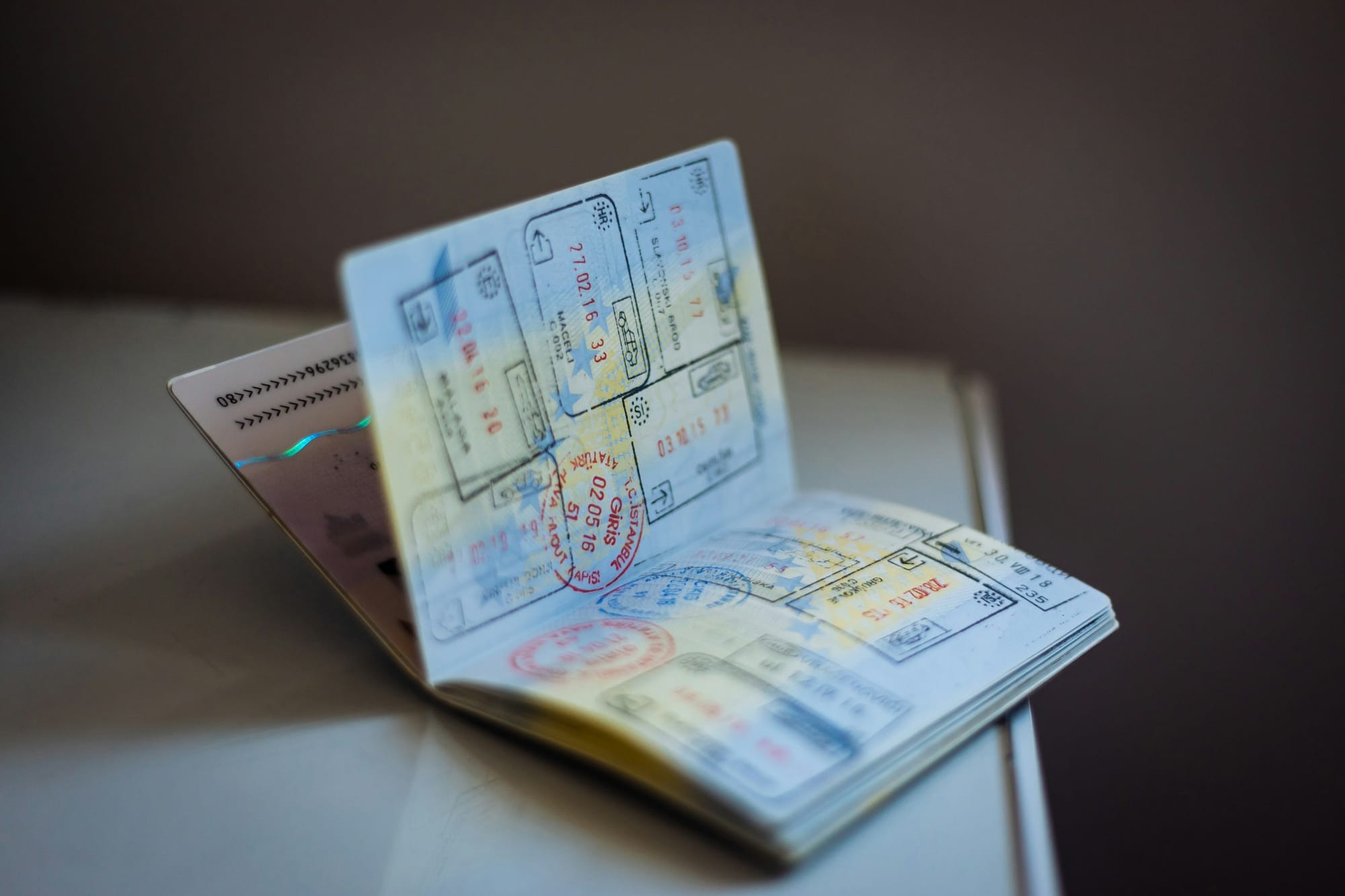
If you lose your passport in China, go in person to the nearest police station for a stamped loss report (bào'àn zhèngmíng) first, then contact your embassy for an emergency travel document. The same report supports your insurance claim and airline rebooking, so get it as soon as you can.
What’s the first thing I must do the moment I realize my passport is gone in China?
Go in person to the closest Public Security Bureau station (pàichūsuǒ) and ask for a stamped loss report. Do not call — you need a stamped physical document. The police report is the foundation everything else relies on. Without it, your embassy will usually send you to get one before it processes an emergency travel document, your insurer will push back, and your airline rebooking becomes much harder.
Frank Zhang, founder of LocalKey Travel in Suzhou, has seen this pattern repeatedly with clients: the single biggest mistake is calling the embassy before securing the stamped report — then being told to go to the PSB anyway. Go as soon as you notice the loss.
At the station, bring any secondary ID (driver’s license, photocopy of your passport data page, credit card), your hotel’s business card or a Chinese-language note showing your current address, and a note on your phone indicating when and where you last had the passport. Explain that your passport was lost or stolen. Officers in tourist-heavy cities handle this situation regularly. They will take a statement and issue the stamped report — the bào'àn zhèngmíng (police report). Do not leave without confirming the stamp. You will need to show it at the embassy, to your insurer, and potentially to your airline.
If you don’t speak Mandarin, ask your hotel to send a staff member to help. In Beijing, Shanghai, Chengdu, and other major cities, some PSB stations have English-speaking officers or can use a phone interpretation service. Show the officer a translation on your phone: “I need to report a lost passport and get a police report stamp.” For additional contacts before you travel, keep our Emergency Contacts for China Travelers page offline with this guide.
How do I contact my embassy and what do I need to have ready?
Call your embassy’s emergency line as soon as you have the police report reference number. You don’t need the physical stamped document in hand — call as soon as you’ve filed. Have this information ready: your full name, date of birth, passport number if you know it, the city you’re in, your planned departure date, and the police report reference number.
The numbers below reach embassies and consulates in mainland China, verified as of May 2026.
United States
- US Embassy Beijing (covers all mainland China): +86-10-8531-4000, 24 hours. Press the option for American Citizens Services.
- US Consulate General Shanghai: +86-21-8011-2400; after-hours emergencies route to the Beijing main line.
- US Consulate General Guangzhou: +86-20-3814-5000.
Source: US Embassy Beijing
United Kingdom
- FCDO 24-hour global line: +44-20-7008-5000 — use this first for any consular emergency.
- British Embassy Beijing: +86-10-5192-4000.
- British Consulate General Shanghai (eastern China): +86-21-3279-2000.
- British Consulate General Chongqing (southwest China including Sichuan): +86-23-6369-1500.
Source: FCDO China guidance
Australia
- 24-hour consular emergency line: +61-2-6261-3305.
- Australian Embassy Beijing: +86-10-5140-4111.
- Australian Consulate General Shanghai: +86-21-2215-5200.
- Australian Consulate General Guangzhou: +86-20-3814-0111.
Source: Australian Embassy China
Canada
- Emergency line (24 hours, collect calls accepted): +1-613-996-8885.
- Canadian Embassy Beijing: +86-10-5139-4000.
- Canadian Consulate General Shanghai: +86-21-3279-2800.
- Canadian Consulate General Guangzhou: +86-20-3884-4488.
Source: Government of Canada – China travel advice
Most consulates will ask you to come in person to apply for an emergency travel document. Check if you need a prior appointment — during peak travel months slots can be scarce. If you’re traveling under the 240-hour visa-free policy and your passport is lost, the exit process changes; see our Complete 240-Hour Visa-Free China Guide for how the exit permit interacts with lost documents.
How long does it take to get an emergency travel document, and can I still fly home on my original ticket?
How long it takes depends on your embassy and on whether your papers are complete, so ask when you call; the emergency document only covers a direct trip home, and your airline may need to reissue the ticket if it was tied to the old passport number. An Emergency Travel Document (ETD) is a single-trip document that lets you travel directly to your home country. It is not a full passport replacement and won’t allow onward travel to third countries. Embassies typically ask for the stamped police report, passport-style photos to their own specification, proof of citizenship — many embassies accept a digital copy of your passport data page; check your embassy's requirements — and your booked flight itinerary.
Processing times differ by nationality, so confirm the current time with your embassy. The 24-hour emergency lines are below.
| Nationality | Emergency contact (24 hr) | Source |
|---|---|---|
| United States | +86-10-8531-4000 | US Embassy Beijing |
| United Kingdom | +44-20-7008-5000 (FCDO global) | FCDO China |
| Australia | +61-2-6261-3305 | Australian Embassy China |
| Canada | +1-613-996-8885 | Canada travel advice |
Missing the police report or acceptable photos slows the process. Budget extra hotel nights accordingly.
Once you have the ETD number, call your airline’s international customer service line. Major carriers that serve China — Air China, British Airways, Cathay Pacific, United, Delta, Qantas, Air Canada — all have standing procedures for emergency travel documents. Explain that you’ll be traveling on an ETD to your home country. If your original ticket was tied to your old passport number and needs to be cancelled or reissued, the airline may ask you to buy a new ticket. Keep every receipt — most travel insurance policies reimburse rebooking costs and additional accommodation caused by a passport loss, as long as you notify the insurer within the required window.
For a step-by-step checklist of what to carry and store before you even land, our First-Time China Visitor Checklist (2026) covers passport photocopies, cloud backups, and the exact documents hotels and PSB officers expect to see.
What does travel insurance cover after losing a passport, and how soon should I file a claim?
A comprehensive policy typically covers the emergency document fee, extra hotel nights while you wait, and rebooking costs; notify your insurer as soon as you have the police report. Most policies have a strict notification window; missing it gives the insurer grounds to limit or deny the claim. When you call, provide the police report reference number, your embassy case number (once you have it), and a list of all out-of-pocket expenses with receipts.
Typical coverage under a comprehensive travel insurance policy includes:
- The fee for the Emergency Travel Document itself (it varies by country; check your embassy's current fee).
- Extra hotel nights you’re forced to book while waiting for the ETD.
- Flight rebooking fees or replacement one-way tickets, if your original booking becomes unusable.
Coverage limits and excess amounts differ by policy. Some policies only cover theft — not accidental loss — so it pays to confirm this before you travel. Having the policy wording saved offline and the police report on hand makes the claim easier to file.
How can I prepare before my trip so a lost passport doesn’t derail everything?
Before you fly, photograph your passport pages, save your embassy’s 24-hour number, download your insurance policy, and plan to carry the physical passport itself. These steps are lightweight compared with scrambling without documents.
- Photograph your passport’s data page and any visa or entry stamp pages. Save the images to your phone’s camera roll, so a copy is on the device even without data. Under China’s rules, VPNs must be licensed by the Chinese government, so unlicensed VPN use is not permitted (UK FCDO China travel advice, updated 27 August 2026, checked 6 October 2026); for data, plan on international roaming or a foreign eSIM data plan (eSIM and SIM options for foreigners).
- Email the photos to yourself — use a subject line you can search even without data, like “Passport Backup MAY 2026”.
- Save your embassy’s 24-hour emergency number as a phone contact named “Embassy Emergency” and write it on a physical card inside your luggage.
- Purchase travel insurance that explicitly covers emergency travel documents and additional accommodation, and download the policy PDF before leaving home.
- Keep your hotel’s address card in your wallet or phone case as well as your passport.
- Carry your physical passport when you sightsee. The UK FCDO (updated 27 August 2026) says police make random checks and do not accept printed copies, and Australia’s Smartraveller (updated 28 September 2026) says you must always carry identification and show it if the police ask; both checked 6 October 2026. Keep the photos from step 1 as a backup, not a substitute. For what the US and UK advisories say more broadly, see China travel advisory 2026 explained and our China safety overview.
If you are traveling to areas that require additional permits — Tibet, for example — document requirements are stricter still, with permits checked along the way. For those destinations, plan with a specialist who understands the on-ground rules.
Quick-reference: what to have offline before you enter China
- Passport data page photo saved to phone and cloud.
- Embassy 24-hour emergency number saved as a contact.
- Travel insurance policy PDF downloaded and emergency claims number noted.
- Hotel address card kept with you at all times.
- Physical passport on you whenever you are out, with the photos as backup only.
- Digital note with a Chinese translation of “I need to report my passport lost and get a police report” (saved from a translation app) to show a PSB officer.
Our First-Time China Visitor Checklist (2026) turns these points into a printable packing list that also covers payment apps, offline maps, and transport setup. For all the numbers — police, fire, ambulance, and embassy switchboards — save the Emergency Contacts for China Travelers guide on your device before you fly. If you’re visiting under the 240-hour visa-free arrangement, keep the Complete 240-Hour Visa-Free China Guide handy: losing your passport while on a transit visa means you’ll need an exit clearance from the PSB in addition to the ETD.
Data sources: US Embassy Beijing American Citizen Services (cn.usembassy.gov); FCDO consular guidance (gov.uk/world/china); Australian Embassy Beijing (china.embassy.gov.au); Global Affairs Canada (travel.gc.ca/destinations/china); China Highlights lost passport procedure (chinahighlights.com/travelguide/lost-passport-in-china.htm); UK FCDO China travel advice (gov.uk/foreign-travel-advice/china, updated 27 August 2026) and Smartraveller China (smartraveller.gov.au, updated 28 September 2026), both checked 6 October 2026. Verify current processing times with your consulate when you travel.