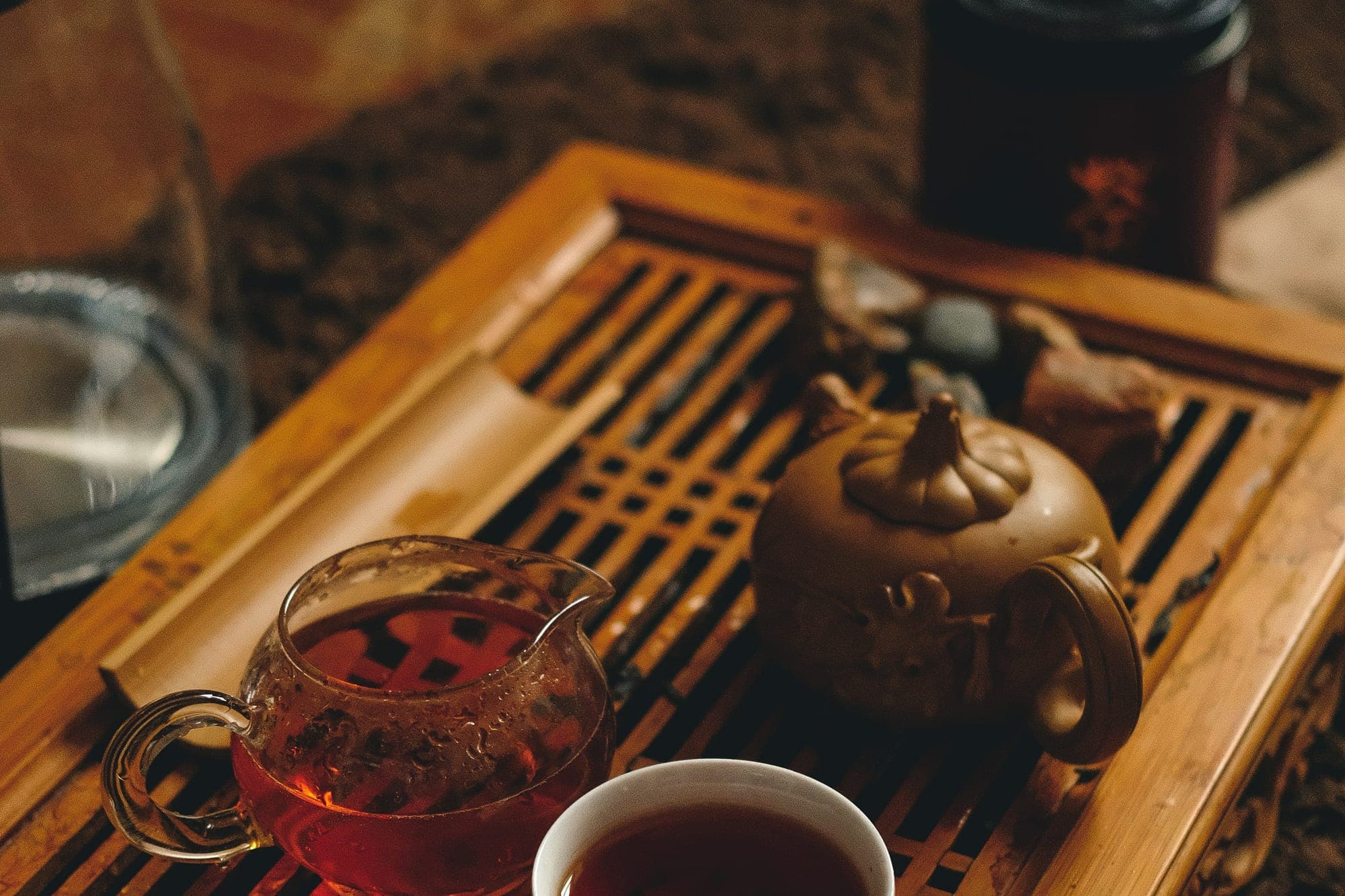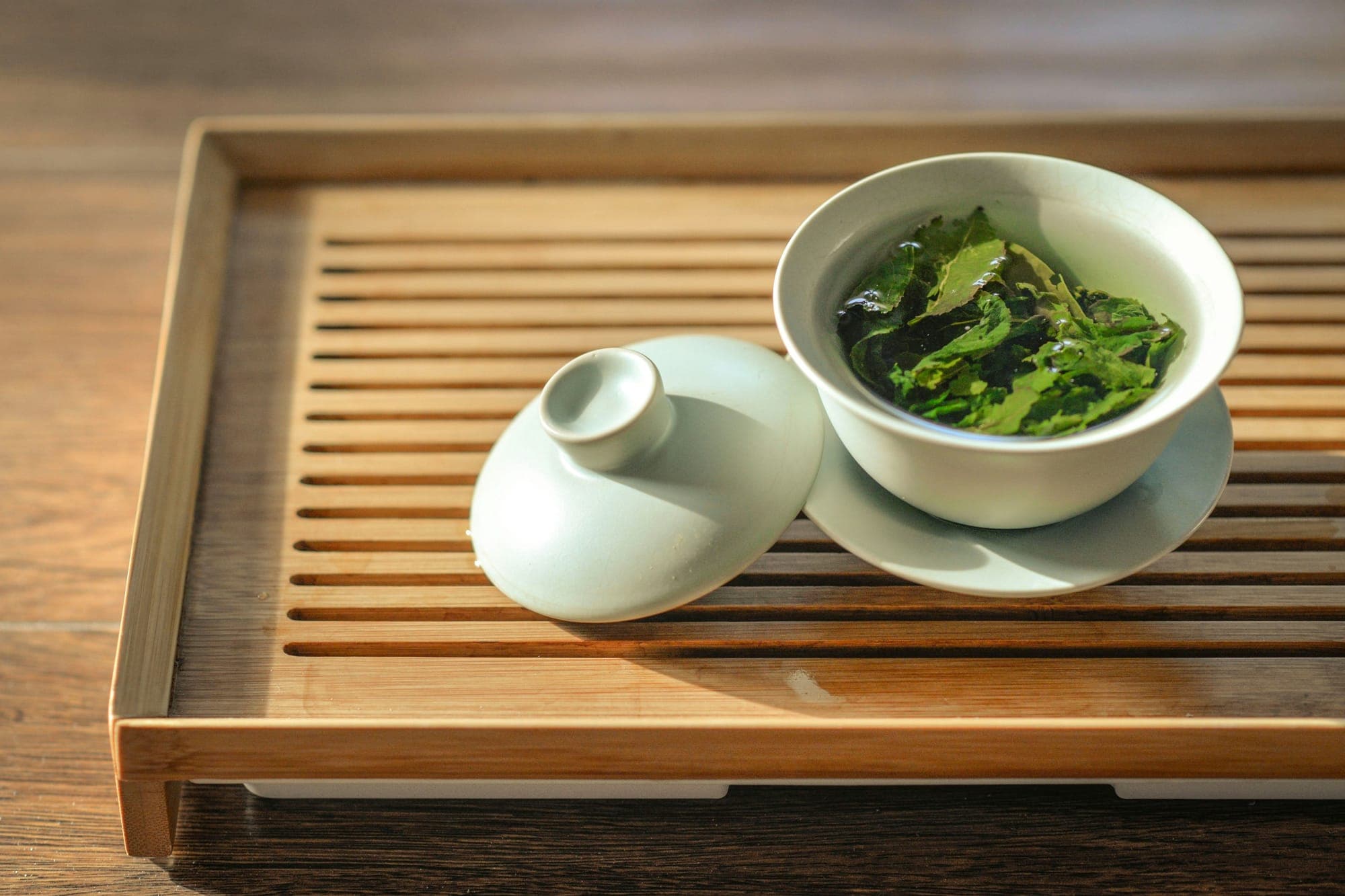
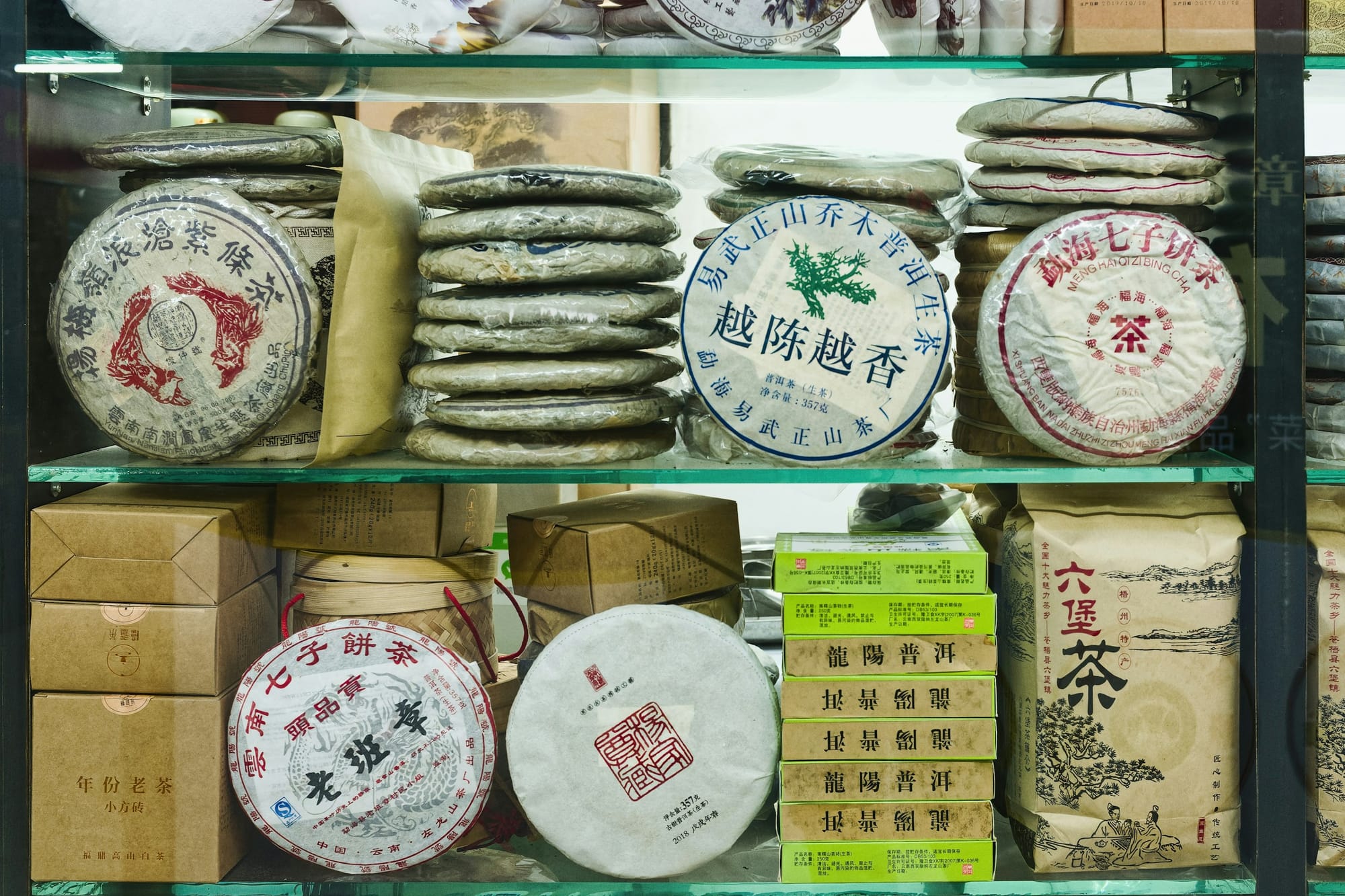
Yes. A tea brick is compressed Pu'er — jǐnyāchá, pressed tea — that you sit with. You break a piece from a cake, a brick, or a tuo, brew it, and stay for the later steeps. That is the culture. It is not a factory walk, not a group tea-plantation day, and not a tasting-menu coach. This page is how an independent traveler sits with one cake.
Pu'er is a Yunnan name with a legal shape. China's national standard GB/T 22111-2008, still current, is titled Product of geographical indication — Puer tea. UNESCO's 2022 listing of traditional tea processing techniques and associated social practices in China covers the six categories of Chinese tea, including dark tea, and the everyday work of drinking and sharing. Since 2012 the FAO has designated the Pu'er Traditional Tea Agrosystem in Yunnan as a Globally Important Agricultural Heritage System: old tea forests, minority knowledge, and a culture already sitting at the start of the Ancient Tea-Horse Route.
You do not need to tour a workshop to drink this. You need a table, hot water, and a piece of the cake.
The brick is a form, not a factory SKU
"Tea brick" in English usually points at this whole family of compressed leaf, not one souvenir rectangle. In Chinese the parent word is jǐnyāchá: tea pressed so it can travel, rest, and be broken at a table. The cake, the brick, and the tuo are shapes of the same sit-down.
| Form | Chinese | What it is | How you sit with it |
|---|---|---|---|
| Cake (bing) | bǐngchá | Round compressed disc | Work a wedge from the edge or the center hole; brew; stay |
| Brick | cházhuān | Rectangular block | Same break-and-brew; this is the search word, not a separate ceremony |
| Tuo | tuóchá | Compact bowl or nest | Break from the rim; same pot |
| Loose | sǎnchá | Unpressed leaf | Skip the pick; still a pot, still not a factory tour |
We will not invent a gram weight, a 2026 menu price, or a ranked list of mountains. Those change, and a checklist turns this back into a tour. One shape on the table is enough.
The name Pu'er is not a souvenir sticker. The national GI standard was issued in 2008 and remains in force; the public record lists Yunnan provincial tea offices among the drafting units. UNESCO's listing is broader than one leaf: plantation knowledge, picking, manual processing, drinking, and sharing, across green, yellow, dark, white, oolong, and black teas. Pu'er sits inside that processing-and-sharing world. The FAO page for the Yunnan agrosystem even names the UNESCO inscription as a related designation. That is origin and practice. It is not a ticket to a production line.
How to sit with a cake
Walk into an ordinary tea room, or sit where you already are. If the door is open and people are pouring, walk in. Say hē chá. Put the cake on the table. Do not ask for a tasting flight of ten villages.
Break the leaf. Use a tea needle or a blunt pick. Work from the edge of a cake, or from the hole if there is one. Lift; do not smash the disc into dust. Take a small piece. You can always add more. A brick is the same job on a flatter face. A tuo breaks from the rim.
Warm the pot or the gaiwan. A short first rinse is common with this leaf — pour it out. Then steep. Stay. The later cups are the point. UNESCO's listing says tea in China is served steeped or boiled in homes, workplaces, tea houses, restaurants, and temples. Follow the person who poured it. We will not invent a water temperature or a gram-to-milliliter ratio. Confirm with the house.
Photograph the cake, the pick, the steam if you want a picture. Do not pose a silk-jacket pour you did not drink. Do not buy ten famous names from a gift counter because a guide ranked them. Drink the third steep. If you still like it, buy a cake you can describe. Vacuum-packed leaf travels. A pretty tin that leaks does not help you.
This is the opposite of a factory SKU. A workshop tour that ends at a shop is a shop. A plantation day with a locked departure is a group stop. LocalKey does not sell either.
Yunnan origin, one table
The leaf is Yunnan. The FAO record treats the province as a provenance of tea trees, with wild communities, old plantations, and knowledge held by Blang, Dai, Hani and other communities. Tea there is not only a drink: the same page places it in festivals, marriage, funerals, and ritual. Compression belongs to that travel culture — the Ancient Tea-Horse Route is the FAO's own frame — not to a 2026 coach loop.
Do not turn origin into a city dump. Pu'er the prefecture is not a LocalKey destination hub, and this page will not invent one. If your week already starts in Lijiang, use it as a Yunnan start, not as the tea origin. The region logic — one corridor, not every famous name — is on Yunnan China 2026. Keep the cake as a table. Do not add a factory because a blog called it the capital of Pu'er.
East China tea is a different sit-down. How to take a pot without a ceremony package, in a Hangzhou village room or a Suzhou garden, is on China tea experience 2026. Chengdu is a third room: a park, a gaiwan, time. That page is Chengdu teahouse experience 2026. Do not paste a Longjing hillside or a Sichuan lake chair onto a compressed cake. The brick is Yunnan's travel form. The sit is still one table.
How this sits in an Independent or Private Guided week
A compressed cake does not need its own city. It can sit inside a Yunnan corridor you already chose, or on a quiet evening anywhere you have hot water. It does not need a third stop stacked on a coach.
Two ways to travel, both private. Independent: we book the hotels and the tickets, you get the LocalKey app roadbook and a 24/7 WhatsApp or WeChat thread, and you can add an airport pickup, a car and driver, or a local guide on the days you want one. You move yourself. That works when the day is a town, a walk, and a pot. Private Guided: the same planning, with private guides, a driver and a car across the trip. A car earns its keep on mountain roads. A locked plantation departure with a lecture at every row of bushes is a group tour. We do not sell that.
Set up Alipay before you want the second pot, not after the kettle is waiting. Cash still appears at older tables. Do not count on English on the wrapper. The cake's characters are the menu.
If you want the day booked, not a factory tour
LocalKey books customized independent travel. We do not sell group tours. We do not sell a tea-plantation coach or a factory walk that ends at a shop.
Two ways to travel, both private. Independent: hotels, trains or flights, the LocalKey app roadbook and 24/7 WhatsApp or WeChat backup; add a car and driver or a local guide on the days you want one. Private Guided: the same planning, with private guides, a driver and a car across the trip. A table and a cake are the culture. A van that tours the leaf is not what we do.
LocalKey Travel is the visitor brand of Guangdong Xingcheng International Travel Agency (est. 2009).