TL;DR: In your first 24 hours in Shanghai, get mobile data and Alipay working before you leave the airport, head straight to your hotel, and treat the Bund night walk after dinner as the only “must-do” on Day 1. You land at Shanghai Pudong (PVG) or Hongqiao (SHA). Keep RMB 500–1,000 cash and your confirmed onward ticket to a third country or region handy if you’re using the 240-hour visa‑free policy. Skip complicated itineraries on arrival day — calm momentum beats ambition.
What paperwork do I need before approaching immigration at PVG or SHA?
Immigration is the first real hurdle, and it goes smoother when everything is in one place. Have your passport, the completed arrival form (if required by your flight or nationality), your hotel address, and — if you’re traveling under the transit‑free policy — a printed or digital copy of your confirmed onward ticket to a third country or region. Screenshots are fine, because the airport Wi‑Fi may not be stable enough to open a booking app on demand.
If you’re using China’s 240‑hour visa‑free transit, border officials may ask where you’ll stay and when you’ll depart. Show the hotel confirmation and a confirmed onward ticket to a third country or region; Hong Kong and Macao usually count, but a return to the city you came from does not. The rules, updated in December 2024, expanded the list of eligible ports and extended the stay to 240 hours. The list now covers 57 nationalities after NIA announcement No. 4 (20 August 2026), per the NIA English policy page. Keep those documents physically separated from your passport so you don’t fumble at the counter.
Answer what you’re asked, don’t volunteer extra details, and avoid rehearsing a speech. The foreign‑passport lanes are clearly signed; follow the staff and the queue. If you’re nervous, remember that thousands of first‑timers clear this stage every day without incident. Frank Zhang, LocalKey Travel’s founder, often points out that the single biggest source of first‑day anxiety is not the process itself but the fear of being unprepared — so having those four items ready before you step off the plane is a no‑brainer.
How do I get mobile data and Alipay working before leaving the airport?
You need connectivity before you need a taxi. Three real‑world paths work, and we see clients use all of them successfully. If you bought an eSIM before departure, activate it as soon as the plane lands and confirm that data flows before you stand up. If your home carrier offers international roaming, turn it on — it may cost more, but reliable data on Day 1 justifies the expense. The fallback is a physical Chinese SIM purchased at the airport; you’ll need your passport for real‑name registration, and the staff will usually help with the setup. Do not assume you’ll “figure it out at the hotel” — you need maps, translation apps, ride‑hailing, and Alipay to function immediately after landing.
Alipay is your wallet for almost everything. Open the app while you’re still in the arrivals hall, confirm your linked foreign card appears, and, if possible, make a small test payment — even buying a bottle of water at an airport shop — to verify it works. If you didn’t set up Alipay before leaving home, do it now if the app flow lets you; the official Alipay+ visitor page walks through the steps: download and register, then add an eligible international card. WeChat Pay, if you’ve set it up, is a good secondary option but not essential. For a full walkthrough with screenshots, read Alipay for Foreigners 2026: The Setup Guide That Actually Works.
Keep a small cash buffer: RMB 500 to 1,000, obtained from an airport ATM or currency exchange. China is overwhelmingly digital, but cash solves rare edge cases — a metro ticket machine that doesn’t like your card, a street‑side dumpling stall, or a taxi whose QR scanner is flickering. In our experience handling thousands of first‑day arrivals, the travelers who report the smoothest starts are always those who left the airport with three things confirmed: data, payment, and a bit of backup cash.
Maglev, metro, or taxi — what’s the best way to reach my Shanghai hotel from PVG?
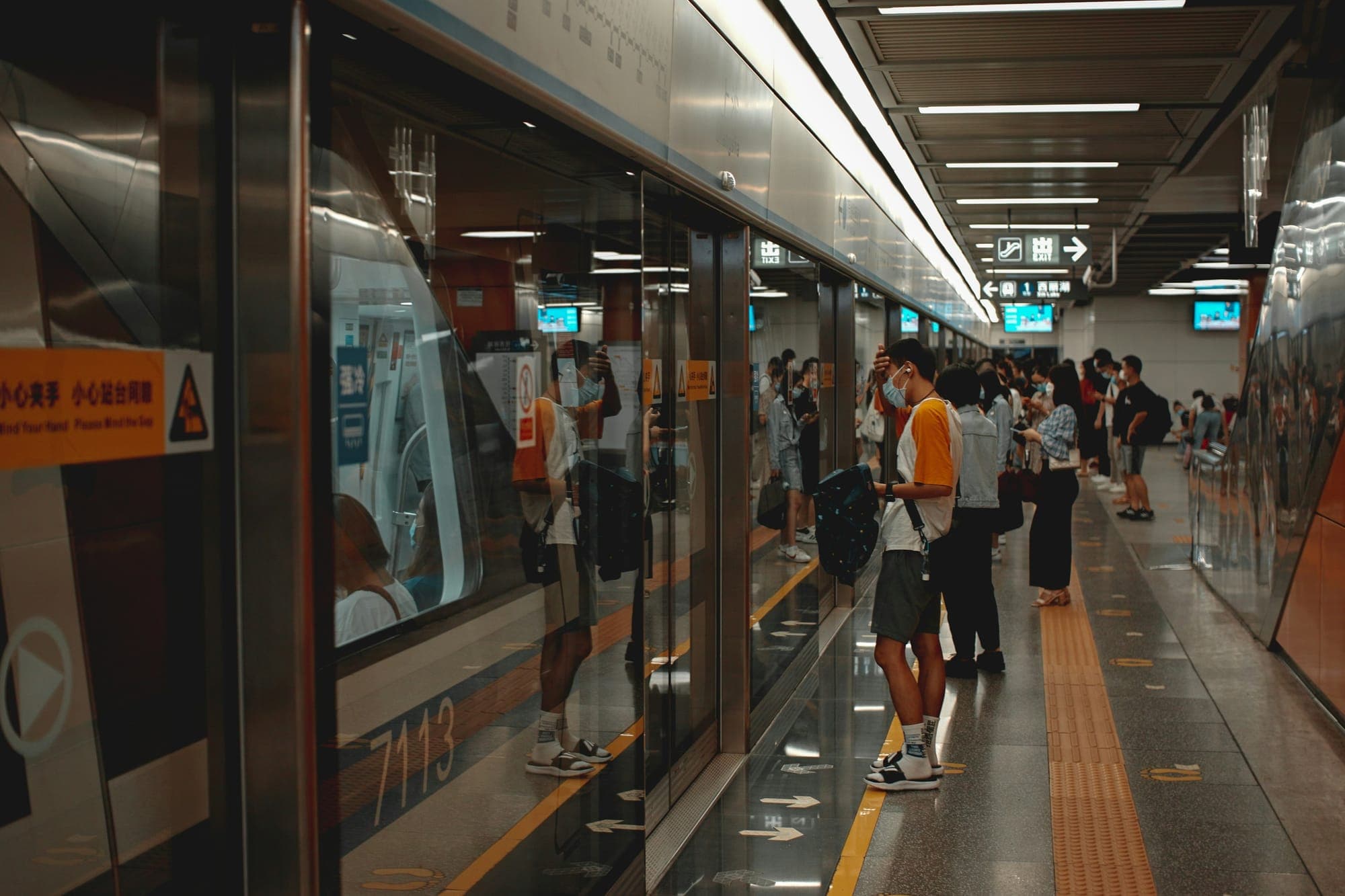
Ride-hailing or an official taxi is the easiest way from PVG to your hotel with luggage, the Maglev plus metro is the fastest, and Metro Line 2 alone is the cheapest. Pudong International Airport sits about 30 km east of the city, so the ride matters. Your choice depends on bags, alertness, and whether a few extra yuan is worth saving an hour of travel‑fog misery. Hongqiao (SHA) is much closer — metro or taxi both work fine — but for PVG, here are the three practical routes.
The Maglev plus metro is fast and fun: the Maglev covers the 30 km to Longyang Road in roughly 8 minutes at speeds up to 431 km/h, then you transfer to Lines 2, 7, or 16 to reach your hotel. It’s slightly fiddly with large suitcases because you change platforms, but train nerds love it. Metro alone is the cheapest option — Line 2 takes you from PVG to the city centre in about 60–80 minutes — but after a long flight it can feel endless. Ride‑hailing or an official taxi is the easiest path with luggage: fares range from about RMB 150 to RMB 250, depending on time and destination, and the trip takes 40–60 minutes in normal traffic. Use official queues inside the terminal; don’t follow a stranger who waves a taxi‑shaped card in the arrivals hall.
| Route | Duration (city centre) | Approx. cost (RMB) | Ease with luggage | Source |
|---|---|---|---|---|
| Maglev + metro | ~30–45 min | 50 + metro 3–8 | Manageable | Shanghai Maglev Transportation Development Co., smtdc.com/en |
| Metro Line 2 only | 60–80 min | 7–10 | Low | Shanghai Shentong Metro Group, service.shmetro.com |
| Taxi / ride‑hailing | 40–60 min | 150–250 | High | Shanghai Airport Authority taxi guide, en.shanghai.gov.cn |
If you’re exhausted and this is your first China day, take the calmer option. Saving a few dollars while running on airline food and disrupted sleep isn’t a travel virtue. Frank Zhang’s advice to anyone landing after a 10‑hour flight is blunt: “If you can afford a taxi, take the taxi. Day 1 is about entry, not economy.”
Which neighborhood should I stay in for my first night in Shanghai?
The district you choose won’t define your trip, but it can determine whether your first 24 hours feel spacious or suffocating. Four zones work especially well for a first‑night landing.
The Bund area puts you next to the iconic riverfront skyline and makes the post‑dinner walk a two‑minute stroll. Hotels here range from historic to modern, and waking up to that view on Day 2 is a gentle win. People’s Square is the metro‑hub choice: lines 1, 2, and 8 converge here, so you can reach almost anywhere tomorrow without a second thought. The Former French Concession and Xuhui — leafy streets, sidewalk cafes, Wukang Road, Anfu Road — give you a softer, more human‑scale first morning if you prefer a low‑key start over the immediate riverfront drama. Jing’an offers polished convenience with easy access to shops and restaurants and a metro interchange that connects to both Pudong and Hongqiao airports.
There is no perfect district, only the one that makes your first 24 hours less complicated. Our clients consistently report that staying near a metro station is far more important than staying in a “must‑see” area. Save the hotel address in Chinese and take a screenshot of the location on a map app; hand that to a taxi driver and you’ll never need to pronounce the street name. For a broader packing and prep checklist before you even board the plane, see First-Time China Visitor Checklist (2026).
What specific steps should I take before leaving the airport to avoid Day 1 stress?
Before you exit the terminal, confirm mobile data works, verify Alipay, withdraw RMB 500 or exchange a small amount of cash, and save the hotel address in Chinese with an offline screenshot of the route. Handling the airport‑to‑hotel pipeline in the right order turns a potential meltdown into a boring success. Do these four things before you exit the terminal building:
- Confirm mobile data works. Test a website or open a map app. If you’re on an eSIM and it didn’t activate, switch to roaming or locate the physical SIM desk before you leave the baggage area.
- Open Alipay and make a small payment or at least verify the linked card appears in the account settings. If something is broken, use airport Wi‑Fi to troubleshoot or contact your bank.
- Withdraw RMB 500 from an ATM or exchange a small amount of cash. China Construction Bank, Bank of China, and ICBC ATMs are inside both PVG terminals and accept foreign cards.
- Save the hotel address in Chinese characters — copy it from your booking app — and screenshot the route from the airport. Offline access matters because mobile data can drop between the taxi stand and the elevated highway.
Once you’ve ticked these off, stop trying to optimize. Get to the hotel, drop your bag, charge your phone, drink a glass of water, and let the afternoon unfold at human pace. The one afternoon activity worth considering is a short walk: the Bund if you want the iconic skyline, the Former French Concession if you’re overstimulated. Don’t try to see three neighborhoods on Day 1. Then eat something specific: xiao long bao (soup dumplings) and shengjianbao (pan‑fried soup buns) are classic first‑night dishes that require no menu decoding. If a busy restaurant has pictures or an English menu, choose it. Pay with Alipay by scanning the merchant’s QR or showing your payment code — this will feel normal by the second transaction.
After dinner, the Bund night walk is the only high‑impact, low‑logistics activity that makes sense. It’s free, it’s safe, and it puts the city’s scale in perspective. Avoid anyone inviting you to a special tea ceremony or art show near tourist hubs — smile and keep walking. By 22:00, be back at the hotel. Charge your phone and power bank, screenshot tomorrow’s first destination, re‑confirm Alipay, and decide your second‑day move. If you’re using the 240‑hour transit policy, keep your route inside the permitted stay areas; the 240-hour visa-free China guide lists them, including whether cities such as Xi’an or Chengdu fit a Shanghai-entry trip. Tools like our visa‑free checker and transit map can help, and if Suzhou is on your list, the direct train is covered in Shanghai to Suzhou by High-Speed Rail.
What is the checklist for my first 24 hours in Shanghai?
Before leaving the airport, have mobile data tested, Alipay linked and confirmed, RMB 500–1,000 cash, the hotel address in Chinese saved offline, and your confirmed onward ticket to a third country or region accessible if you are using the 240-hour visa‑free transit policy. At the hotel, rest and take one afternoon walk at most; before sleep, screenshot tomorrow’s first stop and re‑test Alipay.
Use this before you leave the airport and again before bed to close your first 24 hours cleanly.
Before leaving the airport:
- Mobile data activated and tested
- Alipay linked and confirmed (or WeChat Pay as backup)
- RMB 500–1,000 cash on hand
- Hotel address in Chinese saved offline
- Confirmed onward ticket to a third country or region accessible (if using 240-hour visa‑free transit)
After arriving at the hotel:
- Passport stored safely
- Phone and power bank charging
- Shower, water, 15‑minute rest
- One afternoon walk at most (Bund or French Concession)
- Dinner with a specific local dish (xiao long bao or shengjianbao)
Before sleep:
- Tomorrow’s first stop screenshotted
- Alipay re‑tested (open the app, confirm it loads)
- Hotel address saved again in notes
- Passport and cash placed in the same safe spot
- Next day’s transport or tour plan decided
If your plane lands after 22:00, skip the Bund entirely. Use an official taxi queue, a pre‑booked transfer, or a ride‑hailing setup you already trust, go straight to the hotel, ask reception for a Chinese‑address card, and go to sleep. Shanghai rewards alert people, not heroic late‑night explorers. A boring first night is a solid first night — tomorrow will be better for it.