The best time to visit China is April–May or September–October, when weather and crowds balance best; avoid Golden Week (October 1–7) and the hot, humid July–August. The rest of this guide shows how that changes city by city.
"Best time to visit China" is the wrong question. The right one is: which cities are on your list, and what do you want to do there? Shanghai in July is a sweatbox. Beijing in February is a freezer. But both are perfect in October — and every local in the country knows it, so you will be sharing every site with domestic travellers who had the same idea.
This guide walks through all twelve months across five key cities — Beijing, Shanghai, Chengdu, Chongqing, and Suzhou — so you can match your itinerary to actual conditions on the ground. It also covers the four crowd events that should anchor your planning: Chinese New Year (January/February), Labour Day (May 1–5), Golden Week (October 1–7), and school summer holidays (July–August).
If you only remember four things: April–May and September–October deliver the best balance of weather and manageable crowds. Golden Week (October 1–7) is China's busiest travel period — book 4–8 weeks ahead or stay home. July–August is hot, humid, and typhoon-prone along the coast. Winter is cold but uncrowded and cheap.
Before you go, read the First-Time China Visitor Checklist (2026) — it covers visas, payments, mobile data, and everything else you need sorted before you book a flight.
China's Seasons at a Glance
China doesn't have one climate. It spans five Köppen zones, and the weather in Beijing (continental north) has nothing to do with the weather in Chengdu (Sichuan basin). Here is how the five cities in this guide break down:
Subtropical coast — Shanghai, Suzhou. Hot, humid summers (June–September) with monsoon rains and typhoon risk. Winters are grey and damp but rarely below freezing. Spring and autumn are the prize: dry, mild, and reliably pleasant.
Continental north — Beijing. Four sharp seasons. Winter is dry, windy, and cold enough to freeze the pipes (average January low: −7°C). Summer brings heat, humidity, and afternoon thunderstorms. Spring is brief and windy — dust storms from the Gobi are a real factor in March and April. Autumn is Beijing at its best: crisp air, blue skies, and golden ginkgo leaves.
Sichuan basin — Chengdu, Chongqing. Low elevation, surrounded by mountains, permanently humid. Chengdu is overcast much of the year; Chongqing is the same but with Yangtze River fog layered on top. Winters are mild by northern standards (rarely below 3°C), summers are sweltering (July–August averages hit 33°C+ with humidity above 80%). The rainy season runs May through September.
Temperature Ranges by City and Season
| City | Winter (Dec–Feb) | Spring (Mar–May) | Summer (Jun–Aug) | Autumn (Sep–Nov) |
|---|---|---|---|---|
| Beijing | −7 to 5°C | 2 to 27°C | 20 to 32°C | 1 to 26°C |
| Shanghai | 1 to 10°C | 6 to 27°C | 22 to 33°C | 8 to 28°C |
| Suzhou | 0 to 9°C | 6 to 27°C | 22 to 33°C | 8 to 27°C |
| Chengdu | 3 to 12°C | 11 to 28°C | 22 to 31°C | 12 to 25°C |
| Chongqing | 5 to 13°C | 13 to 29°C | 24 to 34°C | 14 to 27°C |
Crowd Levels by Month
| Month | Beijing | Shanghai | Chengdu | Chongqing | Suzhou |
|---|---|---|---|---|---|
| Jan | Very low | Very low | Very low | Very low | Very low |
| Feb | Very high (CNY) | Very high (CNY) | High (CNY) | High (CNY) | High (CNY) |
| Mar | Low | Low | Low | Low | Moderate |
| Apr | Moderate | Moderate | Moderate | Low | Moderate |
| May | Very high (Labour) | Very high (Labour) | High | Moderate | High |
| Jun | Moderate | High | High | Moderate | High |
| Jul | Very high | Very high | Very high | Very high | Very high |
| Aug | Very high | Very high | Very high | Very high | Very high |
| Sep | Moderate | Moderate | Moderate | Moderate | Moderate |
| Oct | Very high (Golden) | Very high (Golden) | Very high | High | Very high |
| Nov | Low | Low | Low | Low | Low |
| Dec | Very low | Low | Very low | Very low | Very low |
January & February — Winter, CNY, and Low Crowds
If you want the Forbidden City to yourself, come in January. If you want to see China at its most chaotic and celebratory, come for Chinese New Year.
January
Beijing is genuinely cold: average high 2°C, low −7°C. The Great Wall is icy and largely deserted — some sections close after snowfall, so check ahead. Indoor sites (National Museum, 798 Art District, Palace Museum) are the play. Hotels drop to off-season rates; domestic flights are cheap.
Shanghai hovers around 1–10°C with persistent grey skies. The Bund is windswept but walkable if you dress for it. January is the cheapest month for Shanghai hotels.
Chengdu sits at 3–12°C — cold by local standards but warm by northern ones. The panda base is nearly empty. This is the month to see giant pandas without elbowing through tour groups. Fog is constant; the city feels like a film set.
Chongqing runs 5–13°C with heavy fog. The Yangtze and Jialing rivers meet in a grey haze that gives the city's cyberpunk skyline a genuine Blade Runner quality. Hotpot tastes better in this weather.
February and Chinese New Year
Chinese New Year 2026 falls on February 17, with the official public holiday running February 15–23 (9 days), and Saturday 14 and Saturday 28 February as make-up working days, per the State Council General Office notice. During the 40-day 2026 Chunyun travel season, the Ministry of Transport counted about 9.41 billion cross-regional person-trips (MOT). For 2027 dates, closures, Chunyun and when train tickets go on sale, see our Chinese New Year 2027 travel guide. What that means for you:
- Flights and trains sell out. Book domestic travel at least 4 weeks ahead. High-speed rail tickets release 15 days before departure and vanish within seconds on popular routes.
- Restaurants and small shops close for 3–7 days. Chain hotels and large restaurants stay open. Street food stalls disappear.
- Airports are chaos. Arrive 3 hours early for domestic flights during the 3 days before and after the holiday.
- Fireworks. Chongqing puts on the country's most dramatic display — the city sets off coordinated fireworks across the Yangtze and Jialing rivers. Shanghai's Spring Festival lantern displays along the Bund and Yu Garden are elaborate and well-attended.
- Temple fairs run in Beijing (Ditan Park, Longtan Park) and most major cities. These are folk-culture events with street food, crafts, and performances — worth planning around if you are in a city during the holiday.
The upside of February outside of CNY week: once the holiday ends, crowds vanish. Late February is one of the quietest travel windows of the year. For where to go by region from December to February, see winter in China.
If this is your first trip, read the First-Time China Visitor Checklist (2026) before booking anything — payment setup and visa timing matter more in winter when some services operate on reduced schedules.
March & April — Spring Blossoms, Best Weather
This is the window most first-time visitors should target. March is transitional; April is close to perfect.
March
Temperatures climb across all cities: Beijing 2–13°C, Shanghai 6–14°C, Chengdu 11–19°C. Cherry blossoms begin in late March, peaking in early April. The Yuyuantan Park Cherry Blossom Festival in Beijing runs late March through mid-April and draws crowds — go on a weekday morning.
Beijing still has dust storms in March and early April. The Gobi Desert kicks up particulate matter that blankets the city for 1–3 days at a time. An N95 mask is useful. The upside: March is still low season for Beijing hotels and flights.
Chengdu enters spring tea harvest. The tea plantations around Mount Mengding, about 90 minutes from Chengdu, open for picking in late March. Fresh spring tea commands premium prices and is a genuinely good souvenir.
April
April is the single best month for Shanghai and Suzhou. Temperatures in Shanghai reach 11–20°C by mid-month; rain is moderate and sporadic rather than monsoon-driven.
Suzhou's classical gardens hit peak bloom. The Humble Administrator's Garden and Lingering Garden are the headliners, but the smaller Master of the Nets Garden is less crowded and equally good in April. Wisteria drapes the garden walls in late April — it lasts roughly two weeks. Book Suzhou high-speed rail tickets 2–3 days ahead during April weekends.
Qingming Festival falls on April 5, 2026, with a 3-day public holiday April 4–6. This is a tomb-sweeping holiday — families visit ancestral graves, and domestic travel spikes for the long weekend. Tourist sites get a moderate bump, not the system-wide overload of Golden Week.
Beijing in April has warming temperatures (8–21°C) and the tail end of dust storm season. The Great Wall is at its most hikeable — wild sections like Jiankou and Jinshanling are accessible before summer heat sets in.
Panda cubs at the Chengdu Research Base: cubs born the previous August are 8 months old by April, active, and still in the nursery enclosures. Morning sessions (7:30–10:00 AM) are feeding time and the best viewing window.
May & June — Warm but Watch the Rain
Avoid the Labour Day holiday (May 1–5); from mid-June, plum rain settles over Shanghai and Suzhou and the rainy season builds in Chengdu and Chongqing.
May
Labour Day Golden Week runs May 1–5, 2026. This is a 5-day national holiday, and every domestic tourist site runs at or near capacity. High-speed rail tickets sell out, hotels in popular destinations raise their rates, and attractions implement maximum daily visitor caps.
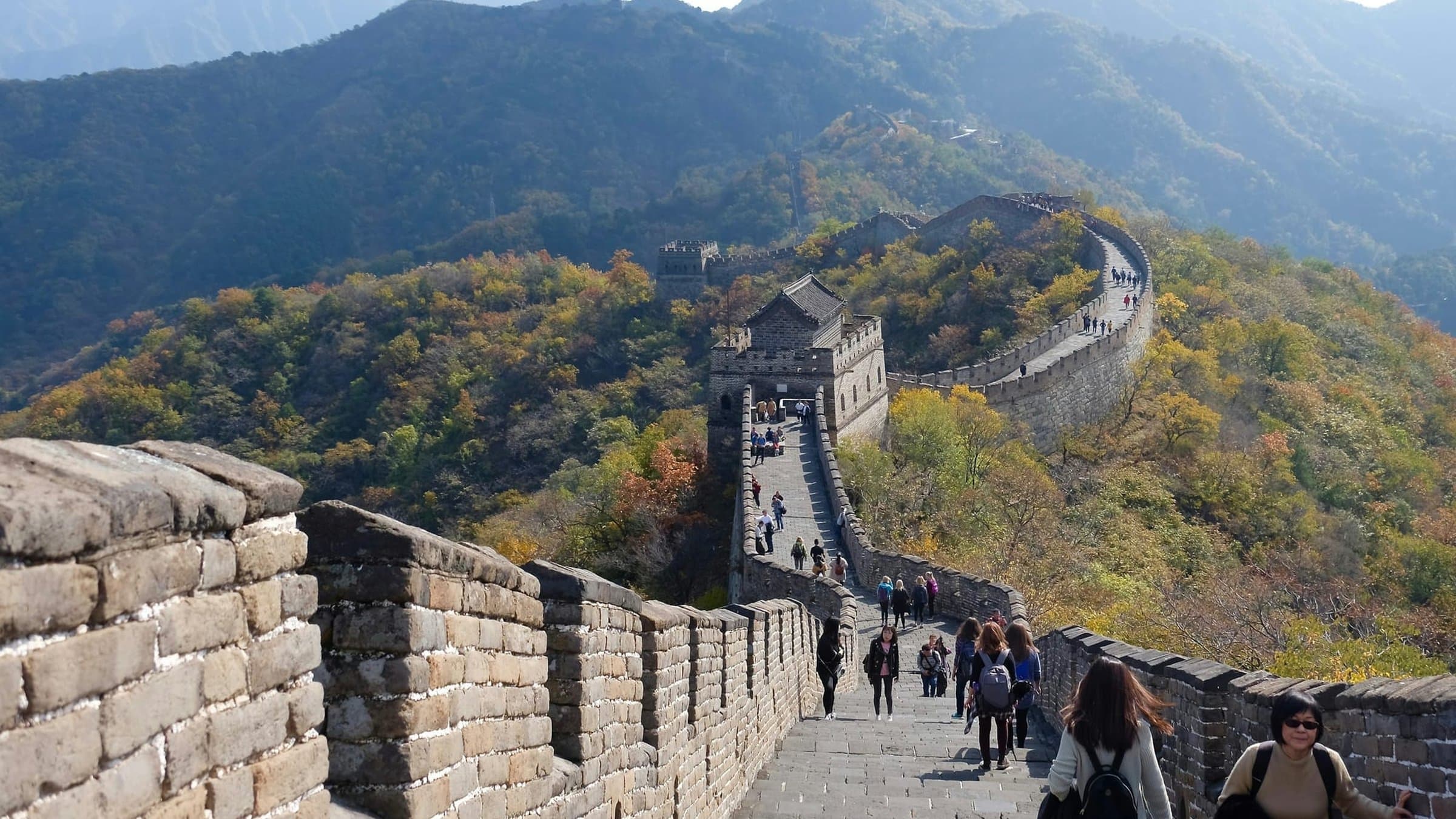
If you must travel during Labour Day: book everything 4–6 weeks ahead. Avoid the Forbidden City, the Bund, and the Great Wall at Badaling entirely — use Mutianyu or Jinshanling instead.
Post-Labour Day (May 6–31) is one of the best travel windows of the year. Crowds empty out overnight. Beijing temperatures sit at 15–27°C with low humidity and clear skies — this is prime Great Wall hiking weather. Shanghai and Suzhou are warm but not yet in plum rain territory.
June
Shanghai and Suzhou enter plum rain season in mid-June. This is not dramatic — it is weeks of grey drizzle, high humidity, and laundry that never dries. Temperatures hover at 22–28°C with humidity above 80%. Outdoor sightseeing becomes an exercise in endurance. If your itinerary is Shanghai/Suzhou-heavy, aim for May or September instead.
Beijing in June is warm (20–31°C) and beginning to get humid. The big advantage: it is before the July school holiday crush. Sites are busy but manageable. Afternoon thunderstorms are common but brief.
Chengdu and Chongqing see the rainy season ramp up in June. Chengdu's average June rainfall is roughly 110mm over 15 rain days. Mountain treks to Jiuzhaigou and Mount Emei remain doable but check weather forecasts — heavy rain can trigger road closures and landslide warnings in the western Sichuan mountains.
Dragon Boat Festival falls on June 19, 2026, with a 3-day public holiday June 19–21. This is a minor holiday by crowd standards — expect a weekend-level bump, not a shutdown. Zongzi (sticky rice dumplings) appear everywhere. Dragon boat races are held in most cities with rivers; Shanghai's Suzhou Creek races are the easiest for visitors to access.
For a detailed packing breakdown by season, see our What to Pack for China — 4-Season Guide.
July & August — Peak Summer Heat
July and August are hot, humid and typhoon-prone along the coast, and school summer holidays fill the sights. If you are flexible with dates, avoid these two months unless you have a specific reason to be here.
What to Expect
Shanghai, Suzhou, and Chongqing run 33–36°C with humidity that makes it feel closer to 40°C. Chongqing — one of China's "three furnaces" (san da huo lu, the traditional trio of summer ovens) alongside Wuhan and Nanjing — is particularly punishing. The city sits in a river basin that traps heat and moisture. Walking between Hongya Cave and Jiefangbei at 2 PM in August is not sightseeing; it is a medical event.
Beijing hits its hottest and wettest month in July. Average high 32°C, humidity above 70%, and afternoon thunderstorms that flood underpasses. The Forbidden City offers almost no shade — the imperial architects did not prioritise visitor comfort — and its daily ticket cap is hit early. If you go, arrive at opening (8:30 AM) and bring water.
Chengdu is hot (22–31°C) and very rainy — July averages roughly 200mm of rainfall over 17 rain days. Mountain treks to Jiuzhaigou and Huanglong should be deferred. The mountains of western Sichuan are prone to landslides during heavy summer rain, and road closures are routine.
Typhoon Risk (July–September)
China's southeast coast — Shanghai, Suzhou, and the Yangtze River Delta — sits in the western Pacific typhoon belt. Typhoon season runs July through September, peaking in August. A direct hit on Shanghai is uncommon (the last major one was Typhoon In-Fa in July 2021), but even a near-miss disrupts flights, closes outdoor attractions, and floods streets.
Check the China Meteorological Administration typhoon tracker before and during your trip. Flight cancellations are widespread when a typhoon warning is in effect — build at least one buffer day into your itinerary for coastal cities during these months.
Who Should (and Shouldn't) Visit
Visit in July/August if: you are on a tight budget (off-peak hotel rates apply at business hotels in Shanghai and Beijing), you are focused on indoor attractions (museums, galleries, shopping), or summer is your only available window.
Avoid July/August if: you are a first-time visitor, travelling with children under 12, or prioritising comfort. The heat is not scenic.
September & October — The Best Months to Visit
This is what you came for. September cools off. October is China's best travel month — but only if you dodge Golden Week.
September
Temperatures ease across the board: Beijing 15–26°C, Shanghai 20–28°C, Chengdu 17–25°C. Humidity drops. Typhoon risk fades by mid-month. Tourist volumes are moderate — domestic summer holidays have ended, and Golden Week hasn't started.
Mid-Autumn Festival falls on September 25, 2026, with a 3-day public holiday September 25–27. This is a family-gathering holiday centred on mooncakes and lantern displays. Crowds get a weekend-plus bump. Mooncakes are sold everywhere — the traditional Cantonese-style with lotus seed paste and salted egg yolk is the standard, but modern variants (snow-skin, ice cream, matcha) are widely available. Lantern displays in public parks and riverside areas run for several days around the festival.
October: The Golden Week Problem
National Day Golden Week runs October 1–7, 2026. This is the single busiest travel week in China. Every scenic spot, museum, and train station in the country operates at capacity. High-speed rail tickets for October 1 release 15 days prior and are gone within minutes.
If you are travelling during Golden Week:
- Book flights and hotels 4–8 weeks ahead.
- Book high-speed rail tickets the moment they release (15 days before travel, typically at 8 AM Beijing time).
- Arrive at attractions at opening time or don't go. The Forbidden City at 2 PM during Golden Week is a queue management exercise, not a cultural experience.
- Use alternative Great Wall sections: Mutianyu, Jinshanling, or Huanghuacheng instead of Badaling.
Post-Golden Week (October 8–31) is near-perfect. Crowds thin overnight. Beijing's Fragrant Hills hit peak autumn foliage in late October — the maple and smoke-tree leaves turn deep red, and the park is mobbed on weekends but manageable on weekdays. Suzhou's ginkgo trees turn gold in early November. Chongqing's autumnal fog gives the river panorama photography its best light of the year.
The 5-day Beijing itinerary in our How to Spend 5 Days in Beijing Without Wasting a Single One guide works best when executed in October.
November & December — Quiet Season, Good Value
November and December are the shoulder-season sweet spot for budget-conscious travellers who don't mind a coat.
November
Crowds are at their lowest outside of January. Hotels drop to off-peak rates. Domestic flights are cheap.
Beijing in November runs 0–11°C. The ginkgo avenues — Diaoyutai Ginkgo Avenue near Yuyuantan Park and the trees inside the Temple of Heaven complex — peak in the first two weeks. By late November the leaves have dropped and the city is grey and cold. Central heating kicks in November 15, so indoor spaces are warm.
Shanghai sits at 8–18°C in November. It is one of the most comfortable months for walking the French Concession and the Bund. Rain is low; humidity is gone.
Chengdu stays mild (12–18°C) but overcast. The Sanxingdui Museum, about 40 km north of Chengdu, is a strong indoor option — the Bronze Age artefacts are among China's most important archaeological discoveries, and November crowds are minimal.
December
Shanghai drops to 2–11°C. Christmas lights along Nanjing Road start in early December and run through New Year. For what stays open and how Christmas week feels versus New Year and Spring Festival, see Christmas in China 2026 and the Christmas–New Year 10–14 day winter route. For city-by-city countdowns, lighting and drone shows, see New Year's Eve in China 2026. In the 2025–26 New Year window, Shanghai ran major-activity Bund / North Bund / Lujiazui lighting without a Huangpu cross-area light show or landscape-lighting midnight countdown; the waterfront can still draw large crowds and police may implement crowd control. If you want to be near the Bund on December 31, check that year's municipal and police notices, arrive early, and plan for slow exits after midnight.
Beijing in December means serious winter: −5 to 4°C, dry, windy. The Summer Palace's Kunming Lake freezes over, and ice skating opens on the lake (typically late December through February). The Great Wall in snow is photogenic but some sections close — verify access before you go.
Chongqing is foggy, cold-damp (7–13°C), and visually at its peak. The combination of winter fog and neon from Hongya Cave and the Jialing River bridges produces the city's signature cyberpunk aesthetic. Photographers rate December as the best month for night shots.
Planning further into winter? See winter in China for where to go by region from December to February, and our Chinese New Year 2027 travel guide if your dates run into early 2027.
City-by-City Verdict
April–May and September–October suit all five cities, July–August is the window to avoid in most of them, and Golden Week (October 1–7) is the crowd peak everywhere.
| City | Best Months | Avoid | Crowd Peak |
|---|---|---|---|
| Shanghai | Apr–May, Sep–Oct | Jul–Aug | Golden Week (Oct 1–7) |
| Suzhou | Apr–May, Oct–Nov | Jul–Aug | Golden Week (Oct 1–7) |
| Beijing | Apr–May, Sep–Oct | Jan–Feb, Jul | Golden Week (Oct 1–7) |
| Chengdu | Apr–May, Sep | Jul–Aug | Golden Week (Oct 1–7) |
| Chongqing | Mar–May, Oct–Nov | Jul–Aug | Golden Week (Oct 1–7) |
For places by trip type rather than by season, see where to visit in China.
Chinese Public Holidays — 2026 Dates
Plan around these. Bookings tighten and prices rise for every holiday on this list, but the first three are the ones that will genuinely derail your trip if you ignore them.
| Holiday | 2026 Date | Days Off | Impact |
|---|---|---|---|
| Chinese New Year | February 17 | Feb 15–23 (9 days) | Extreme — Chunyun peak travel season |
| Qingming | April 5 | Apr 4–6 (3 days) | Moderate — tomb-sweeping, domestic travel bump |
| Labour Day | May 1 | May 1–5 (5 days) | High — all sites at capacity |
| Dragon Boat | June 19 | Jun 19–21 (3 days) | Low–moderate — zongzi and boat races |
| Mid-Autumn | September 25 | Sep 25–27 (3 days) | Moderate — family gatherings, mooncakes |
| National Day Golden Week | October 1 | Oct 1–7 (7 days) | Extreme — busiest travel week of the year |
All dates confirmed via the State Council General Office 2026 holiday notice (4 November 2025). Dates for Qingming, Dragon Boat, and Mid-Autumn are based on the lunar calendar and shift slightly each year.
Packing by Season
China's climate diversity means packing lists change radically by season and destination. Here is the short version:
Spring (March–May): Light layers, a compact umbrella, and a lightweight jacket for evenings. In Beijing, pack an N95 mask for dust storm days (March–April). Walking shoes with decent grip — spring rain makes Suzhou's garden stone paths slippery.
Summer (June–August): Breathable synthetics, sunscreen SPF 50+, a packable rain jacket, and a portable USB fan. Umbrellas double as sunshades — you will see locals using them this way and should copy them. One long-sleeve shirt for air-conditioned trains and malls (the AC is set aggressively). Insect repellent for Chengdu and Chongqing.
Autumn (September–November): A medium jacket, a day-pack with space for a removed layer, and comfortable walking shoes. Beijing in November requires a warm coat; Shanghai in September does not. Pack for the coldest city on your itinerary.
Winter (December–February): Full winter insulation for Beijing (thermal base layer, down jacket, hat, gloves, insulated boots). Shanghai and Suzhou need a heavy coat and layers but not extreme-cold gear. Chengdu and Chongqing winters are mild — a light jacket or sweater suffices, though the damp makes 5°C feel colder than you expect.
For a full breakdown with specific product recommendations and seasonal checklists, see What to Pack for China — 4-Season Guide.
Practical Notes
Payment setup: Do this before you arrive. Alipay for Foreigners 2026: The Setup Guide That Actually Works walks through linking your international card, verifying your identity, and avoiding the common setup failures that leave visitors stranded at a cash register with a dead QR code.
Visa requirements: Many nationalities qualify for the 240-hour (10-day) transit visa-free policy if entering through designated ports. Verify eligibility and port rules before booking. Read The Complete 240-Hour Visa-Free China Guide (2026).
Weather monitoring: The China Meteorological Administration provides English-language typhoon and severe weather tracking at http://eng.nmc.cn/typhoon/. For day-to-day forecasts, Weather China covers all major cities in English. For detailed climate data by city, WeatherSpark provides interactive historical averages. During typhoon season (July–September), check both before travelling to or within coastal cities.
Train bookings: China Railway's official booking platform is 12306.cn (English version at the language toggle). Tickets release 15 days in advance. During holiday periods, set an alarm for 8 AM Beijing time on release day — popular routes (Beijing–Shanghai, Shanghai–Suzhou, Chengdu–Chongqing) sell out in minutes.
The right month makes the difference between a trip you remember fondly and one you survive. Pick your window, book around the holidays, and match your cities to the season. China rewards good planning.