Yes. Yulong Snow Mountain is a photography day on the high alpine massif of northwestern Yunnan: thirteen snow-crested limestone peaks rising above the northern plateau of Lijiang, the Glacier Park cableway climbing to 4,506 meters beneath the sheer summit horn of Shanzidou, the high wooden boardwalk ascending toward 4,680 meters, the turquoise glacial pools of Blue Moon Valley, the open alpine frames of Ganhaizi meadow, and forested glades at Spruce Meadow and Yak Meadow — not a locked group photo-tour coach, not an amphitheater stage show, and not a people-label day. This page is how an independent traveler shoots Yulong Snow Mountain in 2026 — Independent or Private Guided — without buying a group photo tour. Lijiang Railway Station in Yulong County connects via China Railway Kunming Group high-speed lines to Dali, Kunming, and Shangri-La, while the scenic area sits roughly 15 kilometers north of Lijiang Old Town. Hangzhou food is a different province and a different trip; this page is alpine snow peak, glacier ridge, turquoise water, and meadow photography only: mountain elevation geometry, light on snow and limestone, atmospheric mist transitions, and independent high-altitude logistics.
First, resolve an immediate name trap that misleads travelers scanning English travel lists: this page is Yulong Snow Mountain in Lijiang, Yunnan — an alpine snow-peak massif rising above 5,500 meters. It is completely distinct from Yangshuo Photography 2026 (Yulong River raft corridor), which is the tranquil karst river corridor of bamboo rafts, limestone spires, and water reflections located roughly a thousand kilometers to the east near Yangshuo in Guangxi. They share the English romanization "Yulong" because both feature the Chinese concept of a jade dragon in their historical titles, but they belong to entirely different provinces, topographies, ecosystems, and photographic disciplines. One is an alpine glacier and sub-zero altitude challenge; the other is a subtropical karst watercourse. Do not let search algorithms or hurried itineraries conflate them. Keep the snow massif and the bamboo-raft river as two distinct journeys.
The search "Yulong Snow Mountain photography tour" or "Jade Dragon Snow Mountain photo tour" usually lands on a rigid commercial coach, a loudspeaker guide hurrying forty people past crowded meadow fences, an unwanted commercial theater stop, and a rushed checklist that treats one of southern China's most dramatic alpine massifs as a twenty-minute selfie stop. The shoot people actually keep is a mountain day you pace yourself: reserve your official scenic-area ticket and timed cableway departure with real-name passport verification in advance through official WeChat mini-program channels, take the morning transit from Lijiang or ride the Snow Mountain Sightseeing Train from the New Visitor Service Center to Ganhaizi, work the high boardwalk or turquoise water paths at your own rhythm, wait for breaks in the summit cloud layer, and step back when a particular viewpoint is overwhelmed by a tour group. The official China Daily government portal documents Jade Dragon Snow Mountain (Yulong Snow Mountain) as a national 5A tourist attraction and national geological park in Yulong County, Lijiang City, Yunnan. It records the massif approximately 15 kilometers north of Lijiang Old Town, extending roughly 35 kilometers from north to south and 20 kilometers from east to west, encompassing 13 alpine peaks with main peak Shanzidou reaching approximately 5,600 meters (documented at 5,596 meters in regional geodesic surveys). It notes the mountain as a natural glacier museum, housing the southernmost glacier system in the Northern Hemisphere visitor zone. Prices and opening hours change, so check the official site before you go.
Yunnan China Daily published an official summer visitor advisory on 12 July 2025 detailing critical seasonal patterns for Yulong Snow Mountain: advance real-name reservation through official WeChat channels is required during peak travel periods; the Snow Mountain Sightseeing Train connects the New Visitor Service Center to the Ganhaizi Xuechuan Visitor Port across roughly 20.7 kilometers in about 35 minutes; frequent summer rain and dense cloud cover can raise the seasonal snowline above 4,800 meters; near-path ice and snow along the Glacier Park boardwalk may be thin during the warm summer months; and travelers should maintain strict water-edge safety along Blue Moon Valley. China Daily international reporting on 7 May 2025 and 14 August 2015 corroborates the ecological banding across the massif, from alpine meadows and spruce forests to high-altitude moraines, white-water limestone cascades, and the dramatic boardwalk terminating near 4,680 meters. Lijiang municipal transportation notices from 2025 confirm the continuous operation of the Snow Mountain Sightseeing Train serving independent arrivals.
Treat those official records as essential landscape and logistical context for understanding why this alpine massif commands northwestern Yunnan, not as a commercial brochure that locks your day into a rigid schedule. Two crucial geographic distinctions must be established right here: first, Yulong Snow Mountain National Scenic Area is not the UNESCO World Heritage property of the Three Parallel Rivers of Yunnan Protected Areas (UNESCO List 1083). While the Jinsha River (upper Yangtze) carves the world-famous Tiger Leaping Gorge along the northwestern flank of Yulong Snow Mountain between it and Haba Snow Mountain, the scenic area visitor zone on the eastern slopes is managed as an independent national 5A scenic area and national geological park. Second, this page is not the UNESCO Old Town of Lijiang (UNESCO List 811), which is a separate urban cultural property located 15 kilometers to the south. You can capture clean distant silhouette frames of the snow peaks reflected in the waters of Black Dragon Pool on the northern edge of Lijiang city without purchasing a mountain cable ticket, but entering the scenic area itself is a dedicated alpine mountain expedition. You walk, you monitor the thin air, you observe changing mountain light, and you shoot. You do not need a tour conductor barking through a megaphone at every platform.
This is Yunnan alpine snow peak, glacier boardwalk, and turquoise water photography — not bamboo-raft karst water reflection photography on Yangshuo Photography 2026 (Yulong River raft corridor), not Sichuan basin alpine ridge and ski-platform photography on Xiling Snow Mountain Photography 2026, not three-valley alpine stream and horn-peak photography on Mount Siguniang Photography 2026, not Yunnan pinnacle limestone labyrinth photography on Kunming Stone Forest Photography 2026, not misty Buddhist cliff-top photography on Mount Emei Photography 2026, not sheer granite ridge photography on Mount Hua Photography 2026, not granite pine and cloud-sea photography on Huangshan Yellow Mountain hiking photography 2026, and not multi-tiered alpine lake color photography on Jiuzhaigou Photography 2026. Different rock. Different light problem. Different physical rhythm. A well-planned China journey can include multiple landscape shoots, but they must remain separate, unhurried days — never consolidated into a single exhausting coach marathon.
A natural landscape, not a package tour
The alpine massif of Yulong Snow Mountain is an internationally recognized geological and natural landscape governed by Yunnan provincial conservation and national 5A scenic area standards, not a commercial merchandise package. China Daily government archives and Yunnan provincial records confirm National 5A Tourist Attraction status, National Geological Park classification, a total massif dimension of roughly 35 kilometers north-to-south by 20 kilometers east-to-west, a summit peak elevation of approximately 5,596 to 5,600 meters at Shanzidou, thirteen distinct alpine peaks, the southernmost glacier formation in the Northern Hemisphere visitor zone, and an integrated transit network encompassing three separate cableway systems, dedicated eco-shuttles, and the modern Snow Mountain Sightseeing Train. Those are verified institutional facts, not promotional claims.
A national 5A rating and national geological park designation represent rigorous domestic administrative and conservation classifications. They ensure engineered wooden boardwalks that protect delicate alpine tundra, managed cableway operating standards, strictly regulated visitor carrying capacities, and real-name reservation systems that prevent overcrowding. They do not guarantee cloudless skies, nor do they fix prices permanently in stone. On any shoot day, you must confirm live operating conditions, cableway operating status (particularly for the Big Cableway to Glacier Park, which is subject to high-wind suspensions), maintenance schedules, and mountain weather advisories directly through official scenic-area channels. In 2026, visitor advisories emphasize timed real-name ticket appointments via official WeChat mini-programs; do not rely on an outdated static schedule printed in an old guidebook. Prices and opening hours change, so check the official site before you go.
High-altitude alpine photography carries genuine physiological and environmental realities that every independent photographer must respect. The transition from Lijiang city (approximately 2,400 meters above sea level) or the Ganhaizi plateau basin (roughly 3,100 to 3,300 meters) to the Glacier Park upper cableway terminal at 4,506 meters takes less than fifteen minutes inside an enclosed gondola. Ascending more than 1,150 vertical meters in minutes places immediate stress on the human cardiovascular system. From the 4,506-meter cable station, the wooden boardwalk climbs steadily across steep glacial moraine toward the viewing platform at 4,680 meters. At this altitude, atmospheric pressure and effective oxygen levels are roughly 60 percent of sea-level norms. Acute mountain sickness (AMS) can manifest as throbbing headaches, dizziness, nausea, and shortness of breath. Walk at an unhurried, measured cadence. Pause on every landing. Small portable oxygen canisters are widely available throughout Lijiang and at the Ganhaizi visitor center; carrying one or two canisters provides reassurance and symptom relief, but the only true cure for worsening altitude distress is immediate descent. If your body signals distress, do not attempt to force yourself to the 4,680-meter marker for the sake of a photograph: turn around, take the cableway down, and enjoy the rich, oxygenated air of Blue Moon Valley below.
Environmental exposure at over 4,500 meters is severe. Even when Lijiang city enjoys warm 20°C weather, the upper ridges of Glacier Park can experience sub-zero temperatures, howling winds, freezing drizzle, or sudden snow squalls. Wooden boardwalks and steel steps frequently become slick with frost, wet snow, or morning condensation. Wear insulated hiking boots with deep rubber lugs, pack thermal base layers, a windproof and waterproof outer shell, fleece gloves that allow camera dial operation, and UV-blocking polarized sunglasses to prevent snow blindness. Sudden cloud immersion can reduce visibility to ten meters within seconds; stay strictly on the railed wooden boardwalk and never cross boundary chains onto unstable moraine slopes or glaciated ice. Drones are strictly prohibited across the entire scenic area without prior written approval from civil aviation and scenic-area security authorities. If severe weather moves in, or if tourist crowds bottleneck along narrow staircases, step aside into a sheltered platform, bag your gear, or return to the cableway station. Your safety and physical well-being outweigh any single exposure.
LocalKey does not sell group photo tours. LocalKey does not sell a Yulong Snow Mountain photo-tour package. LocalKey does not sell a commercial stage-show package that herds visitors through turnstiles like livestock. LocalKey does not sell group tours.
Alpine snow peaks, Glacier Park, and Blue Moon Valley: what you actually shoot
An independent photographer on Yulong Snow Mountain typically focuses on eight distinct visual situations spread across one dedicated mountain day based in Lijiang: the high-altitude wooden boardwalk and snow-peak faces of Glacier Park between 4,506 and 4,680 meters, the soaring Big Cableway ascent climbing from Ganhaizi through vertical ecological zones, the brilliant turquoise and milky pools of Blue Moon Valley framing the mountain backdrop, the forested glades and distant peak views of Spruce Meadow when open, the expansive alpine pasture and thirteen-peak panorama of Yak Meadow when operational, the wide-open foreground frames across Ganhaizi meadow, golden sunrise light illuminating the mountain crest when atmospheric conditions align, and soft mist transitions versus crisp clear-air depth days, complemented by distant clear-day silhouettes from the city side. You choose which frames to pursue based on the morning light, summit wind reports, crowd flow, and personal physical stamina — not a tour conductor timetable. Confirm open sections on the morning notice.
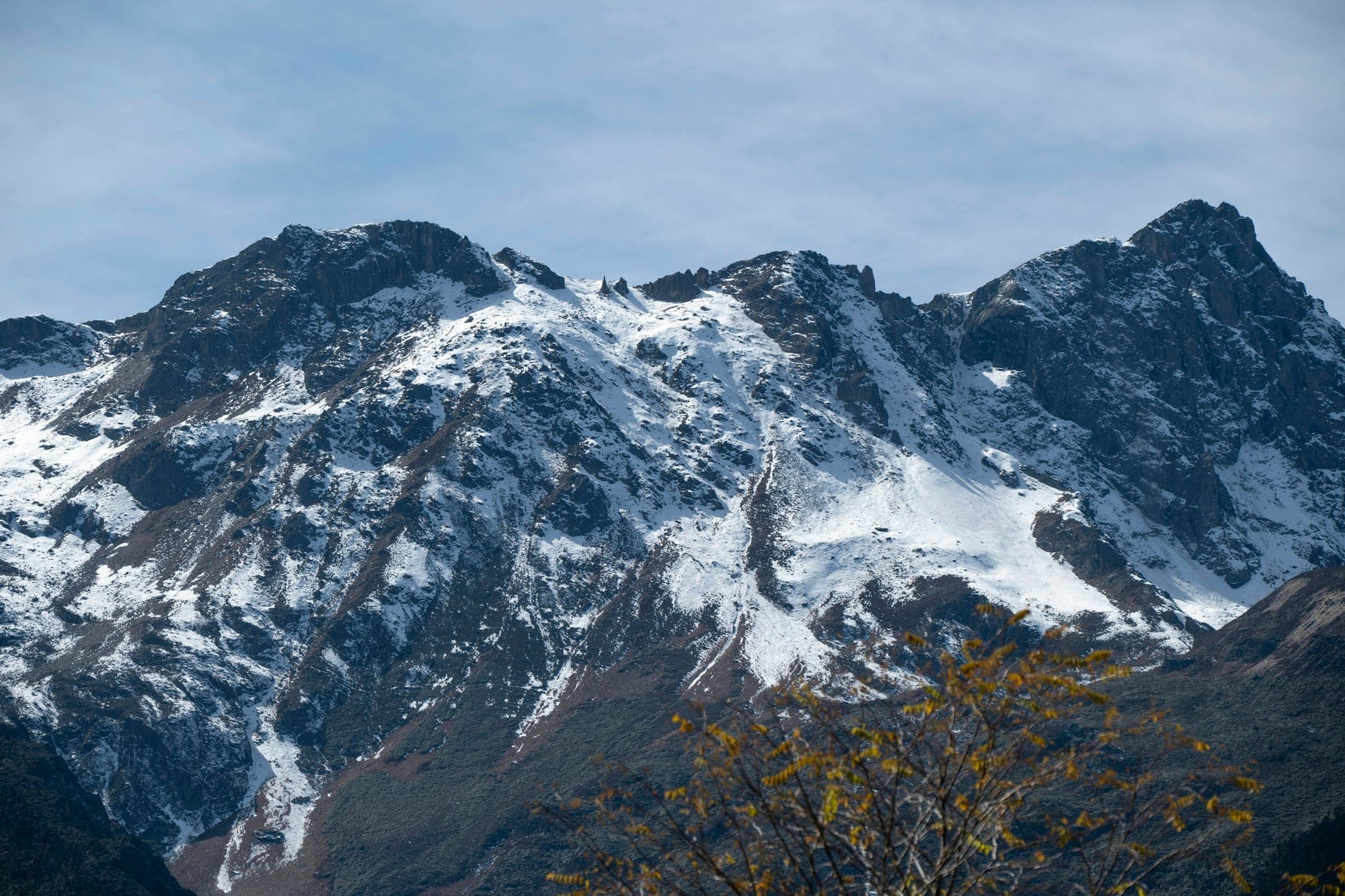
1. Glacier Park boardwalk and snow-peak close frames (~4,506–4,680 m). Glacier Park represents the ultimate high-altitude visual experience on Yulong Snow Mountain. Arriving at the upper cableway station at 4,506 meters, you step out onto a heavy timber boardwalk cantilevered over ancient glacial moraine directly beneath the towering, jagged limestone tooth of Shanzidou. The wooden staircase climbs approximately 174 vertical meters over several hundred meters of trail to reach the highest visitor platform at 4,680 meters. Independent photographers shoot with wide-angle lenses (16mm to 24mm equivalent) to emphasize the immense scale of the vertical rock towers soaring into the deep azure plateau sky, or utilize short telephotos (70mm to 105mm) to isolate jagged seracs, hanging snow fields, and wind-sculpted rock ribs. The visual contrast between raw, dark gray limestone and brilliant white snow requires careful exposure management: meter for highlights to prevent blowing out snow textures, and use a circular polarizer to deepen sky contrast. Note that during warm summer months (June through August), rising temperatures and rain can push the permanent snowline above 4,800 meters, leaving near-path areas characterized by exposed moraine and gray firn ice rather than deep powder. Manage your expectations accordingly, and move with deliberate, slow footsteps to manage the extreme elevation.
2. Big Cableway approach from Ganhaizi through alpine bands. The Glacier Park Cableway (commonly known as the Big Cableway) is an engineering marvel that ascends from the lower station in the Ganhaizi pine zone (approximately 3,356 meters) to the upper station at 4,506 meters. Spanning roughly 2,914 meters with a vertical lift of over 1,150 meters, the enclosed gondola ride takes roughly eight to ten minutes. Through clean cabin windows, independent photographers capture the rapid transition across distinct vertical vegetation zones: dense subalpine conifer forests yield to stunted alpine rhododendron shrubs, which give way to bare talus scree, vertical limestone cliffs, and finally the hanging glacier basin. Shoot looking upward at incoming cable cars suspended like tiny capsules against monumental vertical rock walls, or shoot looking back downward across the vast, flat expanse of the Ganhaizi basin as it recedes into morning haze. Keep your shutter speed relatively fast (1/500s or higher) to counteract cabin vibration.
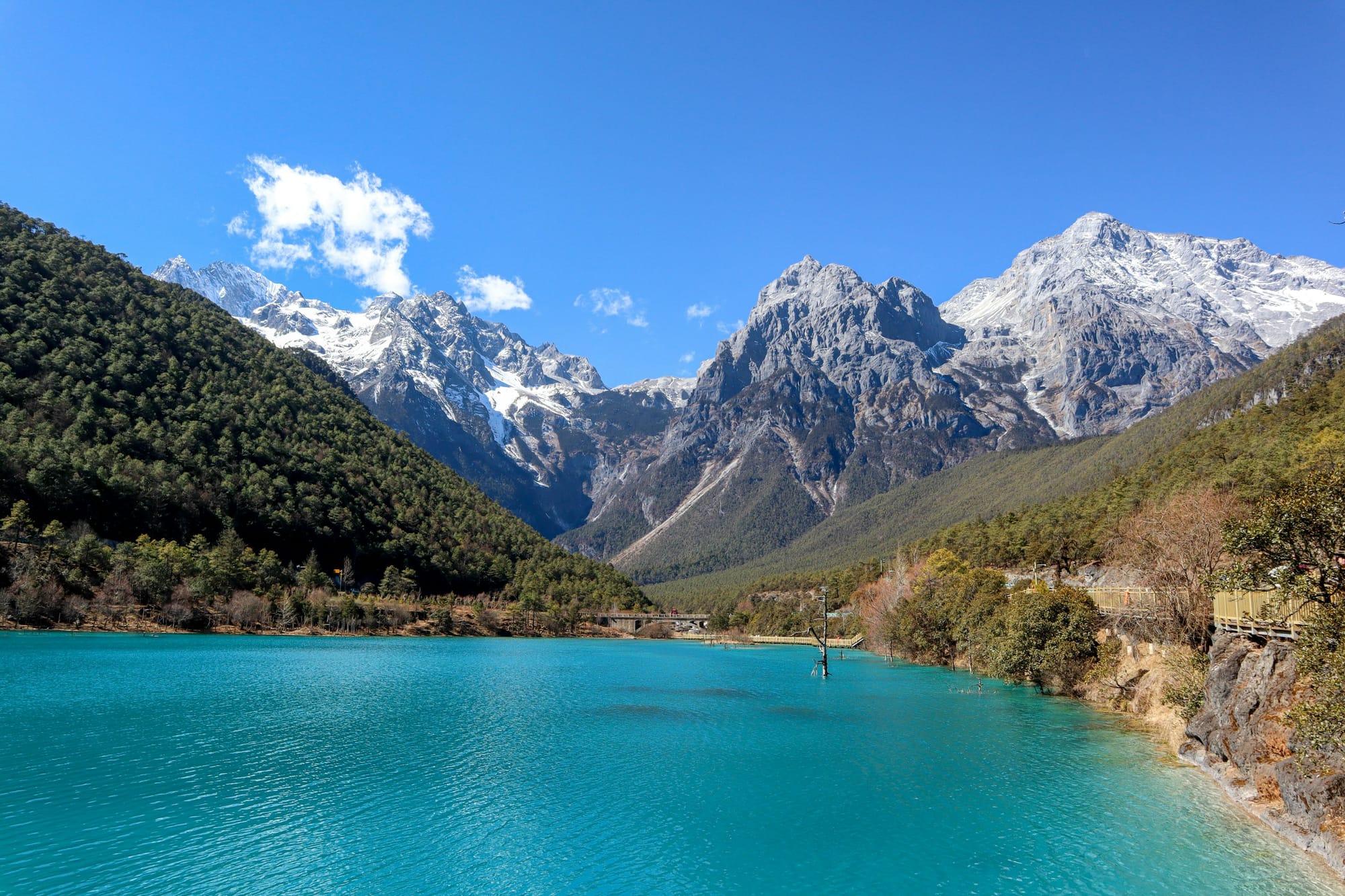
3. Blue Moon Valley turquoise pool reflections and peak backdrop. Situated in the deep river valley below the eastern slopes of the mountain at an altitude of approximately 2,800 meters, Blue Moon Valley (formerly known as Baishui River, or White Water River) offers some of the most vivid landscape color in southwestern China. Fed by melting snow and glacial runoff filtered through rich limestone and mineral deposits, the river forms a series of terraced pools, natural cascades, and broad, mirror-smooth ponds, including Tingtao Lake, Lanyue Lake, Jingtan Lake, and Wangchun Lake. The water shifts through striking hues of turquoise, aquamarine, and milky white depending on sun angle, mineral suspension, and sky reflection. On calm, windless mornings, the smooth surface of Jingtan Lake or Lanyue Lake provides an immaculate reflection of the snow-capped summit ridge framed by weeping willows and pine forests along the shoreline. Use a circular polarizing filter rotated carefully to balance surface reflection with the intense turquoise transparency of the underwater limestone terraces. A dedicated eco-shuttle links the main scenic transit hub directly to Blue Moon Valley; walk the wooden pedestrian paths along the water's edge and avoid crowded golf-cart stops to find secluded compositions.
4. Spruce Meadow forest glades and distant peak frames when open. Spruce Meadow (Yunshanping) is a tranquil subalpine clearing situated at an elevation of approximately 3,240 meters, reached via a dedicated medium-speed cableway roughly 1,000 meters in length. The meadow forms an intimate, undulating grassland enclosed by a dense primeval forest of towering Dragon spruce trees and alpine firs. A raised wooden boardwalk loops through the mossy forest floor and encircles the perimeter of the meadow. The photographic signature here is the stark contrast between the dark, vertical spires of the spruce trees in the foreground and the blinding white limestone mass of Yulong Snow Mountain looming directly overhead behind the forest canopy. In early morning, shafts of sunlight break through the mist between tree trunks, creating dramatic volumetric god rays. When operational, Spruce Meadow provides a gentle, low-altitude shooting environment with abundant oxygen, making it an ideal acclimatization stop or a peaceful alternative when high summit winds close the upper cableway. Always confirm current cableway operating status on the morning of your visit.
5. Yak Meadow thirteen-peak alpine panorama when open. Located on the northern shoulder of the massif at an elevation of approximately 3,700 meters, Yak Meadow (Maoniuping) offers the most expansive, unobstructed panoramic perspective of the entire Yulong Snow Mountain range. Reached via the northern cableway, this high alpine pasture features rolling grasses, weathered wooden livestock fences, and a wide-open vista framing all thirteen peaks stretching along the southern horizon. Because Yak Meadow is farther from the main visitor hub and requires a longer transit ride, it receives a fraction of the visitor volume seen at Glacier Park or Blue Moon Valley. Photographers utilize wide focal lengths (24mm to 35mm) to capture the sweeping pasture foreground leading the eye toward the jagged mountain spine, or telephoto lenses (100mm to 200mm) to compress the serrated profile of the thirteen peaks against dramatic cloud formations. Note that Yak Meadow and its dedicated cableway have undergone periodic infrastructure upgrades, safety maintenance, and seasonal closures; confirm live operational notices before planning your transit to this northern sector.
6. Ganhaizi meadow face-to-face massif and lake reflection. Ganhaizi (Dry Sea) is an expansive alpine meadow basin resting at an altitude of roughly 3,100 meters at the eastern foot of Yulong Snow Mountain, serving as the primary gateway and transit hub for the entire scenic area. Despite its historical name indicating a dried lakebed, Ganhaizi features lush subalpine grasslands, shallow seasonal wetlands, and scattered pine copses set against the sheer, uninterrupted eastern wall of the mountain. Standing in the open meadow, you face the colossal limestone massif rising more than 2,400 vertical meters directly from the plateau floor without intervening foothills. This massive verticality creates extraordinary photographic opportunities during morning hours when early light rakes across the limestone gullies and hanging cirques. Independent photographers position themselves near small seasonal ponds or wetland margins to capture low-angle mirror reflections of Shanzidou, using small apertures (f/8 to f/11) to maintain sharp detail from foreground alpine grasses to the distant icy summit.
7. Sunrise and golden light on peaks when conditions allow. Capturing the first rays of morning sunlight illuminating the eastern face of Yulong Snow Mountain — known across plateau China as "sunshine on golden peaks" — is one of the most coveted landscape exposures in Yunnan. During the crisp, dry autumn and winter months (typically late October through March), clear morning skies frequently allow direct dawn light to strike the highest limestone crags while the plateau basin below remains immersed in deep blue shadow. For ten to fifteen minutes, the white summit shifts from pale lavender to intense fiery amber and warm gold. Ganhaizi meadow provides the most direct and accessible vantage point for this phenomenon, as it faces directly west toward the mountain wall. Because the sunrise window occurs before regular scenic shuttles commence full operations, capturing dawn light requires arranging an early private departure from Lijiang via your LocalKey specialist, or staying at an approved lodge near the scenic area perimeter. We will not publish a rigid sunrise timetable or guarantee golden light: mountain weather in the plateau transition zone is inherently volatile, and thick morning cloud banks can easily obscure the summit crest. Monitor local meteorological forecasts the evening prior.
8. Soft mist and cloud days versus clear depth days, and city-side silhouettes. Mountain weather on Yulong Snow Mountain is defined by dramatic atmospheric contrasts. On moist, overcast days, particularly during the summer monsoon, shifting cloud layers roll across the valleys, wrapping the limestone cliffs in swirling white veils. These conditions offer exceptional opportunities for minimalist, high-contrast monochrome photography: dark, jagged rock spires emerging momentarily from sea-of-clouds inversions, lone spruce trees silhouetted against white voids, and mood-drenched water surfaces in Blue Moon Valley. Conversely, crisp post-cold-front days in late autumn and winter provide crystalline atmospheric transparency with unlimited visibility. On these clear depth days, photographers can step entirely outside the scenic area to shoot classic distant silhouette frames from Black Dragon Pool (Heilongtan Park) on the northern edge of Lijiang Old Town. From the southern shore of the pool, the elegant Suocui Bridge, ancient Deyue Pavilion, and weeping willows form an iconic cultural foreground framing the distant, snow-capped tooth of Shanzidou reflected in the calm pond waters. This classic composition requires no scenic-area ticket and provides a magnificent complement to your high-altitude shoot.
Logistics and independent movement around Lijiang. High-speed rail travelers arrive at Lijiang Railway Station in Yulong County, which operates frequent direct services connecting across the China Railway Kunming Group network to Dali (roughly 1.5 to 2 hours), Kunming (roughly 3 to 3.5 hours), and Shangri-La (roughly 1.5 hours). From Lijiang Railway Station or Lijiang Old Town, independent travelers reach the mountain through several reliable transit options: dedicated public scenic buses depart regularly from the city center toward the scenic area; licensed taxis and ride-hail vehicles provide direct point-to-point transit in roughly 40 to 50 minutes; and the modern Snow Mountain Sightseeing Train operates along a 20.7-kilometer track between the New Visitor Service Center and the Ganhaizi Xuechuan Visitor Port in approximately 35 minutes. All scenic-area admission tickets, Glacier Park cableway slots, and eco-shuttle transfers require advance real-name registration linked to your physical passport. Carry your original passport at all times, as automated turnstiles and manual checkpoint desks verify document details before granting access. Configure mobile digital payments via Alipay for foreigners prior to your excursion to ensure smooth transactions for refreshments, lockers, and park shuttles.
High-altitude hiking and environmental etiquette. While paved trails and railed wooden boardwalks facilitate movement across Glacier Park, Blue Moon Valley, and the meadows, alpine hiking above 3,000 meters requires strict discipline. Never venture off designated boardwalks: fragile alpine tundra and lichen communities take decades to recover from human trampling, and steep moraine slopes conceal loose scree and hidden rockfall hazards. Pack out all trash, including empty oxygen canisters and water bottles, and dispose of them in designated recycling bins at transit stations. Dress in adaptable layers, maintain steady hydration, and carry a compact microfiber cloth to wipe moisture and mist droplets from camera lenses.
What the official records show for a shoot day
Official sources establish clear operational and geographical boundaries that separate a genuinely self-paced Yulong Snow Mountain shoot from a commercial group photo tour, from the subtropical bamboo-raft waters of Yulong River in Yangshuo, from the separate UNESCO designations of the Three Parallel Rivers and Lijiang Old Town, from the Chengdu-side ridges of Xiling Snow Mountain, from the alpine valleys of Mount Siguniang, and from other major scenic massifs across China. Prices and opening hours change, so check the official site before you go. The table below synthesizes published data from the China Daily government portal, Yunnan provincial tourism bulletins, municipal transit records, and international conservation archives.
| Category | What the official record says | What you do on an independent shoot |
|---|---|---|
| Location & Administrative Level | China Daily Govt: Yulong Snow Mountain National Scenic Area & Geological Park, Yulong County, Lijiang, Yunnan; National 5A Tourist Attraction | Base in Lijiang Old Town or near Ganhaizi; confirm morning transport via road or sightseeing train to the visitor center. |
| Mountain Scale & Elevation | China Daily: 13 peaks, length ~35 km, width ~20 km; main peak Shanzidou ~5,596–5,600 m; southernmost glacier in Northern Hemisphere visitor zone | Prepare for high-altitude alpine photography; pack wide-angle and short telephoto lenses; plan for thin air and cold wind. |
| Glacier Park & Big Cableway | Scenic record: lower cable station Ganhaizi (~3,356 m) to upper terminal (4,506 m); wooden boardwalk ascends toward 4,680 m platform | Reserve timed cableway slot via official WeChat; walk boardwalk slowly; carry oxygen canister; turn around if AMS worsens. |
| Blue Moon Valley (White Water) | China Daily & scenic records: glacial runoff valley (~2,800 m); terraced turquoise pools (Jingtan, Lanyue, Tingtao, Wangchun); water safety | Ride internal eco-shuttle from Ganhaizi; use polarizing filter for pool clarity and peak reflections; maintain water-edge safety. |
| Spruce Meadow (Yunshanping) | Scenic record: subalpine clearing (~3,240 m) surrounded by Dragon spruce forest; dedicated cableway (~1,000 m); boardwalk loop | Take Spruce Meadow cableway when open; shoot intimate forest leading lines framing towering snow peaks above tree canopy. |
| Yak Meadow (Maoniuping) | Scenic record: northern alpine pasture (~3,700 m); panoramic vista framing all 13 peaks; dedicated northern cableway | Confirm live operational status; shoot sweeping pasture foregrounds leading toward the full serrated mountain crest. |
| Ganhaizi Meadow Basin | Scenic record: expansive eastern meadow basin (~3,100 m); transit hub; uninterrupted view of vertical eastern mountain face | Shoot low-angle grassland and wetland reflections facing Shanzidou; position early for dawn light when conditions allow. |
| Sightseeing Train Transit | Lijiang.cn: Snow Mountain Sightseeing Train; New Visitor Service Center to Ganhaizi Xuechuan Port (~20.7 km, ~35 min) | Confirm live train schedule; utilize modern rail connection from outside the park directly to the high mountain plateau. |
| Critical Sibling Distinction | Sibling page: Yulong River in Yangshuo, Guangxi (bamboo-raft karst corridor); this page: Lijiang alpine snow massif | Never confuse them: keep Yulong River as a Guangxi karst water shoot and Yulong Snow Mountain as an alpine glacier shoot. |
| UNESCO Designations Honesty | Not UNESCO List 1083 (Three Parallel Rivers) core day; not UNESCO List 811 (Old Town of Lijiang); Tiger Leaping Gorge separate day | Treat Three Parallel Rivers as regional drainage context and Lijiang Old Town as separate cultural day; do not conflate tickets. |
| High-Speed Rail Gateway | Gaotie.net: Lijiang Railway Station in Yulong County, China Railway Kunming Group; connects Dali, Kunming, Shangri-La | Arrive smoothly via high-speed train; transfer to scenic area via taxi, public shuttle, or private Private Guided vehicle. |
| Summer Weather Realities | Yunnan China Daily 2025: summer snowline rises above ~4,800 m; rain and dense fog common; near-path ice/snow thin | Expect dramatic cloud layers rather than deep winter powder in summer; pack waterproof camera rain sleeves and warm layers. |
| Real-Name Ticket Booking | Official WeChat mini-program: real-name timed passport reservations; capacity caps enforced across cableway routes | Book timed entry slots in advance; carry original physical passport for turnstile verification; do not buy scalped passes. |
| Ticket Prices & Hours | No permanent CNY price figure or fixed timetable is listed on this page; fees vary by season, cableway, and shuttle package | Check live ticket prices, cableway supplements, and operating hours directly on official scenic WeChat channels. |
| Photo-Tour Packages | A rigid commercial group coach with fixed stops, shopping lectures, and theatrical shows is a commercial group tour | Avoid packaged photo tours; travel independently on Independent or Private Guided arrangements with full schedule control. |
| Distinctions from Other Sites | Distinct from Xiling Snow Mountain ridges, Mount Siguniang valleys, Kunming Stone Forest, Mount Emei, Mount Hua, and Huangshan | Keep Yulong Snow Mountain as a dedicated Yunnan alpine snow-peak shoot; never compress multiple provinces into one coach rush. |
Sources for the table: govt.chinadaily.com.cn — Jade Dragon Snow Mountain (Yulong Snow Mountain); chinadaily.com.cn — China Travel Guide: Yunnan; yn.chinadaily.com.cn — Summer Visitor Tips for Yulong Snow Mountain; chinadaily.com.cn — Lijiang tourism five-day trip; lijiang.cn — Snow Mountain Sightseeing Train open notice; chinahighlights.com — Jade Dragon Snow Mountain Guide; eastchinatrip.com — Yulong Snow Mountain Travel Guide; gaotie.net — Lijiang Railway Station Hub; travelchinaguide.com — Lijiang attractions hub; whc.unesco.org — Three Parallel Rivers of Yunnan Protected Areas (List 1083); whc.unesco.org — Old Town of Lijiang (List 811); en.wikipedia.org — Jade Dragon Snow Mountain; trip.com — Yulong Snow Mountain attraction guide.
These verified records provide clear operational boundaries. A national 5A rating, a geological park designation, or an engineering cableway altitude of 4,506 meters is valuable factual context, but it does not dictate how you frame a shot or how long you wait for summit clouds to part. You select your vantage point, observe the changing alpine light, and take the exposure on your own terms.
How to shoot without a photo tour
Executing an independent photography shoot on Yulong Snow Mountain without booking an organized group photo tour requires methodical advance planning, realistic timing, and strict physiological awareness. The core rule matches our philosophy across every landscape guide on China photography trip 2026: select one focused geographic circuit, work the quiet hours of early morning and late afternoon, and avoid cramming too many disparate locations into a single exhausting day.
First, secure your scenic-area entry ticket and Glacier Park cableway reservation through official digital channels well before your travel date. Because park management enforces strict carrying capacities to protect alpine environments and prevent cableway overcrowding, Glacier Park cableway tickets are released on rolling schedules via the official scenic WeChat mini-program. Tickets are strictly tied to real-name identification; foreign travelers must input their full name and passport number exactly as they appear on their physical passport. If Glacier Park cableway slots are fully booked for your preferred morning, evaluate whether a combination of Spruce Meadow, Yak Meadow, and Blue Moon Valley suits your photographic objectives, or have your LocalKey specialist secure official reservations through verified institutional channels.
Second, understand the mountain's spatial layout and transit dynamics. Yulong Snow Mountain spans multiple elevations and sectors linked by internal eco-shuttles. The primary entry point is the Ganhaizi plateau basin (roughly 3,100 to 3,300 meters), home to the main tourist operations center, parking zones, and the terminal of the Snow Mountain Sightseeing Train. From Ganhaizi, internal shuttles transport visitors west to the Glacier Park lower cableway station, south toward Spruce Meadow, northeast toward Yak Meadow, and east into the Blue Moon Valley canyon. Attempting to visit all three cableway zones in a single day is an exhausting exercise that leaves minimal time for serious photography. The most balanced, rewarding single-day itinerary focuses on an early morning ascent to Glacier Park (catching the high-altitude morning light and beating midday cloud accumulation), followed by a leisurely descent to Blue Moon Valley for midday and afternoon water reflections amidst the pine forests.
Third, respect high-altitude pacing and cold weather. Rapidly ascending from Lijiang at 2,400 meters to Glacier Park at 4,506 meters leaves your body with zero time to acclimatize. When you step out onto the wooden boardwalk, your heart rate will accelerate and breathing will deepen. Do not rush up the stairs toward the 4,680-meter marker. Climb twenty to thirty steps, pause, take deep diaphragmatic breaths, and admire the rock formations. If you experience persistent dizziness, nausea, or severe headache, stop climbing immediately, inhale supplemental oxygen from your canister, and prepare to descend. The boardwalk is equipped with rest pavilions and emergency medical assistance stations. Never step over the wooden balustrades or climb onto the snow slopes; the terrain beyond the boardwalk consists of unstable moraine and steep glacial ice drops.
Fourth, distinguish Yulong Snow Mountain clearly from its regional and national counterparts. Do not confuse this Yunnan alpine snow massif with Yangshuo Photography 2026 (Yulong River raft corridor), which is the subtropical karst river corridor in Yangshuo, Guangxi. Do not confuse it with Xiling Snow Mountain Photography 2026, which is a Chengdu-side ski-platform and alpine ridge shoot in Sichuan. Do not confuse it with Mount Siguniang Photography 2026, which centers on three extensive hiking valleys beneath towering pyramid horns in western Sichuan. Do not confuse it with Kunming Stone Forest Photography 2026, which is a labyrinth of eroded karst limestone pillars in central Yunnan. Nor is it the golden summit cliff precipices of Mount Emei Photography 2026, the knife-edge granite ridges of Mount Hua Photography 2026, the pine and cloud-sea granite terraces of Huangshan Yellow Mountain hiking photography 2026, or the multi-tiered travertine lakes of Jiuzhaigou Photography 2026. Yulong Snow Mountain is high-alpine glacier, jagged limestone crest, and vivid turquoise river photography. Maintain clear boundaries on your itinerary.
Fifth, manage payments and logistical tools efficiently. Park dining facilities, beverage kiosks, luggage storage lockers, and oxygen supply stations across Ganhaizi and Blue Moon Valley process mobile payments via QR code. Setting up Alipay for foreigners with an international credit or debit card prior to your mountain excursion ensures seamless transactions at every counter. While major ticket offices can accept cash, digital mobile payments eliminate unnecessary delays and currency handling in high-altitude queues.
Above all, reject the premise that you need an organized photo tour to capture Yulong Snow Mountain. A group photo tour traps you in a rigid group timetable, wastes precious early morning light waiting for stragglers, forces unwanted shopping stops and theater visits, and rushes you through dramatic viewpoints. An independent shoot gives you complete freedom: you linger on the high boardwalk until a drifting cloud exposes the summit crags of Shanzidou, you explore secluded forest paths along Blue Moon Valley while tour groups cluster around tour bus stops, and you depart when you have achieved the exposures you came for.
LocalKey does not sell group photo tours. LocalKey does not sell a Yulong Snow Mountain photo-tour package. LocalKey does not sell group tours.
Is Yulong Snow Mountain photography the same as a mountain photo tour?
No. Yulong Snow Mountain photography is an independent landscape shoot: official scenic-area ticket access, self-paced exploration of Glacier Park, Blue Moon Valley, and alpine meadows, and complete freedom to wait for optimal light and atmospheric conditions. A mountain photo tour is a packaged commercial group tour featuring rigid timetables, crowded group movements, predetermined viewpoint stops, and commercial sales pitches. Independent shooting lets you work the mountain on your own schedule.
How is Yulong Snow Mountain different from Yulong River in Yangshuo?
They are completely different destinations in different provinces that share the English romanization "Yulong" in their names. Yulong Snow Mountain is an alpine snow-peak massif rising to 5,596 meters in Lijiang, Yunnan, featuring glaciers, high cableways, and turquoise snowmelt pools. Yangshuo Photography 2026 (Yulong River raft corridor) is a low-altitude subtropical karst river near Yangshuo, Guangxi, celebrated for hand-poled bamboo rafts, limestone karst cones, ancient stone bridges, and tranquil water reflections. They require completely different equipment, physical preparation, clothing, and travel logistics. Never conflate them on an itinerary.
How do foreigners book Yulong Snow Mountain tickets without speaking Chinese?
Foreign travelers can reserve official tickets and cableway slots through official scenic WeChat mini-programs that accept passport registration, through authorized international travel platforms, or through an independent travel planner managing an Independent or Private Guided itinerary. Every ticket requires real-name verification tied to your original physical passport. Ensure the name and passport number match your physical travel document exactly, and present your original passport at entry turnstiles. Always verify current rates on official scenic channels.
Do I need a group photography tour to shoot Glacier Park and Blue Moon Valley?
No. You do not need a group tour of any kind. The entire scenic area is equipped with clear bilingual signage, engineered timber boardwalks, safety balustrades, cableways, and dedicated eco-shuttle buses. An independent photographer simply purchases an official entry ticket and cableway slot, boards the designated shuttle, and explores the signposted boardwalks and valley trails independently. LocalKey does not sell group photo tours. Independent or Private Guided arrangements handle transport, ticketing, and hotel logistics while leaving your shooting time entirely in your hands.
Is Yulong Snow Mountain part of the Three Parallel Rivers UNESCO World Heritage Site?
No. While the Three Parallel Rivers of Yunnan Protected Areas (UNESCO World Heritage List 1083) encompasses a vast serial natural property across northwestern Yunnan where the Yangtze (Jinsha), Mekong (Lancang), and Salween (Nujiang) rivers run parallel through deep gorges, Yulong Snow Mountain National Scenic Area is managed as an independent national 5A scenic area and national geological park. Tiger Leaping Gorge, carved by the Jinsha River between Yulong Snow Mountain and Haba Snow Mountain, sits along its northwestern boundary as a distinct hiking corridor, but the scenic area visitor zone on the eastern slope operates under separate domestic administration.
Is this page the same as an Old Town of Lijiang cultural tour?
No. The Old Town of Lijiang (UNESCO World Heritage List 811) is an urban cultural heritage property located approximately 15 kilometers south of Yulong Snow Mountain, famous for traditional wooden courtyard architecture, stone bridges, and water canals. This page is dedicated strictly to alpine mountain landscape, glacier geology, and outdoor nature photography on the snow mountain. While photographers often capture fine distant views of the snow peaks from Black Dragon Pool near the Old Town, exploring the high massif itself is a distinct, physically demanding mountain excursion.
Is this page the same as Xiling Snow Mountain or Mount Siguniang photography?
No. Xiling Snow Mountain is an alpine ridge and ski-platform landscape located in Dayi County near Chengdu, Sichuan, characterized by lower-elevation ski slopes and the Yinyangjie weather line. Mount Siguniang is an extensive alpine valley system in Xiaojin County, western Sichuan, known for four massive pyramid peaks and multi-day backcountry valley treks. Yulong Snow Mountain is a compact, high-altitude limestone massif in northwestern Yunnan featuring rapid cableway access to over 4,500 meters and the southernmost glacier in the Northern Hemisphere visitor zone. See Xiling Snow Mountain Photography 2026 and Mount Siguniang Photography 2026.
Is this page the same as Kunming Stone Forest or Mount Emei photography?
No. Kunming Stone Forest is a geological labyrinth of vertical karst limestone pinnacles in central Yunnan, focusing on ancient seabed erosion and stone formations. Mount Emei in Sichuan is a mist-shrouded sacred Buddhist mountain featuring ancient monasteries, dense evergreen forests, and golden summit temples. Yulong Snow Mountain is raw alpine snow, glaciated rock ridges, and turquoise water pools. See Kunming Stone Forest Photography 2026 and Mount Emei Photography 2026.
What are the three cableways on Yulong Snow Mountain, and can I ride all three in one day?
The scenic area operates three distinct cableways: the Glacier Park Cableway (Big Cableway), which ascends to 4,506 meters on the main snow peak; the Spruce Meadow Cableway (Medium Cableway), which reaches a forested subalpine clearing at 3,240 meters; and the Yak Meadow Cableway, which climbs to an expansive northern alpine pasture at roughly 3,700 meters. Attempting to ride all three cableways in a single day is practically difficult and counterproductive for photography, as each requires separate shuttle transfers, waiting lines, and distinct weather windows. Independent photographers focus on Glacier Park paired with Blue Moon Valley, or dedicate a separate, relaxed excursion to Yak Meadow.
How serious is altitude sickness at Glacier Park, and should I carry oxygen?
Altitude sickness is a genuine physiological hazard at Glacier Park. The cableway transports visitors from roughly 3,300 meters at Ganhaizi to 4,506 meters in minutes, and the boardwalk climbs to 4,680 meters, where oxygen availability is roughly 60 percent of sea level. Mild symptoms such as lightheadedness, shortness of breath, and mild headaches are common. Carrying a portable oxygen canister is prudent, especially for travelers who have not spent several days acclimatizing in Lijiang (2,400 meters). Walk slowly, stay hydrated, avoid running, and descend immediately if you experience severe headache, persistent nausea, or disorientation.
What is the Snow Mountain Sightseeing Train, and how does it connect to the scenic area?
The Snow Mountain Sightseeing Train is a modern scenic rail connection opened in 2025 that runs approximately 20.7 kilometers between the New Visitor Service Center in Baisha Town and the Ganhaizi Xuechuan Visitor Port on the mountain plateau. With a travel time of roughly 35 minutes, the electric sightseeing train offers expansive panoramic windows framing the rising limestone peaks as it climbs toward the scenic area, providing an eco-friendly and scenic alternative to road shuttles and taxis.
What does summer look like at Glacier Park compared to winter?
During the summer monsoon (June through August), daytime temperatures are milder, but humidity, rain, and dense cloud cover are frequent. Higher temperatures can push the seasonal snowline above 4,800 meters, meaning that areas immediately adjacent to the Glacier Park boardwalk often feature exposed dark limestone and gray glacial ice rather than deep white powder. In contrast, late autumn, winter, and early spring (November through April) offer crisp, clear skies, cold sub-zero winds, and heavy snow cover across the peaks, providing classic deep-winter snow compositions.
Can foreigners photograph Yulong Snow Mountain in 2026 without speaking Chinese?
Yes. Signage across the visitor centers, cableway stations, shuttle boarding bays, and major boardwalks includes clear English translations. Digital navigation tools and translation applications function reliably throughout the scenic area. The essential operational requirements are securing your real-name ticket reservation in advance, carrying your original physical passport for turnstile verification, and having digital mobile payment configured. Language barriers do not prevent an independent traveler from executing an exceptional shoot.
Do I need a Chinese bank card to pay on a shoot day?
No. Foreign visitors can make everyday payments at scenic ticket windows, beverage kiosks, snack stalls, and shuttle counters using an international credit card linked to Alipay. Cash is still accepted at major service centers, but QR mobile payment is standard across the mountain. Set up your payment application before your shoot day to avoid delays.
Is this page a designation stack for its own sake?
No. Citations of National 5A Tourist Attraction status, National Geological Park classification, official elevation benchmarks, and distinctions from UNESCO World Heritage sites provide precise factual accuracy. They prevent travelers from being misled by vague commercial promotional materials or conflating separate scenic areas. This page is a practical, independent photography guide for travelers who want to experience Yulong Snow Mountain on their own schedule without joining a group tour.
How this fits in an Independent or Private Guided week
Yulong Snow Mountain should be positioned as a dedicated single-day alpine shoot within a broader Yunnan or southwestern China journey, rather than rushed through as an afterthought between city tours. Because the mountain rises just 15 kilometers north of Lijiang, it serves as the ultimate high-altitude landscape centerpiece after arriving via high-speed rail at Lijiang Railway Station. After completing an unhurried full-day shoot covering the morning Glacier Park ascent, midday Blue Moon Valley reflections, and afternoon meadow frames, you can transition smoothly to adjacent cultural and trekking corridors.
A well-balanced Yunnan itinerary typically begins with an arrival in Kunming, followed by high-speed rail travel to Dali for two days of lake and historic mountain photography. From Dali, high-speed rail reaches Lijiang in less than two hours. Spend your first day in Lijiang exploring the architecture of the Old Town and capturing distant snow-peak reflections from Black Dragon Pool while acclimatizing to the 2,400-meter plateau elevation. Dedicate your second day entirely to Yulong Snow Mountain: depart early for Ganhaizi, ascend to Glacier Park during the clear morning window, spend the afternoon walking the tranquil turquoise pools of Blue Moon Valley, and return to Lijiang for the evening. Travelers seeking deeper mountain trekking can extend their journey north along the Jinsha River to spend two days hiking the dramatic high trail of Tiger Leaping Gorge between Yulong and Haba snow massifs, before continuing by high-speed rail or private vehicle to Shangri-La. Hangzhou food remains paused throughout this plan — that belongs to Zhejiang Province, a completely different culinary and geographic world.
LocalKey operates two distinct service lanes for travelers seeking independent precision without group tour constraints:
Independent: We secure your hotel accommodations, book point-to-point high-speed rail and airport transfers, obtain guaranteed real-name scenic-area admission and cableway reservations tied to your passport, and provide a comprehensive digital roadbook. You receive continuous remote support via WhatsApp or WeChat from our operations desk, while navigating the trails and managing your camera gear entirely at your own pace.
Private Guided: You receive the complete Independent framework, augmented by a private dedicated car and driver for seamless regional transfers between Lijiang city, the Snow Mountain New Visitor Service Center, Ganhaizi, and regional high-speed rail stations, along with a knowledgeable private guide on the specific days you request one. A private vehicle waiting at Ganhaizi after a cold, exhausting day at 4,500 meters provides immense comfort, without ever dictating how long you spend waiting for light on an alpine boardwalk.
If you originally began your research searching for group tour options, consult our comparative analysis on China group tours or a custom trip to understand why self-paced independent travel consistently delivers superior photographic results.
LocalKey does not sell group photo tours. LocalKey does not sell a Yulong Snow Mountain photo-tour package. LocalKey does not sell group tours.
If you want the shoot booked, not a photo tour
LocalKey designs customized independent journeys across China for photographers, hikers, and independent travelers. We do not sell group tours. We do not operate commercial photo-tour coaches. We do not sell packaged group itineraries that herd photographers along crowded guardrails.
Our two service lanes remain clear:
Independent: Quality hotel reservations, verified high-speed rail and local transfers, guaranteed real-name mountain admission and cableway tickets, detailed route documentation, and active messaging support. You hike and shoot on your own schedule.
Private Guided: Bespoke itinerary planning, private vehicle transfers, verified reservations, and optional private mountain guiding on the days you want local navigational support.
LocalKey Travel is the independent travel brand of Guangdong Xingcheng International Travel Agency Co., Ltd. (established 2009).
Official sources
- govt.chinadaily.com.cn — Jade Dragon Snow Mountain (Yulong Snow Mountain), Lijiang (China Daily, 15 Jan 2026)
- chinadaily.com.cn — China Travel Guide: Yunnan (China Daily, 7 May 2025)
- yn.chinadaily.com.cn — Summer Visitor Tips for Yulong Snow Mountain Scenic Area (Yunnan China Daily, 12 Jul 2025)
- chinadaily.com.cn — Lijiang tourism five-day trip (China Daily, 14 Aug 2015)
- lijiang.cn — Snow Mountain Sightseeing Train open notice (Lijiang Municipal Notice, 2025)
- chinahighlights.com — Jade Dragon Snow Mountain: Tickets, Cableways, and Travel Tips (China Highlights 2026)
- eastchinatrip.com — Yulong Snow Mountain Travel Guide (East China Trip 2026)
- gaotie.net — Lijiang Railway Station Timetable and High-Speed Rail Hub
- travelchinaguide.com — Lijiang attractions hub
- whc.unesco.org — Three Parallel Rivers of Yunnan Protected Areas (UNESCO World Heritage List 1083)
- whc.unesco.org — Old Town of Lijiang (UNESCO World Heritage List 811)
- en.wikipedia.org — Jade Dragon Snow Mountain
- trip.com — Yulong Snow Mountain attraction guide (Trip.com)