Updated 8 October 2026 · LocalKey consultant team
Lijiang Old Town is a UNESCO World Heritage site (1997) in Yunnan made up of three parts — Dayan Old Town with the Black Dragon Pond, and the Baisha and Shuhe housing clusters — and we suggest giving it one full walking day plus a second morning for Baisha or Shuhe.
What is Lijiang Old Town, and why is it a World Heritage site?
Lijiang Old Town sits on the Lijiang plain at an elevation of 2,400 metres in Yunnan, positioned where strategic mountain passes cross the surrounding ranges. UNESCO inscribed the Old Town of Lijiang on the World Heritage List in 1997 under cultural criteria (ii), (iv), and (v), with a minor boundary modification confirmed in 2012.
From the 12th century onward, Lijiang served as an important goods distribution centre for trade between Sichuan, Yunnan, and Tibet, situated where the southern Silk Road joins the Ancient Tea and Horse Road. Over some 800 years, the settlement functioned as a centre of exchange between the Naxi, Han, Tibetan, and Bai peoples.
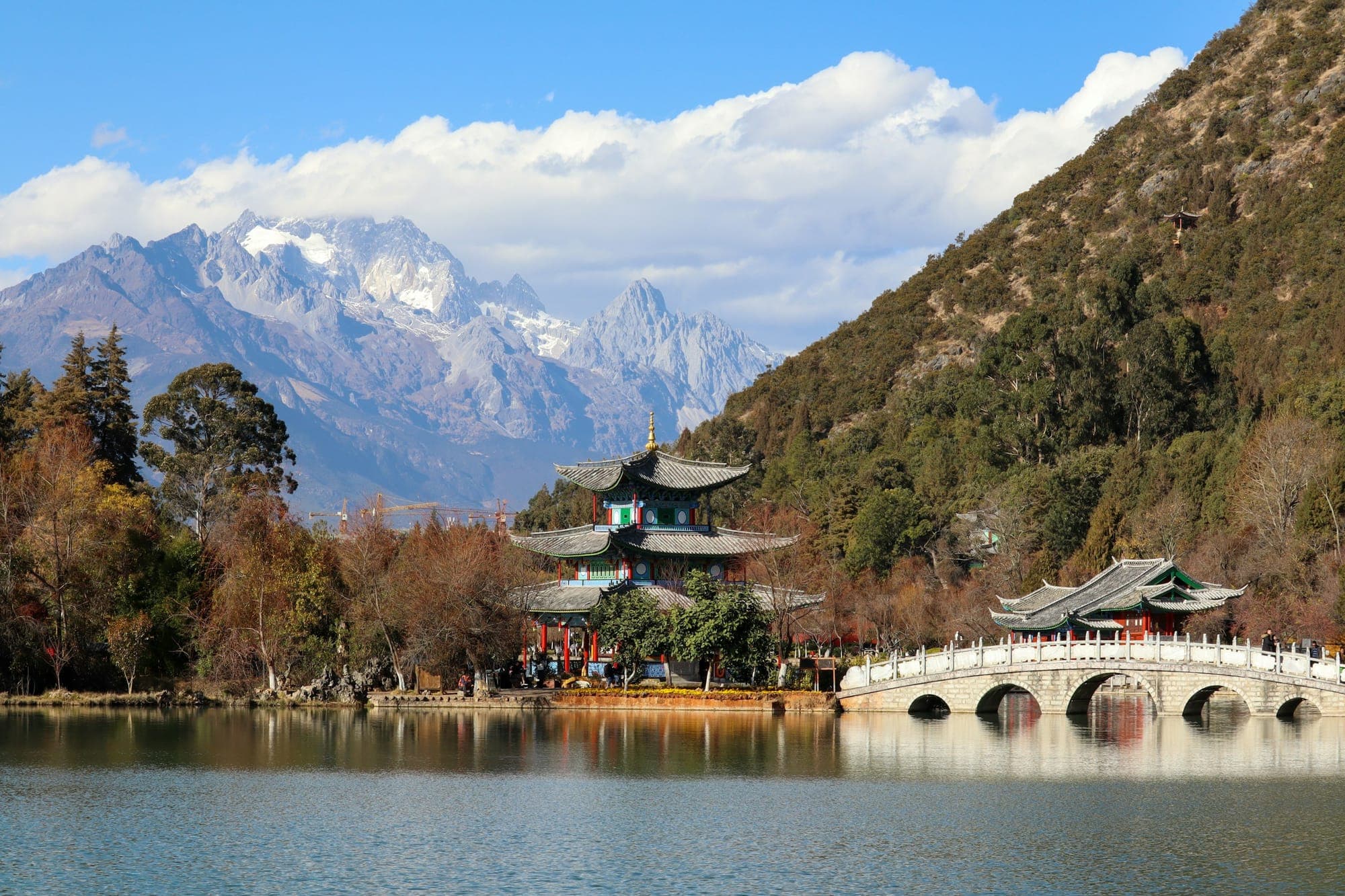
A central element of this inscription is the ancient, working water-supply system that winds through the settlement. To the north-west of the town, Yulong Snow Mountain feeds the rivers and springs that supply Heilong Pool (Black Dragon Pond), from which waterways feed a network of canals and channels through the town. The main street and alleys front onto the canals, with buildings and many bridges across them. Along with scattered wells and springs, Heilong Pool forms a complete water system for fire prevention, daily life, and production, and this ancient water-supply system still functions today.
UNESCO also recognized the physical survival and intangible culture of the settlement. The town kept its Ming and Qing layout and streetscape despite numerous earthquakes, including a big earthquake on 3 February 1996. Alongside the physical structures, UNESCO named the intangible heritage rooted in the community: Dongba culture, the Naxi script, and the building skills of traditional houses. For a focused look at the community's distinctive visual arts, see our dedicated guide to Lijiang Dongba painting.
How do Dayan, Baisha and Shuhe differ?
UNESCO protects three component parts under the Lijiang World Heritage inscription: Dayan Old Town (including Black Dragon Pond), established in the Ming dynasty; the Baisha housing cluster, established earlier during the Song and Yuan dynasties; and the Shuhe housing cluster, located 4 km north-west of Dayan.
| Part | What UNESCO records | Distance from Dayan | What we suggest |
|---|---|---|---|
| Dayan Old Town (incl. Black Dragon Pond) | Established in the Ming dynasty as a commercial centre; includes Lijiang Junmin Prefectural Government Office, Yizi pavilion and Guabi Tower from the former Mujia compound, and Yuquan architectural structures in Heilongtan Park; numerous two-storeyed, tile-roofed, timber-frame houses | 0 km | We suggest spending your full walking day here exploring the canals and historic timber architecture early in the day. |
| Baisha housing cluster | Established earlier during the Song and Yuan dynasties; houses arranged on a north-south axis around a central terraced square; religious complex with halls and pavilions containing over 40 paintings from the early 13th century depicting Buddhism, Taoism and Naxi life, with Bai cultural elements | 8 km north | We suggest visiting on a second morning to see the 13th-century religious paintings and walk the north-south axis. |
| Shuhe housing cluster | Housing cluster inscribed as a component of the World Heritage property | 4 km north-west | We suggest Shuhe as an alternative second morning if you prefer a quieter cluster closer to Dayan. |
For a second morning, we suggest Shuhe if you prefer an unhurried visit close to Dayan, or Baisha if your priority is the early religious paintings.
How should you plan a day walking Lijiang Old Town?
We suggest spending your full walking day in Dayan Old Town, and we usually plan an early start along the canal streets. Following the waterways from Heilong Pool into the heart of the settlement connects the historic streetscape directly to the ancient water-supply system.
We usually plan the morning around Heilong Pool, where the water feeding the town gathers, and then follow the channels into the surrounding lanes. Walking through Heilongtan Park allows you to view the historic setting at an unhurried pace before taking the alleys where buildings and many bridges cross the flowing canals.
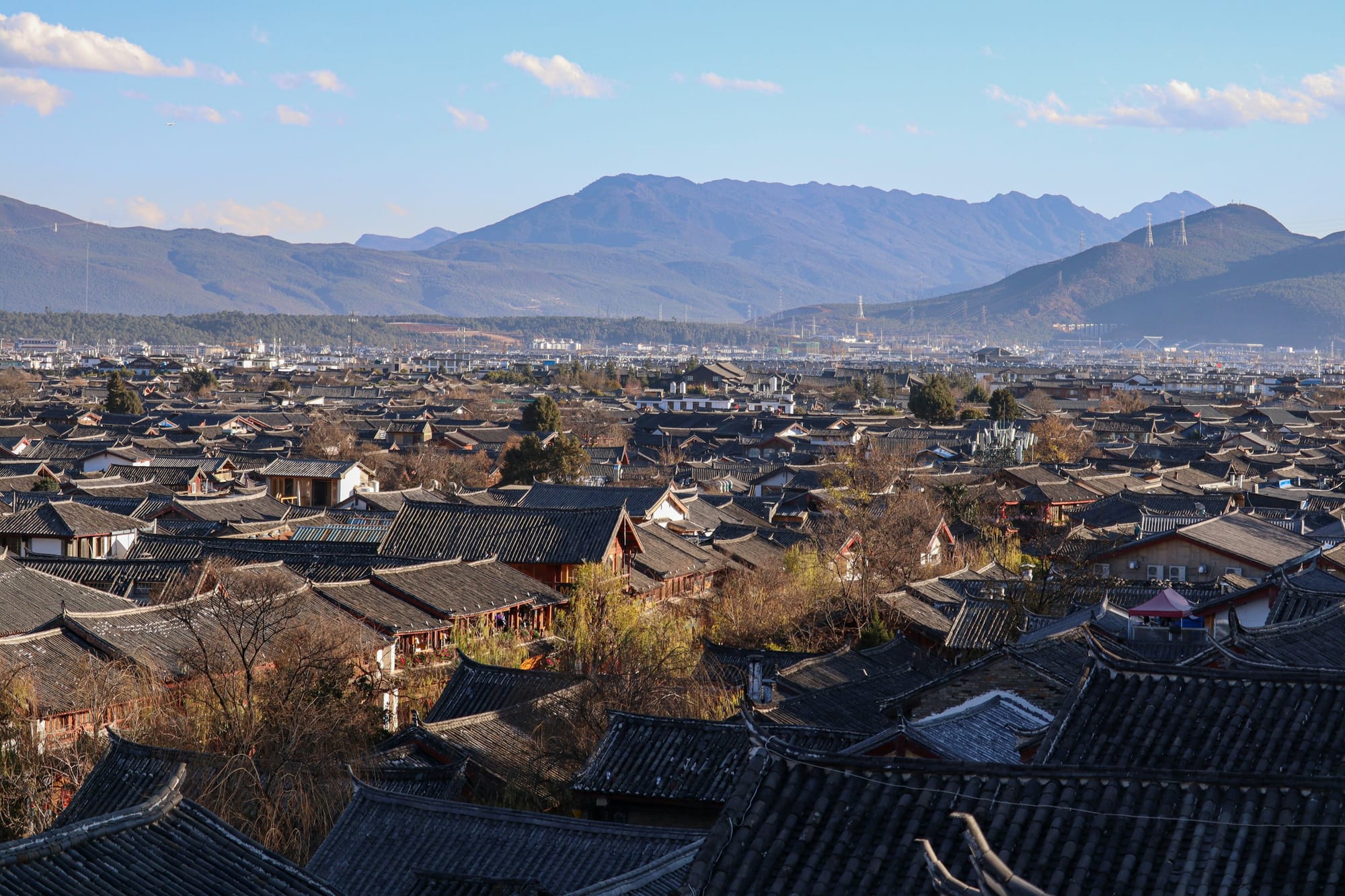
In the middle of the day, we suggest visiting the administrative landmarks cited in the UNESCO records, such as the Lijiang Junmin Prefectural Government Office alongside the Yizi pavilion and Guabi Tower. For a slower afternoon, we suggest wandering through the residential lanes to observe the two-storeyed, tile-roofed, timber-frame houses whose layout and streetscape survived numerous earthquakes, including the 1996 earthquake.
How long should you spend in Lijiang Old Town, and what can you pair it with?
For visiting the World Heritage site, we suggest one full walking day for Dayan plus a second morning for Baisha or Shuhe.
This pacing allows you to explore the canals, bridges, and timber architecture of Dayan on foot during your first day, while reserving a second morning for either the early 13th-century paintings in Baisha or an unhurried visit to Shuhe. To see how the old town connects with the broader city and surrounding landscape, consult our Lijiang page and our regional Lijiang destination guide. For travellers interested in mountain trails and gorge scenery, our guide to Tiger Leaping Gorge hiking explains the hiking route.
To follow the broader heritage corridor across the province, we recommend our Yunnan culture and landscape 10-day tour from Kunming to Dali, Lijiang, and Shangri-La. For an overview of regional destinations across Yunnan, see our guide to Yunnan China.
Can foreign visitors explore Lijiang Old Town on their own?
Foreign travellers can explore Lijiang Old Town on foot independently, and LocalKey can plan and book the journey for visitors who prefer full local coordination. The canal network through Dayan makes orientation straightforward, as waterways flow directly alongside the streets and alleys.
Visiting Yunnan is supported by national immigration policies: under the National Immigration Administration 240-hour visa-free transit policy, Yunnan Province is one of 24 permitted provincial-level areas where eligible travellers (nationals of 57 countries flying on to a third country or region) can stay for up to 10 days (240 hours) without a visa (see our 240-hour visa-free China guide).
While independent walking is straightforward, LocalKey can arrange your itinerary, private transfers between Dayan, Baisha, and Shuhe, and on-the-ground support so you can focus entirely on experiencing the heritage of the town.
Plan your trip with LocalKey
LocalKey can arrange your journey to Lijiang Old Town and across Yunnan, delivering your own China trip — planned, booked and backed. Whether you choose Independent or Private Guided, we build flexible journeys tailored to your interests:
- Independent: You travel on your own with the LocalKey app and 24/7 backup. There is no full-time guide on any day; a local guide, airport pickup, or a private car and driver are available as optional add-ons on demand whenever you need extra support.
- Private Guided: You travel with a dedicated English-speaking private guide and a private car throughout the trip, providing seamless door-to-door coordination, deep cultural commentary, and effortless transit between Dayan, Baisha, and Shuhe.
For families travelling with children or multi-generational groups who want well-paced walking days and comfortable transfers, we suggest exploring our tailored China family tours. Every route is supported by a 1:1 destination specialist and continuous 7×24 WeChat or WhatsApp customer service, giving you complete reassurance from arrival to departure. If you are exploring broader options across the country, discover our full portfolio of private China tours.
Sources
- UNESCO World Heritage Centre — Old Town of Lijiang — verified_on 2026-10-08
- National Immigration Administration — Visa-Free Transit Policies, 20 August 2026 — verified_on 2026-10-08
- National Immigration Administration — 240-hour transit permitted areas, 17 December 2024 — verified_on 2026-10-08