Updated 19 October 2026 · Frank Zhang
Visit the Yungang Grottoes from Datong in Shanxi, and build your day around the Five Caves of Tan Yao and the long cliff of Buddhist carvings made in the Northern Wei period. This page gives you the official record, a sensible route from the city and a pacing plan.
What are the Yungang Grottoes?
The Yungang Grottoes are Buddhist cave carvings in Datong City, Shanxi Province, cut during the Northern Wei period. UNESCO calls them the outstanding achievement of Buddhist cave art in China.
Two official sources describe the site, and their figures do not always match. The table below shows what each record says, with UNESCO and the National Cultural Heritage Administration (NCHA) shown separately wherever their wording differs.
| Item | What the official record says | Source (UNESCO or NCHA) |
|---|---|---|
| Location | 16 km west of Datong city, at the southern foot of Wuzhou Mountain, stretching about 1 km east to west | NCHA |
| Period | Northern Wei. UNESCO: mid-5th to early 6th century AD. NCHA: 460–525 | UNESCO; NCHA |
| Caves and niches | UNESCO: 252. NCHA: 254 of all sizes, including 45 major caves | UNESCO; NCHA |
| Statues | UNESCO: 51,000. NCHA: more than 51,000 | UNESCO; NCHA |
| Carved area | 18,000 sq m | UNESCO |
| Key group | Five Caves of Tan Yao | UNESCO |
| Listings | UNESCO: State Priority Protected Site, 1961. UNESCO and NCHA: World Heritage, 2001, criteria (i)–(iv) | UNESCO; NCHA |
The counts of caves and statues differ between the two records. We suggest quoting both when you plan or write about your visit, rather than choosing one. Treat the numbers as a sense of scale, not as a checklist to finish.
UNESCO says the grottoes were built with Imperial instructions during the Northern Wei Dynasty, reflecting the will of the State in Buddhist belief. NCHA describes Yungang as China's first cave site carved under imperial authorization, reflecting the political ambition of the Northern Wei. UNESCO adds that the site is managed by the Yungang Grottoes Research Academy.
The protected property covers 348.75 ha, with a buffer zone of 846.81 ha. UNESCO names water seepage, rain erosion and weathering as the major threats. We suggest treating that as a reason to follow the site's own rules and keep your hands off the stone. Datong, the city the site belongs to, is the natural base for the visit.
Where are the Yungang Grottoes and how do you get there?
We suggest reaching Datong by rail, then taking a taxi or a ride-hailing car out to the grottoes, which sit west of the city. An optional private car and driver can handle that transfer if you would rather have it arranged in advance.
Book the rail leg to Datong through 12306 with your passport. Our page on 12306 train tickets for foreigners covers the booking process. We suggest booking the train before you fix the rest of the Shanxi route, so the other days can move around it.
For the run out to the grottoes, we suggest a taxi or ride-hailing car from the city. Decide how you will get back before you set out, so the end of the day is not left to chance. Keep the site name from this page saved on your phone, or ask your hotel to mark the grottoes on a map app, so you can show the screen to a driver.
We suggest setting up mobile payment before you leave home. Our page on Alipay for foreigners covers how. Carry your passport, a charged phone with offline maps and a screenshot of the site name. We do not list opening hours or entry arrangements here, so ask us to check them shortly before your date.
What should you look for at Yungang?
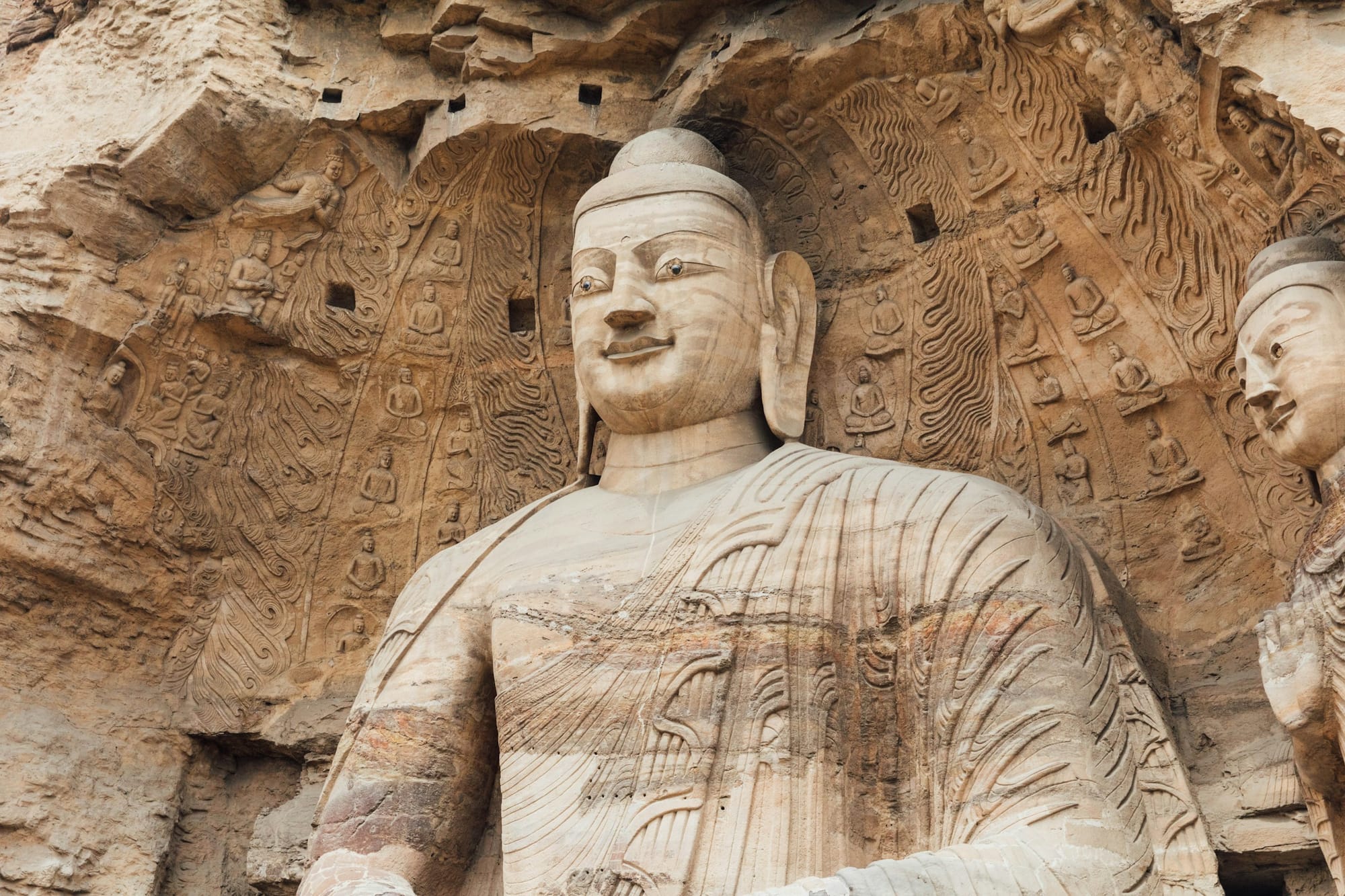
Start with the Five Caves created by Tan Yao, which UNESCO calls a classical masterpiece of the first peak of Chinese art. Then look at how foreign and Chinese ideas meet in the carving.
UNESCO notes a strict unity of layout and design across the Five Caves. We suggest making them your first stop if the site lets you, so that you read the rest of the cliff against that reference point. Take a few minutes in front of each cave before you reach for your camera.
UNESCO says Yungang was influenced by Buddhist cave art from South and Central Asia but interpreted it with distinctive Chinese character and local spirit. It adds that Yungang had a far-reaching impact on Buddhist cave art in China and East Asia. NCHA calls it the cave temple with the strongest western style in China, mixing Indian and Central and West Asian art elements with Greek and Roman architectural forms, decorative patterns and facial features. We suggest comparing faces, borders and carved patterns from one cave to the next, and noting what looks imported and what looks local.
The eaves of the wooden pavilions in front of some caves keep the character of the times they were built. We suggest looking up as well as in. NCHA names the Cave 20 plaza in a photo caption, and we suggest using it as a landmark for orientation and a place to regroup.
How long to spend: we suggest allowing a full morning or afternoon at the grottoes, and a whole day if you like to read the carvings slowly or take photographs. We suggest keeping the rest of that day free, because the carvings reward slow looking and tired eyes miss detail. Bring comfortable shoes, water, layers for sun or rain and a power bank. Leave the next site for another day rather than squeezing it into the evening.
Is Yungang the same as Longmen, Mogao or Dazu?
No. Yungang is a Shanxi site near Datong, while Longmen is at Luoyang, Mogao is at Dunhuang and Dazu is in Chongqing.
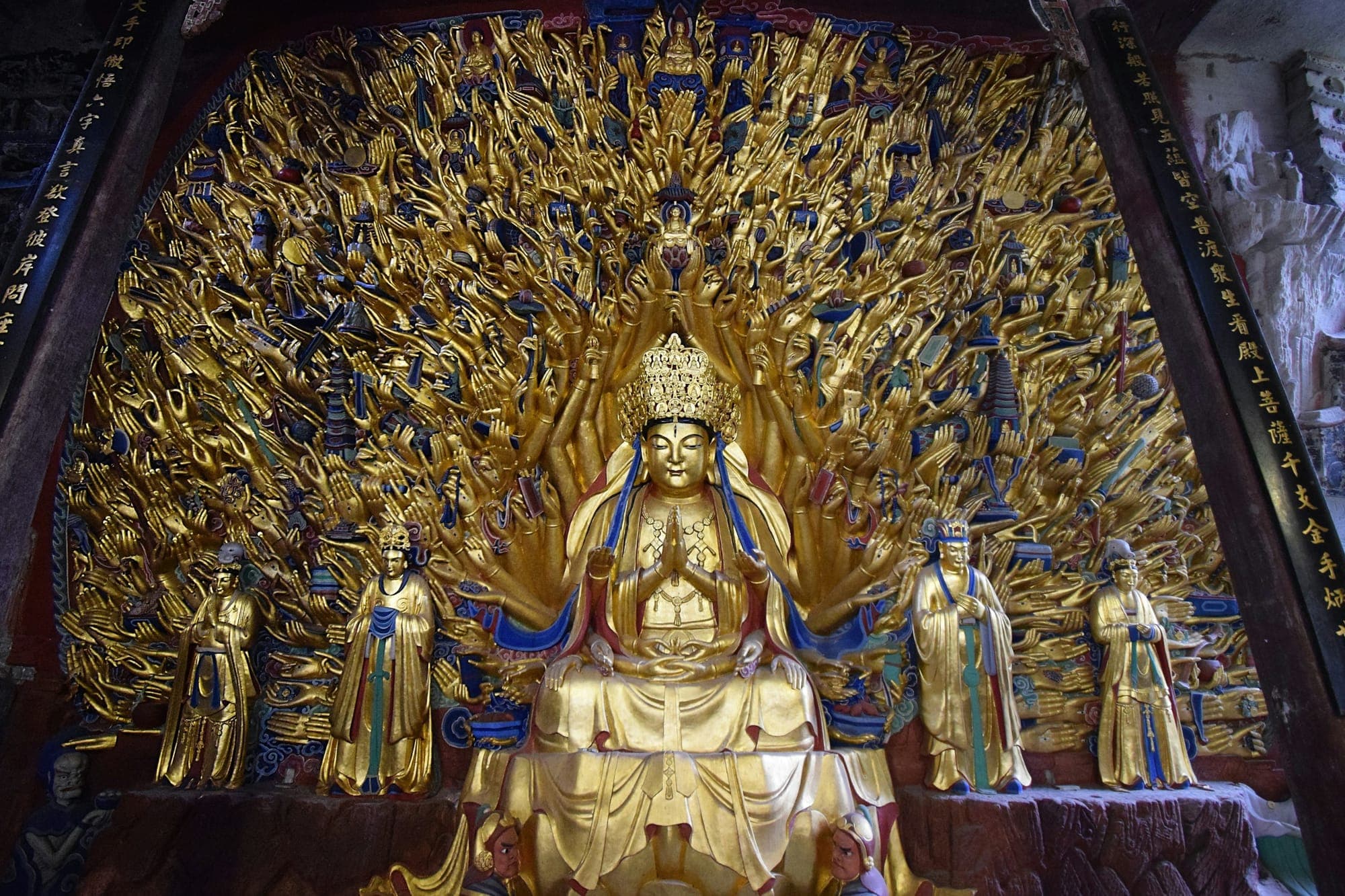
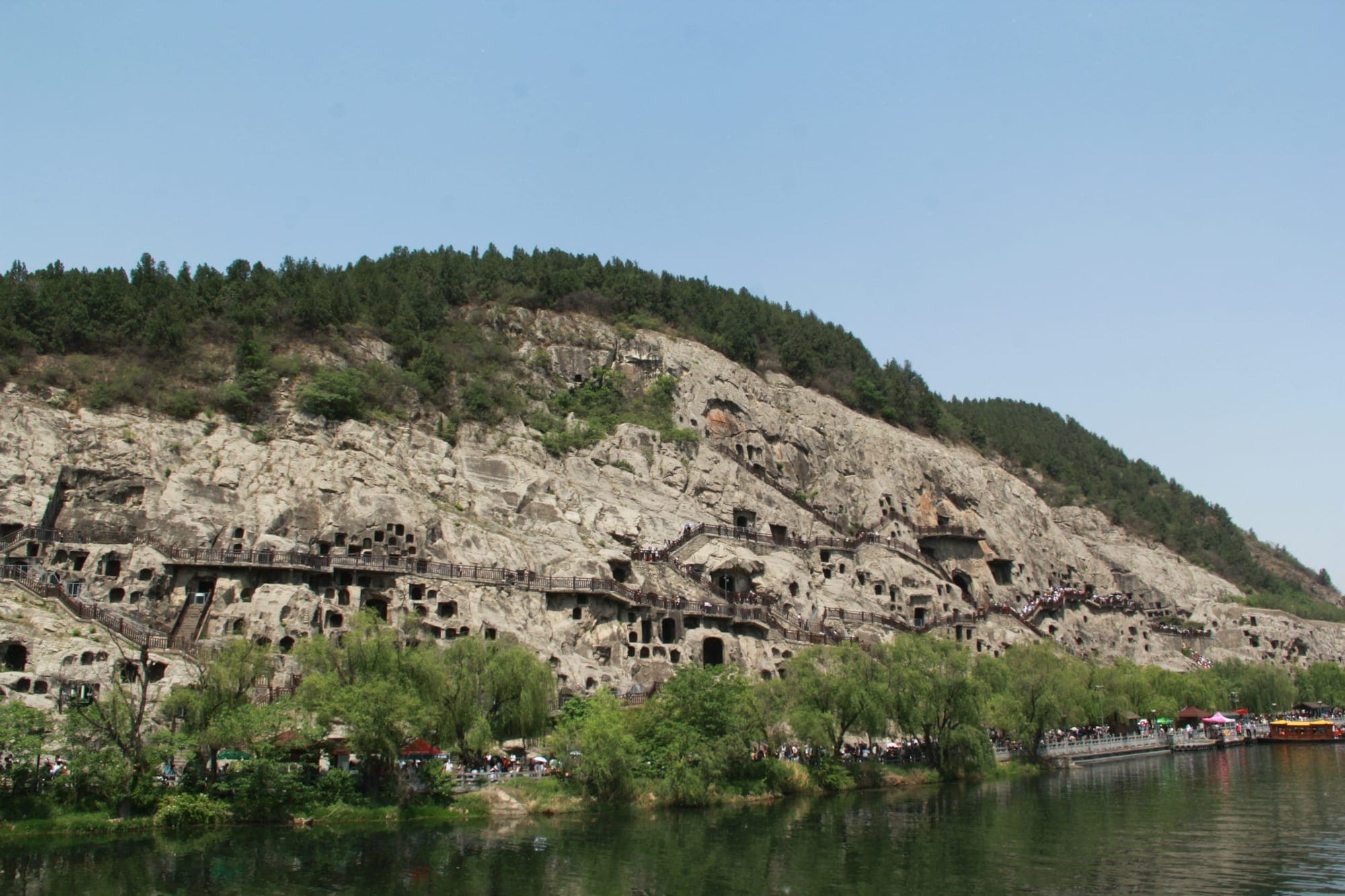
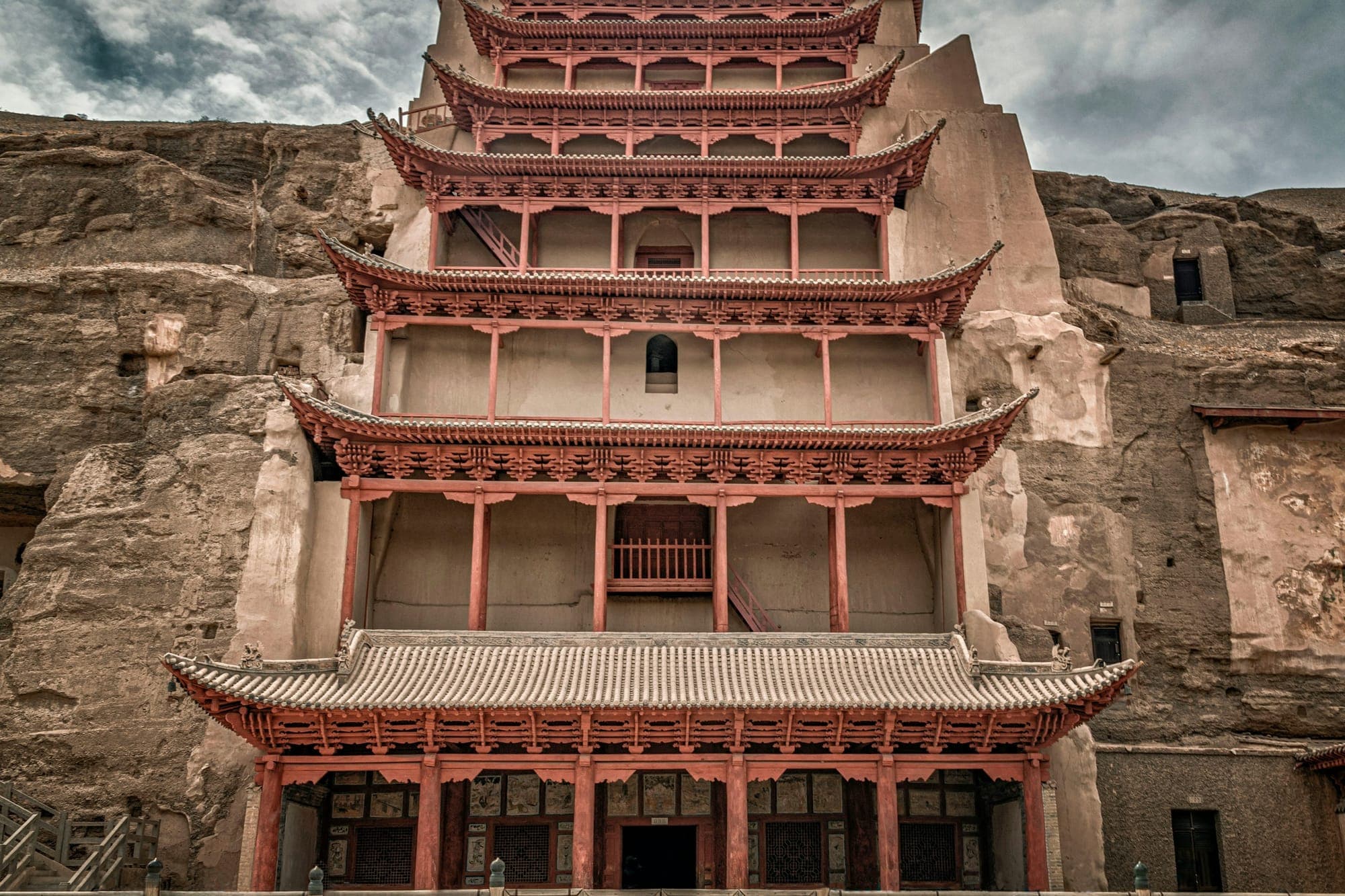
Our pages cover each place separately: Longmen Grottoes in Luoyang, Mogao Caves in Dunhuang and Dazu Rock Carvings in Chongqing.
Because the sites sit in different cities, we suggest planning each as its own journey with its own day. Do not try to fold them into a single circuit. Use the sister pages to decide which one fits your route, not to compare them point for point.
Within Shanxi, Pingyao is the other page we link from here. We suggest giving it a separate day from Yungang so that neither visit is rushed. If cave art is the theme of your trip, we suggest reading this page first, then choosing one further site rather than trying to see all three.
How does Yungang fit an Independent or Private Guided trip?
Yungang works well as one day inside an Independent or Private Guided trip through Shanxi. With Independent you travel on your own with the LocalKey app and 24/7 backup, with no full-time guide on any day, while Private Guided gives you an English-speaking private guide and a private car throughout.
On an Independent trip, we suggest adding a local guide for the Yungang day, because the carvings are easier to read with explanation. We also suggest a private car and driver for the transfer from Datong. Both are optional add-ons, and you can take either, both or neither.
On a Private Guided trip, your guide and car stay with you, so the main planning question is pacing. We suggest telling us whether you want a slow morning with the first group of caves or a wider look along the cliff. Once you have decided, share the plan with us before you travel so the rest of the day can be built around it.
For a Shanxi route, we suggest giving Yungang a day of its own and keeping the surrounding days light. Fans of the game can also see Black Myth: Wukong in Shanxi for related locations.
Plan your trip with LocalKey
LocalKey can arrange a Yungang day inside our private China tours, which give you your own China trip, planned, booked and backed by one team.
- Independent: you travel on your own with the LocalKey app and 24/7 backup, with no full-time guide on any day; a local guide, airport pickup or a private car and driver are optional add-ons.
- Private Guided: an English-speaking private guide and a private car throughout.
To talk with a 1:1 specialist, reach us any time, 7×24, on WeChat or WhatsApp. LocalKey does not sell group tours.
Sources
- UNESCO World Heritage Centre — Yungang Grottoes — verified_on 2026-10-19
- National Cultural Heritage Administration — Yungang Grottoes — verified_on 2026-10-19