Updated 19 October 2026 · Frank Zhang
To visit Pingyao Ancient City in 2026, plan one unhurried walking day inside the walls and decide separately on temples. UNESCO's listing covers the walled city plus two temples outside it.
What is Pingyao Ancient City?
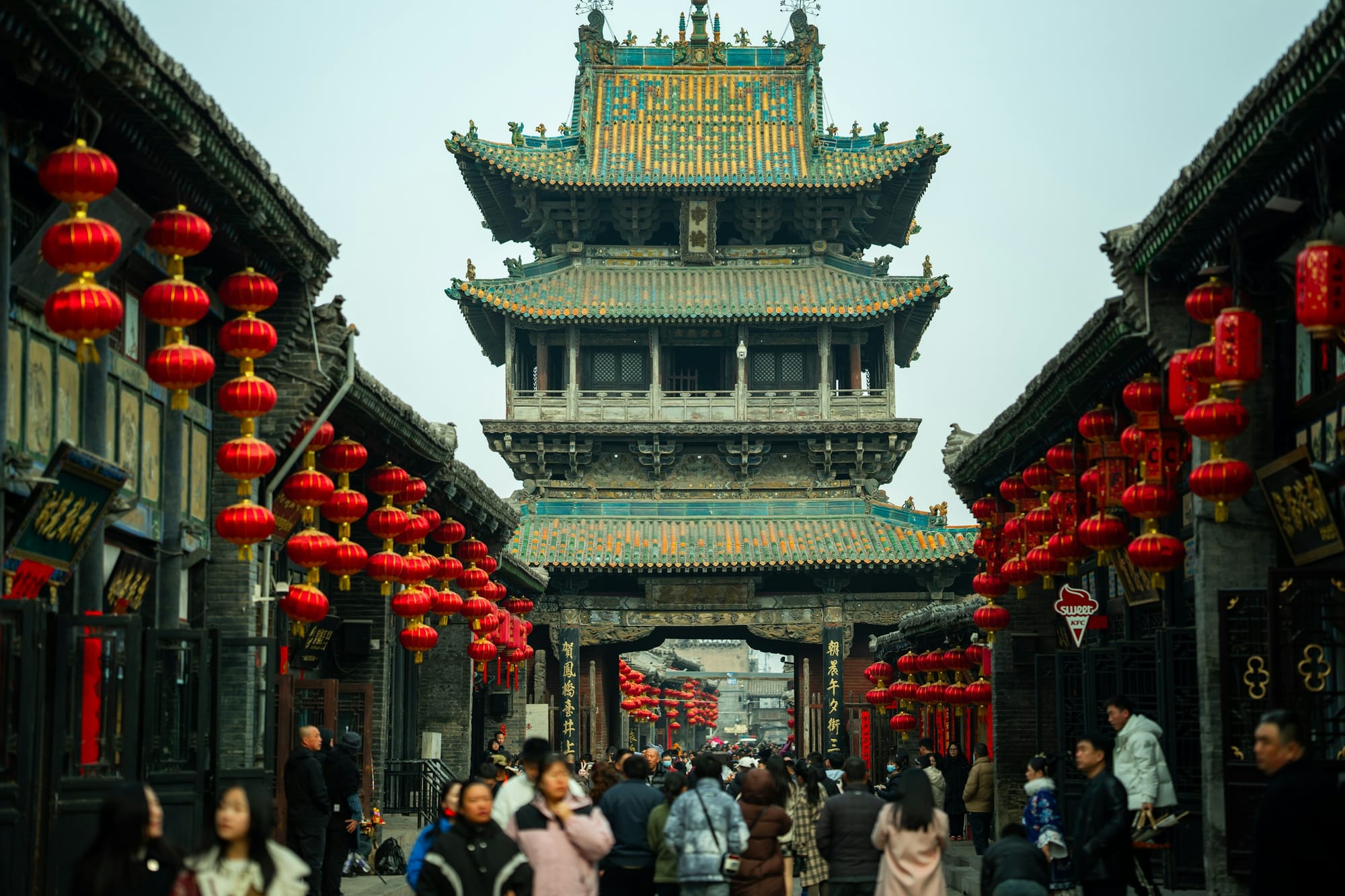
Pingyao Ancient City is a well-preserved ancient county-level city in Pingyao County, central Shanxi Province. It retains the historic form of county-level cities of the Han people in Central China.
The city was founded in the 14th century, and the official description calls it a complete building complex of ancient walls, streets and lanes, shops, dwellings and temples. The National Cultural Heritage Administration (NCHA) calls it an outstanding example of a Han Chinese city of the Ming and Qing period that has kept all its features.
Pingyao is in Shanxi, while Xi'an is in Shaanxi, a different province. The names look similar in English, so check the province before you book transport or hotels. For the Shaanxi side of a north-China route, see our Xi'an Culture 2026 page.
We suggest reading Pingyao slowly rather than treating it as a list of sights. The interest lies in the street fabric: how a shopfront sits beside a dwelling, how a lane opens onto a larger street, and how the walls frame it all. Arrive with that mindset and the day feels far less rushed.
For an overview and trip-planning options, see our Pingyao destination page before you fix your dates.
What does the UNESCO listing include besides the walls?
The listing covers the walled area and two temples outside the city, which together form a serial property. The table below sets out the main figures and where each part sits.
| Item | What the official record says | Source (UNESCO or NCHA) |
|---|---|---|
| Location | Pingyao County, central Shanxi Province; Jinzhong City | UNESCO; NCHA |
| Inscription | 1997, criteria (ii), (iii), (iv) | UNESCO; NCHA |
| Walled city | Founded in the 14th century; 225 ha; 2.25 sq km inside the wall | UNESCO (founding, 225 ha); NCHA (2.25 sq km) |
| Street plan | 4 main streets, 8 small streets, 72 lanes | NCHA |
| Shops and dwellings | Nearly 4,000 existing shops and traditional dwellings | UNESCO |
| Shuanglin Temple | 6 km southwest of the county seat; more than 2,000 existing painted sculptures from the Ming and Qing dynasties | UNESCO |
| Zhenguo Temple | 12 km northeast of the county seat | UNESCO |
UNESCO records the property at 245.62 hectares, with a buffer zone of 95.99 hectares. The city was designated a National Historical and Cultural City by the State Council in 1986, and it is managed by the Management Committee of World Cultural Heritage-Ancient City of Ping Yao under the Regulations on the Protection of the Ancient City of Ping Yao.
We suggest reading the table as a planning tool rather than a checklist. The two temples are part of the listing but sit apart from the walled city, so decide on each one separately. The shops and dwellings are part of the walled area you will already be walking, so they need no separate planning.
How should you plan a day inside the walls?
We suggest giving the walled city one unhurried walking day, with the main streets as your spine and the small streets and lanes as detours. Start early and keep the afternoon flexible.
The record describes the shops and dwellings as grand in form and exquisite in ornament, and UNESCO records Pingyao as a financial center for the whole of China from the 19th century to the early 20th century. We suggest looking at doorways, carved detail and building fronts as you walk, rather than hunting for one named address.
For pacing, walk one main street while your energy is highest, then cut across on a small street or lane rather than retracing your steps. Plan a rest stop roughly every hour, and sit down properly at least once in the middle of the day. In the afternoon, pick a handful of lanes to follow slowly and leave the rest for another visit.
Wear comfortable, grippy shoes, and carry water, a light layer, sun protection and a power bank for your phone. Bring your passport, and set up mobile payment before you arrive; our Alipay for Foreigners page explains how.
If you can, stay at least one night inside or near the wall rather than making Pingyao a rushed day trip, so you can walk the lanes in both morning and evening light. Let the evening end wherever you happen to be. For another example of a walking day through old lanes, see our Beijing Hutong Walk 2026 page.
How do Shuanglin and Zhenguo Temples fit into a visit?
Shuanglin Temple lies southwest of the county seat and Zhenguo Temple northeast of it, so use the table to see how the two sit in relation to each other. Treat them as separate, optional stops rather than one loop.
Neither is needed to understand the walled city.
Shuanglin Temple is reputed as an "oriental art gallery of painted sculptures," so we suggest it for travelers who enjoy slow, close looking at figures and detail. Give yourself time to stand in front of a few pieces rather than trying to see everything.
Wanfo Shrine, the main shrine of Zhenguo Temple, dates back to the Five Dynasties and is one of China's earliest and most precious timber structure buildings in existence. We suggest Zhenguo Temple for travelers drawn to early timber architecture, and we suggest looking at how the timber structure is built before you look at what is inside it.
If you have time for only one temple, choose by interest rather than distance. If you want both, give each its own half day. Visit the walled city first, then decide on a temple once you know how much energy you have left. If you stay overnight, a temple visit the next morning keeps the walled-city day free for walking.
How does Pingyao fit an Independent or Private Guided trip?
Pingyao suits both an Independent trip and a Private Guided trip, because the walled-city day is a walking day and the temples are extras. The difference is how much support you want around the day.
On an Independent trip, we suggest planning your own route along the main streets and lanes and keeping the LocalKey app close for support. A local guide is an optional add-on for part of the day, and a private car and driver is an optional add-on for one temple direction.
On a Private Guided trip, we suggest asking your guide to set the order of the day, point out details you might walk past, and plan any temple stop around the car's route. The private car is included throughout, so tell your specialist which temple interests you and the day can be built around it.
If your plan covers more of Shanxi, we suggest pairing Pingyao with the Yungang Grottoes, which are also in Shanxi, at Datong; our Datong and Yungang Grottoes 2026 page covers that stop. For rail, book tickets through 12306 with your passport, and read our 12306 train tickets for foreigners page first. We suggest giving each Shanxi stop its own day, so Pingyao keeps its walking pace.
Plan your trip with LocalKey
LocalKey can arrange your own China trip, planned, booked and backed, through our private China tours. Tell us your dates, your pace and which temple, if either, interests you, and we will suggest a plan.
- Independent: you travel on your own with the LocalKey app and 24/7 backup, with no full-time guide on any day; a local guide, airport pickup or a private car and driver are optional add-ons.
- Private Guided: an English-speaking private guide and a private car throughout.
To talk with a 1:1 specialist, reach us any time, 7×24, on WeChat or WhatsApp. LocalKey does not sell group tours.
Sources
- UNESCO World Heritage Centre — Ancient City of Ping Yao — verified_on 2026-10-19
- National Cultural Heritage Administration — Ancient City of Pingyao — verified_on 2026-10-19