Updated 2026-09-28 · LocalKey consultant team
After Black Myth: Wukong launched in August 2024, players started asking a travel question: which real temples and cliffs sit behind those halls and caves? Shanxi officials and state media framed the answer around heritage sites the developers scanned or modeled — not a game walkthrough, not boss tactics, and not official Game Science merchandise. This page is a culture travel guide: where those places are, how they connect to the story, and how to move between them on rail and road.
Black Myth: Wukong and related names appear here descriptively only. LocalKey has no partnership with the studio. Photos show real places only — no game screenshots, posters, or logos.
1. The story (short)
Black Myth: Wukong is an action game from Game Science that draws on the Journey to the West cycle. What pulled travelers into Shanxi was the art direction: timber halls, hanging clay sculpture, cliff temples, and Northern Wei grottoes that look close enough to visit. Shanxi’s Culture and Tourism Department promoted a “Follow Wukong through Shanxi” campaign after launch and, according to People’s Daily Online (27 August 2024), had already agreed with the developer to use game scenes for cultural-tourism promotion. Treat that as a tourism promotion arrangement reported by state media — not an endorsement of any tour operator.
2. The real place(s)
Zhang Qing of Shanxi’s Culture and Tourism Department told People’s Daily Online that the game features 36 filming or scan locations across China, with 27 in Shanxi (People’s Daily Online, 27 Aug 2024; the same 36/27 figure was attributed to the department’s Weibo in Global Times / People’s Daily Online, 22 Aug 2024). Secondary travel sites sometimes say 26 instead of 27. We keep the tourism-bureau attribution and do not invent a studio PDF list.
Below are six practical stops that recur in that coverage. Each claim is tied to an openable source. Contested counts stay as questions.
| Site | Hub | Link to the game (sourced) | Typical time |
|---|---|---|---|
| Xiaoxitian | Linfen / Xi County | ECNS: key inspiration for suspended-sculpture “Buddhist kingdom” scenes | Full day with road transfer |
| Hanging Temple (Xuankong) | Datong / Hunyuan | People’s Daily: official tourism WeChat compared cliff temple photos with game scenes | Half day |
| Yungang Grottoes | Datong | Widely listed among Shanxi scan/inspiration sites in launch coverage | Half day to full day |
| Yingxian Wooden Pagoda | Datong / Ying County | People’s Daily surge list: Sakyamuni Pagoda of Fogong Temple | 1.5–2 hours |
| Foguang Temple | Xinzhou / Wutai County | ECNS: trailer stone pillar modeled on Sidong Hall entrance; art director Yang Qi on real immersion | 2–3 hours |
| Shuanglin Temple | Pingyao | China Daily / Shanxi tourism lists among standout settings; painted clay guardians | 2–3 hours |
Xiaoxitian (Small Western Paradise)
Xiaoxitian sits on Phoenix Mountain about 1 km west of Xi County town (Linfen). ECNS (23 Aug 2024) describes a Ming temple (founded 1629), a national key cultural relic unit, and a compact Great Buddha Hall of about 170 square meters packed with hanging polychrome sculpture — the source they name for the game’s suspended-sculpture celestial halls (ECNS). Ctrip data reported via Global Times showed ticket orders jumping sharply at launch; crowds and caps remain a planning issue.
Booking (verified_on 2026-09-28): From 1 April 2026 the scenic service center requires real-name tickets (passport or other valid ID; one person, one ID, one ticket). Online booking on authorized platforms (official WeChat account and listed OTAs) can be made up to seven days ahead; on-site windows sell limited same-day tickets only (CNR, 28 Mar 2026). Confirm opening hours and any maintenance closures on the official channel before leaving Linfen. We do not publish ticket prices here.
Hanging Temple (Xuankong Temple)
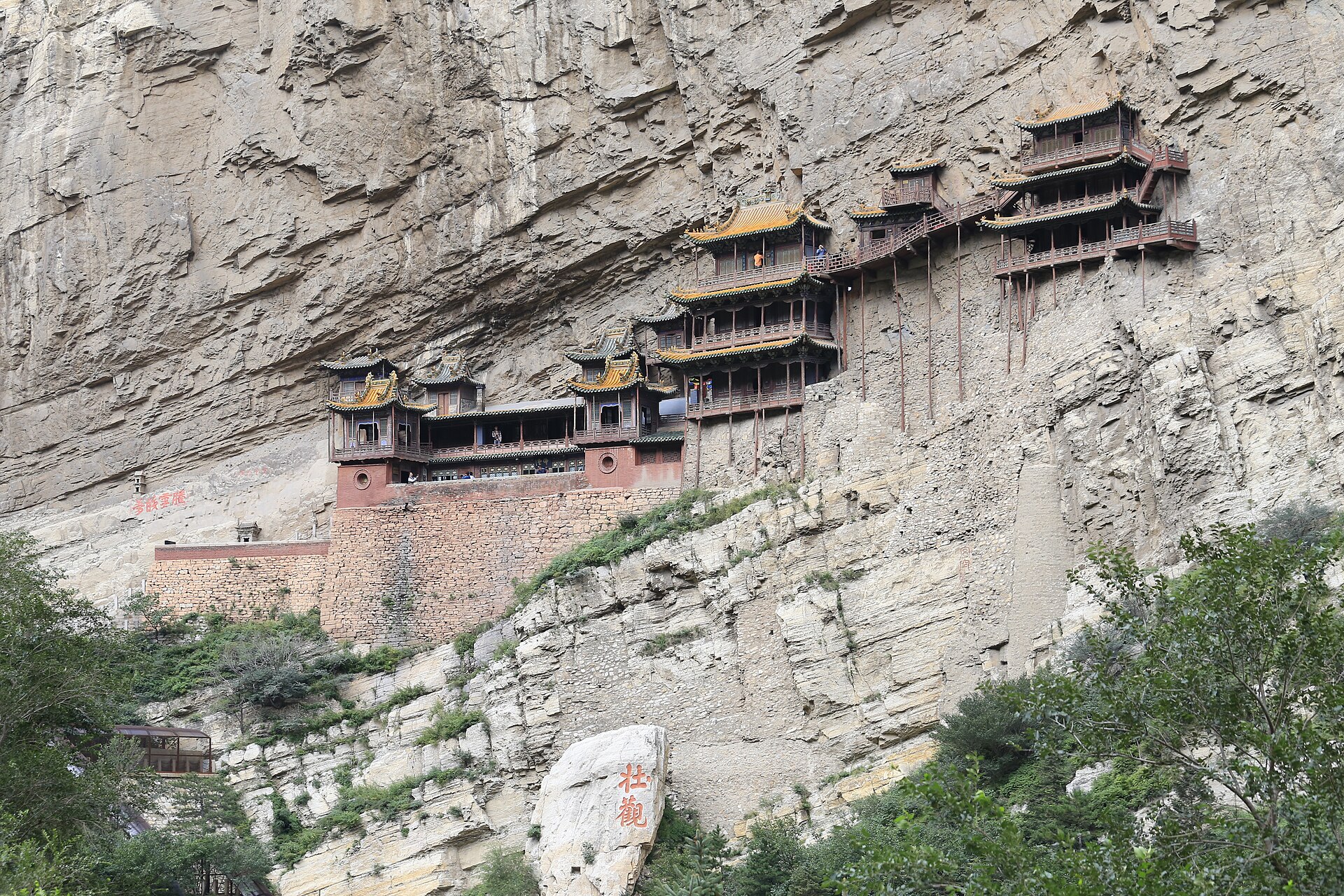
The temple clings to a cliff in Jinlong Canyon, Hunyuan County, southeast of Datong — northern Mount Heng (Beiyue), not southern Mount Heng in Hunan. People’s Daily Online published side-by-side photos from the Shanxi Culture and Tourism Department’s WeChat account matching the cliff structure to game scenery. China Daily’s Shanxi special likewise lists Xuankong among the standout settings. Narrow one-way timber walkways; mobility or height limits may keep you on the canyon-floor viewpoint.
Yungang Grottoes
About 16 km west of Datong, Northern Wei rock-cut caves and niches (UNESCO 2001). Launch-era tourism coverage groups Yungang with the Shanxi scan set; colossal Buddhas and open-air Cave 20 are the usual traveler focus. Full visit notes: Yungang Grottoes 2026. Confirm current hours and booking on the scenic-area channel (verified_on practice: check the day before).
Yingxian Wooden Pagoda
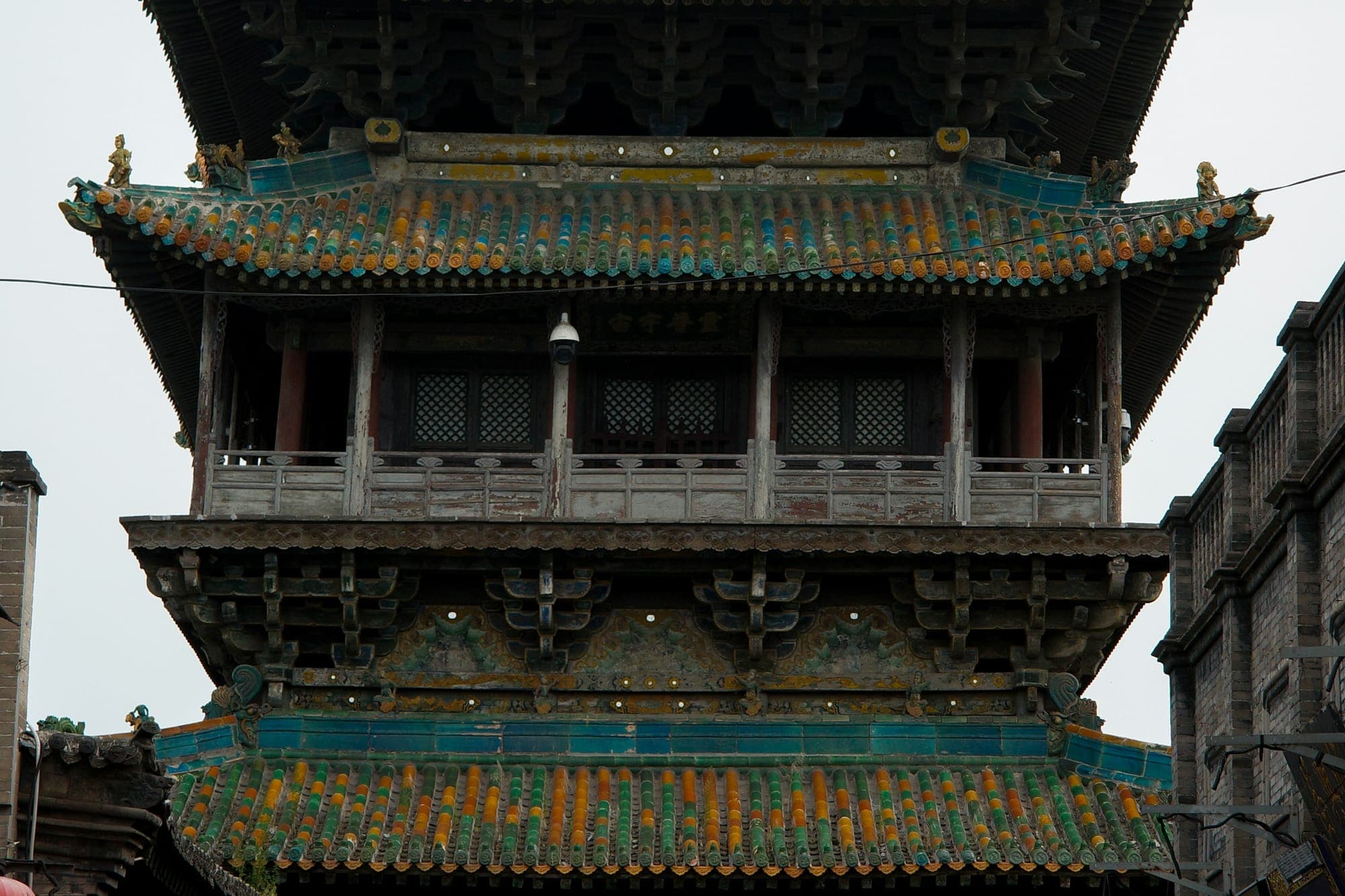
Fogong Temple’s Sakyamuni Pagoda in Ying County (~75 km south of Datong) appears on People’s Daily’s post-launch surge list. Built in 1056 (Liao), it is widely described as the oldest and tallest surviving fully timber pagoda. Upper floors are often closed for conservation — expect courtyard and exterior brackets unless the gate says otherwise.
Foguang Temple
In the hills of Wutai County, roughly 30 km from Mount Wutai’s Taihuai core — not a walk from town. ECNS reports that a Buddhist stone pillar in the game trailer was modeled on the Sidong Hall entrance pillar, and quotes art director Yang Qi: “The most immersive must be something that exists in reality.” The Great East Hall (late Tang, 857) is a landmark timber hall. Pair with Mount Wutai 2026 only as a separate detour day.
Shuanglin Temple
About six kilometers southwest of Pingyao’s walls, Shuanglin holds a large Song–Ming painted clay collection. China Daily’s Shanxi tourism coverage lists it among standout game settings. Give it 2–3 hours of its own; do not fold it into a sprint of the whole wall. City walk: Pingyao Ancient City 2026.
Other named sites (Yuhuang Temple, Tiefo Temple, Chongfu Temple, and more) appear in the same press wave. They are real and worth a longer Shanxi trip; this guide keeps six that fit a Beijing–Datong–Wutai–Taiyuan–Pingyao spine without inventing more days.
For a related but earlier-stage Game Science trailer matching project, see Black Myth: Zhong Kui China locations 2026 — media matches, not an official studio list.
3. The culture behind it
Even without the game, these sites are why Shanxi markets itself as China’s densest storehouse of pre-Yuan timber and sculpture. Zhang Qing’s People’s Daily interview cites tens of thousands of immovable relics and thousands of ancient buildings province-wide. Xiaoxitian’s hanging clay work, Foguang’s Tang hall, Yingxian’s Liao brackets, Yungang’s Northern Wei cliff Buddhas, and Xuankong’s syncretic Three Religions Hall each stand as craft history — the game is one modern door into that archive, not the only reason to go.
Flash is banned in most sculpture halls. Floors are uneven; Hanging Temple and Xiaoxitian add steep steps. September–October is usually the most comfortable walking season in northern Shanxi; winters are cold and dry.
4. How to go
Gateway: Beijing for international arrivals, then high-speed rail toward Datong or Taiyuan. Datong, Pingyao, and Taiyuan city guides are not live yet — tags only; “[city guide pending]”.
Rail spine: Datong → Taiyuan → Pingyao / Linfen on the north–south high-speed corridor. Book trains via the practical pillar (12306 for foreigners); do not re-learn booking on this page. Rural spokes (Hunyuan, Yingxian, Xi County, Foguang) need a private car with driver — not self-drive.
Sample route (Beijing → Datong → Wutai → Taiyuan → Pingyao)
| Day | Focus | Base | Notes |
|---|---|---|---|
| 1 | Arrive Datong; Yungang | Datong | Rail from Beijing; half- to full-day caves |
| 2 | Hanging Temple + Yingxian | Datong | Private car loop; morning cliff, afternoon pagoda |
| 3 | Foguang / Mount Wutai approach | Xinzhou or Wutai | Dedicated road detour; not a Taihuai walk |
| 4 | Taiyuan transit → Pingyao; Shuanglin | Pingyao | Rail to Pingyao; temple afternoon or next morning |
| 5+ | Optional Xiaoxitian | Linfen or overnight | Taiyuan/Pingyao → Linfen West, then full-day road to Xi County |
Trim to three or four days by keeping the Datong cluster and saving Shuanglin/Xiaoxitian for a trip that already includes Pingyao or Linfen.
Culture travelers who want craft context beyond temples can also browse /experiences/culture.
5. Build this trip with LocalKey
Shanxi mixes hub stations with county roads. Two product levels fit:
- Independent — your own China trip — planned, booked and backed: LocalKey app roadbook, booked trains and hotels, 24/7 WeChat/WhatsApp. Add a local guide only on the days you want deeper temple reading (for example Yungang or Foguang). Airport pickup, private car with driver, and day guides are optional add-ons.
- Private Guided — the same planning, with private guides plus driver and car across the trip — useful when Hunyuan, Yingxian, Xi County, and Foguang stack in one week.
Ask a specialist via inquiry or 7×24 WeChat/WhatsApp. No group coach product on this page. No prices in articles — we quote privately.
Practical reminders
- Confirm timed entry and real-name rules the day before (Xiaoxitian real-name rule above; other sites vary).
- Carry passport for scenic gates that scan ID.
- Set up Alipay for foreigners before rural ticket windows.
- Sibling reading: Yungang, Pingyao, Zhong Kui locations.
Frequently Asked Questions
Is this a game walkthrough?
No. It is a culture travel guide to physical Shanxi heritage sites that state media and Shanxi tourism officials link to Black Myth: Wukong art and scanning. No boss tactics or quest solutions.
Did Game Science publish an official public list of all 36 sites?
We have not found a complete studio PDF listing every site. The 36 / 27 Shanxi figure is attributed to Shanxi Culture and Tourism officials in People’s Daily Online coverage. Site-by-site matches above cite ECNS, People’s Daily, or China Daily. Where counts differ in secondary travel blogs, treat them as secondary.
Which stops fit three or four days?
Prioritize Datong: Yungang; Hanging Temple + Yingxian by car; optional Foguang push. Keep Shuanglin and Xiaoxitian for itineraries that already reach Pingyao or Linfen.
How do I reach Xiaoxitian from Taiyuan?
High-speed rail Taiyuan South → Linfen West (about 1.5–2 hours), then road to Xi County (~100–120 km). No direct rail to the gate. Budget a full day; book real-name tickets ahead when required.
Independent or Private Guided for Shanxi?
Independent if you are comfortable with hubs and short hired cars, adding a guide only when you want one. Private Guided if you want one vehicle and guide team across the county legs.
Sources
- People’s Daily Online — Wukong ignites Shanxi tourism (27 Aug 2024)
- People’s Daily Online / Global Times — tourism surge; 36/27 figure (22 Aug 2024)
- ECNS — Shanxi beckons ‘destined ones’; Xiaoxitian, Foguang, Yang Qi (23 Aug 2024)
- CNR — Xiaoxitian real-name tickets from 1 Apr 2026 (28 Mar 2026)
- UNESCO — Yungang Grottoes