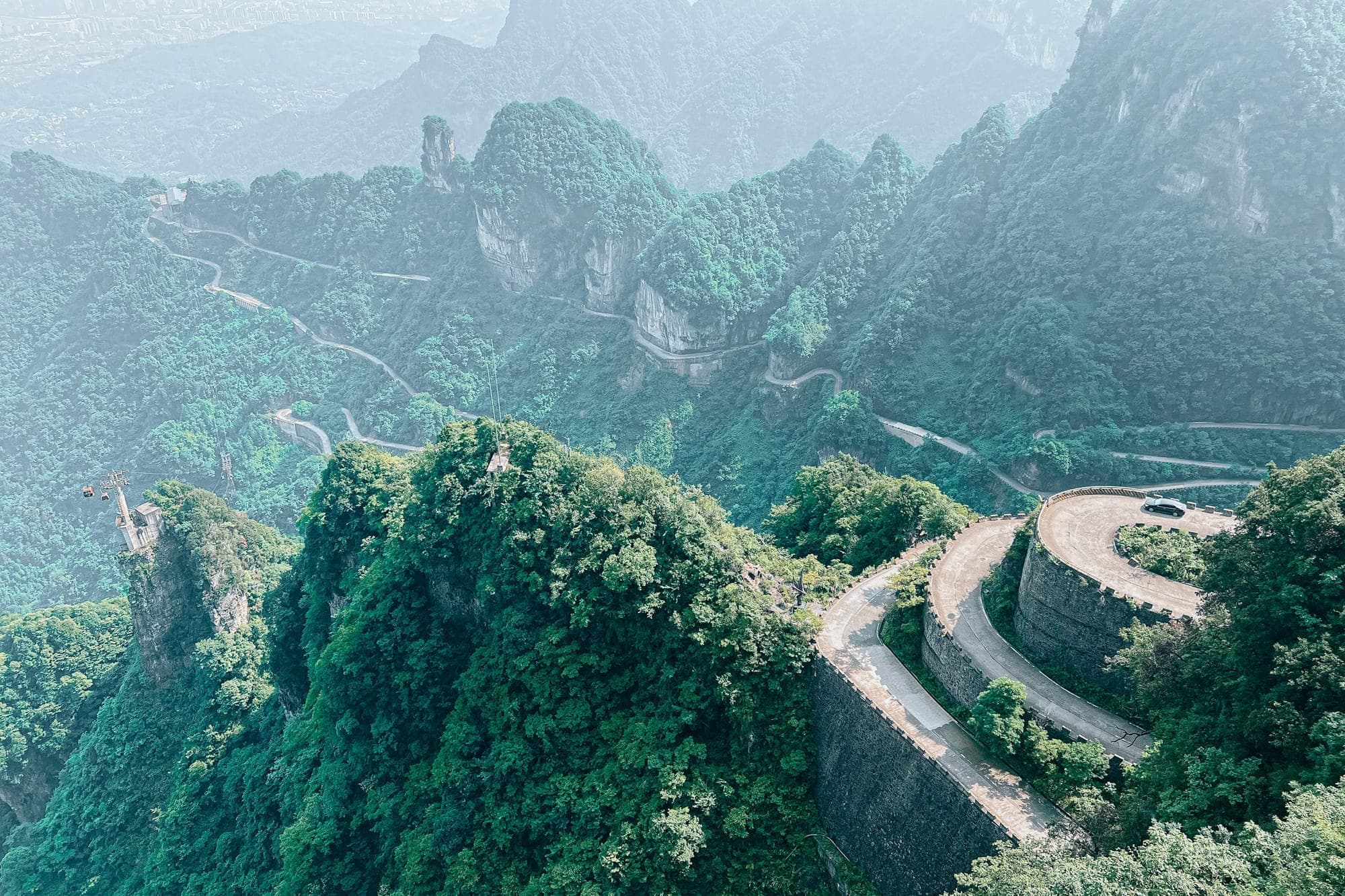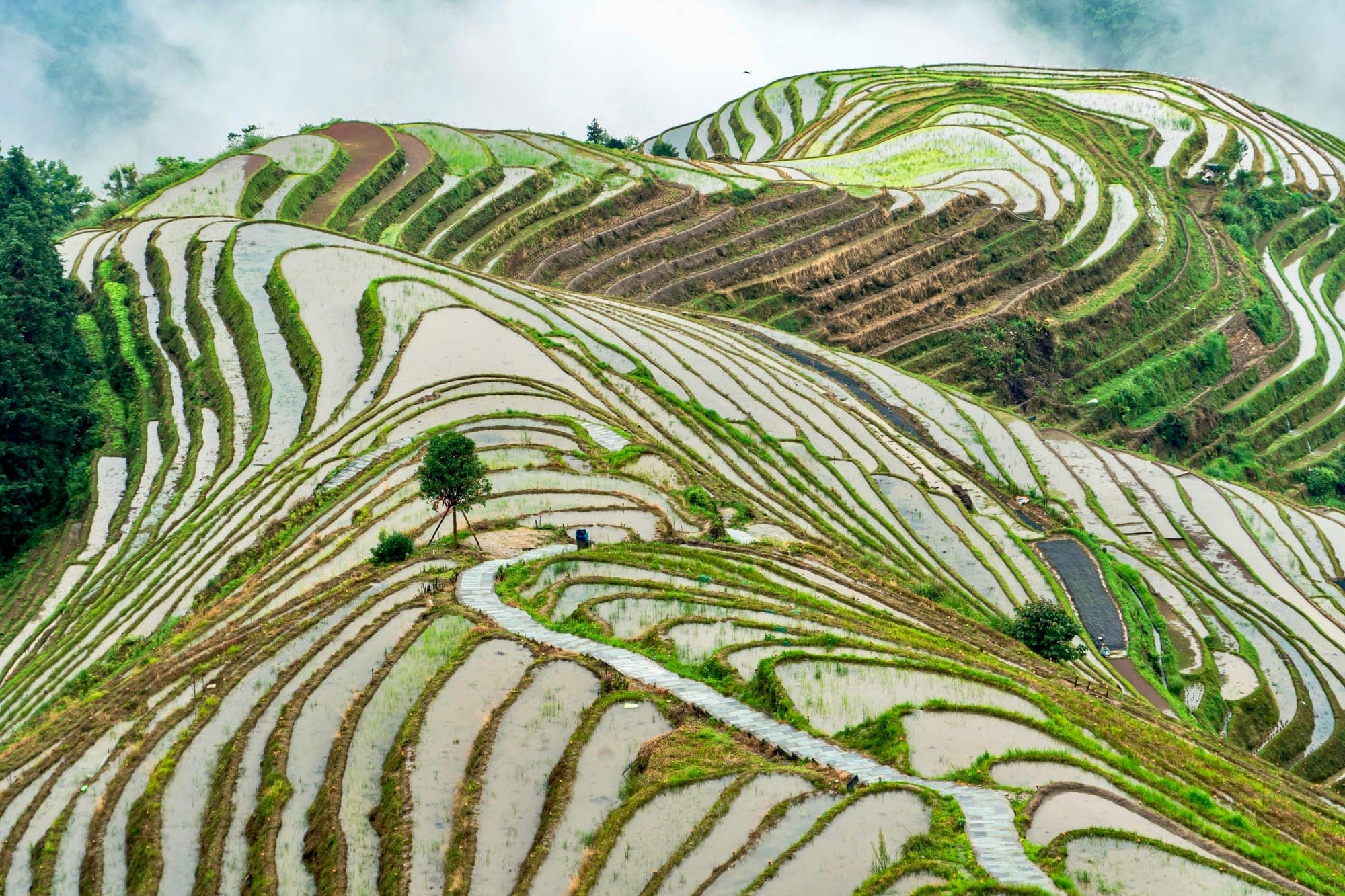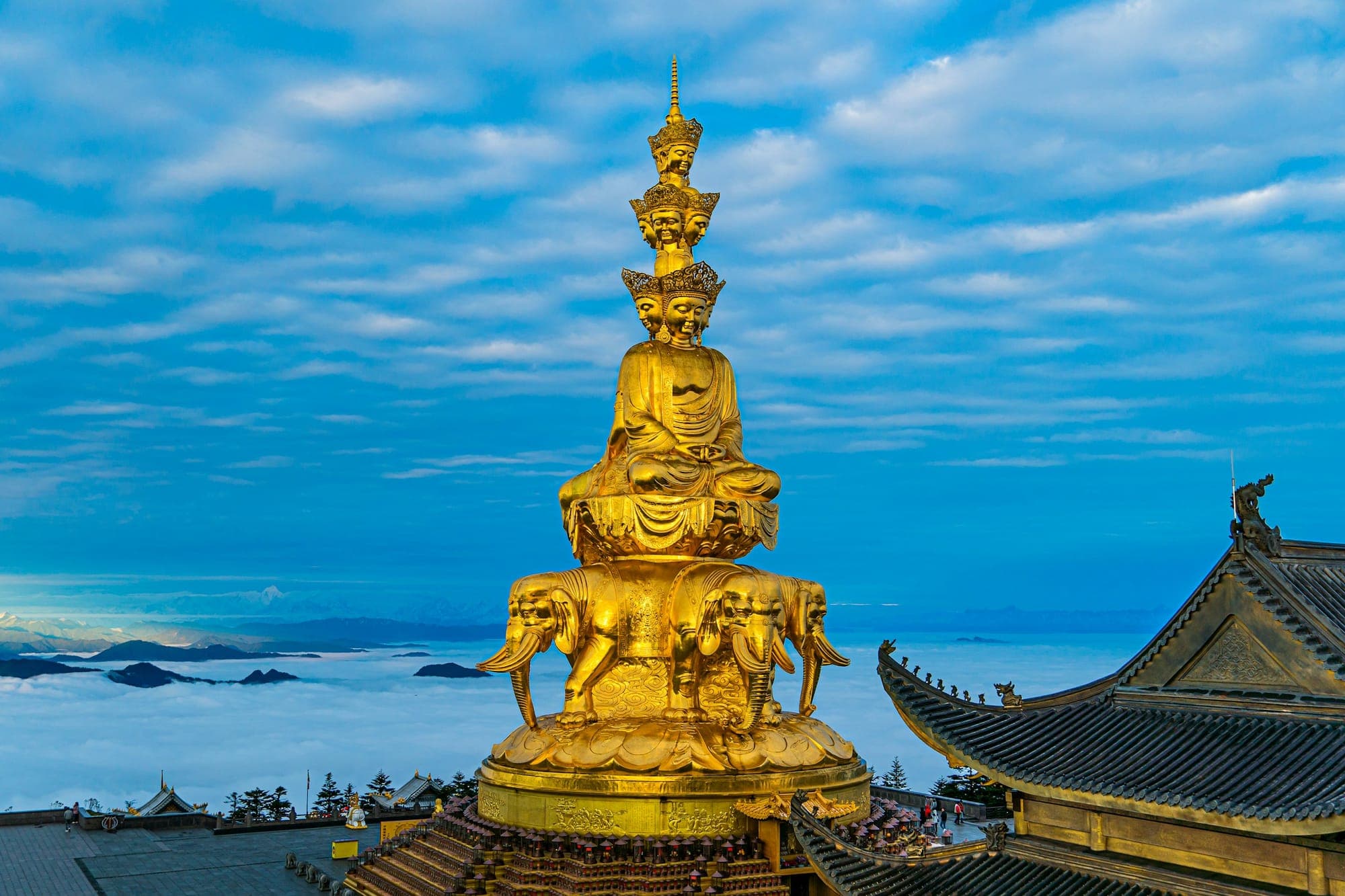
Yes. Mount Fanjing is a photography day on the dramatic metamorphic crest of the Wuling Mountains in Tongren, northeastern Guizhou: a colossal thumb-shaped vertical pillar soaring into the clouds at Red Cloud Golden Summit, sliced down the middle by the precipitous cleft of Gold Sword Gorge and joined by a stone arch bridge, the perched ten-meter mushroom-shaped stack of Mushroom Stone sculpted by differential weathering, panoramic ridge overlooks from Old Golden Summit, and the rapid ascent of the East Gate cableway rising through dense subtropical mountain forest — not a package tour coach, not ticking off every stop at each guardrail, and not a rushed group day. This page is how an independent traveler shoots Mount Fanjing in 2026 — Independent or Private Guided — without buying a group photo tour. High-speed rail connections through Tongren Station and Tongren South Railway Station (Tongrennan) in Yuping County link the mountain across the Shanghai–Kunming and regional high-speed rail corridors to Guiyang, Changsha, and Shanghai, while local shuttles and private transfers run directly via Jiangkou County to the East Gate scenic entrance. Hangzhou food is a different province and a different trip; this page is Guizhou mountain geology and landscape photography only: sheer metamorphic cliff massing, cloud-sea atmospheric transitions, differential weathering rock silhouettes, timber boardwalk approach lines, and independent mountain access.
The search "Mount Fanjing photography tour" or "Fanjingshan photo tour" usually lands on a rigid commercial coach, a loudspeaker guide hurrying forty people past crowded ridge boardwalks, a souvenir sales stop near the lower bus terminus, and a rushed checklist that treats one of the planet's most remarkable geological sanctuaries as a thirty-minute selfie stampede. The shoot people actually keep is a mountain day you pace yourself: reserve your official scenic-area ticket with real-name passport verification in advance through official channels, choose the East Gate cableway approach for direct ridge access or the West Gate stair ascent if testing physical endurance, ride the Wanbaoyan cableway through the cloud deck into alpine daylight, work the ridge boardwalks at your own rhythm, wait for breaks in the shifting cloud sea, and step back when the narrow crevice stairs ascending Red Cloud Golden Summit are crowded by tour groups. The UNESCO World Heritage Centre inscribed Fanjingshan in 2018 (List 1559) as a World Natural Heritage site under criterion (x), documenting the property as an isolated island of Precambrian metamorphic rock rising out of a vast sea of surrounding karst terrain, with a core property of 40,275 hectares and a protective buffer zone of 37,239 hectares across an altitudinal range spanning roughly 500 meters to its highest summit at Mount Fenghuangshan at 2,570 meters above sea level. Guizhou China Daily in October 2024 reaffirmed Mount Fanjing's national 5A-level tourist attraction status, its UNESCO Biosphere Reserve designation (dating back to 1986), and its listing on the IUCN Green List of Protected and Conserved Areas. China Daily reported on 5 July 2018 during the 42nd World Heritage Committee session in Manama on Mount Fanjingshan's historic inscription among global natural treasures. China Daily documented on 23 December 2019 how high-altitude meteorological monitoring stations across Mount Fanjing deliver real-time fog, cloud-sea, and sunrise forecasts to assist park management and independent visitors navigating its abrupt microclimates. China Daily detailed on 10 May 2022 the pristine ecological environment and ancient botanical diversity preserved across the metamorphic heights of Mount Fanjing since its establishment as a national nature reserve in 1978. Those are verified institutional and geographic facts from national and international authorities, rather than commercial marketing claims, and ticket prices change over time.
Treat those official records as essential geological and logistical context for understanding why this vertical metamorphic citadel commands northeastern Guizhou, not as a commercial brochure checklist that dictates your morning. One critical factual distinction to keep in mind: casual travel guides and unvetted online blogs frequently label Mount Fanjing as a UNESCO mixed cultural and natural heritage site. That is factually incorrect. The UNESCO World Heritage Centre inscribed Mount Fanjing exclusively as a World Natural Heritage site under criterion (x) for its exceptional biological and geological value. While historic stone shrines and temple pavilions perch atop the precipitous twin crags of Red Cloud Golden Summit and the saddle below, international conservation bodies evaluate the property as a natural sanctuary — an isolated metamorphic ecological island whose vertical relief preserved ancient flora and fauna through successive Ice Ages while surrounding limestone plateau landscapes underwent widespread karstification. We treat the stone architecture on the summit crags precisely as what it is visually: remarkable human architectural massing constructed directly on extreme vertical rock spires, providing striking geometric anchors for landscape photography. Forget commercial group tour schedules: this is physical mountain terrain, geological structure, and independent light. You walk, you observe light, and you shoot. You do not need a tour leader barking through a megaphone at every ridge overlook.
This is Guizhou metamorphic rock island, differential weathering spire, and cloud-sea photography — not Guizhou plateau-gorge waterfall and limestone cavern photography on Huangguoshu Waterfall Photography 2026, not sheer limestone karst cliff and natural arch photography on Tianmen Mountain Photography 2026, not high-alpine Shaanxi granite ridge and precipitous knife-edge spine photography on Mount Hua Photography 2026, not Jiangxi mist-ridge highland terrace and botanical valley photography on Mount Lushan Photography 2026, not sediment-yellow canyon cataract photography on Hukou Waterfall Photography 2026, and not arid sedimentary colored-hill fold photography on Zhangye Danxia Photography 2026. Nor is it desert dune oasis reflections on Crescent Lake Photography 2026, or high-altitude travertine terraces and alpine lakes on Jiuzhaigou Photography 2026 and Huanglong Photography 2026. Different geology. Different atmospheric behavior. Different physical rhythm. A well-planned China journey can combine multiple landscape shoots, but they must remain separate, unhurried days — never consolidated into an exhausting multi-province coach rush.
A protected landscape, not a package tour
The sheer metamorphic massif of Mount Fanjing is an internationally recognized natural sanctuary governed by strict Chinese national park conservation policies, national nature reserve laws, and national 5A scenic area standards, not a commercial merchandise package. The UNESCO World Heritage Centre records World Natural Heritage status under List 1559, a total property area of 40,275 hectares surrounded by a 37,239-hectare buffer zone, an altitudinal span from approximately 500 meters to the 2,570-meter summit of Mount Fenghuangshan, and an explicit geological definition as an island of metamorphic rock in a sea of karst. Guizhou China Daily and official scenic authorities verify its national 5A tourist attraction rating, its 1986 UNESCO Biosphere Reserve status, its 1978 nature reserve baseline, and its IUCN Green List inclusion. China Daily national archives verify automated meteorological monitoring stations deployed across the ridges to forecast fog dispersion, cloud-sea elevations, and sunrise visibility. Those are verified institutional facts — not promotional claims or estimated admission prices.
A national 5A rating and UNESCO World Natural Heritage designation represent Chinese domestic administrative and global conservation classifications. They mean strict infrastructure controls, dedicated timber boardwalk circuits, managed cableway transit lines, regulated carrying capacities, and strict prohibitions against off-trail exploration. They do not guarantee blue skies, nor do they fix prices permanently in stone. On any shoot day, you must confirm live operating hours, cableway route availability (East Gate Jiangkou cableway versus West Gate Yinjiang pedestrian trail), maintenance advisories, and weather warnings directly through official scenic-area channels. Daily reception is subject to a strict capacity ceiling (official materials document an overall daily reception threshold of approximately 9,000 visitors across the mountain); do not rely on an outdated static schedule printed in an old guidebook. Admission fees, cableway tariffs, and opening hours change, so check current details on the official site before you go.
High-altitude mountain photography carries genuine physical and environmental realities. Climbing the narrow stone staircase carved into the vertical fissure of Red Cloud Golden Summit (reaching approximately 2,336 meters elevation) requires pulling yourself up near-vertical rock steps using thick iron chains bolted into the stone. The sheer drop on either side of the narrow spine induces acute vertigo in many visitors. If heights trigger genuine anxiety, you do not have to force yourself onto the exposed summit crag: the scenic area provides extensive elevated timber boardwalks circling Mushroom Stone, Wanbaoyan, and the central saddle at Pudu Square, allowing you to photograph the dramatic vertical monolith from stable ground below. Slippery footing is another persistent reality: frequent mountain precipitation, drifting cloud mist, morning dew, and winter frost turn exposed metamorphic stone and wooden boardwalk steps slick. Walk with deliberate, measured steps and wear high-traction rubber-soled trail shoes. Dense mountain fog and sudden cloud envelopment are regular occurrences across Mount Fanjing: moist air ascending from the surrounding valleys condenses rapidly against the cold metamorphic precipices, reducing visibility to less than ten meters in a matter of minutes, only to clear suddenly when mountain winds sweep the cloud deck below the ridge into an expansive sea-of-clouds panorama. High ridge winds require secure camera straps and anchored tripods. If a narrow stair passage becomes congested with tour groups, or if torrential rain makes the rock faces treacherous, step aside into a covered trail shelter, stow your camera in a weatherproof pack, or turn around early. Your personal safety and physical well-being always outweigh any single exposure.
LocalKey does not sell group photo tours. LocalKey does not sell a packaged Mount Fanjing photo tour. LocalKey does not sell a ridge-climb combo that herds visitors through turnstiles like livestock. LocalKey does not sell group tours.
Red Cloud Golden Summit, Mushroom Stone, and ridge planks: what you actually shoot
An independent photographer on Mount Fanjing typically focuses on eight distinct visual situations spread across one dedicated mountain day based in Jiangkou or Tongren: the soaring East Gate cableway approach climbing through subtropical forest canopy and mist, the expansive timber boardwalk paths traversing the high metamorphic ridge, the iconic differential-weathering silhouette of Mushroom Stone, panoramic companion overlooks from the high crest of Old Golden Summit, the monumental upward perspective from Pudu Square at the foot of the vertical monolith, the dramatic twin-pillar silhouette and stone bridge of Red Cloud Golden Summit spanning Gold Sword Gorge, shifting sea-of-clouds atmospheric transitions, and late-afternoon warm light illuminating the summit crags when weather and descent schedules permit. You choose which frames to pursue based on morning cloud altitude, foot traffic flow, sun angle, and your physical stamina — not a tour leader's whistle. Confirm open trail sections on the morning bulletin, as trail access and visibility change with the weather.
1. East Gate cableway approach frames through mist and canopy. The ascent from the East Gate (Jiangkou entrance) begins with a scenic shuttle bus winding along the mountain stream before arriving at the lower terminal of the Wanbaoyan cableway. Spanning approximately 3,500 meters across steep mountain ravines and rising over a vertical elevation gain exceeding 1,100 meters, the cableway gondola glides silently over dense, ancient subtropical evergreen broadleaf forests. As the cabin ascends, travelers pass through distinct altitudinal ecological zones, transitioning from lush lower valleys to moss-draped alpine dwarf forests. On humid mornings, the cableway carries you directly through thick lower cloud decks: cabins ahead appear like floating globes emerging from white vapor, with the dark outlines of ancient trees ghosting below. Independent photographers shoot through clean cabin windows or open ventilation louvers using moderate wide-angle lenses (24mm to 35mm equivalent) to juxtapose mechanical cables against primeval forest canopy, or capturing the moment the gondola punches through the top of the cloud sea into brilliant alpine sunshine.
2. Summit plank boardwalk ridge approaches. Upon stepping off the upper cableway terminal, visitors enter an extensive network of elevated timber boardwalks and stone-paved paths designed to protect the fragile alpine vegetation of the national nature reserve. These boardwalks gently ascend toward Wanbaoyan, Mushroom Stone, and the central mountain ridge. The pathways themselves form powerful compositional leading lines, curving along the undulating contours of the metamorphic spine, bordered by dense thickets of alpine rhododendrons, dwarf bamboo, and moss-covered rock outcrops. In the soft light of early morning or when low mist drifts across the ridge, the timber planks create clean, receding perspective lines that lead the viewer's eye into the mountain landscape. Framing a lone hiker or distant photographer walking along the elevated wooden walkway establishes vital human scale against the monumental geological backdrop.
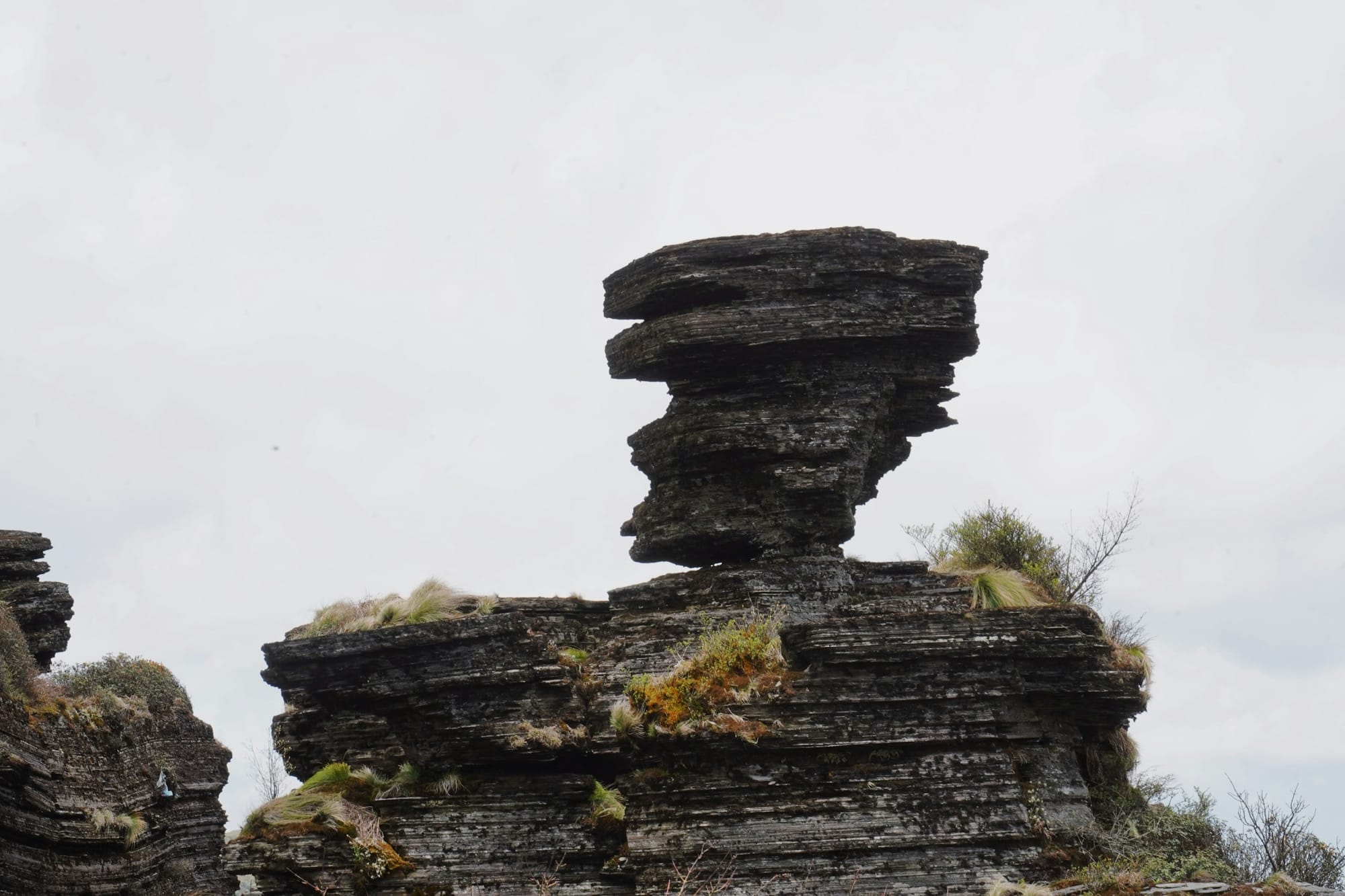
3. Mushroom Stone silhouette and differential-weathering scale frames. Perched on an open rock platform approximately 2,300 meters above sea level near the summit ridge, Mushroom Stone is one of the most celebrated geological landmarks in China. Standing roughly ten meters in height, this bizarre rock formation resembles an enormous mushroom or a precariously stacked tower of flat metamorphic stone slabs. Formed through hundreds of millions of years of differential weathering, wind erosion, and freeze-thaw cycles acting on horizontal Proterozoic metamorphic strata, the top slab flares outward wider than its slender supporting base. Photographers work the perimeter of the stone platform to capture its stark silhouette against passing cloud banks or deep blue alpine sky. Low-angle compositions emphasize its precarious balance and massive physical weight, while medium telephoto shots (50mm to 85mm) isolate the fine horizontal bedding planes etched into its weathered rock surfaces. Incorporating visitors standing at a respectful distance provides an immediate visual benchmark for scale.
4. Old Golden Summit ridge overlooks and panoramic companion frames. Rising to approximately 2,494 meters above sea level (visitor elevation language; often referenced historically as Moon Mirror Mountain), Old Golden Summit is the companion high point accessible on the standard summit circuit. The trail ascends via stone steps past ancient rock terraces to an exposed observation platform crowned by a historic stone pavilion. From this elevated vantage point, photographers gain a commanding 360-degree panoramic view across the entire northern Guizhou plateau and the undulating peaks of the Wuling mountain range. The premier composition from Old Golden Summit looks south-southeast directly across the deep forested saddle toward the vertical thumb of Red Cloud Golden Summit. From this elevated angle, you gaze down upon the twin pillars, capturing the miniature stone temples perched on their crowns and the delicate stone arch bridge suspended across the cleft of Gold Sword Gorge, set against vast sea-of-clouds horizons. A 70-200mm telephoto lens compresses the distance, isolating the architectural pavilions against churning cloud layers.
5. Pudu Square base of Red Cloud pillar (upward scale). Pudu Square is the wide, stone-paved central saddle nestled between Old Golden Summit and the base of Red Cloud Golden Summit, situated adjacent to the historic Cheng'en Temple complex. Standing in Pudu Square, you are positioned directly at the foot of the monolithic vertical rock buttress that forms Red Cloud Golden Summit. The rock face rises nearly one hundred meters straight up like an immense petrified finger pointing toward the heavens. Looking upward from the plaza, wide-angle lenses (16mm to 24mm) emphasize the overwhelming verticality of the monolith, framing the sheer cliff walls, the dark vertical fissure of Gold Sword Gorge cutting into the upper pillar, and the tiny figures of climbers slowly ascending the narrow crevice stairs. This vantage provides a dramatic illustration of mountain massing and human insignificance against geological power.
6. Red Cloud Golden Summit twin-pillar, Gold Sword Gorge, and bridge silhouette. Red Cloud Golden Summit (also widely known as New Golden Summit or Hongyun Golden Summit, reaching approximately 2,336 meters visitor elevation) is the supreme visual icon of Mount Fanjing. The monolith is an enormous thumb of metamorphic rock split clean down the center by a sheer, narrow chasm known as Gold Sword Gorge. Perched atop the two isolated stone pinnacles are two ancient stone-built temple halls, connected across the abyss by a single arched stone bridge spanning the void. Reaching the summit requires ascending a near-vertical staircase carved directly into narrow rock crevices and exposed cliff ledges, where climbers pull themselves upward using secured iron hand chains. Once atop the twin crags, photographers can shoot across the narrow chasm: framing the opposing stone hall, the arch bridge hanging over hundreds of meters of empty air, and the vast expanse of forested ridges receding into the distance. Note that due to strict safety regulations and the extreme narrowness of the single-file summit path, access to Red Cloud Golden Summit often requires securing an on-site secondary queuing number or free reservation voucher at Pudu Square during peak hours (confirm live operational arrangements on the day).
7. Soft cloud-sea and mist days versus clear depth days. Mount Fanjing's isolated high elevation and high humidity make it a prolific producer of shifting cloud seas (yuhai) and mountain mist. As documented by China Daily in December 2019, automated weather stations monitor these rapid atmospheric transitions across the nature reserve. On misty and post-rain mornings, dense white cloud decks often settle in the surrounding river valleys between 1,000 and 1,800 meters elevation. The high peaks of Mount Fanjing—Old Golden Summit, Red Cloud Golden Summit, and Mushroom Stone—emerge from this swirling ocean like isolated islands floating in a boundless sea of white. These conditions demand ethereal, high-contrast framing: the dark vertical rock towers and timber boardwalks provide rich visual anchors against the luminous white mist. On rare, crystal-clear autumn and winter days, atmospheric clarity allows photographers to see dozens of kilometers across the Guizhou plateau, revealing the complex dendritic drainage patterns, deeply incised karst canyons, and endless mountain ridges stretching toward Hunan and Chongqing. Both conditions offer extraordinary photographic rewards: prepare with polarizing filters to cut through high-altitude glare on clear days, and bring microfiber cloths to wipe condensation on humid mist days.
8. Late-day warm light and red-tinted cloud on the pillar. The name "Red Cloud Golden Summit" (Hongyun) originates from the natural phenomenon wherein morning dawn or late-afternoon sunlight strikes low-altitude cloud banks enveloping the vertical rock pillar, reflecting rich reddish, crimson, and golden hues across the sheer rock face. In the late afternoon, as the sun drops toward the western horizon across Guizhou, warm directional light grazes the western buttress of the monolith, turning the dark metamorphic stone into glowing amber. If drifting clouds brush past the summit during this golden hour, the vapor catches the warm raking light, creating an unforgettable spectacle of glowing mist swirling around the stone halls and the arch bridge. Independent photographers planning a late-afternoon shoot must strictly monitor park transit operating timetables: verify the exact operational closing time of the Wanbaoyan cableway and the last East Gate sightseeing shuttle bus to ensure safe descent before twilight. Overnight stays on the summit are not permitted, so plan your return with ample safety margins.
Logistics and independent movement around Tongren and Jiangkou. The regional transit logistics for an independent Mount Fanjing shoot are well-established. High-speed rail travelers generally arrive at Tongren Railway Station (in downtown Tongren) or Tongren South Railway Station (Tongrennan, located in Yuping County along the Shanghai–Kunming High-Speed Railway). Gaotie.net documents direct high-speed services connecting Tongren South with major transportation hubs including Guiyang North (roughly 1.5 hours), Changsha South (roughly 2.5 hours), and Shanghai Hongqiao. From Tongren South, dedicated scenic shuttle coaches and private transfers run directly to Jiangkou County and the East Gate entrance in approximately 1.5 to 2 hours. From downtown Tongren Railway Station or Tongren Fenghuang Airport, regular tourist shuttles connect to the East Gate in roughly 60 to 80 minutes. The East Gate (Jiangkou) is the universally recommended base for independent photographers due to its direct cableway access. The West Gate (Yinjiang), situated on the opposite side of the massif, offers only a grueling pedestrian ascent of over 8,000 stone steps with no cableway service; furthermore, tickets purchased for East Gate and West Gate are strictly non-interchangeable. Foreign travelers must bring their original physical passport for real-name electronic ticket verification at scenic entrance gates and cableway stations. Set up digital mobile payments via Alipay for foreigners in advance to effortlessly handle ticket scans, locker rentals, snacks, and local transport.
Hiking and safety etiquette. Navigating Mount Fanjing demands respect for alpine terrain and personal safety. Wear sturdy hiking shoes with deep rubber lug soles to maintain traction on damp timber boardwalks and slick stone steps. The climb up Red Cloud Golden Summit is intensely steep and physically demanding: maintain a three-point hold on the iron chains, do not stop abruptly in narrow vertical choke points, and never lean over the low metal chains to compose photos. If you suffer from acute acrophobia or balance issues, do not attempt the vertical climb; the views of the summit from Pudu Square, Mushroom Stone, and Old Golden Summit are equally striking and completely safe. Flying aerial drones is strictly prohibited throughout the national nature reserve without prior formal approval and written administrative permits from park management. Stay strictly on marked boardwalks and paved paths to protect rare alpine flora and avoid disturbing local wildlife habitats. Pack a lightweight waterproof rain shell, warm thermal layers (the summit ridge is often 8 to 12 degrees Celsius cooler than the base valleys), and ample water.
What the official records show for a shoot day
Official documentation and scientific records establish clear factual boundaries that distinguish a genuinely self-directed Mount Fanjing shoot from a commercial group photo tour, from the separate plateau gorge waterfalls of Huangguoshu, from the sheer limestone precipices of Tianmen Mountain, from the granite spires of Mount Hua, from the misty cultural ridges of Mount Lushan, from the sediment cascades of Hukou Waterfall, and from the colored sandstone strata of Zhangye Danxia. Ticket prices and opening hours change seasonally, so check official channels before you go. The table below synthesizes published data from the UNESCO World Heritage Centre, China Daily official reports, Guizhou provincial tourism announcements, and regional transit documentation.
| Category | What the official record shows | What you do on an independent shoot |
|---|---|---|
| Location & Administration | Guizhou China Daily 2024 & Scenic Zone: Mount Fanjing National Nature Reserve, Tongren City, Guizhou; National 5A Tourist Attraction | Base in Jiangkou County near East Gate or downtown Tongren; arrange early morning transit to scenic gates. |
| UNESCO World Heritage Designation | UNESCO List 1559 (2018): Inscribed as World Natural Heritage under criterion (x); core property 40,275 ha, buffer 37,239 ha; Natural not Mixed | Document the site as a pristine natural and geological sanctuary; do not repeat inaccurate mixed-heritage claims. |
| Mountain Elevation & Geology | UNESCO & Scenic record: Metamorphic rock island in a sea of karst; highest peak Mt Fenghuangshan 2,570 m; altitudinal span ~500–2,570 m | Frame sheer metamorphic rock towers rising from surrounding karst sea; pack wide and telephoto lenses for scale. |
| Red Cloud Golden Summit | Scenic record: ~2,336 m visitor elevation; vertical monolith split by Gold Sword Gorge; twin stone halls joined by stone arch bridge | Photograph iconic twin-spire silhouette and bridge from saddle, Old Golden Summit, or climb crevice chains if comfortable. |
| Old Golden Summit & Overlooks | Scenic record: ~2,494 m visitor elevation (historic Moon Mirror Mountain); 360-degree panoramic overlook platform | Ascend stone steps for elevated landscape frames looking down across the saddle toward Red Cloud Golden Summit. |
| Mushroom Stone Differential Rock | Scenic record: ~10 m tall natural rock pillar formed by differential weathering on horizontal Proterozoic strata | Capture dramatic isolated silhouette against clouds or sky; use human figures to establish geological scale. |
| East Gate vs West Gate | Official Traffic EN & Scenic site: East Gate (Jiangkou) has cableway; West Gate (Yinjiang) is hike-only (no cableway); tickets NOT interchangeable | Book East Gate tickets for cableway access; avoid West Gate unless undertaking a dedicated full-day mountain endurance trek. |
| Visitor Capacity & Reservations | Scenic site record: Strict real-name reservation linked to passport; daily reception ceiling language ~9,000 visitors; timed entry windows | Reserve official tickets online well in advance; carry original passport; queue for secondary summit voucher at Pudu Square if active. |
| High-Speed Rail Gateways | Gaotie.net & official traffic: Tongren Station and Tongren South (Tongrennan in Yuping County); direct links to Guiyang, Changsha, Shanghai | Arrive by HSR from Guiyang North or Changsha South; connect to Jiangkou and East Gate via scenic shuttle coach or private transfer. |
| Weather Monitoring & Fog Forecasts | China Daily 2019: High-altitude automated meteorological stations provide real-time fog, cloud-sea, and sunrise monitoring | Check morning weather bulletins; prepare for rapid transitions between dense fog and brilliant sea-of-clouds spectacles. |
| Ticket Prices & Hours | Ticket prices and operating timetables vary by season and weather | Check live ticket prices, cableway fees, and operating hours directly on official scenic booking mini-programs. |
| Commercial Photo Tours | A rigid group coach with fixed viewpoint stops, loudspeaker lectures, and commercial sales pitches is a commercial group tour | Avoid packaged photo tours; travel independently on Independent or Private Guided arrangements. |
| Distinctions from Other Sites | Distinct from Huangguoshu falls, Tianmen Mountain karst cliffs, Mount Hua granite, Mount Lushan mist ridges, and Zhangye Danxia | Maintain Mount Fanjing as a dedicated metamorphic mountain shoot; do not compress into an exhausting multi-park tour. |
Sources for the table: whc.unesco.org — Fanjingshan (UNESCO World Heritage List 1559); global.chinadaily.com.cn — World Heritage meeting adds Mount Fanjingshan (China Daily, 5 Jul 2018); chinadaily.com.cn — Big data assists tourism at Mount Fanjing (China Daily, 23 Dec 2019); chinadaily.com.cn — A national treasure: Mount Fanjing vegetation (China Daily, 10 May 2022); guizhou.chinadaily.com.cn — IUCN Green List / 5A scenic area (Guizhou China Daily, 16 Oct 2024); fanjingshan.gz.cn — Fanjingshan Tourism Zone Official Site; fanjingshan.gz.cn — Official Traffic and Transport Information (EN); gaotie.net — Tongren South Railway Station (Tongrennan); travelchinaguide.com — Fanjing Mountain Guide; chinaxiantour.com — Guizhou Fanjing Mountain Logistics; roamchinatravel.com — Fanjingshan Mountain Guide; en.wikipedia.org — Fanjingshan (supporting geography).
These verified records provide clear operational boundaries. A UNESCO World Natural Heritage inscription or a national 5A rating is valuable factual context, but it does not dictate how you frame a shot or how long you wait for fog to part around Mushroom Stone. You select your vantage point, observe the shifting clouds, and take the exposure on your own terms.
How to shoot without a photo tour
Executing an independent photography shoot on Mount Fanjing without booking an organized group photo tour requires methodical advance planning, deliberate route selection, and realistic timing. The core principle mirrors our philosophy across every landscape guide on China photography trip 2026: select one focused mountain circuit, work the quiet hours of morning and afternoon, and avoid cramming too many disparate scenic areas into a single exhausting day.
First, book your scenic-area entry ticket through verified digital channels or have your LocalKey specialist secure real-name reservations tied to your original passport. Scenic management regulates visitor flow through strictly timed departure slots and enforces an overall daily reception threshold of approximately 9,000 visitors across the mountain. Securing an early morning entry time slot (typically within the first hour of park opening) is the single most effective way to experience the Wanbaoyan cableway, Mushroom Stone, and the summit boardwalks before commercial tour groups arrive. When booking your ticket, make certain you select the East Gate (Jiangkou) entrance. The East Gate features the high-speed passenger cableway that whisks you to the summit ridge in roughly twenty minutes. The West Gate (Yinjiang) has no cableway whatsoever and requires an arduous stair climb of over 8,000 steps that consumes four to six hours of intense uphill hiking before reaching the ridge. Crucially, tickets purchased for East Gate and West Gate are not interchangeable; attempting to enter the East Gate with a West Gate ticket will result in denied entry at the turnstiles.
Second, understand the summit loop geometry. Once you disembark at the upper Wanbaoyan cableway station, an elevated timber boardwalk guides you through the alpine dwarf forest up to the central ridge. The path leads directly to Mushroom Stone and the adjacent rock plateau. From Mushroom Stone, the trail splits into two primary circuits: ascending northeast along stone steps to the panoramic overlook of Old Golden Summit (~2,494 meters), or descending south toward the central saddle of Pudu Square and Cheng'en Temple. From Pudu Square, the steep, chain-assisted ascent of Red Cloud Golden Summit (~2,336 meters) rises vertically above. Planning a coherent circuit—for instance, ascending the cableway early, visiting Mushroom Stone in morning light, climbing Old Golden Summit for panoramic companion views, descending to Pudu Square, evaluating the queue for Red Cloud Golden Summit, and looping back along the timber boardwalks—prevents backtracking and maximizes your photographic opportunities.
Third, manage the Red Cloud Golden Summit ascent with caution. The climb up the vertical thumb of Red Cloud Golden Summit is physically intense and technically exposed: the route winds through narrow rock crevices, along exposed cliff ledges, and up near-vertical stone steps flanked by heavy iron chains. Due to the extreme narrowness of the single-file path and strict safety capacity limits on the twin-pillar summit, park staff often implement an on-site secondary queuing number or free digital time-slot reservation system at Pudu Square during peak hours. If you wish to make the climb, register your queue number at Pudu Square as soon as you reach the saddle. While waiting for your number, you can photograph the towering monolith from below, explore Cheng'en Temple's architectural massing, or rest at nearby tea houses. If the queue is excessively long, or if you experience vertigo, do not hesitate to skip the vertical climb: the view of Red Cloud Golden Summit from Old Golden Summit and Mushroom Stone is actually more dramatic compositionally than the view from the summit itself, as it captures the entire monolithic pillar, the twin spires, and the arch bridge in their complete geological context.
Fourth, distinguish Mount Fanjing clearly from its regional and national counterparts. Do not confuse Mount Fanjing with the dramatic limestone waterfall cascades and cavern tunnels of Huangguoshu Waterfall Photography 2026, situated in southwestern Guizhou on the Baishui River. Do not confuse it with the sheer vertical limestone karst cliffs, glass skywalks, and natural mountain arch of Tianmen Mountain Photography 2026 in Zhangjiajie, Hunan. Do not confuse it with the quartz-sandstone pillar forests of Wulingyuan, located roughly three hours northeast across the provincial border.
Maintain equal clarity when comparing Mount Fanjing to other prominent photography destinations across China. This is not the massive granite block architecture, exposed knife-edge ridges, and ancient stone-cut steps of Mount Hua Photography 2026 in Shaanxi. This is not the misty cultural hill-station ridges, colonial-era stone villas, and highland botanical gardens of Mount Lushan Photography 2026 in Jiangxi. This is not the sediment-yellow cataract and thunderous canyon spray of Hukou Waterfall Photography 2026 on the Yellow River. This is not the dry, multi-hued sedimentary sandstone fold landscape of Zhangye Danxia Photography 2026 in Gansu. This is not the desert dune oasis curve of Crescent Lake Photography 2026 in Dunhuang. Nor is it the high-altitude multi-tiered travertine pools and alpine lakes of Jiuzhaigou Photography 2026 and Huanglong Photography 2026 in northern Sichuan. Mount Fanjing is an ancient metamorphic rock citadel, differential-weathering stone towers, soaring vertical pillars, and subtropical cloud-sea ecology. Keep each landscape distinct on your calendar.
Fifth, handle daily transactions smoothly. Park refreshment kiosks, luggage storage lockers, cableway concessions, and local dining stalls predominantly process digital mobile payments. Setting up Alipay for foreigners with an international credit or debit card before arriving at the mountain ensures smooth, instantaneous transactions at every counter. While cash is still accepted at major ticket windows, digital QR payment is standard across Guizhou.
Above all, reject the premise that you need an organized photo tour to capture Mount Fanjing. A group photo tour forces you into a rigid group schedule, wastes valuable morning light waiting for stragglers, forces unwanted souvenir stops, and dictates where and when you press the shutter. An independent shoot gives you total control: you linger at Mushroom Stone until a drifting cloud exposes the rock platform, you wait on Old Golden Summit for the late afternoon sun to illuminate the face of Red Cloud Golden Summit, and you leave when you have captured the work you came for.
LocalKey does not sell group photo tours. LocalKey does not sell a packaged Mount Fanjing photo tour. LocalKey does not sell a ridge-climb combo that herds visitors through turnstiles like livestock. LocalKey does not sell group tours.
Is Mount Fanjing photography the same as a mountain photo tour?
No. Mount Fanjing photography is an independent landscape shoot: official scenic-area ticket access, self-paced exploration of the summit boardwalks, Mushroom Stone, Old Golden Summit, and Red Cloud Golden Summit, and complete freedom to wait for optimal light and mist conditions. A mountain photo tour is a packaged commercial group tour featuring rigid timetables, crowded group movements, predetermined viewpoint stops, and commercial sales pitches. Independent shooting lets you work the mountain on your own schedule.
How do foreigners book Mount Fanjing tickets without speaking Chinese?
Foreign travelers can reserve official tickets through recognized online booking platforms, official scenic WeChat mini-programs with passport entry options, or through an independent travel planner handling an Independent or Private Guided itinerary. Every ticket requires real-name verification tied to your original physical passport. Ensure your name and passport number match your physical travel document exactly, and present your passport at the entry turnstiles. Ticket prices change seasonally, so always verify current rates on official scenic channels.
Do I need a group photography tour to shoot Red Cloud Golden Summit and Mushroom Stone?
No. You do not need a group tour of any kind. The entire scenic area is equipped with clear bilingual signage, paved boardwalks, safety railings, shuttle buses, and modern cableways. An independent photographer simply purchases an official entry ticket, boards the East Gate cableway, and walks the signposted summit loops independently. LocalKey does not sell group photo tours. Independent or Private Guided handle transport, ticketing, and hotel logistics while leaving your shooting time entirely in your hands.
Is Mount Fanjing a UNESCO mixed cultural and natural heritage site?
No. Mount Fanjing was inscribed by the UNESCO World Heritage Centre in 2018 (List 1559) strictly as a World Natural Heritage site under criterion (x). While historic stone shrines and temple halls perch on its summits, international conservation bodies evaluate the property as a natural sanctuary—an isolated metamorphic ecological island preserving ancient biodiversity amid a vast sea of karst. Treat the temples purely as striking architectural massing on extreme rock spires, not as a cultural or mixed heritage designation.
What is the difference between East Gate (Jiangkou) and West Gate (Yinjiang)?
East Gate (Jiangkou) features a sightseeing shuttle bus and the Wanbaoyan passenger cableway, whisking visitors to the summit ridge in roughly twenty minutes; it is the default, recommended entrance for independent photographers. West Gate (Yinjiang) has no cableway and requires an arduous stair climb of over 8,000 steps, taking four to six hours of intense uphill hiking. Crucially, tickets purchased for East Gate and West Gate are not interchangeable; you must enter through the specific gate designated on your reservation.
Do I need a secondary reservation or queue ticket to climb Red Cloud Golden Summit?
Yes, frequently. Due to the extreme narrowness of the single-file stair fissure ascending Red Cloud Golden Summit and strict carrying capacity limits on the twin-pillar crest, scenic management often enforces an on-site secondary queuing number or free reservation ticket at Pudu Square during peak visiting hours. Register your queue number upon reaching Pudu Square; while waiting, you can photograph the monolith from below or explore Mushroom Stone and Old Golden Summit.
Is this page the same as Huangguoshu Waterfall photography?
No. Huangguoshu Waterfall is a massive limestone plateau-gorge cataract on the Baishui River in southwestern Guizhou, characterized by roaring cascade curtains, Water Curtain Cave mist, and karst canyon hydraulics. Mount Fanjing is an ancient metamorphic mountain massif in northeastern Guizhou, characterized by differential-weathering rock pillars, sheer cliff monoliths, and high-altitude cloud seas. They are in completely different parts of Guizhou and require separate days. See Huangguoshu Waterfall Photography 2026.
Is this page the same as Tianmen Mountain, Mount Hua, or Mount Lushan photography?
No. Tianmen Mountain is vertical limestone karst, cliff-hanging glass walkways, and natural mountain arch photography in Hunan. Mount Hua is high-alpine Shaanxi granite ridge and sheer cliff-path photography centered on exposed knife-edge spines. Mount Lushan is Jiangxi mountain mist, colonial-era stone villas, and botanical valley terraces. Mount Fanjing is Guizhou metamorphic rock island, differential weathering pillars, and cloud-sea photography. Each presents distinct geological structures and photographic challenges. See Tianmen Mountain Photography 2026, Mount Hua Photography 2026, and Mount Lushan Photography 2026.
Is this page the same as Hukou Waterfall or Zhangye Danxia photography?
No. Hukou Waterfall is a sediment-yellow cataract on the Yellow River canyon border between Shanxi and Shaanxi. Zhangye Danxia is dry sedimentary colored-hill landforms in Gansu. Mount Fanjing is high-altitude metamorphic rock citadel and cloud-sea photography in Guizhou. Each represents a completely different landscape discipline. See Hukou Waterfall Photography 2026 and Zhangye Danxia Photography 2026.
How difficult and steep is the climb up Red Cloud Golden Summit, and can I avoid it if I have vertigo?
The ascent up Red Cloud Golden Summit is exceptionally steep and physically demanding: the path consists of narrow stone steps cut into vertical rock crevices, requiring climbers to haul themselves upward using heavy iron hand chains. For travelers who experience acute vertigo or fear of heights, the climb can be completely avoided without missing the mountain's grandeur, as extensive timber boardwalks surround Mushroom Stone, Wanbaoyan, and Pudu Square.
Can foreigners photograph Mount Fanjing in 2026 without speaking Chinese?
Yes. Major signage across the East Gate terminal, cableway stations, summit timber boardwalks, and transit interchanges includes clear English translations. Mobile translation tools and digital navigation apps work effectively throughout the park. The primary requirement is carrying your original physical passport for ticket verification at entry turnstiles and having digital payment configured. Language barriers do not prevent an independent traveler from having a successful photography day.
Do I need a Chinese bank card to pay on a shoot day?
No. Foreign visitors can make everyday payments at scenic ticket windows, beverage kiosks, snack stalls, and cableway counters using an international credit card linked to Alipay. Cash is still accepted at major service windows, but QR mobile payment is standard across Guizhou. Set up your payment application before your shoot day to avoid transaction delays.
Is this page a designation stack for its own sake?
No. Citations of UNESCO World Natural Heritage status (List 1559), National 5A Tourist Attraction ratings, national nature reserve history, and IUCN Green List recognition provide precise factual accuracy. They prevent travelers from being misled by inaccurate promotional brochures. This page is a practical, independent photography guide for travelers who want to experience Mount Fanjing on their own schedule.
How this fits into an Independent or Private Guided week
Mount Fanjing should be positioned as a dedicated full-day shoot within a broader Guizhou or southwestern China journey, rather than rushed through as a hurried morning excursion. Because the mountain rises in northeastern Guizhou near the border with Hunan, it links naturally with regional high-speed rail corridors through Tongren Station and Tongren South Railway Station (Tongrennan). After completing an unhurried full-day shoot covering the East Gate cableway, Mushroom Stone, Old Golden Summit, and Red Cloud Golden Summit, you can transition smoothly toward regional cultural centers or connect west toward Guiyang.
A well-balanced itinerary typically allocates one full day based in Jiangkou County for Mount Fanjing, followed by high-speed rail transit to Guiyang. From Guiyang, travelers can take high-speed rail southwest to Anshun to spend a dedicated full day photographing the mighty cascades of Huangguoshu Waterfall Photography 2026. Alternatively, travelers heading east can connect via high-speed rail into western Hunan to explore the ancient riverbanks of Fenghuang Ancient City or continue north along the Zhangjihuai line to shoot the sheer karst precipices of Tianmen Mountain Photography 2026 in Zhangjiajie. Hangzhou food remains paused throughout this plan — that belongs to Zhejiang Province, a completely different culinary and geographic world.
LocalKey operates two distinct service lanes for travelers seeking independent precision without group tour constraints:
Independent: We secure your hotel accommodations, book point-to-point high-speed rail and airport transfers, obtain real-name scenic-area tickets linked to your passport, and provide a comprehensive digital roadbook. You receive continuous remote support via WhatsApp or WeChat from our operations desk, while navigating the trails and managing your camera gear entirely at your own pace.
Private Guided: You receive the complete Independent framework, augmented by a private dedicated car and driver for seamless regional transfers between Tongren high-speed rail stations, Jiangkou hotels, and the East Gate entrance, along with a knowledgeable private guide on the specific days you request one. A private vehicle waiting at the lower bus terminal after a long day of ridge hiking provides immense comfort, without ever dictating how long you spend waiting for light on an alpine overlook.
If you originally began your research searching for group tour options, consult our comparative analysis on China group tours or a custom trip to understand why self-paced independent travel consistently delivers superior photographic results.
LocalKey does not sell group photo tours. LocalKey does not sell a packaged Mount Fanjing photo tour. LocalKey does not sell group tours.
If you want the shoot booked, not a photo tour
LocalKey designs customized independent journeys across China for photographers, hikers, and independent travelers. We do not sell group tours. We do not operate commercial photo-tour coaches. We do not sell packaged group itineraries that herd photographers along crowded guardrails.
Our two service lanes remain clear:
Independent: Quality hotel reservations, verified high-speed rail and local transfers, guaranteed real-name mountain admission tickets, detailed route documentation, and active messaging support. You hike and shoot on your own schedule.
Private Guided: Bespoke itinerary planning, private vehicle transfers, verified reservations, and optional private mountain guiding on the days you want local navigational support.
LocalKey Travel is the independent travel brand of Guangdong Xingcheng International Travel Agency Co., Ltd. (established 2009).
Official sources
- whc.unesco.org — Fanjingshan (UNESCO World Heritage List 1559)
- global.chinadaily.com.cn — World Heritage meeting adds Mount Fanjingshan to list (China Daily, 5 Jul 2018)
- chinadaily.com.cn — Big data assists tourism at Mount Fanjing (China Daily, 23 Dec 2019)
- chinadaily.com.cn — A national treasure: Mount Fanjing vegetation (China Daily, 10 May 2022)
- guizhou.chinadaily.com.cn — IUCN Green List / 5A scenic area (Guizhou China Daily, 16 Oct 2024)
- fanjingshan.gz.cn — Fanjingshan Tourism Zone Official Site
- fanjingshan.gz.cn — Official Traffic and Transport Information (EN)
- gaotie.net — Tongren South Railway Station (Tongrennan)
- travelchinaguide.com — Fanjing Mountain Guide: Location, Weather, Highlights (Travel China Guide)
- chinaxiantour.com — Guizhou Fanjing Mountain Logistics and Travel Tips (China Xian Tour)
- roamchinatravel.com — Fanjingshan Mountain Guide: Highlights, Cableway, and Practical Tips (Roam China)
- en.wikipedia.org — Fanjingshan (supporting geography)