Updated 18 October 2026 · Frank Zhang
You can see Kunqu live in Suzhou by booking an evening of classic excerpt plays from Jiangsu Suzhou Kunqu Theatre, the company named in the national listing, and fitting it into a day you have already planned. We suggest one evening, one company and a short read-up beforehand, then letting the live flute and drums carry you.
What is Kunqu opera?
Kunqu (kūnqǔ), also called Kunqiang, Kunshan qiang or Kunju, is a traditional Chinese drama that formed when southern opera (nanxi) reached the Kunshan area at the end of the Yuan and start of the Ming dynasty and merged with local music, song, dance and speech. UNESCO describes it as one of the oldest forms of Chinese opera still performed today.
| Item | What the official record says | Source |
|---|---|---|
| National listing | National item no. 145; project number IV-1; first batch of 2006; traditional drama; declared by Jiangsu Province | China ICH Digital Museum |
| UNESCO | Proclaimed in 2001; Representative List in 2008 | UNESCO; China ICH Digital Museum |
| Origin | Kunshan, Suzhou region; developed under the Ming dynasty (UNESCO); formed at the end of the Yuan and start of the Ming (China ICH Digital Museum) | UNESCO; China ICH Digital Museum |
| Music | Bamboo flute, small drum, wooden clappers, gongs and cymbals | UNESCO |
| Repertoire | More than 400 surviving excerpt plays; The Peony Pavilion, The Palace of Eternal Life | China ICH Digital Museum |
| Suzhou company | Jiangsu Suzhou Kunqu Theatre | China ICH Digital Museum; Suzhou Municipal People's Government |
The national listing names two protection units: Jiangsu Performing Arts Group Co., Ltd. and Jiangsu Suzhou Kunqu Theatre. In the Jiajing reign, reforms led by Wei Liangfu gave the form its smooth, lingering "water-mill tune" (shuimo diao) style. Liang Chenyu staged the play The Washing of Silk (Huansha Ji) in Kunqu, moving it from pure singing into full stage drama.
In the Wanli reign Kunqu spread from Jiangsu and Zhejiang across the country. It flourished for more than a century, from the early Tianqi reign of the Ming to the late Kangxi reign of the Qing, and declined after the Qianlong reign.
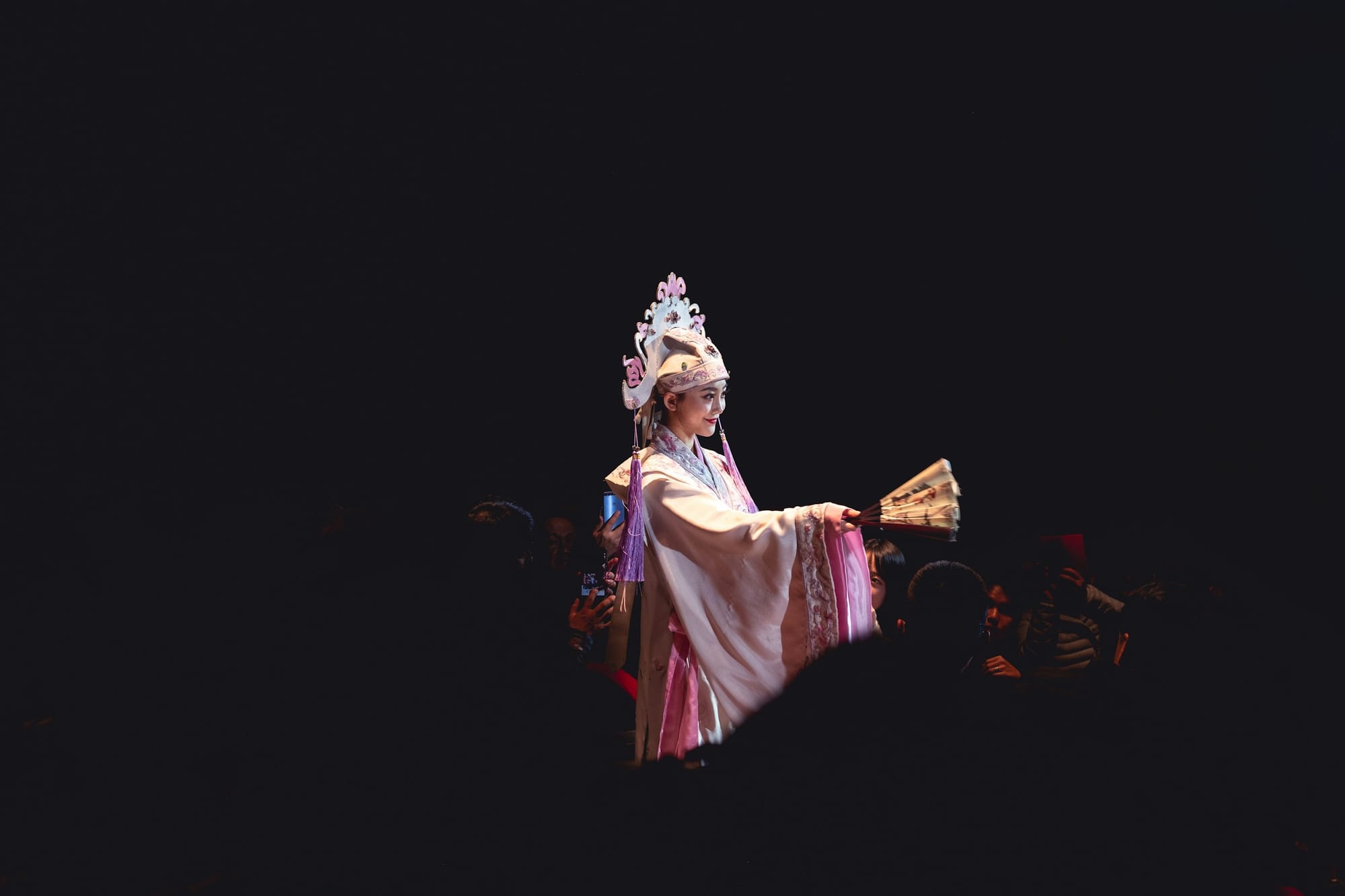
On stage, UNESCO describes song and recital combined with a complex system of choreographic techniques, acrobatics and symbolic gestures. The form features a young male lead, a female lead, an old man and various comic roles, all in traditional costume, and it is known for the virtuosity of its rhythmic patterns (changqiang). The instruments listed in the table are used to punctuate actions and emotions.
Representative plays beyond the two in the table include The Lute (Pipa Ji), The Jade Hairpin (Yuzan Ji) and Fifteen Strings of Cash (Shiwu Guan). Since the mid-Qing, Kunqu has been performed mainly as excerpt plays (zhezixi, "folds"). We suggest thinking of a first evening as a taste of the form rather than a full story.
Where can you see Kunqu live in Suzhou?
Jiangsu Suzhou Kunqu Theatre is the company to look for in Suzhou, and it works with the Suzhou Opera Museum on a performance season of classic excerpt plays. Performance activity for the form is mainly concentrated in Jiangsu, Zhejiang, Shanghai, Beijing and Hunan.
In 2003 the company worked with writer Bai Xianyong to create the youth edition of The Peony Pavilion. Over 21 years it has toured for 540 performances at home and abroad, with more than one million audience members in the theater, about 75 percent of them young people. We suggest asking whether the current season includes any scenes from that production, since this page cannot tell you.
The company also runs a transmission plan for classic excerpt plays, and in 2025 it raised the number passed on to young performers from 10 a year to 20 a year. In January 2025 Suzhou published a three-year action plan (2025–2027) for protecting and passing on traditional opera excerpt plays. From February 2025 the company ran an "art class in the theater" program for families.
The national record notes that after 1949 the state set up 7 independent professional Kunqu companies, and that today the form is performed mainly by professional companies. We suggest checking the company's current season directly before you plan around it. This page does not list dates, times or seat plans, so confirm those with the company.
How is Kunqu different from Beijing opera?
The difference this page can document is what Kunqu asks of its audience: UNESCO says it demands high technical knowledge from its audience, and of the 400 arias regularly sung in the mid-20th century only a few dozen are still performed. For Beijing opera itself, see our Beijing opera page.
The two forms are related rather than separate. Kunqu influenced the formation of Beijing opera, according to the national record, and UNESCO adds that it has had considerable influence on more recent forms such as Sichuan opera. If you plan to see both, we suggest keeping them on separate evenings, ideally in different cities, so each form gets your full attention.
We suggest treating the audience demand as an invitation rather than a warning. Read a one-paragraph plot summary of the excerpt before you go, and expect to follow the mood through the music and movement before you follow every detail.
How should first-time visitors plan a Kunqu evening?
We suggest choosing one excerpt evening from the company's current season and building the rest of your Suzhou day around it. Keep the day light, because an evening of live music rewards a rested audience.
Role types are worth a glance before you sit down. The national record lists laosheng, xiaosheng, dan, tie, laodan, wai, mo, jing, fu and chou. You do not need to memorize them: the lead roles described earlier are enough to start with, and you can notice the others as they appear.
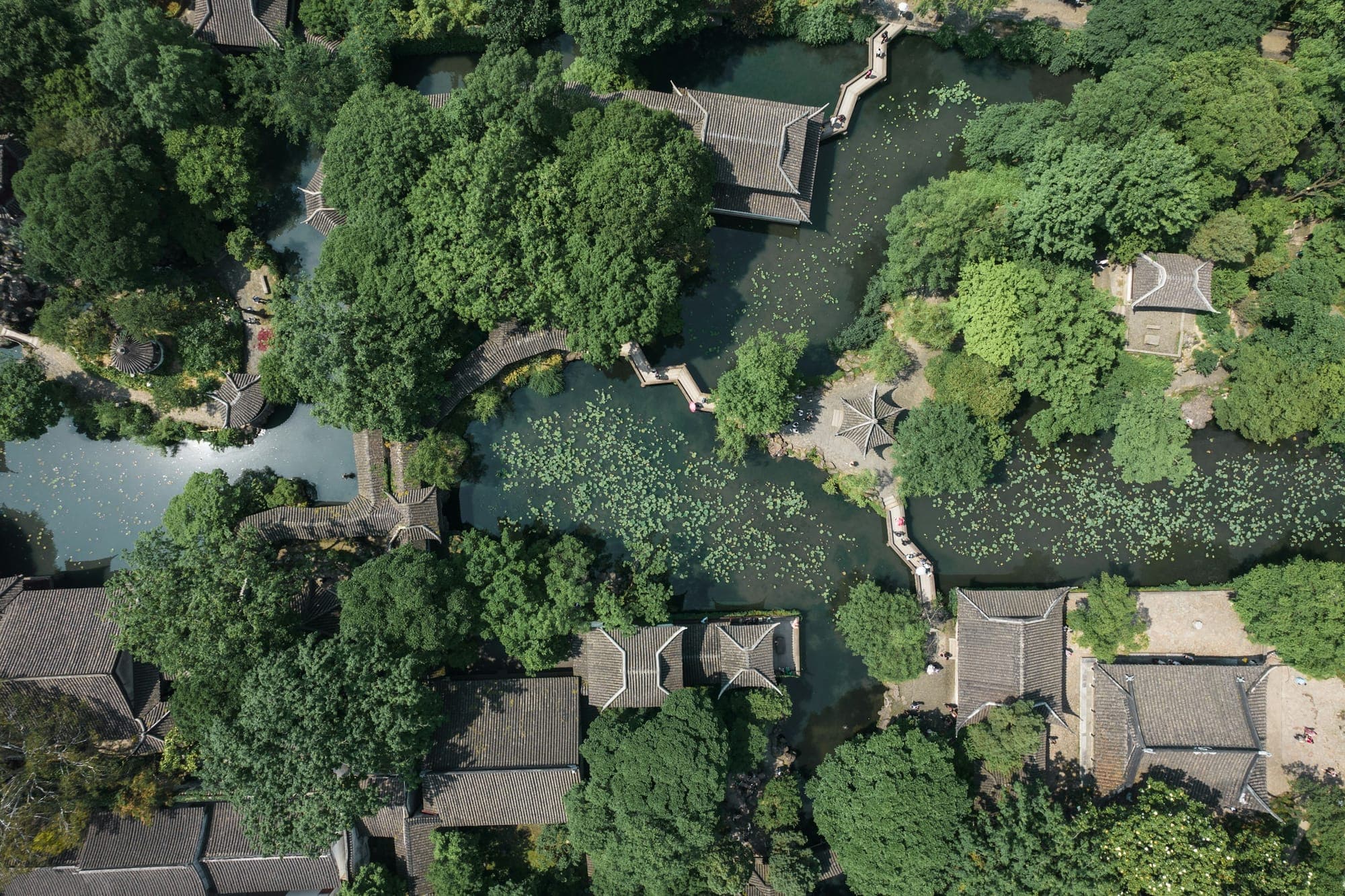
For the order of the day, we suggest a morning or early-afternoon visit to the classical gardens, a slow meal, a rest at your hotel, and then the theater. Arrive early enough to find your seat without hurrying, and keep your phone away during songs. If you are coming from Shanghai, our page on the Shanghai to Suzhou high-speed train covers the journey. We suggest staying the night in Suzhou rather than racing back after the final bow.
Once the music starts, we suggest listening for the flute line first and letting the percussion mark the moments of action. Do not try to decode every gesture. Pick one performer to follow through each scene.
Before you book, set up Alipay for foreigners so your payment method is ready when you reach the booking step. We also suggest keeping your booking confirmation on your phone and saving the theater's name in your maps app before you leave the hotel.
How does a Kunqu night fit an Independent or Private Guided trip?
A Kunqu evening fits both Independent and Private Guided trips as a single fixed point in a Suzhou day, with everything else left flexible.
On an Independent trip, we suggest deciding before you arrive whether a local guide add-on would help on the day of the performance, for example to explain the excerpt beforehand. If you prefer to go on your own, read the plot summary in advance and keep your booking confirmation handy. Either way, we suggest leaving the hour before the performance free so a late lunch or a slow garden does not push you into a rush.
On a Private Guided trip, we suggest asking your guide to time the day around the performance and to brief you on the excerpt over lunch. Your private car can then take you to and from the theater, so the evening ends without a search for transport.
To see how Kunqu sits alongside the rest of the city, start from our Suzhou destination page, then add the evening to the days you have already chosen.
Plan your trip with LocalKey
LocalKey can arrange a Kunqu evening inside your Suzhou days, whether you travel on your own or with a private guide. Our private China tours put your own China trip, planned, booked and backed by one team.
- Independent: you travel on your own with the LocalKey app and 24/7 backup, with no full-time guide on any day; a local guide, airport pickup or a private car and driver are optional add-ons.
- Private Guided: an English-speaking private guide and a private car throughout.
To talk with a 1:1 specialist, reach us any time, 7×24, on WeChat or WhatsApp. LocalKey does not sell group tours.
Sources
- China ICH Digital Museum — Kunqu (national list IV-1) — verified_on 2026-10-18
- UNESCO Intangible Cultural Heritage — Kun Qu opera — verified_on 2026-10-18
- China ICH Digital Museum — Kunqu on the UNESCO list — verified_on 2026-10-18
- Suzhou Municipal People's Government — Kunqu news, 8 March 2025 — verified_on 2026-10-18