Updated 17 October 2026 · Frank Zhang
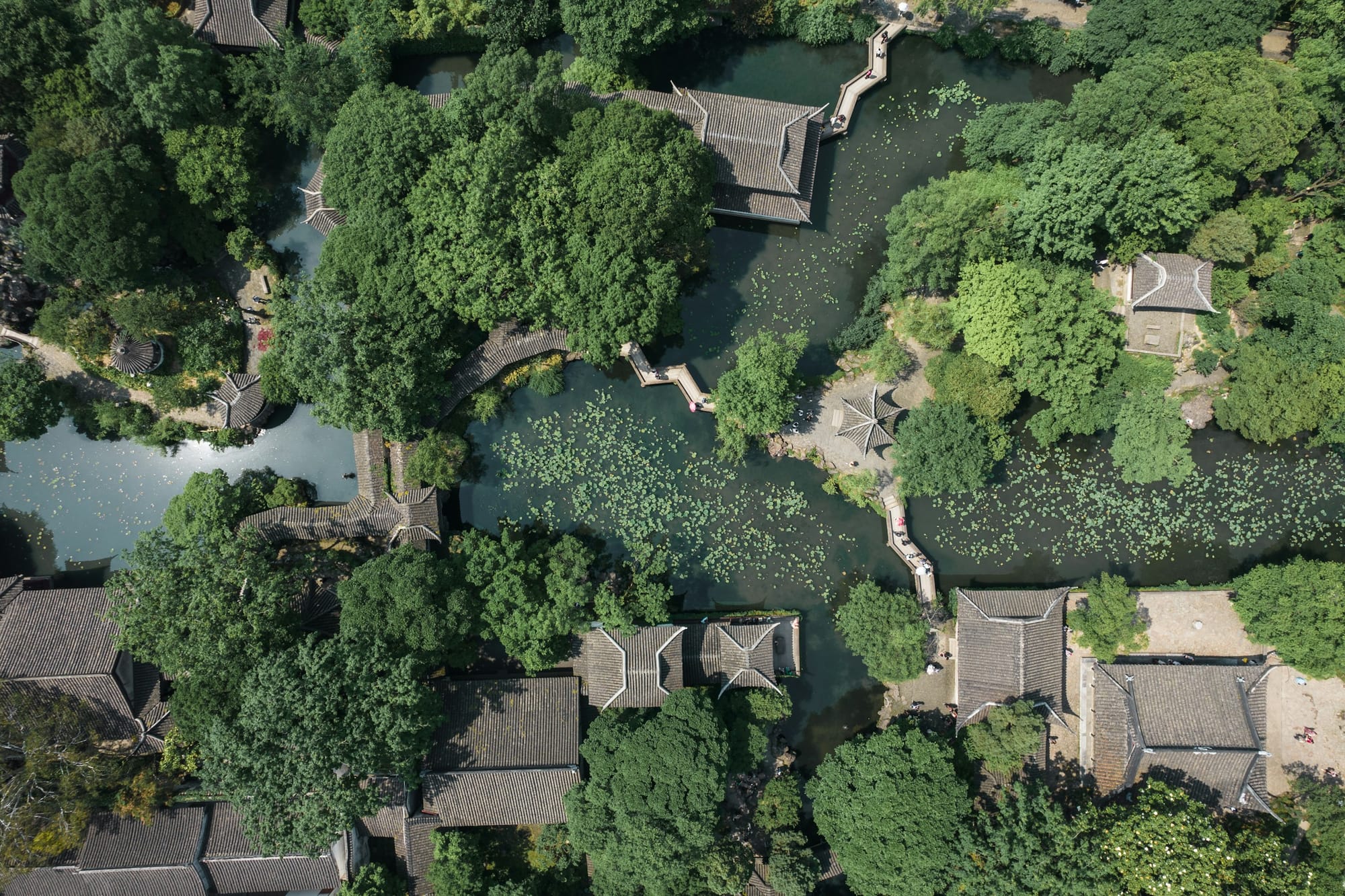
The Classical Gardens of Suzhou are a UNESCO World Heritage property of nine gardens, inscribed in 1997 and extended in 2000, and we suggest you plan to sit one or two of them rather than all nine. Independent or Private Guided, the gardens fit one unhurried morning or afternoon inside a Suzhou stay.
This page sets out what the listing is, how many gardens it names, and how we suggest you plan a visit. The listing facts come from the UNESCO World Heritage page, which records the property under criteria (i), (ii), (iii), (iv) and (v). It covers 11.922 ha, with a buffer zone of 26.839 ha, and its dossier reference is 813bis.
The history behind the listing is long. Private gardens in Suzhou go back to about the 4th century, and the city itself was founded as the capital of Wu in the 6th century BCE. The earliest of the nine listed gardens, Canglang Pavilion, was built in the early 11th century, and the tradition reached its climax in the 18th century.
The nine gardens are:
- Humble Administrator's Garden
- Lingering Garden
- Net Master's Garden (Master of the Nets)
- Mountain Villa with Embracing Beauty
- Canglang Pavilion
- Lion Grove Garden
- Garden of Cultivation
- Couple's Garden Retreat
- Retreat and Reflection Garden
A serial property is a single listing made up of several components, which is why the nine gardens appear together under one UNESCO entry. For a visitor, the practical point is simple: you visit the gardens one at a time, and one or two gardens make a comfortable day.
We suggest reading "Mountain and Water" as a prompt for what to look at: how rock, water and buildings sit together in each garden. For the wider city, see our Suzhou destination page.
How many gardens are on the UNESCO listing?
Nine gardens are on the UNESCO listing: four inscribed in 1997 and five added by the extension in 2000. The property is serial, so the nine gardens are components of one World Heritage listing rather than nine separate ones.
| Inscription | UNESCO decision | Gardens | Count |
|---|---|---|---|
| 1997 (initial inscription) | 21 COM VIII.C | Humble Administrator's Garden; Lingering Garden; Net Master's Garden (Master of the Nets); Mountain Villa with Embracing Beauty | 4 |
| 2000 (extension) | 24 COM X.C.2 | Canglang Pavilion; Lion Grove Garden; Garden of Cultivation; Couple's Garden Retreat; Retreat and Reflection Garden | 5 |
| Total | Serial property | Nine gardens | 9 |
UNESCO's component table, from its Periodic Reporting document, groups the gardens the same way. Names vary slightly between sources: Net Master's Garden also appears as Master of the Nets, Lion Grove Garden as Lion Forest Garden, and Couple's Garden Retreat as Couple's Retreat. We suggest matching a garden by its place in the table rather than by one spelling, especially when you read signs, maps or booking pages.
The 1997 and 2000 split is useful as a planning hint, not as a ranking. We do not say which garden is best, because the record does not. If you want a simple pair, we suggest one garden from the 1997 group and one from the 2000 group, which gives you two components of the same listing; Canglang Pavilion, the earliest of the nine, is in the 2000 group if you want the oldest.
The count matters too. More than 50 classical gardens still exist in Suzhou and nine are on the list, so a garden you see on a map that is not among the nine can still be worth your time; it simply is not one of the listed components.
How should you plan a visit to one or two gardens?
Plan around one or two gardens in a day, not all nine on the UNESCO listing. This page leaves out ticket prices and opening hours, which change and are not part of the UNESCO record.
Here is how we suggest building the day:
- Choose your gardens first. Pick one or two names from the list above by interest, not by a ranking, because we do not rank them.
- Leave room around each garden. We suggest keeping the rest of the day light, with a gap before and after each garden, so you can sit rather than hurry to the next stop.
- Check access close to your date. Because this page gives no prices or hours, we suggest confirming current entry arrangements shortly before you go, or asking us to do it.
- Skip bundled shopping stops. We suggest not adding silk shops or timed photo stops between gardens; one or two gardens, then lunch and an unhurried walk, makes a better day.
- Keep one question for the day. We suggest choosing one thing to look for in each garden, such as how a pavilion frames the water or how rock is placed, so the visit has a thread without becoming a checklist.
If you reach Suzhou by train, we suggest reading how foreigners buy 12306 train tickets before you book. For moving around, our China metro for foreigners page covers the basics. If your Suzhou stay is a single night or a day from another city, we suggest choosing the garden pair first and building the rail times around it, not the reverse.
If the day has room, we suggest pairing a garden with another Suzhou topic: our pages on Suzhou embroidery and Suzhou Kunqu cover two of them. If Suzhou is one stop in a longer route, Hangzhou West Lake and Longjing is a sister page for the next stop, and the 10-day China itinerary shows how stops can be sequenced.
How do the gardens fit an Independent or Private Guided day?
Independent means you travel on your own with the LocalKey app and 24/7 backup, with no full-time guide on any day. Private Guided means an English-speaking private guide and a private car throughout.
Both options are described on our private China tours page: the Independent route and the Private Guided route. Neither is a group tour, and a garden visit fits either one.
On an Independent day, we suggest keeping the garden as the centre of the plan and everything else light. You move yourself with the app, and the 24/7 backup is there if a booking or a transfer goes wrong. A local guide, airport pickup, or a private car and driver are optional add-ons for the days you want them. If you choose only one, we suggest a local guide for the garden morning, because the gardens reward having someone explain what you are looking at.
On a Private Guided day, the guide and car stay with you throughout, so the visit can be paced to you: one garden, a pause, perhaps a second garden, and the car between them. We suggest telling us early if you would rather stay at a single garden all morning, so the day is built around that.
If you are travelling as a family or a small group of friends, the same logic holds. Both options are private to your party, so the pace of the day can follow the slowest walker, which suits gardens that are best at a gentle pace.
As a rule of thumb, we suggest Independent if you like to wander at your own pace and are comfortable with trains and the metro, and Private Guided if you want the gardens explained and the logistics handled for you.
Plan your trip with LocalKey
LocalKey can plan a Suzhou stay around one or two of the nine gardens and fit it into a longer China route. Every trip is planned, booked and backed by LocalKey, whether you choose Independent or Private Guided. Tell us your dates, how many days you have in Suzhou, and whether you prefer to travel on your own or with a private guide, and we will suggest a pace.
We would rather give you one well-paced garden day than a packed list, and we say so when we plan. If you already have favourite names from the list above, send them with your request. To start, see our Suzhou destination page or the private China tours overview.
Talk to a 1:1 specialist, available 7×24 on WeChat or WhatsApp.
Sources
- UNESCO — Classical Gardens of Suzhou — inscribed 1997; extended 2000 (decisions 21 COM VIII.C and 24 COM X.C.2) — verified_on 2026-10-17