Updated 16 October 2026 · LocalKey consultant team
Dujiangyan is the living irrigation half of the UNESCO Mount Qingcheng and Dujiangyan listing (2000); we suggest visiting the weir as its own outing rather than stacking it with a rushed Chengdu morning.
How do you visit Dujiangyan in 2026?
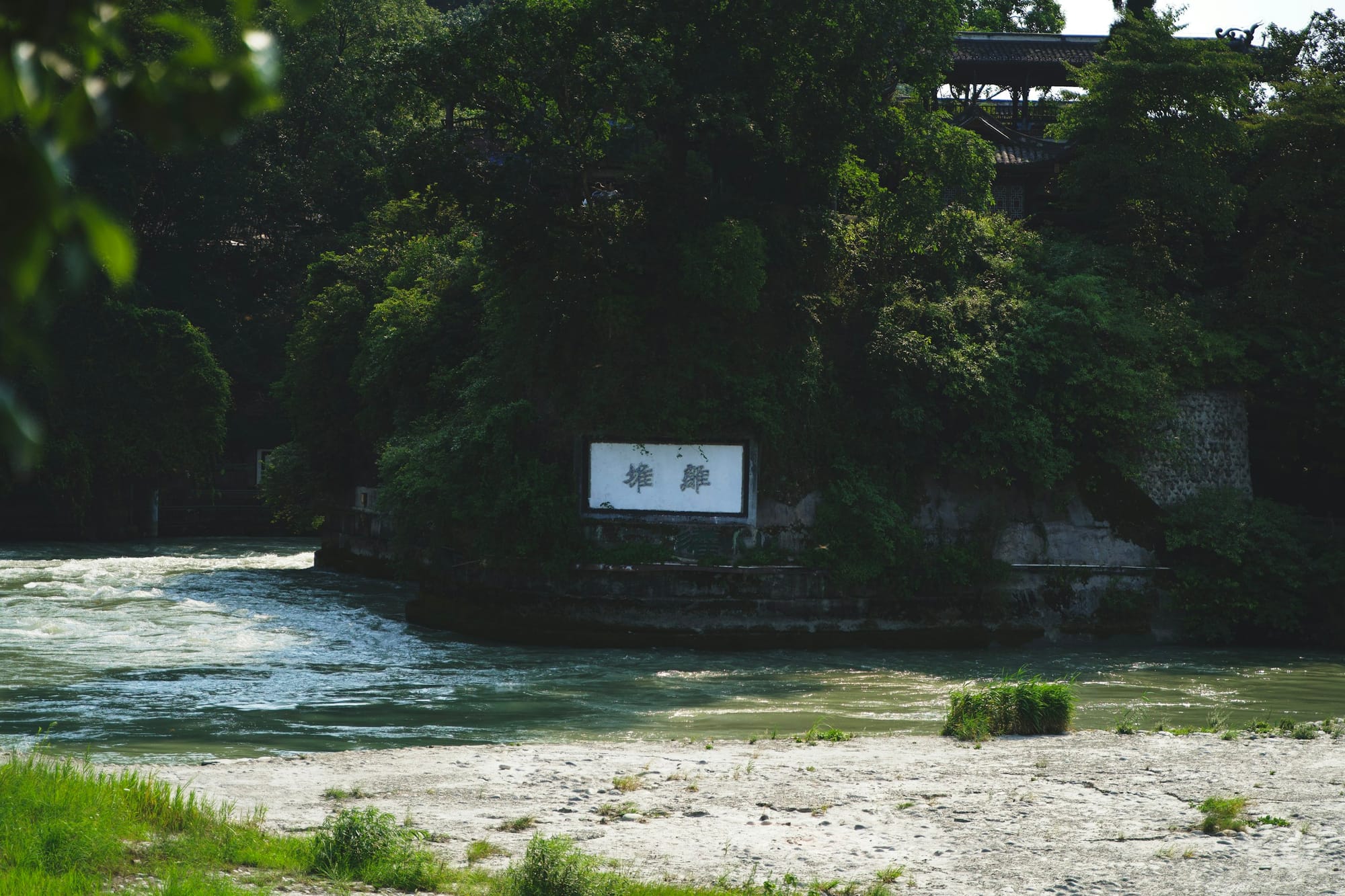
Dujiangyan is an irrigation system that was originally constructed around 256 BC, and it sits in Dujiangyan City, Sichuan. We suggest treating it as a calm half-day or a relaxed full day from Chengdu, with nothing else scheduled around it that would force you to hurry.
The reason for that advice is simple. The weir is a place you understand by walking slowly and looking at how water is guided across a landscape. It is not a place you tick off between two other appointments. If you arrive tired, late or already behind schedule, you will see less and remember less.
Here is how we suggest shaping the day:
- Keep the day light. Pair the weir with an unhurried lunch and an early return, not with a second major sight. Chengdu has plenty to offer in the evening, so you do not need to fill the daytime hours as well.
- Read a little first. Knowing that the system dates to around 256 BC, and that later dynasties modified and enlarged it, turns a pleasant riverside walk into something with a clear story. The next section sets out what the sources confirm.
- Choose a calm travel day. If your Chengdu days are crowded, put the weir on the day after a slow morning, not the day after a late flight.
- Carry your phone and payment ready. Mobile payment is the normal way to pay in China. Our page on Alipay for foreigners explains how to set it up before you travel, so small purchases on the day are not a worry.
- Save place names in pinyin. Having the name of the site and of your return point on your phone makes it easier to show a driver, a staff member or a passer-by what you need.
A note on scope. The UNESCO listing joins two places, and Mount Qingcheng is the other half of its name. This page uses that name only as the listing title. We do not cover a mountain itinerary here, so you can plan the weir visit on its own terms.
If you want a gentler pairing for the same trip, consider the evening back in the city. Our page on the Chengdu teahouse experience is a quiet way to close a day spent outdoors. If you are interested in craft, Chengdu Shu embroidery is another unhurried indoor option for a different day.
What does the UNESCO listing cover?
UNESCO inscribed Mount Qingcheng and the Dujiangyan Irrigation System in 2000, under criteria (ii), (iv) and (vi). The irrigation system was originally constructed around 256 BC, and the Chinese heritage administration dates it to the 3rd century BCE.
The table below sets out what the two sources in this article confirm. We have kept it to the verified facts and have not added engineering figures that neither source gives.
| Item | What the sources confirm |
|---|---|
| Listing name | Mount Qingcheng and the Dujiangyan Irrigation System |
| Year inscribed | 2000 |
| Criteria | (ii), (iv) and (vi) |
| Original construction | Around 256 BC (UNESCO); 3rd century BCE (NCHA) |
| Later history | Modified and enlarged in the Tang, Song, Yuan and Ming dynasties (UNESCO) |
| Setting | Western Chengdu flatlands, at the junction of the Sichuan basin and the Qinghai-Tibet plateau (UNESCO) |
| Location | Dujiangyan City, Sichuan (NCHA) |
Two points in the table are worth slowing down for. The first is the long timeline. A system first built around 256 BC and then modified and enlarged under four later dynasties is not a single monument from one moment. It is a place that people kept adjusting over many centuries. That is why we call it a living weir: the story is one of continued use and change, not of a fixed relic.
The second is the setting. UNESCO places the system on the western Chengdu flatlands, at the junction of the Sichuan basin and the Qinghai-Tibet plateau. If you keep that in mind while you walk, the surrounding landscape makes more sense, because you are standing where highland meets plain.
The criteria numbers are the formal reasons for inscription. We do not paraphrase them here, because the exact wording belongs to UNESCO. If you want the full text, the first link in the Sources section goes straight to the listing page.
One more practical point. Because the listing carries two names, you may see signs, booking pages or tour descriptions that mix them together. We suggest deciding up front that your day is for the irrigation system, then checking any plan you are offered against that goal. This avoids ending up on an unplanned mountain circuit when you expected a walk along the water.
How do you get there from Chengdu?
Dujiangyan City lies in Sichuan, and UNESCO places the irrigation system on the western Chengdu flatlands. We do not list timetables or journey times on this page, because transport options change and we only publish facts we have verified.
What we can give you is a way to think about the journey, so that you choose the option that suits your trip.
- Decide how much logistics you want to own. Some travellers like working out the route themselves. Others prefer to arrive at the site with energy left for looking, not for navigating.
- Confirm the current option before the day. Ask your LocalKey specialist to check the present route and the return plan, and screenshot the key place names in pinyin for your phone.
- Plan the return, not just the arrival. The most common planning gap on a day trip is the way back. We suggest fixing your return approach before you set out, so that you are not deciding it while tired at the end of the day.
- Allow slack. Build in time between the site and anything you have booked in the evening. A relaxed buffer is cheaper than a missed reservation.
- Keep your documents with you. Carry your passport and have your hotel name saved in pinyin, in case you need to explain where you are going.
If a private car and driver suits your plans, that can be added to an Independent trip as an optional extra on demand. A driver who handles the route lets you spend the whole day on the weir itself. This is a convenience choice and not a requirement, and many first-time visitors manage a day like this comfortably with good preparation.
Do not hire or arrange anything informal at the roadside on the day. We suggest arranging transport in advance through a source you can reach again if something changes. That is part of what you are paying for when a trip is properly set up.
Do you need a tour for Dujiangyan?
You do not need a group tour for Dujiangyan, and we do not suggest one. LocalKey offers two ways to plan a visit, both built around your own China trip — planned, booked and backed — and neither is a group departure.
Independent is for travellers who prefer to move on their own. You travel on your own with the LocalKey app and 24/7 backup, and there is no full-time guide on any day. A local guide, airport pickup or a private car and driver are optional add-ons you can request when you want them. If you are comfortable with some preparation and like exploring at your own speed, this suits a weir visit well, especially if you add a local guide for just the Dujiangyan day.
Private Guided is for travellers who want a more supported trip. It means an English-speaking private guide and a private car throughout the trip. If you would like someone to explain the history of the system as you walk, and you want logistics handled from start to finish, this is the better fit.
Both options are on our private China tours page. You can go straight to the Independent or Private Guided section to compare them.
LocalKey can arrange a Dujiangyan day inside a wider Sichuan itinerary, or as a stand-alone outing. We begin with how you like to travel, how much walking suits you and how many days you have in Chengdu. If you are still deciding where else to go, our Chengdu destination page is the natural starting point.
A few questions help you decide:
- Do you want someone to explain the layers of history on site, or are you happy reading ahead and walking quietly?
- Would you rather leave route-finding and the return journey to a driver?
- Is this a single outing in a packed Chengdu stay, or one chapter in a longer Sichuan trip?
If your answers lean toward explanation and ease, Private Guided is likely to feel right. If they lean toward independence with a safety net, Independent with an optional local guide for the day is a sound combination.
Plan your trip with LocalKey
If you would like Dujiangyan placed sensibly inside your Chengdu days, speak with a 1:1 specialist. They can walk you through the pacing, the transport choice and whether Independent or Private Guided fits you better. Our team is reachable 7×24 on WeChat and WhatsApp, so you can ask questions at whatever hour suits your time zone.
Tell us how many days you have, how you like to travel and what you hope to see. We will help you build a plan that keeps the weir as a calm, well-paced outing. Start from our private China tours page whenever you are ready.
Sources
- UNESCO — Mount Qingcheng and the Dujiangyan Irrigation System — verified_on 2026-10-16
- NCHA — Mount Qingcheng-Dujiangyan