Updated 15 October 2026 · LocalKey consultant team
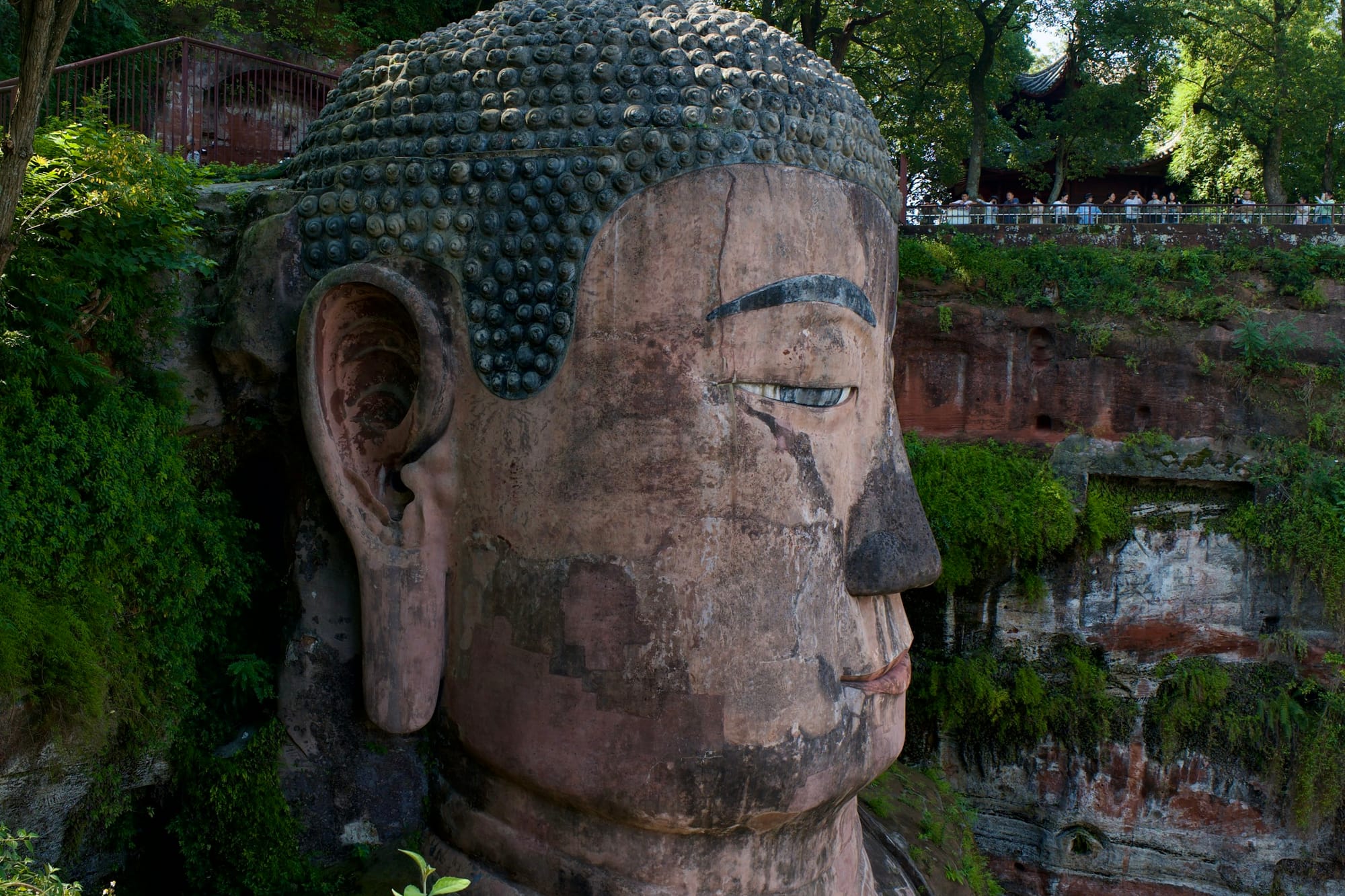
The Leshan Giant Buddha is an 8th-century cliff carving 71 m high at the confluence of three rivers in Leshan, Sichuan, inscribed with Mount Emei as a UNESCO mixed site in 1996; we suggest giving it its own half-day or day from Chengdu rather than stacking it as a photo stop on a commission coach.
How do you visit the Leshan Giant Buddha in 2026?
The Leshan Giant Buddha is a cliff carving made in the 8th century, 71 m high, cut out of the hillside of Xijuo Peak and looking down on the confluence of three rivers. It was inscribed in 1996 as part of Mount Emei Scenic Area, including Leshan Giant Buddha Scenic Area, on the UNESCO World Heritage List (list 779).
A visit here is a single-subject day. You come to see one very large carving in its river setting, and the useful planning questions are which day you give it, how you pay once you arrive, and how much support you want around you. The checklist below separates what the official record fixes from what we suggest.
Leshan Giant Buddha checklist
| What to sort | What the official record locks | What we suggest |
|---|---|---|
| UNESCO listing year and criteria | Inscribed in 1996 as a mixed cultural and natural site (list 779). The National Cultural Heritage Administration (NCHA) records criteria (iv), (vi) and (x). | Read the listing once before you go, so the carving makes sense as part of a wider heritage file and not only as a photo. |
| Height and century | The Buddha is 71 m high and was carved in the 8th century. | Leave time to look at the figure from more than one point, not one quick stop at the gate. |
| Three rivers and the confluence | The Buddha looks down on the confluence of three rivers. | Plan the day around the river setting as well as the figure, and keep the afternoon loose. |
| Leshan and Mount Emei as separate days | The two areas sit under one 1996 inscription, but they are different places: a cliff carving and a mountain temple landscape. | Give each its own day; do not fold Emei into a Leshan day. |
| Payment setup before the gate | Not a heritage fact; the official record does not cover it. | Set up your mobile wallet at home, before you land in Sichuan. |
| Booking style | Not a heritage fact; this is a LocalKey product choice. | Choose Independent or Private Guided before you fix dates. |
Payment is the item most visitors leave too late. We suggest setting up your wallet before you leave home, and our Alipay for Foreigners page walks through that setup step by step. Do it before travel, not at the scenic-area gate.
If you are still deciding where Leshan sits in a longer route, our Where to Visit in China 2026 page puts Sichuan next to the other regions people usually compare.
Is the Leshan Giant Buddha the same as Mount Emei?
No. Mount Emei (Emeishan) is the mountain where Buddhism first became established on Chinese territory, while the Leshan Giant Buddha is a separate 8th-century cliff carving at the confluence of three rivers.
UNESCO lists them together in one 1996 inscription, which is why the two names are often run together.
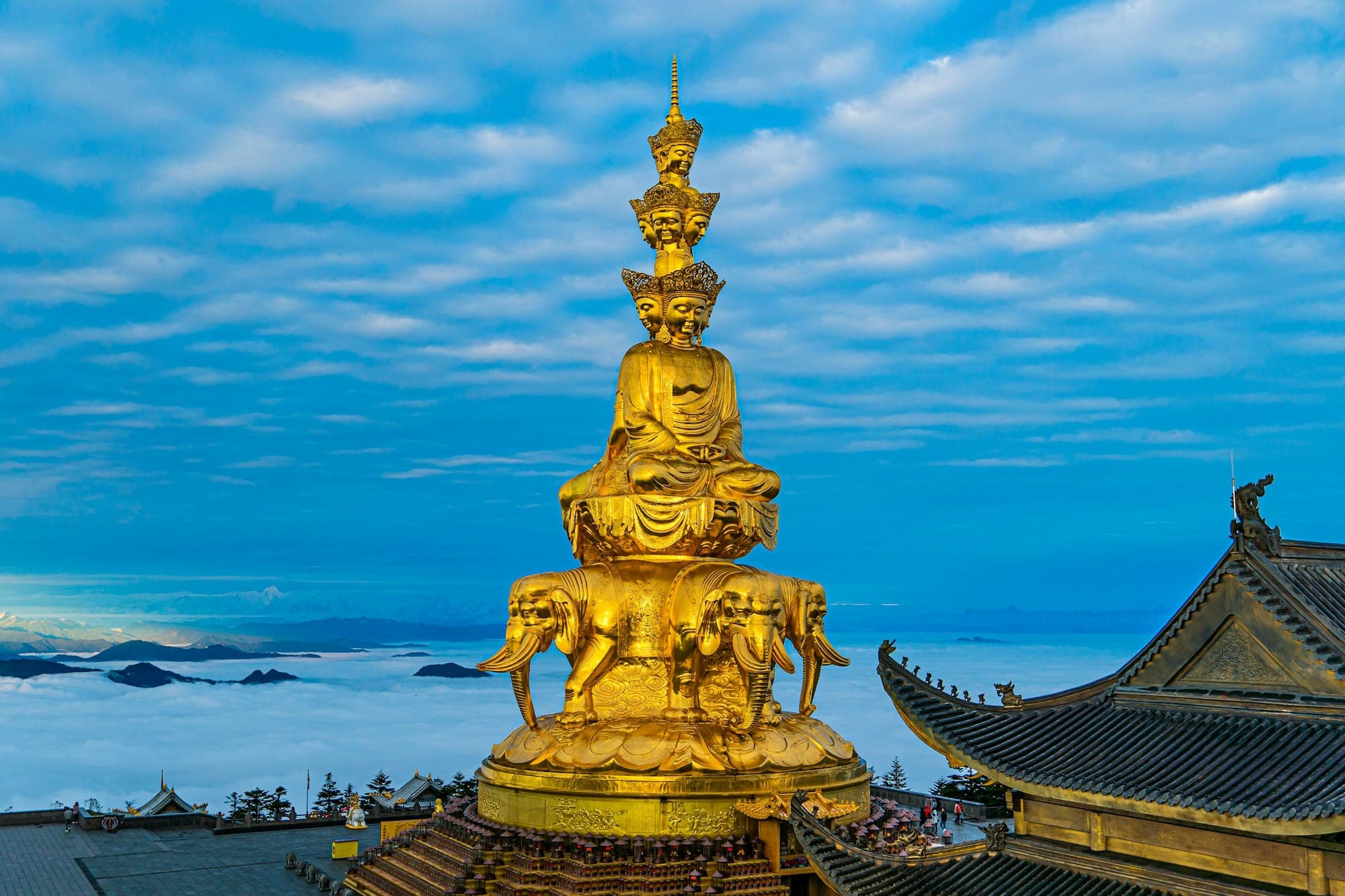
That shared file is the source of most of the confusion. UNESCO describes the first Buddhist temple in China as built on Mount Emei in the 1st century A.D., and notes that management of the mountain dates from the middle of the 10th century. The Leshan Giant Buddha is one of the cultural treasures associated with that landscape: carved in the 8th century CE out of the hillside of Xijuo Peak. The NCHA page uses the combined title Mount Emei-Leshan Giant Buddha (Mixed Cultural and Natural Heritage), and places the heritage in Leshan City, Sichuan.
The "mixed" label matters too. The natural side of the listing is about the mountain: UNESCO cites criterion (x) for its exceptional floral diversity, about 3,200 plant species. That is a reason to treat Emei as a mountain day with its own pace, temples and walking. The Giant Buddha is not that kind of day. It is a carving, a cliff and a river.
We suggest planning them as two separate days, with different expectations. For the mountain day, our Mount Emei 2026 page covers the Emei side on its own terms. For the carving, read on: the rest of this page is only about the cliff Buddha, the day you give it, and how to get there.
How do you get to Leshan from Chengdu, and how long do you need?
Leshan is in Sichuan Province, and we suggest using Chengdu as your base for visiting it. This is LocalKey advice on how to shape the day; we have not set out train times, bus numbers or ticket details here, because those change and should be checked close to your date.
Chengdu is a practical base because most international visitors already pass through it, and our Chengdu destination page covers the city itself. Our Leshan destination page covers the local side. For planning, we suggest thinking in two shapes of day rather than one fixed route:
- A half-day if the Buddha is the only thing on your list and you are happy to keep the rest of the schedule light.
- A full day if you want to see the carving at an unhurried pace, take in the river setting, and keep a buffer for meals and the return to Chengdu.
If you are choosing between the two, we suggest the full day for first-time visitors. A carving this size rewards slow looking, and a day that ends in a rush back to the city tends to flatten the experience. It also leaves room for a break in the middle, which matters in Sichuan's warm, humid months.
We suggest keeping the Leshan day separate from your Mount Emei day in the diary, even though both are near each other on the map. The two places ask for different energy, and stacking them tends to shortchange both.
For the journey itself, a private car and driver is available as an optional add-on if you would rather not work out the local transport yourself. We suggest deciding this when you book, not on the morning. Whichever way you travel, we suggest checking current transport options with a LocalKey specialist a few days before you go.
Do you need a tour to see the Leshan Giant Buddha?
You do not need a coach tour to see the Leshan Giant Buddha; the real choice is how much support you want around the day. We suggest avoiding a commission coach that treats the carving as one photo stop among several, because the cliff and the river setting reward more time than that.
LocalKey offers two ways to do this, and neither is a group tour.
Independent is your own trip, run with the LocalKey app and 24/7 backup. There is no full-time guide on any day. A local guide, airport pickup or a private car and driver can each be added on demand, so you can add support only where you want it, for example a local guide for the Leshan day alone. See Independent.
Private Guided is an English-speaking private guide and a private car throughout the trip. It suits visitors who want the history of the carving explained on site and want the logistics handled for them. See Private Guided.
LocalKey can arrange either style, with Leshan as a half-day or full day out of Chengdu, and with Mount Emei kept as its own day. If you want to see how the two styles sit inside a wider itinerary, our private China tours page sets them out side by side.
We suggest choosing the style first and the dates second. Your answer to "how much do I want explained on the day?" decides most of the rest.
Plan your trip with LocalKey
Your own China trip — planned, booked and backed. That is what we mean by Independent and Private Guided: either way, the trip is yours, with real people behind it.
LocalKey can help you decide how to fit the Leshan Giant Buddha around Chengdu and Mount Emei, how many days to give each, and which support style suits you. Message a 1:1 specialist on WeChat or WhatsApp, 7×24, and we will build the Sichuan section of your route with you.
Sources
- UNESCO World Heritage Centre — Mount Emei Scenic Area, including Leshan Giant Buddha Scenic Area — verified_on 2026-10-15
- NCHA — Mount Emei-Leshan Giant Buddha (Mixed Cultural and Natural Heritage) — verified_on 2026-10-15