Updated 15 October 2026 · LocalKey consultant team
Mount Taishan is a UNESCO mixed World Heritage mountain inscribed in 1987, spanning Tai'an and Jinan in Shandong with its main peak in Tai'an; we suggest planning it as its own day from Tai'an, with time for temples and stone inscriptions, and choosing Independent or Private Guided for how much support you want.
Mount Taishan, also written Mount Tai, is a place to read as much as to climb. Temples, carved inscriptions and a long imperial history sit along a natural mountain landscape. This page sets out what the official record says, so you can decide how much of the mountain you want to see and how you want to travel. It covers the heritage listing, the difference between Taishan and other famous Chinese mountains, and the two ways LocalKey can set up the trip.
How do you visit Mount Taishan in 2026?
Mount Taishan sits in central Shandong Province, and its main peak, the Jade Emperor Summit, stands in the city of Tai'an at 1,545 m above sea level. We suggest giving the mountain a full day of its own, starting early and leaving time to stop at the temples and inscriptions rather than treating the summit as the only goal.
The table below separates what the official record fixes from what we suggest. The left column is the heritage record. The right column is planning advice from our consultants.
Mount Taishan checklist:
| What to sort | What the official record locks | What we suggest |
|---|---|---|
| Inscription year and criteria | Inscribed on the World Heritage List in 1987 under criteria (i), (ii), (iii), (iv), (v), (vi) and (vii), as a mixed cultural and natural property | Read the listing before you go, so the temples and the landscape make sense together |
| Location | Spans the cities of Tai'an and Jinan in central Shandong Province, with the main peak in the city of Tai'an | Base yourself near Tai'an for the mountain, and treat Jinan as a separate stop if you want one |
| Peak height | Main peak, the Jade Emperor Summit, is 1,545 m above sea level | Plan for a real mountain day on foot or with transport on the slopes, not a short stop |
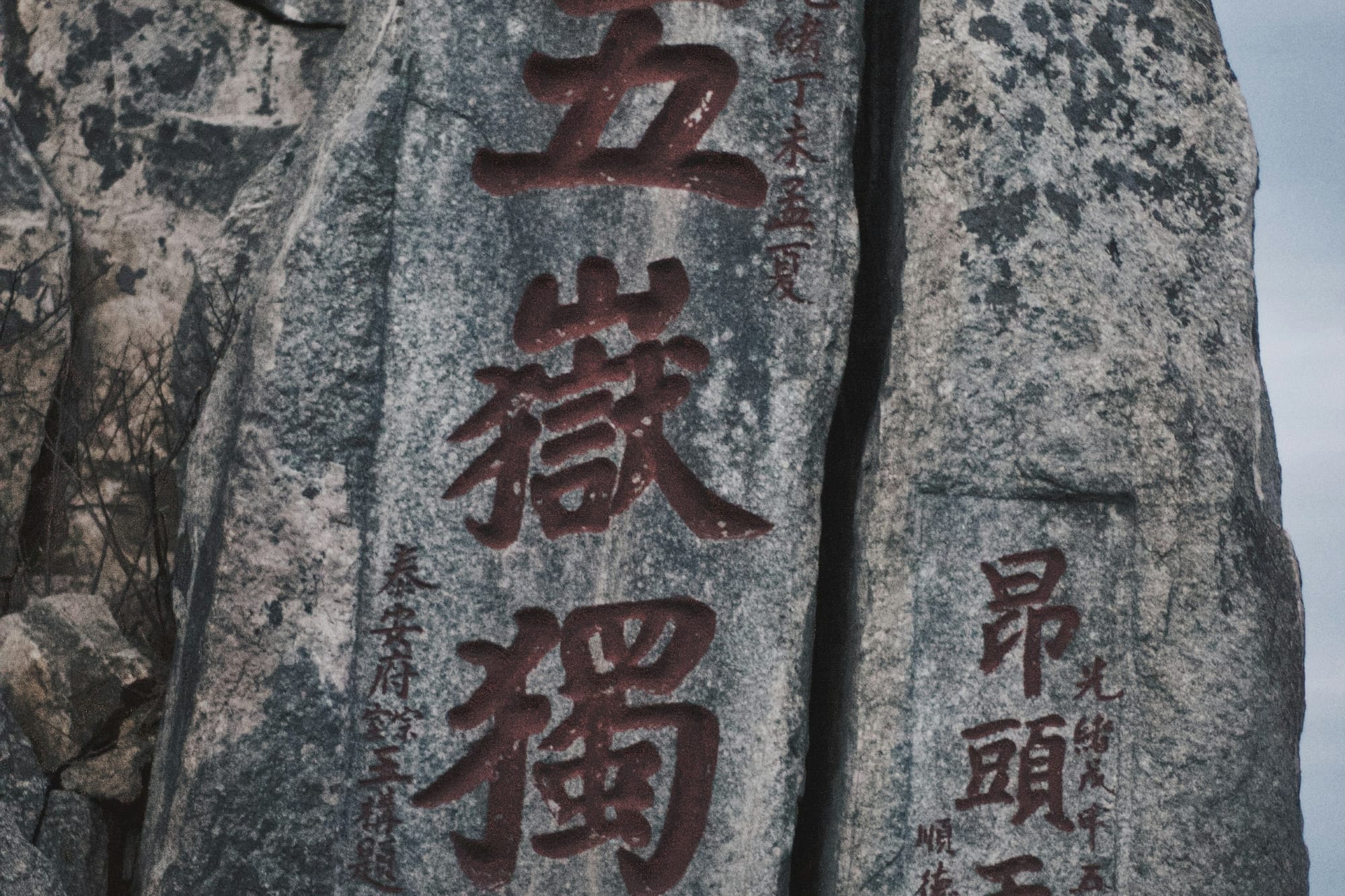
| Steles and temples | About 1,800 stone tablets and inscriptions and 22 temples | Allow time to read and look; the heritage lies in these places as much as in the summit |
| Payment setup | Not a heritage fact | We suggest setting up a mobile wallet before you fly |
| Independent or Private Guided | Not part of the heritage record | Choose Independent if you like to move at your own pace, or Private Guided if you want context on the temples and inscriptions |
Route, ascent method and transport details are not part of the heritage record, so we have not listed them here. We do not quote cable-car or bus details on this page. Your LocalKey consultant confirms the current arrangements when you book, so you plan from live information rather than a fixed guess.
A few practical points follow from the record.
- Start early. The mountain is large and the sites are spread out, so a full day gives you room to see the main places without hurrying.
- Read the mountain, not only the summit. The listing stresses artistic masterpieces in harmony with the natural landscape. The stone tablets and temples are part of the reason the mountain is protected.
- Pack for a mountain. Comfortable shoes and layers matter on any long ascent. Our Hiking in China 2026 page covers general mountain preparation, so we do not repeat it here.
- Treat sunrise as optional. A very early start is a choice, not a requirement. We suggest deciding based on how much you want to walk in the dark, not on a fixed schedule.
If the mood of the mountain is what draws you, our Mount Taishan photography page covers the visual side, and this page stays with the planning.
We suggest setting up a mobile wallet before you fly; see Alipay for Foreigners.
What does the UNESCO listing cover on Mount Taishan?
UNESCO lists Mount Taishan as number 437 on the World Heritage List, and describes it as a sacred mountain that was the object of an imperial cult for nearly 2,000 years. It was inscribed in 1987 and covers about 25,000 hectares.
The World Heritage Centre's description gives the main reasons for the listing:
- It is a sacred mountain, the object of an imperial cult for nearly 2,000 years.
- Its artistic masterpieces stand in harmony with the natural landscape.
- It has been a source of inspiration for Chinese artists and scholars.
- It symbolizes ancient Chinese civilizations and beliefs.
The record also gives local detail. UNESCO calls Mount Taishan the most famous sacred mountain of China. It notes that the area was settled as early as the Neolithic, with the Dawenkou site nearby. The property spans the cities of Tai'an and Jinan in central Shandong Province, and the main peak is in Tai'an. In 1982 the State Council designated it a National Top Scenic Spot.
The listing is a mixed one. It meets all seven criteria, (i) to (vii), which means it is recognised for both cultural and natural value. The heritage record counts about 1,800 stone tablets and inscriptions and 22 temples. These are the visible result of a long tradition of imperial ceremony. The record points to the Fengshan imperial cult, with cult worship at the mountain before 219 BCE. The Qin Emperor paid tribute there, and 12 imperial ceremonies are historically recorded. For a visitor, that history explains why so many inscriptions and temples gather on one mountain.
We suggest reading these points before you arrive. The mountain makes more sense when you know that people have gone up it for ceremony, writing and reflection for a very long time, and not only for the view.
Is Mount Taishan the same as Emei or Huangshan?
No. Mount Taishan is in Shandong, Mount Emei is in Sichuan and Huangshan is in Anhui, and each has its own UNESCO file.
They are separate trips with different histories and different reasons for protection.
It helps to keep them apart when you plan, because they are often mentioned together as famous Chinese mountains. Each page on LocalKey answers a different question.
- Mount Taishan is the subject of this page: a sacred mountain in Shandong, spanning Tai'an and Jinan, with its imperial ceremonial history and its stone inscriptions.
- Mount Emei is in Sichuan. If that is the mountain you are after, our Mount Emei 2026 page covers it separately.
- Huangshan is in Anhui. For that mountain, see Huangshan Hiking and Photography 2026.
Because they are in different provinces, we do not suggest squeezing two of them into a short trip. Each deserves its own planning, and a rushed combination tends to leave you with transfers and little time on the mountain itself. We also do not offer or describe any combined package of these mountains on this page. If you want more than one mountain in a single trip, ask your consultant to build the route around travel time and rest days.
Do you need a tour to hike Mount Taishan?
No tour is required. You can plan Mount Taishan on your own, or have a private guide with you for the day, and LocalKey sets up either.
LocalKey can arrange Mount Taishan as part of your own China trip — planned, booked and backed — without placing you in a group.
There are two ways to travel, and both are private, with no shared coach and no group schedule.
Independent is for travellers who like to move at their own pace. You travel on your own with the LocalKey app and 24/7 backup. There is no full-time guide on any day, but you can add a local guide, an airport pickup or a private car and driver on demand. You see the full set of options on our Independent page section.
Private Guided is for travellers who want context as they walk. You have an English-speaking private guide and a private car throughout the trip. On a mountain with this much inscription and temple history, a guide can explain what you are looking at as you pass it. You see the full set of options on our Private Guided page section.
Both options sit within our wider private China tours. We suggest choosing Independent if you are comfortable reading the heritage record in advance and want flexibility on the mountain. We suggest Private Guided if you would rather have the temples, steles and Fengshan history explained as you go, or if you want a private car handling the transfers around Tai'an.
Either way, we suggest settling payment before you arrive. Your consultant can walk you through this when you book.
Plan your trip with LocalKey
LocalKey can plan Mount Taishan as one stop in a wider route through Shandong and northern China, or as its own mountain day. Tell us how long you have, how much you want to walk and whether you prefer to travel on your own or with a private guide, and we will build the trip around that.
You get a 1:1 specialist who plans the route with you, and they are available 7×24 on WeChat or WhatsApp before and during your trip. Everything is private and set up around your own dates, your own pace and your own China trip — planned, booked and backed.
Start with our private China tours page, or message a specialist directly and tell them you want to visit Mount Taishan.
Sources
- UNESCO World Heritage Centre — Mount Taishan — verified_on 2026-10-15
- NCHA — Mount Taishan (Mixed Cultural and Natural Heritage) — verified_on 2026-10-15