Yes. Mutianyu Great Wall photography in 2026 is a ridge day, not a photo tour: Mutianyu Great Wall is a photography day on the forested mountain ridges of Huairou District, roughly 70 kilometers northeast of central Beijing: an extraordinary 2,250-meter restored Ming dynasty military fortification corridor straddling the rugged granite crests of the Yanshan mountains, renowned among landscape and architectural photographers for its classic postcard ridge silhouettes, a continuous rhythm of 22 numbered watchtowers stepping across rolling knolls, rare dual-sided crenellated parapets engineered for defensive crossfire, the unique three-watchtower pass fortress of Zhengguantai at Tower 4, commanding spur junctions at Big Horn Tower, the precipitous western crest at Tower 20 rising over 540 meters above sea level where the restored ramparts meet the wild cliffs of Jiankou, sweeping valley panoramas framed by over ninety-six percent surrounding forest coverage, accessible aerial cable car and chairlift ascents, and an internationally celebrated cultural landscape inscribed under UNESCO World Heritage List designation 438 as part of The Great Wall — not a locked group photo-tour coach, not a megaphone lecture at every turnstile, and not a packaged retail circuit. This page is how an independent traveler shoots Mutianyu Great Wall in 2026 — Independent or Private Guided — without buying a group photo tour. Regional expressway infrastructure connects central Beijing directly across the northern foothills via the modern G45 Daqing–Guangzhou Expressway and Jingcheng Expressway, reaching the Huairou scenic gateway in roughly an hour and a half by private transfer, while independent travelers access the ramparts via the comprehensive valley visitor service terminal, scenic shuttle buses, passenger cableways, and stone staircases. Hangzhou food is a different province and a different sit; this page is Mutianyu Great Wall Ming military architecture, ridge watchtowers, seasonal light, and independent photography only: watchtower rhythm, ridge crest leading lines, golden-hour masonry textures, atmospheric cloud seas, and independent hiking, cable car, and chairlift access.
The search "Mutianyu Great Wall photo tour" or "Beijing Great Wall photography tour" usually lands on a rigid commercial coach, a tour leader herding twenty people past crowded arrival turnstiles on a fixed two-hour countdown, an unwanted detour to a commercial jade carving factory or tea warehouse along the suburban highway, and an exhausting schedule that treats one of humanity's greatest architectural and landscape fortifications as a hurried souvenir stopover. The shoot people actually keep is an open-ridge day you pace yourself: reserve your official scenic-area ticket with real-name passport verification in advance through official digital platforms, arrange private vehicle transfers from Beijing directly to the Huairou staging base, reach the high ridge crests during the quiet golden hours of early morning or late afternoon, walk the undulating granite ramparts at your own cadence, wait for morning mist or drifting valley clouds to reveal the rhythmic succession of stone watchtowers winding across emerald mountain folds, position your tripod with deliberate stability against mountain wind gusts, and step back when casual midday tourist crowds gather around the central cable car terminal at Tower 14. Official administrative records and international heritage documentation confirm that The Great Wall was inscribed on the UNESCO World Heritage List in 1987 under site reference 438, recognizing its outstanding universal value as a colossal defensive fortification system spanning thousands of kilometers across northern China. Within that comprehensive national inscription, Mutianyu preserves one of the best-restored Ming dynasty sectors in existence, originally built on Northern Qi foundations dating to the mid-sixth century, reconstructed under the leadership of Ming general Xu Da in 1368 with its strategic pass established in 1404, and fortified comprehensively under General Qi Jiguang around 1568. TravelChinaGuide documents that Mutianyu is world-renowned for its dense watchtower spacing—22 watchtowers along a 2,250-meter ridge—and its exceptional surrounding vegetation, offering a far less congested and more scenic experience than the heavily packed flagship ramparts at Badaling, while serving as the accessible, restored companion to the quieter, semi-wild photography sanctuary at Jinshanling. Those are verified institutional, geographic, and architectural facts from national and international heritage authorities, not promotional claims we invent, and not an unchangeable ticket price table.
Treat those official records as indispensable historical and logistical reality for understanding why this serpentine stone wall commands the northern mountain horizon of Beijing, not as a commercial brochure checklist that dictates your morning. A fundamental operational reality must be locked right here: casual travel blogs and unvetted online forums frequently confuse independent landscape photography with commercial group sightseeing packages, or claim that photographing Mutianyu requires joining an organized tour group to navigate scenic shuttles and cable car lines. That is completely untrue. For independent photographers, Mutianyu Great Wall is an open scenic area in Huairou District, Beijing, fully accessible using standard domestic transport, private vehicle transfers, and regular scenic-area admission verified against your original physical passport. No special travel permits, closed-circuit tour registrations, or mandatory group escorts are required to travel from Beijing to Mutianyu, stage in local village guesthouses, or photograph from authorized ramparts, watchtowers, and ridge walking trails. Furthermore, this page must be strictly distinguished from our other regional landscape guides: we reject all identity essays, romanticized folklore, and promotional marketing narratives. This is physical stone architecture, mountain ridgeline topography, dynamic seasonal light, and independent camera work. You ascend the mountain, you observe the masonry and sweeping ridgelines, and you shoot. You do not need a commercial tour guide herding you with a whistle.
This is Beijing Huairou District restored Ming dynasty ridge wall and watchtower architecture photography — not subalpine temperate maritime glacier and 1,080-meter icefall photography on Hailuogou Glacier Photography 2026, not volcanic caldera crater lake and subarctic tundra photography on Changbai Mountain Photography 2026, not vast alkaline inland saltwater shoreline and coastal marsh photography on Qinghai Lake Photography 2026, not ancient Precambrian metamorphic rock pinnacle and sea-of-clouds photography on Mount Fanjing Photography 2026, not maritime island granite peaks and coastal temple ridge photography on Mount Putuo Photography 2026, not glaciated carbonate massif and alpine meadow photography on Yulong Snow Mountain Photography 2026, not mid-elevation alpine ridge and winter plateau photography on Xiling Snow Mountain Photography 2026, not roaring transnational border karst waterfall photography on Detian Waterfall Photography 2026, not desert dune oasis reflections and singing sand photography on Crescent Lake Photography 2026, not arid sedimentary colored-hill fold photography on Zhangye Danxia Photography 2026, not high-altitude karst travertine terraces and multi-tiered alpine lakes on Jiuzhaigou Photography 2026 and Huanglong Photography 2026, not the quieter, high-watchtower-density, semi-wild photographer corridor on Jinshanling Great Wall Photography 2026, and not broader multi-province journey planning on China Photography Trip 2026. Different architecture. Different topography. Different atmospheric behavior. A thoughtful China journey can combine multiple landscape shoots, but they must remain separate, unhurried days — never consolidated into an exhausting multi-province coach rush.
For tickets, hours, section choice, and a Beijing day plan (not photography frames), see How to Visit the Great Wall from Beijing 2026.
Landscape lock, not a photo-tour SKU
The serpentine granite fortifications of Mutianyu Great Wall constitute a nationally protected cultural monument and an internationally inscribed treasure governed by national heritage legislation, state cultural relics protection regulations, National 5A Tourist Attraction standards, and UNESCO World Heritage framework 438, not a commercial merchandise package. The section encompasses approximately 2,250 meters of continuous ridgeline defenses traversing the precipitous crests of the Yanshan mountain range in Huairou District, roughly 70 kilometers northeast of downtown Beijing. Inscribed in 1987 as a central component of The Great Wall UNESCO World Heritage property, Mutianyu preserves the defensive ingenuity and tactical engineering of the Ming dynasty northern defensive line. Built predominantly from robust, finely cut slabs of local granite, the main wall stands between 7 and 8.5 meters high, with a defensive walkway measuring 4 to 5 meters wide along its upper surface, allowing garrison infantry and supply units to maneuver rapidly along the ridge. Across this 2,250-meter span, Ming military architects positioned 22 distinct, numbered watchtowers, creating an average interval of roughly 100 meters between strongholds. Those are verified architectural, historical, and institutional facts — not a promotional claim or an invented admission tariff.
A National 5A rating and UNESCO World Heritage inscription establish rigorous operational and preservation frameworks. They mean organized ticketing checkpoints, designated visitor paths, restored granite staircases alongside preserved watchtower interiors, an enclosed aerial passenger cable car serving Tower 14, an open chairlift serving Tower 6, an alpine wheeled toboggan track descending from Tower 6, bilingual informational markers, and strict statutory prohibitions against masonry vandalism, unauthorized commercial operations, or off-trail wilderness trespassing. They do not guarantee cloudless skies or dramatic golden light, nor do they fix prices permanently in stone. On any shoot day, you must confirm live operating hours, shuttle bus intervals, cableway running status, and seasonal ticketing notices directly through official scenic channels. Meteorological conditions over the Huairou mountains are dynamic: morning valley breezes rake the slopes, autumn temperature inversions periodically generate dense seas of white clouds pooling across the forested lowlands, and summer convective storms can envelope the high towers in swirling fog before breaking into brilliant post-rain sunlight. Independent photographers understand that the Great Wall does not reveal dramatic clearing light on demand; clear morning sunbursts and fiery sunsets are magnificent photographic rewards, while shifting fog, overcast granite textures, and moody skies form the dependable core of serious architectural and landscape imagery. Do not rely on an outdated static price printed in an obsolete guidebook. We will not invent a 2026 admission ticket fee, an internal shuttle fee, a cable car round-trip tariff, a chairlift ticket price, a rigid operating-hour table, an unverified wild crossing route, or a commercial tour ranking.
Landscape and architectural photography along high mountain ramparts carries genuine physical and environmental realities. Operating camera systems along steep stone steps rising and falling across rugged granite ridgelines demands sustained physical stamina. Carrying heavy backpacks loaded with professional camera bodies, fast zoom lenses, and sturdy metal tripods accelerates physical exertion, especially when ascending the steep stairs approaching Tower 20 along the Hero Slope or hiking between Tower 1 and Tower 4. Pace your walking deliberately, carry adequate drinking water and high-energy snacks, and wear supportive hiking boots with rugged rubber tread to handle polished stone surfaces and steep masonry inclines. Mountain wind is another constant factor: exposed ridge parapets experience sudden, powerful wind gusts that can destabilize high-mounted tripod setups or cause camera shake during long exposures. Always weigh your tripod down with a gear backpack attached to the center column hook and use a remote shutter release or self-timer. Early mornings and late afternoons along the crest are significantly colder than valley staging areas; autumn and winter shoots bring freezing temperatures and bitter wind chills that drop well below freezing, requiring thermal base layers, windproof outer jackets, insulated headwear, and photographer gloves with fold-back fingertips. Heritage regulations are strictly enforced throughout the scenic area: defacing ancient masonry, carving inscriptions, removing historic bricks, and climbing past warning barriers onto crumbling unrestored wild sections are serious offenses under national cultural relics protection laws. Furthermore, flying unmanned aerial vehicles (drones) is subject to strict regional airspace controls and scenic area management regulations; unauthorized drone flights without prior administrative approval risk signal jamming, equipment confiscation, and legal fines. If a popular watchtower deck becomes crowded with visitors, step along the parapet to the next tower, explore lower embrasure windows, or wait patiently for the crowds to move along. Your personal safety, legal compliance, and preservation of this ancient monument always outweigh any single exposure.
LocalKey does not sell group photo tours. LocalKey does not sell a Mutianyu Great Wall photo-tour SKU. LocalKey does not sell a suburban Great Wall combo that herds visitors through turnstiles like livestock. LocalKey does not sell group tours.
Restored ridge frames, watchtower rhythm, and cableway access: what you actually shoot
An independent photographer at Mutianyu Great Wall typically focuses on eight distinct visual situations spread across one to two dedicated shoot days based near Huairou or Mutianyu Village: classic postcard ridge compositions from mid-section towers, rhythmic telephoto perspectives capturing the dense succession of 22 watchtowers marching across mountain folds, elevated cable-car approach frames contextualizing the sheer relief of the Yanshan foothills, practical toboggan-adjacent logistics management for delicate optical equipment, vivid autumn forest foliage or crystalline winter snow framing dark granite masonry, low-angle golden-hour side light accentuating unique double-sided crenellations and the Zhengguantai fortress, atmospheric cloud-sea clearings when low valley fog blankets the surrounding woodlands, and candid crowd-contrast compositions comparing Mutianyu's visitor flow against the quieter solitude of sister site Jinshanling. You choose which frames to pursue based on morning weather bulletins, sun angles, wind speeds, and seasonal conditions — not a tour leader's whistle. Confirm open trail sections on the morning bulletin. We will not invent a rigid viewpoint ranking or a guaranteed sunshine schedule.
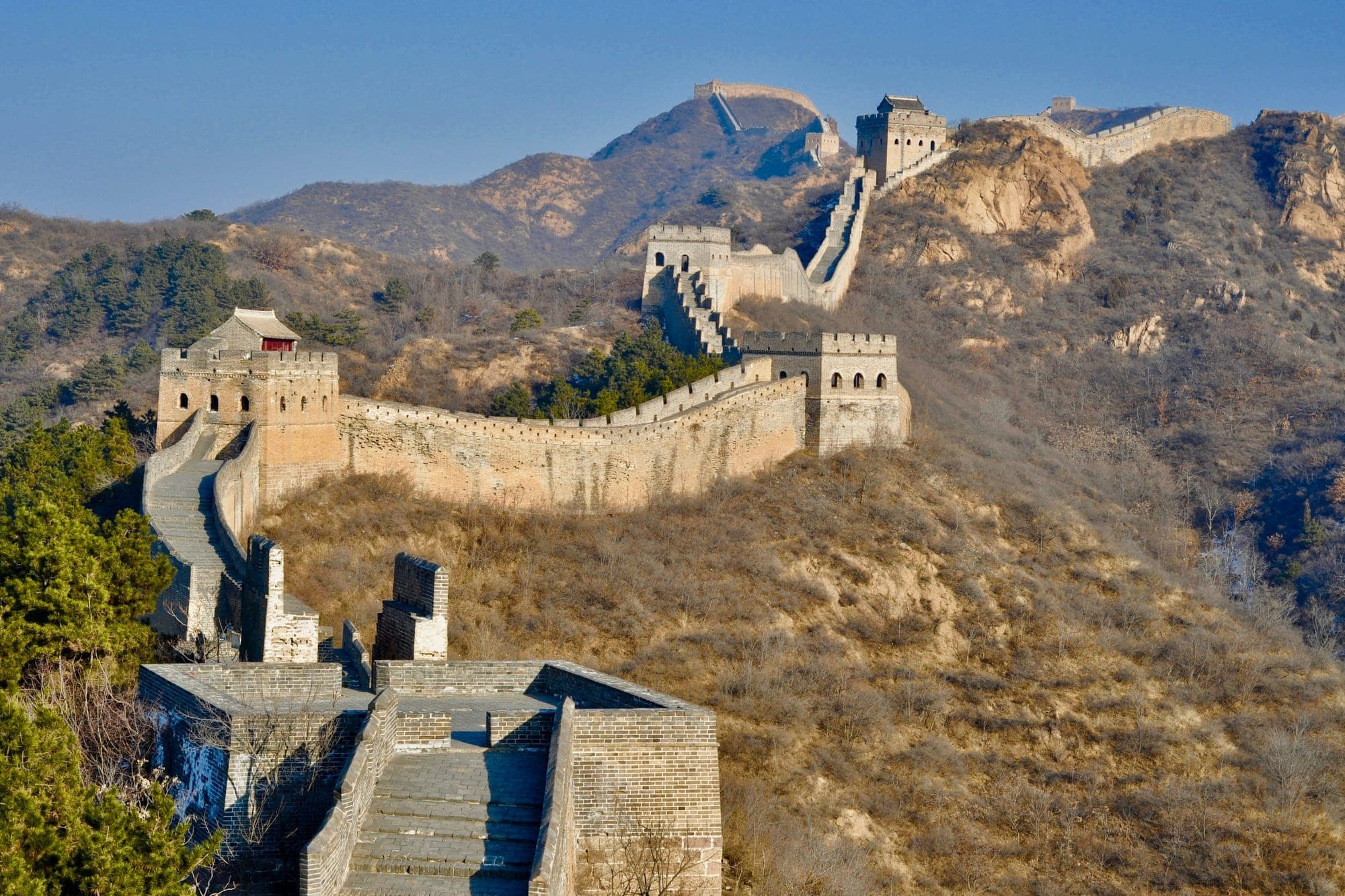
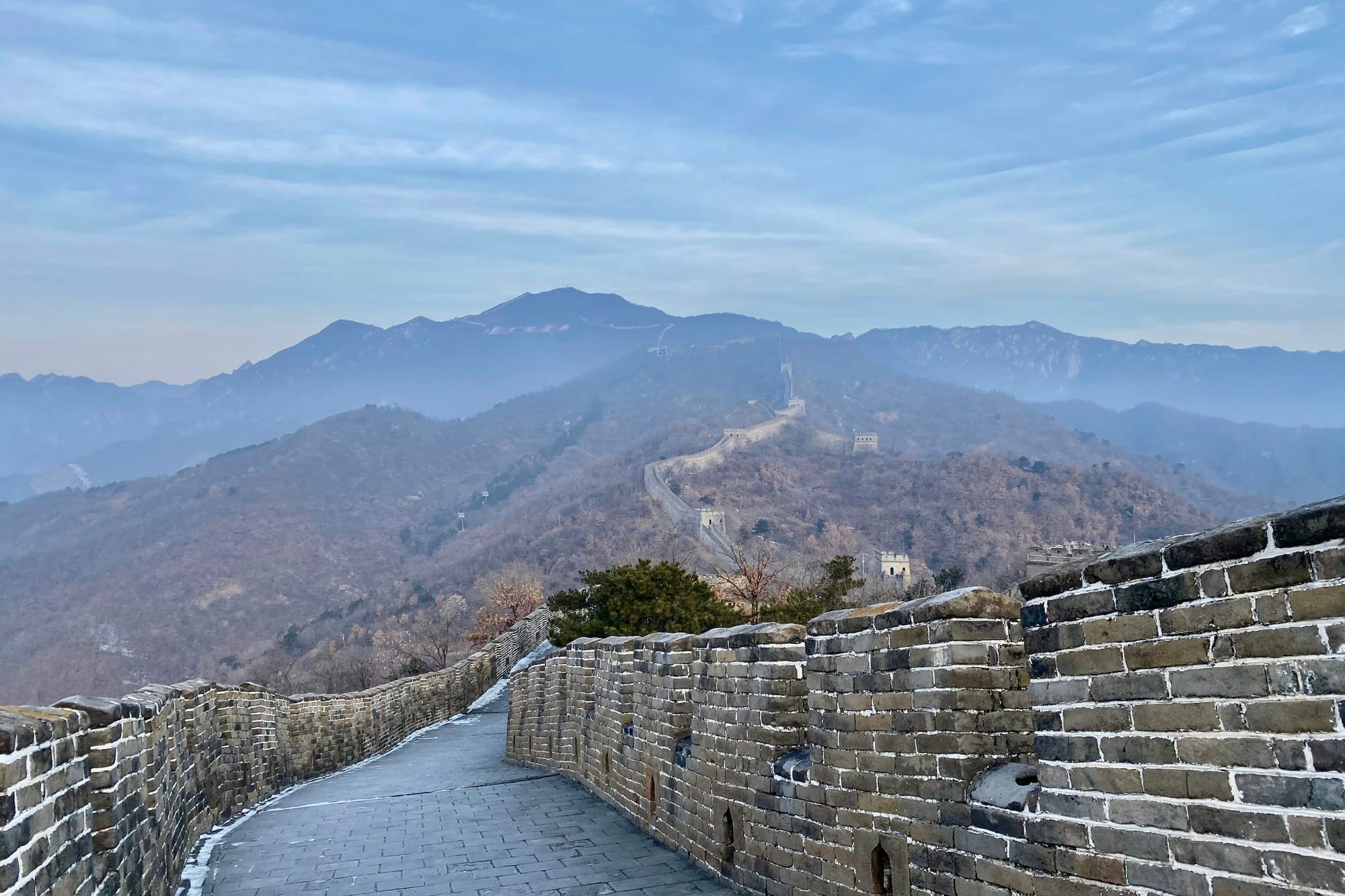
1. Classic restored-ridge postcard frames from mid-section towers. The central span of Mutianyu Great Wall, particularly the elevated ramparts between Tower 12 and Tower 16, provides the quintessential landscape perspective that has defined Great Wall imagery for generations. Here, the restored granite battlements follow the undulating contours of the high mountain ridge in sweeping, graceful S-curves that dip through natural mountain saddles before climbing steeply toward adjacent knolls. Looking east from the open deck of Tower 14 toward Tower 10 and Tower 6, the stone wall snakes through dense green pine forests, presenting an unbroken ribbon of grey granite that contrasts vividly against the rolling ridges of the Yanshan range. Looking west toward Tower 19 and Tower 20, the wall rises precipitously toward the rugged western heights, where the granite steps become increasingly steep and dramatic. Independent photographers work with standard zoom lenses (24–70mm equivalent) and wide-angle primes to compose balanced landscape frames: positioning an imposing watchtower archway or crenellated parapet in the foreground to anchor the frame, while allowing the serpentine wall to draw the viewer's eye through the middle ground into the hazy mountain horizons. During early morning hours immediately after opening, the low sun casts soft golden illumination along the eastern faces of the battlements, highlighting the clean, restored masonry joints and creating crisp separation between the stone wall and the shadowed valleys below.
2. Watchtower rhythm along the restored corridor. What sets Mutianyu apart from wider, more dispersed sections of the Great Wall is the extraordinary frequency and rhythmic cadence of its watchtowers. Along a restored distance of just 2,250 meters, Ming military engineers erected 22 numbered watchtowers, creating an average spacing of only 100 meters between fortifications. Unlike simple solid observation platforms, these structures are substantial two-story hollow bastions constructed from granite foundation blocks and arched brick interiors, designed to house garrison troops, store weapons, and provide elevated firing platforms. Walking between Tower 14 and Tower 20 reveals an astonishing visual rhythm: watchtowers step progressively higher up the steep mountain crest, each tower framed by the dramatic gradient of stone steps leading to the next. Independent photographers utilize medium and long telephoto lenses (70–200mm or 100–400mm) to compress spatial distance, visually stacking four, five, or six watchtowers into a single tightly framed graphic composition. This telephoto compression emphasizes the staggering architectural density of the Ming defensive line, illustrating how military builders adapted each stronghold to the specific crests, saddles, and cliffs of the Huairou mountain terrain. By shifting positions along the rampart, you can align multiple arched embrasure windows and rooftop battlements into layered geometric patterns of light and shadow.
3. Cable-car approach and elevation context. Reaching the high ridge of Mutianyu involves overcoming a significant vertical elevation gain of over 300 meters from the valley floor. The aerial passenger cableway, which transports visitors from the lower staging terminal to the upper station at Tower 14, provides an exceptional vantage point for observing the dramatic topographic relief that Ming engineers fortified. While this guide does not write a tourist ride review, photographing the mountain landscape from the vicinity of the upper cableway terminal and its adjacent lookout terraces offers valuable contextual imagery. From the platform near Tower 14, photographers can frame wide landscape compositions that contrast the steep, tree-covered slopes of the Huairou foothills with the fortified granite battlements crowning the knife-edge ridge above. Early in the morning, when lingering valley mist drifts through the lower pine woods, the ridge ramparts appear to float serenely above the forested basin. Utilizing an ultra-wide zoom lens (16–35mm equivalent), you can incorporate the sheer drop of the southern mountain slope in the lower third of your frame, providing viewers with an immediate sense of the formidable physical barriers that protected the northern approaches to Beijing.
4. Toboggan-adjacent logistics honesty for gear. Mutianyu features a well-known wheeled alpine toboggan track descending from the ridge near Tower 6 down through the forest to the valley floor, operating alongside an open-air chairlift. For casual visitors, the toboggan is a popular recreational descent; for serious landscape photographers carrying heavy backpacks filled with professional camera bodies, high-end zoom lenses, and sturdy carbon fiber tripods, it introduces specific logistical and safety considerations. If you elect to descend via the toboggan track when weather conditions permit its operation, all camera equipment must be packed securely inside a well-padded, zippered backpack before boarding. Never attempt to operate handheld cameras, action cams, or smartphones while driving the sled, as both hands are required to manage the central brake lever and maintain safe following distances. Furthermore, heavy or oversized tripod legs attached to the exterior of camera bags must be strapped tightly to avoid snagging on track guardrails. For photographers carrying full professional setups, descending on foot via the authorized stone staircase below Tower 6 or Tower 8, or returning via the enclosed cable car at Tower 14, is often the far safer and more productive choice: the walking paths through the lower woodlands provide beautiful low-angle perspectives looking up at the towering granite bastions rising above the tree canopy, allowing you to continue shooting without risking damage to expensive optical gear.
5. Autumn color and winter snow ridge frames. The seasonal transformations of the surrounding landscape make Mutianyu one of northern China's most visually dynamic mountain photography destinations. The scenic area boasts an exceptional forest coverage rate exceeding ninety-six percent, blanketing the slopes in a rich mix of chestnut orchards, oak groves, wild pine stands, and smoketree (Cotinus coggygria) shrubs. During the peak autumn foliage window—typically spanning from mid-October through early November, depending on seasonal temperature drops—these deciduous forests ignite in a brilliant tapestry of crimson, scarlet, burnt orange, and warm golden tones. The fiery autumn canopy provides a striking color contrast against the cool grey granite masonry and pale mortar lines of the restored Great Wall, creating rich opportunities for colorful landscape compositions. Independent photographers use circular polarizing filters (CPL) to deepen the saturation of the foliage and eliminate glare from leaf surfaces, working with standard and telephoto zooms to frame the serpentine stone wall cutting through waves of vivid autumn color. In the deep winter months from December through February, periodic snowfalls transform Mutianyu into a stark, contemplative landscape: a blanket of white snow dusts the dark granite parapets and frosted pine branches, reducing the scene to a classic monochrome composition that recalls traditional Chinese ink-wash paintings. Winter photography requires cold-weather discipline: pack spare batteries inside warm interior pockets, wear micro-spikes on your boots to prevent slipping on icy stone steps, and check local road conditions between Beijing and Huairou.
6. Side-light battlement geometry at golden hour. Mutianyu is distinguished by unique architectural features that set it apart from other Great Wall sections, most notably its rare double-sided crenellations. While most sectors of the Great Wall feature crenellated battlements with defensive merlons and shooting embrasures only along the exterior (northern) parapet, Mutianyu incorporates protective battlements along both the outer and inner walls. This sophisticated design allowed Ming defenders to repel assaults coming from the northern mountain passes while maintaining defensive firing capability if hostile forces managed to scale the southern slopes or penetrate adjacent valleys. In addition, Tower 4, historically designated as Zhengguantai or the Mutianyu Pass Fortress, represents an extraordinary military bastion: built in 1404 across three connected towers on a single massive rectangular stone terrace, it features a large central fortress flanked by two smaller defensive bastions. During the golden hours of early morning and late afternoon, low-angle raking sunlight strikes these architectural features from the side, casting deep, graphic shadows through arrow slits and across granite block facades. Independent photographers position themselves low along the walkway, using standard prime lenses (35mm or 50mm) or standard zooms (24–70mm) to capture the sharp interplay of light and shadow raking across the double parapets and ancient arched doorways.
7. Cloud-sea and fog soft clearings when they appear. The complex topography of the Yanshan mountains around Huairou District frequently creates dramatic atmospheric weather phenomena, particularly during late spring, post-rain summer mornings, and crisp autumn temperature inversions. When overnight moisture pools in the deep mountain basins and cool morning breezes settle over the valleys, a dense white sea of clouds (cloud-sea) often forms below 400 to 500 meters in elevation. Because the restored ridge of Mutianyu stands between 400 and over 540 meters above sea level, the granite battlements and stone watchtowers frequently rise above the undulating layer of white fog, appearing like ancient stone ships anchored in an ocean of vapor. Independent photographers reach the high vantage points near Tower 14, Tower 16, or Tower 20 early in the morning to capture the first rays of dawn illuminating the churning surface of the cloud deck. As morning temperatures rise, thermal currents cause the fog to billow and drift through the mountain saddles, creating fleeting, dynamic windows of clarity where individual watchtowers appear and vanish through swirling mists. Utilizing exposure bracketing ensures you retain delicate highlight detail in the luminous white clouds while maintaining rich shadow textures in the dark granite masonry, while a sturdy tripod weighted against ridge gusts keeps exposures razor-sharp.
8. Contrast frames vs Jinshanling density and crowd honesty. A vital responsibility of this guide is providing completely candid visitor-density honesty. Located only 70 kilometers from downtown Beijing with smooth expressway transit and multiple mechanical ascent options, Mutianyu experiences significantly higher visitor traffic than its more remote sister section at Jinshanling (~125–130 km away in Hebei). On weekends, national holidays, and peak midday hours between 10:00 AM and 3:00 PM, the central sector around the Tower 14 cable car station and the Tower 6 chairlift area becomes bustling with international tour groups, school excursions, and casual day-trippers. Serious landscape photographers manage this crowd reality through deliberate scheduling and positioning: enter the scenic area at opening light (typically 7:30 AM or 8:00 AM depending on season) when the ramparts are virtually deserted, or remain on the high ridge during the late afternoon golden hour after 3:30 PM when commercial tour buses begin their return journey to Beijing. Furthermore, the steep western ascent from Tower 16 up to Tower 20 (the Hero Slope) filters out casual tourists, leaving the high crest relatively peaceful even during midday. For photographers seeking pristine, empty watchtower vistas and extensive semi-wild masonry, sister site Jinshanling remains the superior specialized corridor; for photographers seeking impeccably restored granite fortifications, dramatic watchtower rhythm, and convenient suburban access, Mutianyu delivers magnificent results when timed with discipline.
Logistics and independent movement around Beijing and Huairou. Organizing an independent photography shoot at Mutianyu Great Wall is straightforward with Beijing's modern highway infrastructure. Beijing serves as the primary regional aviation and rail gateway, offering international connections via Beijing Capital International Airport (PEK) and Beijing Daxing International Airport (PKX), along with major railway terminals including Beijing South, Beijing West, and Beijing Chaoyang stations. From downtown Beijing, the primary overland transit corridor follows the modern G45 Daqing–Guangzhou Expressway (Jingcheng Expressway) heading northeast, taking the Huairou exit and continuing along the wide, well-paved Mutianyu Ring Road directly to the scenic area parking and visitor complex. The driving distance measures approximately 70 kilometers, requiring roughly an hour and fifteen minutes to an hour and a half by private vehicle under normal traffic conditions. Independent travelers have two dependable staging options: arranging a private vehicle transfer for a dedicated day-trip from Beijing departing around 6:00 AM, or staging overnight in comfortable boutique guesthouses and hotels located in Mutianyu Village immediately below the scenic gate. Staging overnight in the village is highly advantageous for photographers: it enables you to enter the scenic gate at opening light, capture the soft dawn illumination without a pre-dawn highway drive, rest during the crowded midday hours, and return to the high ramparts for late afternoon golden-hour compositions. Within the scenic area, visitor flow is strictly organized: visitors arrive at the main service terminal, clear ticket turnstiles, and board scenic shuttle buses for a short five-minute transfer to the valley staging area, where they choose between the cable car to Tower 14, the chairlift to Tower 6, or the stone walking trails. Real-name digital ticketing tied directly to your physical passport is mandatory. Setting up mobile payment via Alipay for foreigners before arrival ensures frictionless transactions for tickets, cableway passes, local dining, and regional transport.
Field safety, stair steepness, and gear management. Conducting serious photography along the mountain ramparts of Mutianyu requires sound physical conditioning and strict adherence to safety regulations. Although the ridge elevation (peaking at over 540 meters at Tower 20) presents no danger of altitude sickness, traversing several kilometers of undulating granite battlements involves thousands of vertical stone steps. In particular, the western climb from Tower 16 to Tower 20—frequently referred to as the Hero Slope—features steep staircases rising at angles exceeding 45 degrees, where narrow granite treads demand careful, deliberate footing. Carrying a heavy backpack loaded with multiple camera bodies, professional zoom lenses, and a metal tripod increases physical fatigue; pace your ascent, stay well-hydrated, and use sheltered watchtower interiors to rest out of the sun and wind. Footwear is crucial: wear sturdy hiking shoes or boots with grippy rubber soles to maintain traction on polished granite blocks, especially on morning stone surfaces damp with dew or frost. Mountain wind gusts along exposed ridge parapets can easily destabilize camera setups; always use a center-column ballast hook to anchor your tripod with your gear bag and avoid balancing equipment near parapet edges. Most importantly, observe heritage conservation laws and safety boundaries: at Tower 20, the restored scenic area officially ends at an impassable brick barrier marked with prominent warning signs. The wild Great Wall beyond Tower 20—the rugged, unrestored Jiankou section—is severely deteriorated, featuring crumbling masonry, loose rock, and knife-edge cliffs where accidental falls have caused severe injuries and fatalities. Crossing past the Tower 20 barrier into wild Jiankou is strictly prohibited by scenic regulations and local authorities; frame the dramatic, rugged silhouette of Jiankou safely from the authorized observation platform at Tower 20. In addition, flying unmanned aerial vehicles (drones) is strictly forbidden across the scenic area without prior administrative permits from scenic management and regional aviation authorities; unauthorized flights risk signal jamming, equipment confiscation, and legal penalties.
What the official files lock for a shoot day
Official documentation, administrative releases, and architectural heritage surveys establish factual parameters that distinguish a genuinely self-directed Mutianyu Great Wall shoot from a commercial group photo tour, from its sister section at Jinshanling, from the flag-led crowds at Badaling, from the glaciated valleys of Hailuogou, from the volcanic caldera of Changbai Mountain, from the inland saltwater shoreline of Qinghai Lake, from the island ridges of Mount Putuo, and from the metamorphic summit of Mount Fanjing. We do not invent admission fees or rigid daily schedules. The table below synthesizes published data from the National Cultural Heritage Administration, the UNESCO World Heritage Centre (WHC 438), the official Mutianyu scenic administration portal, TravelChinaGuide, Visit Beijing, and municipal transportation records.
| Category | What the official record locks | What you do on an independent shoot |
|---|---|---|
| Location & Administration | Official records: Huairou District, Beijing; ~70 km northeast of central Beijing; Yanshan mountain ridge corridor | Base in guesthouses in Mutianyu Village or arrange private vehicle transfer from Beijing via G45 Jingcheng Expressway (~1.5 hours). |
| Protected Designations | UNESCO World Heritage List reference 438 (inscribed 1987 as part of The Great Wall); Major National Historical and Cultural Site; National 5A Tourist Attraction (2011) | Understand the protected conservation status of the Ming military fortifications; respect cultural relic laws; photograph preserved stone and brick architecture without causing damage. |
| Wall Dimensions & Scale | Architectural surveys: Restored core length 2,250 meters; 22 numbered watchtowers; wall height 7–8.5 m, width 4–5 m; ridge crest elevation ~540 m+ at Tower 20 | Plan your hiking route across distinct ridge sections; take advantage of dense tower spacing (~100 m interval) to capture multi-tower telephoto compression compositions. |
| Ming Dynasty Construction | Sourced historical records: Northern Qi foundations (550–577); Ming rebuild under Xu Da (1368); Mutianyu Pass built 1404; major fortification under Qi Jiguang (1568) | Appreciate the sophisticated late-16th-century military engineering; frame the harmonious integration of granite masonry and natural mountain precipices. |
| Architectural Diversity | Heritage surveys: Unique double-sided crenellations (merlons on both inner and outer parapets), Zhengguantai three-tower pass (Tower 4), Big Horn Tower junction (Tower 1) | Capture low-angle golden-hour side light on double-sided crenellations; use arched windows for creative framing; shoot the massive three-bastion terrace at Tower 4. |
| Visitor Flow & Density | TravelChinaGuide & scenic archives: Busier than Jinshanling due to suburban proximity and cableway/toboggan; significantly less congested than Badaling | Enjoy early morning opening hours and late afternoon golden hour for quiet shoots; climb past Tower 16 to Tower 20 to escape casual midday tourist crowds. |
| Wild Jiankou Border Honesty | Heritage & park management: Restored wall ends at Tower 20 barrier; unrestored Jiankou section beyond is hazardous, crumbling, and strictly off-limits | Photograph the dramatic vanishing lines and jagged knife-edge ridges of Jiankou safely from the Tower 20 platform; do not cross safety barriers or attempt illegal wild hikes. |
| Ascent & Cableway Logistics | Scenic layout: Enclosed cable car to Tower 14; open chairlift to Tower 6; wheeled alpine toboggan slide down from Tower 6; 4,000+ stone steps | Ascend via the cable car to Tower 14 for direct access to the scenic mid-ridge, or take the chairlift to Tower 6; descend on foot to protect fragile camera gear. |
| Weather & Seasonal Dynamics | Meteorological records: Ridge elevation ~400–540 m+; sunrise and sunset golden hours; autumn foliage (>96% forest cover, mid-October to early November); winter snow | Never expect guaranteed clear skies; check morning weather forecasts; stage overnight near the mountain to maximize dawn and dusk lighting opportunities; shoot misty days for mood. |
| Drone Regulations & Airspace | National heritage & aviation rules: Strict prohibition on unauthorized drone flights in scenic area without prior formal administrative permits | Leave personal drones packed away unless holding written administrative authorization; prevent radio interference, fines, or equipment confiscation. |
| Dynamic Ticketing & Road Transit | Scenic management: Real-name ticketing tied to physical passport; highway access via G45 Jingcheng Expressway; no static forever CNY numbers locked on this page | Verify live ticket prices, cableway operational status, and seasonal shuttle timetables directly on official scenic digital channels; carry your original physical passport. |
| Commercial Photo-Tour SKU Rejection | Commercial tour reality: Rigid group coaches, rushed ninety-minute countdowns, shopping diversions, and fixed viewpoints ruin serious photography | Reject packaged photo tours; travel independently on Independent or Private Guided arrangements with complete creative freedom and unhurried pacing. |
| Sibling Landscape Distinctions | Comparative geography: Distinct from sister site Jinshanling (quieter, ~67 towers, semi-wild), Hailuogou glacier, Changbai caldera, Qinghai salt lake, and Putuo island ridges | Treat Mutianyu as a dedicated restored Ming dynasty ridge wall and architectural shoot; do not confuse with distant subalpine, maritime, or volcanic destinations. |
Sources for the table: en.wikipedia.org — Mutianyu; whc.unesco.org — The Great Wall (WHC 438); travelchinaguide.com — Mutianyu Great Wall; mutianyugreatwall.com — Mutianyu Great Wall Official Portal; english.visitbeijing.com.cn — Visit Beijing Official Tourism.
These verified records provide clear operational boundaries. A UNESCO World Heritage inscription or a National 5A rating is vital institutional context, but it does not dictate how you frame an exposure or how long you wait for sunset light to rake across the granite parapets of Zhengguantai. You choose your vantage point, observe the mountain light and shifting shadows, and take the exposure on your own terms.
How to shoot without a photo tour
Executing an independent photography shoot at Mutianyu Great Wall without booking an organized group photo tour requires methodical advance preparation, deliberate staging selection, and realistic pacing across steep mountain topography. The core principle mirrors our philosophy across every landscape guide on China Photography Trip 2026: select one focused mountain zone per day, work the quiet hours of early morning and late afternoon, and avoid cramming disparate regional sites into a single frantic transit rush.
First, secure your scenic-area admission, shuttle bus transfer, and cableway passes in advance through verified digital channels or have your LocalKey specialist arrange real-name bookings tied to your physical passport. Scenic management regulates visitor flow through digital ticketing linked directly to your travel document. The official Mutianyu digital platforms and authorized online travel portals allow travelers to purchase entry admission, internal scenic shuttle bus rides between the visitor center and the valley terminal, and aerial passenger cable car or chairlift tickets. Ensure your passport details entered during booking match your physical travel document exactly, and carry your original physical passport to clear turnstile scanners and customer service verification desks. This page does not publish or invent fixed 2026 ticket prices; always verify current rates, shuttle fees, and seasonal tariffs directly on official scenic channels.
Second, choose an effective staging base that matches your photographic priorities. While many travelers visit Mutianyu on a hurried day-trip excursion from Beijing, serious landscape photographers achieve vastly superior results by staging overnight immediately outside the scenic area. Comfortable boutique guesthouses, countryside inns, and hotels are located within walking distance or a brief five-minute drive of the Mutianyu visitor center in Mutianyu Village and surrounding Huairou valleys. Staging overnight near the mountain eliminates the stress of early morning highway transit from Beijing, allowing you to reach the scenic turnstiles right at opening light (typically 7:30 AM or 8:00 AM) to capture the soft morning illumination raking across empty battlements before day-trip tour buses arrive. Furthermore, overnight staging enables you to remain on the high ramparts through the late afternoon golden hour and sunset, descending in twilight when commercial day-tour crowds have long departed. If your schedule requires a day-trip from central Beijing, arrange a private vehicle transfer through a Private Guided itinerary that departs your hotel around 6:00 AM to ensure arrival before tour crowds appear, or plan an afternoon-focused shoot that maximizes sunset light.
Third, select your hiking route based on your physical conditioning and gear weight. Mutianyu offers several flexible route configurations:
- The Central Ridge Loop (Cable Car to Tower 14, Hike to Tower 20): Ascend from the valley terminal via the enclosed aerial cable car directly to Tower 14. From Tower 14, hike westward along the ramparts past Towers 15 through 19, ascending the steep stone steps of the Hero Slope to reach Tower 20, the highest restored point on the ridge. Here you can capture panoramic vistas of the wild Jiankou ridgeline to the west and the serpentine wall snaking eastward. Return to Tower 14 to ride the cable car down, or walk down the authorized valley footpath. This route covers the most dramatic high-elevation scenery with focused physical effort.
- The Classic East-West Traverse (Chairlift to Tower 6, Traverse to Tower 14 or Tower 20): Ascend via the open chairlift to Tower 6. First walk eastward along the ridge to explore Zhengguantai (Tower 4) and continue toward Big Horn Tower (Tower 1), capturing early morning side light on the unique three-tower fortress and double-sided crenellations. Then turn westward, traversing past Tower 6, Tower 8, Tower 10, and Tower 14, continuing as far as Tower 20 if stamina permits. Descend via the cable car at Tower 14 or the stone stairs below Tower 6. This traverse spans approximately 2 to 3 kilometers along the wall, involves extensive stair climbing, and requires 3 to 4 hours of deliberate hiking and shooting.
Fourth, manage your camera equipment and exposure techniques for high-contrast mountain light. Operating along mountain ridgelines introduces significant dynamic range challenges. When shooting sunrise or sunset from Tower 14 or Tower 20, the dynamic range between the radiant sky and the deep mountain shadows often exceeds the sensor latitude of modern digital cameras. Utilize exposure bracketing (three to five frames bracketed at 1-stop intervals) to ensure you capture clean highlight detail in the sky and rich shadow texture in the granite masonry, which can later be blended into balanced composite images. Equip your lenses with high-quality circular polarizing filters (CPL) to cut atmospheric haze, enhance the contrast between white clouds and blue sky, and deepen the warm saturation of autumn forest foliage. Neutral density (ND) filters (6-stop or 10-stop) enable creative long exposures of drifting valley clouds, transforming choppy morning mist into silky, ethereal seas of fog around the watchtowers. Carry a sturdy carbon fiber tripod equipped with rubber feet and spiked tips for rock stability, and always hang your camera bag from the center column hook to counteract ridge wind gusts.
Fifth, respect cultural relic conservation and personal safety regulations. Mutianyu Great Wall is a priceless UNESCO World Heritage site and a Major National Historical and Cultural Site protected under strict Chinese national laws. Never step past wooden warning fences or security barriers onto crumbling, unrestored wild wall sections. The unrestored masonry west of Tower 20 leading into Jiankou contains loose, unstable bricks, sheer cliffs, and dangerous drop-offs where falls could be fatal. Never carve names, remove bricks, or disturb historic mortar. Always pack out all personal trash, carry adequate drinking water, and protect this majestic monument for future generations of independent travelers.
Is Mutianyu Great Wall photography the same as a photo tour?
No. Mutianyu Great Wall photography is an independent landscape and architectural shoot: official scenic-area ticket access, self-paced movement along elevated granite ramparts and watchtower decks, flexible staging in Huairou or Mutianyu Village to wait for optimal sunrise and sunset lighting windows, and complete autonomy over lens choice, exposure timing, and tripod placement. A photo tour is a commercial group tour featuring rigid schedules, crowded group coaches, predetermined viewpoint countdowns, and commercial retail diversions. Independent shooting lets you work the ancient Ming fortifications and forested mountain ridges on your own schedule.
How do foreign visitors book Mutianyu Great Wall tickets without speaking Chinese?
Foreign travelers can reserve official scenic tickets through recognized online travel platforms, the official Mutianyu digital platforms supporting passport entry verification, or through an independent travel planner handling an Independent or Private Guided itinerary. Every ticket requires real-name verification tied directly to your original physical passport. Ensure your full name and passport number match your physical travel document exactly, and present your original passport at scenic entrance turnstiles and customer service verification windows. This page does not publish or invent fixed 2026 ticket prices; always verify current rates, shuttle fees, and seasonal tariffs directly on official scenic channels.
Do I need a group photography tour to shoot Mutianyu?
No. You do not need a group tour of any kind. The entire scenic area is equipped with clear bilingual signage, restored stone pathways, robust safety guardrails, organized sightseeing shuttle bus transit, and mechanical cableways including an enclosed cable car to Tower 14 and an open chairlift to Tower 6. An independent photographer simply purchases an official entry ticket, boards the designated park shuttle or cableway, and explores the platforms and ridge ramparts independently. LocalKey does not sell group photo tours. Independent or Private Guided trips handle transport, ticketing, and hotel logistics while leaving your shooting time entirely in your hands.
What makes Mutianyu different from Badaling and Jinshanling for photographers?
Mutianyu occupies an ideal middle ground between Badaling and Jinshanling. Badaling is Beijing's most heavily commercialized and densely crowded section, packed with domestic tour groups that make clean tripod landscape photography exceptionally difficult. Jinshanling, located roughly 125 to 130 kilometers away in Hebei Province, is a quieter, specialized photographer corridor featuring approximately 67 watchtowers over 10.5 kilometers, semi-wild transitions, and unique barrier walls. Mutianyu, located roughly 70 kilometers from Beijing, features beautifully restored granite battlements, 22 watchtowers over 2,250 meters, rare double-sided crenellations, over ninety-six percent surrounding forest cover, and mechanical ascents via cable car and chairlift. While busier than Jinshanling, Mutianyu is significantly less congested than Badaling and offers classic postcard ridge frames with excellent suburban accessibility.
What are the official dimensions, tower counts, and Ming history of Mutianyu?
According to verified architectural surveys and historical archives, the main restored core of Mutianyu Great Wall extends approximately 2,250 meters across the Yanshan mountain ridges in Huairou District, Beijing. The section features 22 numbered watchtowers, with an average wall height between 7 and 8.5 meters, a walkway width of 4 to 5 meters, and a ridge elevation reaching over 540 meters above sea level at Tower 20. Sourced historical records document that initial fortifications on this ridge were erected during the Northern Qi dynasty (550–577). In 1368, at the beginning of the Ming dynasty, General Xu Da supervised the reconstruction of the wall on Northern Qi foundations, and the strategic pass of Mutianyu was officially constructed in 1404. In 1568, General Qi Jiguang directed a comprehensive rebuilding and fortification campaign, strengthening the battlements with durable granite blocks and multi-level brick watchtowers.
Is sunrise, sunset, or sea-of-clouds guaranteed at Mutianyu?
No. Seeing a fiery sunrise, a vivid sunset, or a dramatic sea of clouds (cloud-sea) is never guaranteed on any single day. Weather across the Yanshan mountain ridges is highly dynamic: passing cold fronts can generate dense fog, overcast cloud decks, or heavy haze that obscures distant mountain peaks. Independent photographers manage this reality by staging overnight near the scenic area in Mutianyu Village, allowing them to monitor morning conditions and capture multiple lighting windows. If heavy overcast blankets the ridges, pivot your camera work to intimate architectural studies: the graphic geometry of double-sided crenellations, the massive three-bastion architecture of Zhengguantai at Tower 4, and atmospheric granite archway compositions, all of which photograph exceptionally well under soft, diffused light.
How do I travel from Beijing to Mutianyu Great Wall independently?
Travelers journey northeast from central Beijing along the modern G45 Daqing–Guangzhou Expressway (Jingcheng Expressway), exiting onto the Huairou scenic roadway network and continuing along the Mutianyu Ring Road directly to the scenic entrance, covering roughly 70 kilometers in about an hour and fifteen minutes to an hour and a half. Independent travelers reach Mutianyu either via private vehicle transfer arranged through a Private Guided itinerary (the most flexible option for photographers carrying heavy gear for sunrise or sunset shoots) or by scheduled tourist bus services departing from central Beijing transit hubs (such as Dongzhimen). Private vehicle transfers provide complete scheduling freedom, enabling early morning departures before dawn or late evening returns after sunset.
Can I fly an aerial drone at Mutianyu Great Wall?
No. Flying unmanned aerial vehicles (drones) is strictly prohibited throughout Mutianyu Great Wall and the surrounding scenic area without prior formal written administrative authorization from scenic management and regional civil aviation authorities. Because the Great Wall is a Major National Historical and Cultural Site and a UNESCO World Heritage property safeguarding sensitive historical masonry and visitor safety along narrow ramparts, unauthorized drone flights cause severe safety hazards. Unauthorized drone operations will result in radio signal jamming, equipment confiscation, and administrative penalties.
What is the best season to photograph Mutianyu Great Wall?
The best season depends on your specific photographic goals. Autumn (mid-October through early November) is widely considered the premier season: skies are crisp and clear, temperatures are comfortable, and the surrounding mountain forests—which cover over ninety-six percent of the landscape—explode in vivid scarlet, amber, and golden foliage that contrasts dramatically with grey granite battlements. Spring (April and May) features blooming wild peach and apricot blossoms carpeting the greening mountain ridges. Winter (December through February) offers stark, dramatic landscapes when fresh snow blankets the ramparts, creating high-contrast black-and-white graphic compositions. Summer (June through August) brings lush greenery and frequent post-thunderstorm cloud seas, though heat, humidity, and sudden rain showers require careful preparation.
What camera gear, lenses, and clothing should I pack?
Pack an ultra-wide zoom lens (such as 16–35mm equivalent) for expansive panoramic compositions of watchtowers and winding ridgelines, a standard zoom (24–70mm) for general landscape and archway perspectives, and a telephoto zoom (70–200mm or 100–400mm) for compressing distant towers and isolating architectural details. Essential accessories include circular polarizing filters (CPL) to cut atmospheric haze, neutral density filters (ND) for cloud movement, a sturdy carbon fiber tripod with a center-column weight hook for wind stability, and microfiber lens cloths. Wear sturdy hiking boots with deep rubber traction lugs for steep stone steps. Dress in breathable, moisture-wicking layers: a lightweight base layer, a fleece or down mid-layer for chilly ridge mornings, and a windproof outer jacket.
Can I hike past Tower 20 into wild Jiankou?
No. Hiking past Tower 20 into the wild Jiankou Great Wall is strictly prohibited under scenic area regulations and cultural relics protection laws. At Tower 20, the restored stone walkway terminates at a fortified brick wall equipped with clear warning signs and safety barricades. The unrestored wild wall beyond Tower 20 is severely degraded, featuring loose, crumbling bricks, unstable foundations, and treacherous knife-edge ridge cliffs where severe accidents and fatal falls have repeatedly occurred. In addition, local forestry and cultural heritage bureaus enforce strict fines for trespassing on unrestored wild wall sectors. Independent photographers must respect the safety barriers, remain on authorized restored pathways, and photograph the dramatic, rugged precipices of Jiankou safely from the elevated observation platform at Tower 20.
What are the gear logistics for the cable car, chairlift, and toboggan?
The scenic area offers three mechanical transport options: an enclosed aerial cable car (gondola) to Tower 14, an open chairlift to Tower 6, and a wheeled alpine toboggan slide descending from Tower 6. For photographers carrying heavy camera bags and metal tripods, the enclosed cable car to Tower 14 provides the most comfortable and secure ascent, protecting gear from accidental knocks while depositing you directly in the scenic mid-ridge. The chairlift to Tower 6 is an open-air double bench; if using it, ensure camera straps are securely looped around your neck and small bags are held firmly on your lap. If you decide to ride the toboggan slide down from Tower 6, all camera equipment, lenses, and tripods must be completely zipped inside a padded backpack, as you will need both hands free to operate the sled's brake lever. Photographers with oversized tripods or delicate optical gear should descend on foot or take the cable car back down to avoid risking equipment damage.
What is Zhengguantai and why is Tower 4 architecturally unique?
Zhengguantai, also known as the Mutianyu Pass Fortress or Tower 4, is one of the most architecturally unique defensive structures along the entire Great Wall of China. Constructed in 1404 during the early Ming dynasty, Zhengguantai consists of three interconnected hollow watchtowers erected on a single massive rectangular granite terrace. The structure features a large central watchtower flanked by two slightly smaller side towers, with vaulted interior chambers, arched doorways, and upper battlements that allowed garrison troops to coordinate multi-directional defensive fire. Situated at a crucial mountain pass, this three-bastion complex defended a strategic natural gateway leading through the mountains toward Beijing. Photographers can capture this rare architectural monument under raking early morning side light from the ramparts approaching from Tower 3 or Tower 5.
Do I need a Chinese bank card to pay for tickets, shuttles, and meals?
No. Foreign visitors can make everyday payments at scenic ticket counters, internal cableway windows, regional restaurants, and staging hotels using an international credit card linked to Alipay. Cash is still accepted at major scenic customer service windows, but QR mobile payment is standard across Beijing and Huairou District. Set up your payment application before arriving to ensure smooth, immediate transactions.
Is this page the same as Mount Putuo, Mount Fanjing, Hailuogou Glacier, Changbai Mountain, or Qinghai Lake photography?
No. Mount Putuo in Zhejiang is a sacred maritime island featuring coastal granite ridges, ocean beaches, and ancient monasteries. Mount Fanjing in Guizhou is an ancient Precambrian metamorphic rock summit featuring sheer vertical pinnacles rising above a subtropical sea of clouds. Hailuogou Glacier in Sichuan is a modern temperate maritime valley glacier descending into subalpine conifer forests with a 1,080-meter icefall. Changbai Mountain in Jilin is a Quaternary volcanic stratovolcano featuring the deep crater lake of Heaven Lake. Qinghai Lake in Qinghai Province is an expansive alkaline inland saltwater lake. Mutianyu Great Wall is restored Ming dynasty ridge military architecture and watchtower geometry. See Mount Putuo Photography 2026, Mount Fanjing Photography 2026, Hailuogou Glacier Photography 2026, Changbai Mountain Photography 2026, and Qinghai Lake Photography 2026.
Is this page a designation stack for its own sake?
No. Citations of UNESCO World Heritage reference 438, Major National Historical and Cultural Site status, and National 5A Tourist Attraction protections provide precise factual context. They protect independent photographers from misleading commercial tour claims, unverified off-trail routes, and illegal trespass onto crumbling wild masonry. This page is a practical, independent photography guide for travelers who want to experience Mutianyu Great Wall on their own schedule.
How this sits in an Independent or Private Guided week
Mutianyu Great Wall should be positioned as a dedicated one-to-two-day architectural and landscape shoot within a broader northern China or multi-province journey, rather than rushed through as an exhausting, fleeting stop on a commercial bus tour. Because the lighting across the Yanshan mountain ridges is most dramatic during early dawn and late afternoon, building overnight staging flexibility into your itinerary dramatically increases your chances of capturing the watchtowers under pristine golden-hour illumination or catching a dynamic sea of clouds, while providing ample time to explore both the central and western sectors at an unhurried cadence.
A well-balanced independent itinerary typically begins by departing central Beijing in the afternoon via private vehicle transfer along the G45 Jingcheng Expressway, traveling roughly 70 kilometers northeast to reach staging accommodations in Mutianyu Village by late afternoon. On day one, check into your local guesthouse or boutique inn, take an unhurried orientation walk to verify scenic opening hours and morning shuttle schedules, and prepare your camera equipment for an early dawn shoot. On day two, enter the scenic area at opening light, take the scenic shuttle and ascend via the cable car directly to Tower 14, and walk the central ramparts as the first golden rays illuminate the granite battlements and deep mountain shadows. Spend the morning working telephoto compression compositions along the ridge toward Tower 20. In the midday hours, descend to your guesthouse to rest, review exposures, and recharge camera batteries while midday tourist crowds fill the central corridor.
In the late afternoon of day two, re-enter the scenic area or ascend via the chairlift to Tower 6, exploring the unique three-tower architecture of Zhengguantai at Tower 4 and working low-angle side light on the double-sided crenellations as the sun sets over the western Yanshan ranges. Descend via the valley trail and return to your base. On day three, conclude your shoot with an optional morning session or begin your transfer back to Beijing, where you can connect seamlessly with high-speed rail services to other photographic destinations across China.
Photographers planning extended journeys across China can connect Mutianyu Great Wall seamlessly with adjacent regional landscape shoots: continue northeast into Hebei to shoot the dense watchtowers and semi-wild battlements of Jinshanling Great Wall Photography 2026, journey northeast toward the volcanic caldera and crater rim of Changbai Mountain Photography 2026, travel west along the Hexi Corridor toward the desert oasis of Crescent Lake Photography 2026 and the colored hills of Zhangye Danxia Photography 2026, head southwest toward the vast inland saltwater shoreline of Qinghai Lake Photography 2026, explore the maritime glacier and icefall on Hailuogou Glacier Photography 2026, or travel south toward the vertical pinnacles of Mount Fanjing Photography 2026 and the island ridges of Mount Putuo Photography 2026. Throughout your journey, keep each landscape shoot dedicated and unhurried; never consolidate disparate provincial terrains into a frantic commercial tour loop.
LocalKey operates two distinct service lanes for travelers seeking independent precision without group tour constraints:
Independent: We secure your hotel accommodations near the scenic gates, book point-to-point transport and regional expressway transfers, obtain guaranteed real-name scenic-area admission and cableway passes linked to your passport, and provide a comprehensive digital roadbook. You receive continuous remote support via WhatsApp or WeChat from our operations desk, while navigating the ramparts and managing your camera gear entirely at your own pace.
Private Guided: You receive the complete Independent framework, augmented by a private dedicated vehicle and experienced driver for seamless regional transfers between Beijing, Huairou, staging guesthouses, and scenic gateway terminals, along with an optional knowledgeable private guide on the specific days you request one. A private vehicle waiting at the gate after a cold evening sunset shoot on the ridge provides immense comfort, without ever dictating how long you spend waiting for light on a watchtower platform.
If you originally began your research searching for group tour options, consult our comparative analysis on China group tours or a custom trip to understand why self-paced independent travel consistently delivers superior photographic results.
LocalKey does not sell group photo tours. LocalKey does not sell a Mutianyu Great Wall photo-tour SKU. LocalKey does not sell group tours.
If you want the shoot booked, not a photo tour
LocalKey designs customized independent journeys across China for photographers, hikers, and independent travelers. We do not sell group tours. We do not operate commercial photo-tour coaches. We do not sell packaged group itineraries that herd photographers along crowded guardrails.
Our two service lanes remain clear:
Independent: Quality hotel reservations, verified regional transport and local transfers, guaranteed real-name scenic admission and cableway tickets, detailed route documentation, and active messaging support. You hike and shoot on your own schedule.
Private Guided: Bespoke itinerary planning, verified reservations, and private guides, a driver and a car across the trip.
LocalKey Travel is the independent travel brand of Guangdong Xingcheng International Travel Agency Co., Ltd. (established 2009).
Official sources
- en.wikipedia.org — Mutianyu
- whc.unesco.org — The Great Wall (WHC 438)
- travelchinaguide.com — Mutianyu Great Wall
- mutianyugreatwall.com — Mutianyu Great Wall Official Portal
- english.visitbeijing.com.cn — Visit Beijing Official Tourism
Mutianyu Great Wall photography 2026
Shoot restored Ming watchtowers and ridge views at Mutianyu in Huairou, Beijing, from marked access. It is not a group photo tour and not a rewrite of other Great Wall pages. LocalKey books Independent or Private Guided travel. This page does not invent a 2026 cable-car fare.