Updated 16 October 2026 · LocalKey consultant team
The main Shanghai to Hangzhou high-speed route is Shanghai Hongqiao to Hangzhou East: 12306 listed 109 trains on that pair for 20 October 2026, taking 45 to 87 minutes. Book an electronic ticket on the official 12306 app or website with your passport, then use the same passport to enter the station and board.
Put simply: book an electronic seat on official 12306 with your passport, pick Shanghai Hongqiao or Shanghai Station to Hangzhou East, and ride under about an hour on many G-services. That sub-hour timing is for Hongqiao; Shanghai Station is a minor backup, with 4 trains to Hangzhou East on 20 October 2026 and a fastest time of 85 minutes. Always check 12306 for live times on your date.
Shanghai to Hangzhou by train at a glance
| Question | Short answer |
|---|---|
| Main station pair | Shanghai Hongqiao → Hangzhou East |
| Trains on that pair, 20 October 2026 | 109 (all G/D), first 05:52, last 21:19 |
| Journey time on that pair | 45–87 minutes |
| Where to book | Official 12306 app or English website, with your passport |
| What you show at the gate | Your passport (the e-ticket is linked to it), at the staffed manual lane |
| Changes and refunds | One change per ticket if seats remain, no fee more than 48 hours before departure; refunds can be requested 24 hours a day |
| When to arrive (consultant advice) | About 45–60 minutes early, or 75–90 minutes on your first China rail trip |
| 240-hour visa-free transit | Hangzhou is inside the permitted stay areas, alongside Shanghai and Suzhou |
Which train stations should you use between Shanghai and Hangzhou?
Shanghai Hongqiao to Hangzhou East is the main pair, with high-speed (G/D) trains through the day. We suggest starting there unless your hotel is closer to another station; confirm the live 12306 search for your exact date before you go.
The table below summarises 12306 listings for all Shanghai-area to Hangzhou-area trains on one travel day, Tuesday 20 October 2026.
| Station pair | Trains on 20 Oct 2026 | Fastest–slowest | First–last departure |
|---|---|---|---|
| Shanghai Hongqiao → Hangzhou East | 109 (all G/D) | 45–87 minutes | 05:52–21:19 |
| Shanghai Hongqiao → Hangzhou West | 39 (33 G/D) | 65–123 minutes | 06:20–22:11 |
| Shanghai Hongqiao → Hangzhou Station | 3 | 60–68 minutes | 18:23–21:12 (evening departures) |
| Shanghai South → Hangzhou East | 44 (41 G/D) | 46–106 minutes | 06:52–21:58 |
| Shanghai Songjiang → Hangzhou East | 17 (16 G/D) | 36–71 minutes | 06:43–19:31 |
| Shanghai Station → Hangzhou East | 4 | 85 minutes fastest (slowest not recorded) | 08:00–14:27 |
| Shanghai Station → Hangzhou Station | 1 | 98 minutes | 17:51 (single departure) |
Schedules change by day, so the figures above are a one-day snapshot, not a fixed timetable. Shanghai Station (the central station) is a minor option for this route, with only a handful of trains on 20 October 2026.
Shanghai has several departure stations and Hangzhou has several arrival stations, so the pair you choose shapes the rest of your day. Our order of preference is simple. Hongqiao to Hangzhou East is the default. Shanghai South and Shanghai Songjiang to Hangzhou East are worth comparing on the live search if your hotel is nearer to them than to Hongqiao. Shanghai Station and Hangzhou Station are conditional alternatives: use them only when one of their few trains fits your day, and treat them as a backup rather than the plan.
Choose your Hangzhou arrival station by where you are staying, then work back to the Shanghai station that suits your own hotel. Match the pair to your hotels at both ends rather than simply picking the shortest journey on the page. Shanghai Hongqiao to Hangzhou Station is a good example: it had only 3 evening departures (18:23 to 21:12) on 20 October 2026, so it only helps if you plan to arrive in Hangzhou in the evening, not for a morning start near the southern shore of West Lake.
The single most common mistake first-time travellers make when booking high-speed rail in China is booking the earliest departure without checking the physical terminal. Both Shanghai and Hangzhou have several major railway stations, separated by long stretches of urban geography, and the wrong terminal can add a long cross-town transfer before your train even departs. When you search for departures on 12306, always specify the exact station pair that matches where you sleep in Shanghai and where your day begins in Hangzhou.
Shanghai departure stations
Shanghai has several stations that handle passenger traffic on the southern rail corridor into Zhejiang Province. These are the ones that matter for Hangzhou:
-
Shanghai Hongqiao Railway Station (Shanghai Hongqiao)
Located in Minhang District in western Shanghai, Shanghai Hongqiao is a very large high-speed transport complex. As detailed in the Gaotie.net Shanghai Hongqiao directory, it is classified as a Special-class passenger station operating under China Railway Shanghai Group. It anchors the eastern terminus of the dedicated Shanghai–Hangzhou High-Speed Railway as well as the Beijing–Shanghai and Shanghai–Kunming mainlines. The station integrates directly with Terminal 2 of Shanghai Hongqiao International Airport and Shanghai Metro Lines 2, 10, and 17. Because the overwhelming majority of Hangzhou-bound high-speed trains on 20 October 2026 left from Hongqiao (109 to Hangzhou East alone), it is the default departure hub for most visitors. It is especially convenient if your hotel is in Changning, Minhang, Xuhui, or western Jing'an, and it works well if you are arriving from or leaving for the airport. -
Shanghai Railway Station (Shanghai Station)
Located in Jing'an District immediately north of Suzhou Creek, Shanghai Railway Station is the city's historic central passenger hub. It is documented as a Special-class terminal in the Gaotie.net Shanghai Station directory and is served by Shanghai Metro Lines 1, 3, and 4. It handles far fewer departures toward Hangzhou than Hongqiao (4 to Hangzhou East and 1 to Hangzhou Station on 20 October 2026). If your accommodation is around People's Square, The Bund, Huangpu, or Hongkou and one of those trains fits your plans, boarding here spares you the long cross-city metro ride out to Hongqiao. If none fits, go to Hongqiao or Shanghai South instead of bending your day around Shanghai Station. -
Shanghai South Railway Station (Shanghai South)
Located in Xuhui District and connected via Metro Lines 1, 3, and 15, Shanghai South had 44 trains to Hangzhou East on 20 October 2026 (41 of them G/D), taking 46 to 106 minutes. It is worth comparing if your hotel is in southern Shanghai; otherwise Hongqiao remains the primary option. -
Shanghai Songjiang Railway Station (Shanghai Songjiang)
Songjiang sits on the Shanghai–Hangzhou line itself, in the southwest of the city (it also appears as an intermediate stop in the corridor facts below). It had 17 trains to Hangzhou East on 20 October 2026, taking 36 to 71 minutes. It is only a sensible choice if you are staying out that way; for most visitors the transfer to Songjiang does not beat simply starting at Hongqiao.
Hangzhou arrival stations
Hangzhou has two main central terminals for travellers arriving from Shanghai, alongside outer hubs:
-
Hangzhou East Railway Station (Hangzhou East)
Located in Shangcheng District (formerly Jianggan District) northeast of the city centre, Hangzhou East is the primary high-speed rail gateway into Zhejiang Province. According to the Gaotie.net Hangzhou East directory, it is a Special-class terminal managed by China Railway Shanghai Group that connects the Shanghai–Hangzhou, Shanghai–Kunming, Nanjing–Hangzhou, and Hangzhou–Ningbo high-speed passenger lines. The station has a large underground interchange for Hangzhou Metro Lines 1, 4, 6, and 19 (the Airport Express). For the lakefront, Hangzhou Metro Line 1 runs from the underground concourse of Hangzhou East toward Longxiangqiao Station and Fengqi Road Station near the eastern shoreline; in our consultants' experience the ride takes roughly 15 to 20 minutes. To go that way, take Line 1 toward Xianghu and get off at Longxiangqiao or Fengqi Road, then walk to the eastern promenade of the lake. Hangzhou East is where the great majority of Shanghai trains arrive. -
Hangzhou Railway Station (Hangzhou Station)
Known locally as City Station to tell it apart from Hangzhou East, this First-class passenger station sits in Shangcheng District just east of the southern edge of the lake, as listed in the Gaotie.net Hangzhou Station directory. Served by Hangzhou Metro Lines 1 and 5, it is physically closer to the southern scenic areas, the historic Qinghefang pedestrian quarter, and the base of Wushan Hill. If your morning itinerary begins on the southern perimeter of the lake or you are staying nearby, arriving at Hangzhou Station can save local transfer time. The catch is that the Shanghai services into it are few: on 20 October 2026 only 3 evening trains from Hongqiao and 1 from Shanghai Station. Check your exact date on 12306 before you plan around it. -
Hangzhou South and Hangzhou West Stations
Hangzhou South Railway Station is in Xiaoshan District south of the Qiantang River (Metro Line 5), while Hangzhou West Railway Station is a newer hub in Yuhang District near the Future Sci-Tech City (Metro Lines 3 and 19). Hangzhou West did have 39 trains from Hongqiao on 20 October 2026 (65 to 123 minutes), but both stations are farther from the central scenic districts, so we do not suggest them for a city-centre day trip unless your destination is in those outer districts.
Station decision checklist
- Where is your Shanghai bed? Near Changning, Hongqiao or western Jing'an: search Shanghai Hongqiao. In Xuhui or elsewhere in southern Shanghai: compare Shanghai South with Hongqiao. Near People's Square or The Bund: start with Hongqiao or Shanghai South, and use Shanghai Station only if one of its few Hangzhou departures fits your day. Compare all of them on the live search for your date.
- Where does your Hangzhou day start? Central West Lake or Broken Bridge: book to Hangzhou East and take Metro Line 1. Southern West Lake or Hefang Street: look at Hangzhou Station, but only if a train is scheduled at the time you need; otherwise still use Hangzhou East and transfer.
- Always select the exact station pair. Never search only "Hangzhou" or "Shanghai" without checking which station each result uses.
For how station layouts, security and signage work across the country, see our China train stations for foreigners 2026 guide, and for the metro legs at both ends see China metro for foreigners. We suggest pairing this train with a stay or a full day around West Lake. Our Hangzhou West Lake and Longjing guide covers the destination side, so you can fit the train times around it. If you would rather keep a shorter trip based in Shanghai, Suzhou is an alternative day trip, covered in Shanghai to Suzhou by high-speed rail.
How long does the high-speed train take from Shanghai to Hangzhou?
On 20 October 2026, the Shanghai Hongqiao to Hangzhou East journey ranged from 45 to 87 minutes across 109 trains. Other pairs had different ranges, for example 65 to 123 minutes from Shanghai Hongqiao to Hangzhou West.
Journey times depend on the train and the stops it makes, so check the exact train on 12306 before you plan connections; the station table above lists the 20 October 2026 times for each pair (a range where there were several trains). On the main pair, first departures were at 05:52 and last at 21:19 on 20 October 2026, so there is plenty of choice, but we suggest not building your day around the last departure of any pair. Keep a spare train in hand in case something runs late.
Read the departure and arrival times, not just the duration. A short journey into a station that is awkward for your hotel may not beat a slightly longer journey into the station you actually need. Plan a buffer for getting to the station and through security, especially if you are changing from a metro line or an airport transfer. Save your ticket details on your phone and keep your passport within reach, because you will use the same ID to check in, exit and board.
Corridor facts
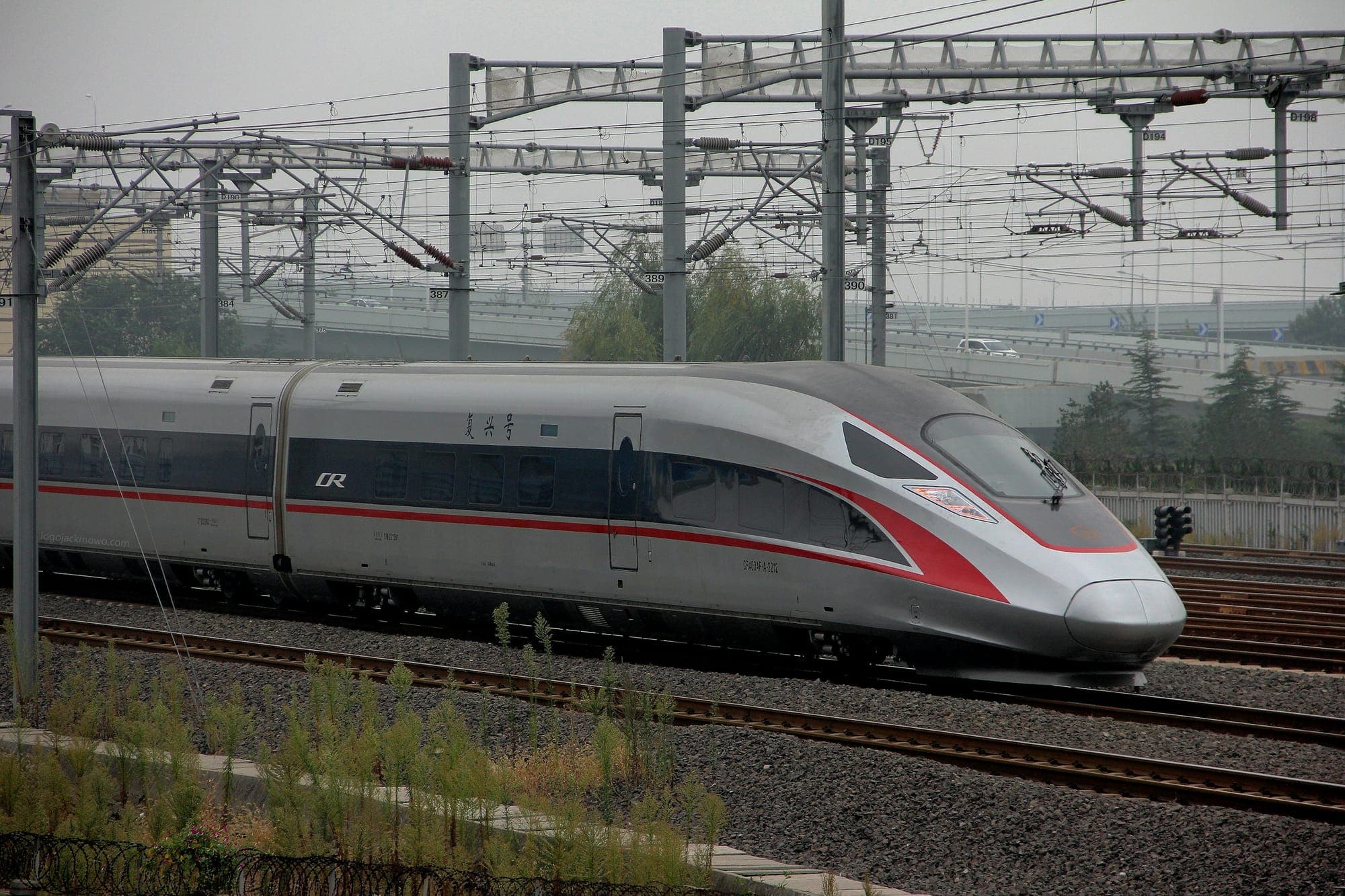
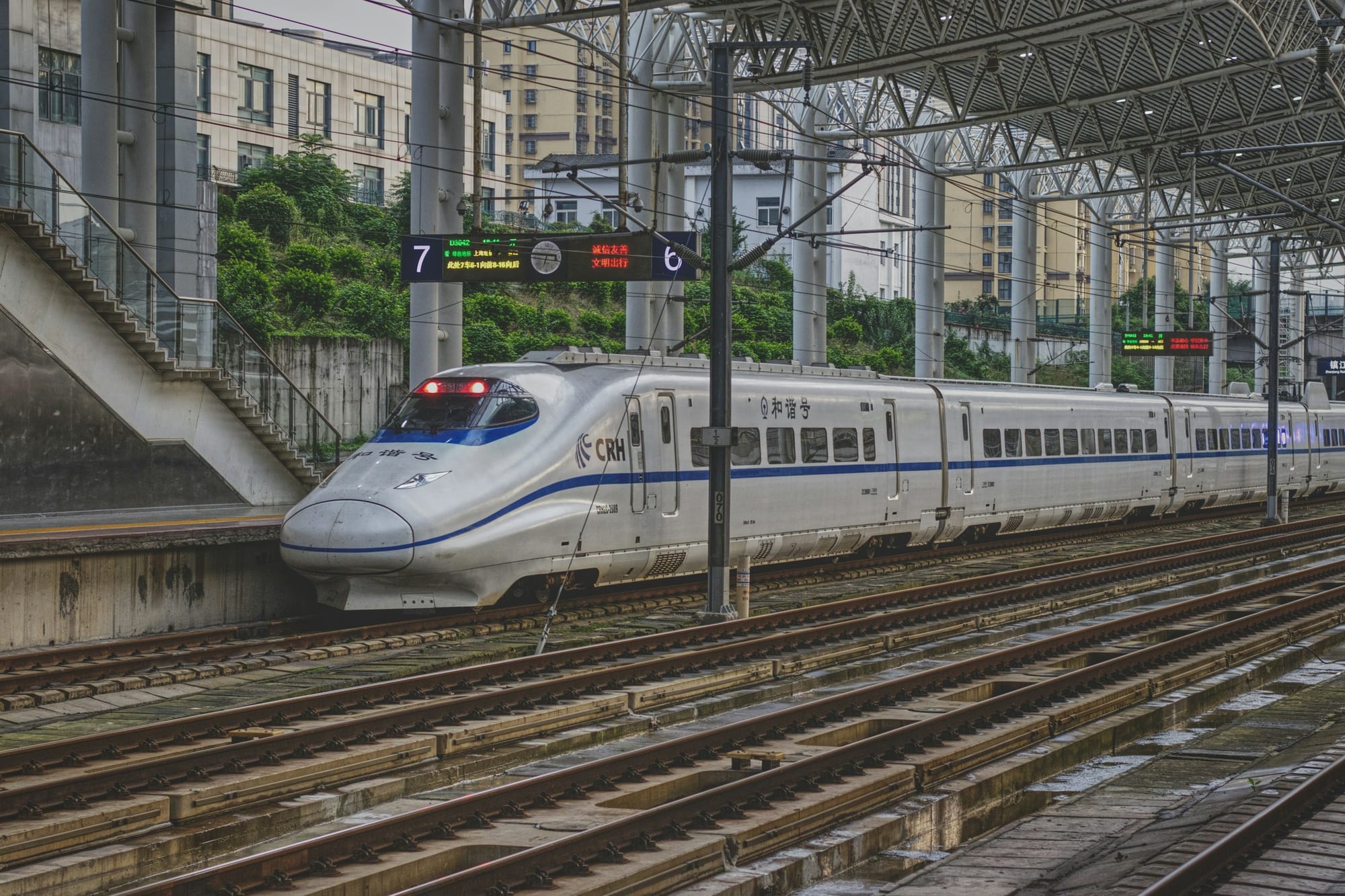
The Shanghai–Hangzhou High-Speed Railway is one of China's most heavily used passenger corridors, connecting two major economic centres across the Yangtze River Delta. The dedicated passenger line opened for commercial service on 26 October 2010 and is designed for 350 km/h running. The list below gives the technical and operational specifications for the corridor, each with the source it comes from. Where a figure is a publisher's reference rather than a dated 12306 listing, the list says so.
- Line designation: Shanghai–Hangzhou High-Speed Railway (Gaotie.net Shanghai–Hangzhou Line).
- Commercial opening date: 26 October 2010 (Wikipedia Shanghai–Hangzhou HSR).
- Operating authority: China Railway Shanghai Group (CR Shanghai) (China State Railway Group official portal).
- Track distance: about 158 km between Hongqiao and Hangzhou East, and about 158 to 202 km across the wider corridor network (Gaotie.net and TravelChinaGuide).
- Maximum design speed: 350 km/h (Gaotie.net Railway Directory).
- Standard operating speed: 300 to 350 km/h on G-series trains (Wikipedia Shanghai–Hangzhou HSR).
- Journey time: on 20 October 2026, 45 to 87 minutes from Hongqiao to Hangzhou East, with the fastest trains at about three-quarters of an hour (12306 live train search, listing for 20 October 2026).
- Daily frequency: TravelChinaGuide's July 2026 update, a secondary publisher reference, describes well over 250 services in each direction across the corridor (TravelChinaGuide). That is a whole-corridor publisher count and is not directly comparable with the station-pair counts above: on 20 October 2026 the 12306 search listed 109 trains on the main pair, and the seven pairs in the table above add up to 217. Use the 12306 search for your own date.
- Ticketing format: real-name ticket linked to your passport, e-ticket or paper (12306 English FAQ).
- Intermediate stations: Shanghai Songjiang, Jinshan North, Jiashan South, Jiaxing South, Tongxiang, Haining West, Linping South (Gaotie.net Shanghai–Hangzhou Line).
Intermediate stations along the corridor
The line crosses southern Shanghai and northern Zhejiang across the plains of the Yangtze River Delta. Between Shanghai Hongqiao and Hangzhou East it passes seven intermediate passenger stations (names and distances from the Gaotie.net Shanghai–Hangzhou line record):
- Shanghai Songjiang (formerly Songjiang South, 31 km from Hongqiao)
- Jinshan North (48 km from Hongqiao)
- Jiashan South (67 km from Hongqiao, entering Zhejiang Province)
- Jiaxing South (84 km from Hongqiao)
- Tongxiang (112 km from Hongqiao, gateway to the historic water town of Wuzhen)
- Haining West (133 km from Hongqiao)
- Linping South (formerly Yuhang Station, 144 km from Hongqiao)
The fastest trains on 20 October 2026 covered Hongqiao to Hangzhou East in 45 minutes. Trains that call at some of these intermediate stations take longer, and the slowest on the pair took 87 minutes. Check the stop pattern of the exact train you book.
Sample daily train services (publisher reference only)
To see how high-speed trains are spread across the day, the services below were recorded in the TravelChinaGuide July 2026 update, a secondary publisher reference. This is a separate schedule from the 12306 listing for 20 October 2026 above, so train numbers and times will not necessarily match what 12306 shows for your date. They are illustrative scheduling patterns, not an official permanent timetable. China State Railway Group adjusts operating diagrams from time to time, so check 12306 for live times, train numbers and platform assignments on the day you travel.
- G7505, outbound, Shanghai Hongqiao to Hangzhou East, 08:49 to 09:58, 1h 09m
- G7599, outbound, Shanghai Hongqiao to Hangzhou East, 10:54 to 12:00, 1h 06m
- G7539, outbound, Shanghai Hongqiao to Hangzhou East, 13:28 to 14:36, 1h 08m
- G1455, outbound, Shanghai Hongqiao to Hangzhou East, 17:43 to 18:42, 0h 59m
- G7529, outbound, Shanghai Hongqiao to Hangzhou East, 20:32 to 21:40, 1h 08m
- G7358, return, Hangzhou East to Shanghai Hongqiao, 06:07 to 07:07, 1h 00m
- G7572, return, Hangzhou East to Shanghai Hongqiao, 09:45 to 10:47, 1h 02m
- G7540, return, Hangzhou East to Shanghai Hongqiao, 12:04 to 12:56, 0h 52m
Always check 12306 for live times before departing for the station.
How do foreigners buy, change and refund Shanghai to Hangzhou tickets on 12306?
Foreign passengers buy tickets on 12306 with a valid passport, because real-name ticketing applies, and the 12306 English FAQ allows one change per ticket if seats are available, with refunds requestable 24 hours a day. On the English website, only valid foreign passports are accepted.
Foreigners register on the official 12306 English site or app with a foreign passport, complete real-name verification, search the exact station pair, and pay. The e-ticket is linked to the passport, so with an e-ticket there is usually nothing to collect. The 12306 English Portal is the direct, official source for passenger ticketing across the national network, and booking there means you deal with the railway itself for any later change or refund. For a step-by-step walk-through of account creation, profile setup and identity verification, see our guide to 12306 train tickets for foreigners. The essential rules for this hop are below.
12306 booking workflow
- Register your profile. Use your foreign passport and enter your name exactly as on the passport.
- Complete the real-name ID check. Submit the photo page and wait until the status shows as verified.
- Search the specific stations. Avoid a citywide search and select Hongqiao and Hangzhou East, or the pair you chose above.
- Pay in the payment window. Use a card or wallet that works for your account, within the time limit shown.
- Confirm the e-ticket. The ticket is linked to your passport record.
- Board with your passport. Use the staffed manual lane; with an e-ticket there is no paper voucher to collect.
Key ticketing rules
-
Foreign passport requirements. According to the 12306 English FAQ, the English-language version of the portal accepts valid foreign passports only. When registering, enter your surname and given names in the format and order shown on the machine-readable page of your passport. Avoid initials or nicknames; any mismatch between your 12306 record and your physical passport can cause problems at the station.
-
Identity verification and timing. Real-name verification is mandatory. Register and verify on 12306 before you travel to China, so that the check is finished before you need a ticket. If your passport is "to be verified" or verification does not clear, take the original passport to a station ticket counter for verification before you pick up a paper ticket. We suggest doing this on the day you arrive in Shanghai rather than on the morning of your train, so any delay does not cost you a departure.
-
Advance booking window. Check the presale date shown in the 12306 search for your travel date; in our consultants' experience, standard high-speed tickets go on sale about 15 days before departure. Schedules and ticket availability can be browsed around the clock on the 12306 live train search. According to the 12306 English FAQ, ticket sales and changes are open from 05:00 to 01:00 the next day, or 05:00 to 23:30 on Tuesdays; queries and refunds are available 24 hours a day. In our consultants' experience, booking a few days ahead is usually enough on ordinary weekdays, but for Friday afternoons, weekends and national holidays we suggest booking as soon as sales open, to secure your preferred morning departure and evening return.
-
Payment options. All tickets on 12306 are priced and paid in Chinese Renminbi (CNY). Use whichever international card or linked wallet the 12306 checkout accepts for your account. In our consultants' experience, Visa or Mastercard is the safest primary choice, and some debit and prepaid cards fail at the payment step. If you prefer a mobile wallet, see our guide to Alipay for foreigners 2026.
-
E-tickets and paper tickets. 12306 sells both e-tickets and paper tickets. With an e-ticket, your booking is attached to your passport number, so you do not need to print a confirmation or collect a boarding pass: your passport is your ticket at the gate. You must keep the same ID you used to buy the ticket, because you will show it to check in, exit and board. A ticket is valid only for the date and train shown, and one ID can hold only one ticket per train per date.
-
Third-party platforms as a backup. If your foreign card is repeatedly declined by the 12306 payment gateway, an international travel agency such as Trip.com can be a fallback booking interface. In our consultants' experience these platforms draw on the same railway ticket pool as 12306 and may charge service fees for changes or cancellations, so book directly on 12306 when you can, for immediate control over your itinerary.
-
Children and group bookings. Children have their own fare rules, which the 12306 FAQ explains; check the exact age bands there before you book rather than relying on a rule of thumb. Because one ID holds one ticket per train per date, we suggest each traveller books under their own passport, and that everyone double-checks the passport number and date before paying.
-
Fares. Fares vary by train, seat class and travel date, and we do not list prices in this article. Use the live search on 12306 China Railway — live train search for the fare on your exact train.
Which seat class should I book?
Second class is the practical choice for most independent travellers because the ride is short. First class (2+2) is quieter and better for working, and business class is generally an indulgence for a journey of about an hour. Not every train offers every class, so check the options shown for your train on 12306.
- Second class (2nd). The standard accommodation on G-series trains, in a 3+2 layout across the aisle (seats A, B, C on one side; D, F on the other; seats C and D border the aisle). Seats are upholstered and recline, with a fold-down tray table and a seat-back pocket, and power sockets are normally available. It is a busy cabin but good value.
- First class (1st). A 2+2 layout (seats A, C, then aisle, then D, F) that removes the middle seat. The seats are wider with more shoulder space and recline, and the carriages are typically quieter, which suits reading, phone calls or working on a laptop.
- Business class. The top tier, with wider, deeply reclining seats in a smaller cabin on trains that offer it (layouts vary by train), along with snacks and access to dedicated station waiting lounges. For the short Shanghai to Hangzhou run it is more comfort than logistics.
Should I book my Hangzhou to Shanghai return train in advance?
Yes. Book the return at the same time as the outbound ticket, because in our consultants' experience evening trains back to Shanghai can sell out on Fridays, Saturdays, Sundays and national holidays. The most frequent operational failure we see among day-trippers is not booking the return in advance.
Because trains run between the two cities many times a day, travellers often assume they can walk into Hangzhou East in the evening, buy a ticket at a window, and board the next train back. On ordinary weekdays that sometimes works. On busy days it can leave you stranded late at night.
- Book both legs together. Buy your return Shanghai ticket when you buy the morning outbound ticket. Do not treat return rail as an on-demand taxi.
- Pick an evening window with a spare. Choose a return that leaves you a good part of the day in Hangzhou but is not the last departure, and check the live 12306 search for the evening departures on your date. Keep a later train in reserve.
- Budget the transfer to Hangzhou East. Our suggestion is to allow roughly an hour to an hour and a quarter between leaving the West Lake shore and your scheduled departure, covering the metro on Line 1, the walk through the station, and security and boarding.
- Know the official standby mechanism. If evening trains are sold out, submit an official standby request on 12306. Never buy unofficial "standby coach" tickets from touts outside the station.
Can I change or refund a Shanghai to Hangzhou train ticket?
Yes: you can make one change per ticket if seats are available, with no fee more than 48 hours before departure, and refunds can be requested 24 hours a day on 12306. An endorsed (changed) ticket cannot be refunded after departure.
A change can cover the date, train, seat class or arrival station. According to the 12306 English FAQ, closer to departure a fee percentage of the lower fare applies: 5% for a change to a later train made 24 to 48 hours before departure, and 15% for a later train under 24 hours before departure. The departure station cannot be changed. Changes are handled during the same hours as ticket sales, from 05:00 to 01:00 the next day, or 05:00 to 23:30 on Tuesdays. Since you get only one change per ticket, we suggest deciding your Hangzhou plans before you buy, so the change is a safety net and not a routine step. If your plans are still loose, change early, more than 48 hours ahead, to avoid any fee.
If you miss your train, ask at a station ticket window straight away. The change is subject to seat availability: if every later train from Hangzhou to Shanghai is fully booked, the railway system cannot move you onto a train with no capacity, which is another reason to lock in your return seat in advance. Check the rules on the 12306 China Railway — English FAQ (real-name tickets, endorsement and refund) before you rely on a change. For questions, 12306 lists the phone number +86 12306 and the email kyfw@12306.cn.
How early should foreigners arrive at the station?
In our consultants' experience, arrive about 45 to 60 minutes before departure if your 12306 profile is already verified, or 75 to 90 minutes on your first China rail trip. Foreign passport holders pass security and then use the staffed manual lane instead of the automated ID gates, and ticket checks stop shortly before departure.
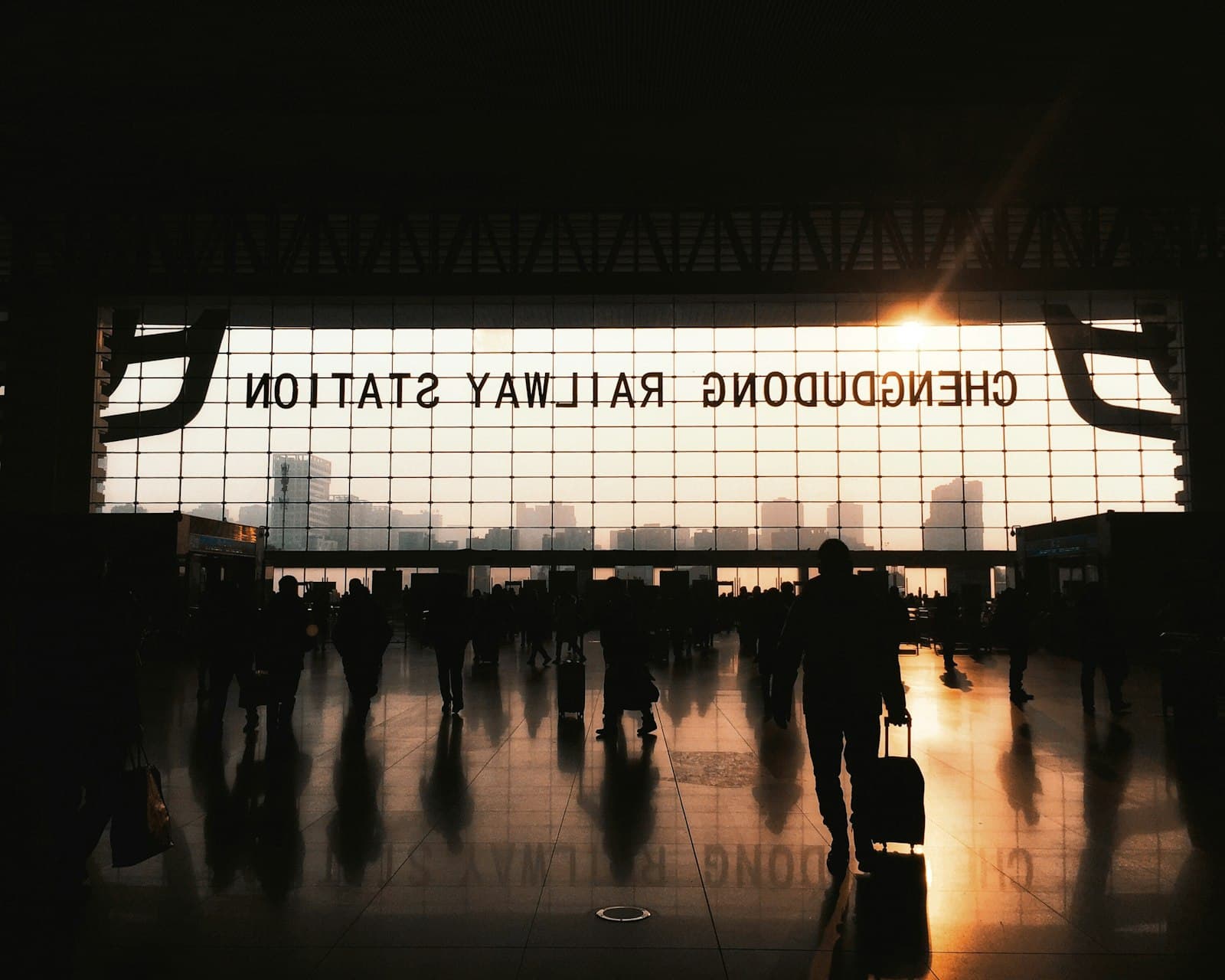
Navigating a Chinese high-speed railway station is much like navigating an airport terminal. Large hubs such as Shanghai Hongqiao and Hangzhou East have multi-level departure halls that handle very large numbers of travellers at once.
As the 12306 English FAQ warns passengers:
"The ticket counter, station entrance, ticket gate, and platforms are a few minutes' walks away. For passenger safety and station order, ticket sales and check will be halted before train departure... We suggest you arrive at the station early and reserve enough time for ticket collection, security check and ID verification."
Recommended station time buffers
These are our consultants' experience, not official figures.
- Experienced independent traveller (verified passport, travel app ready): arrive about 45 to 60 minutes early. Allow time for security and the ID check, the walk to the gate, and a short wait before the gate opens.
- First-time China rail traveller: arrive about 75 to 90 minutes early. The extra time is for finding your way around a large station for the first time, not for passport verification: if your 12306 status is still "to be verified", sort that out at a station counter on the day you arrive in Shanghai, not on the morning of the train.
- Ticket checks: both groups should follow the station announcement, because checks halt before departure and the exact timing varies by station and train.
The step-by-step station walkthrough
-
Station arrival and security check. Upon arriving by metro or taxi, follow the signs to the Departure Hall. Before entering the waiting concourse, every traveller passes through security. Place luggage, backpacks and personal items on the X-ray belt and walk through the metal detector. Stations apply airport-style rules: flammable liquids, pressurised aerosol cans above the posted limit, and knives are prohibited, so pack accordingly.
-
Manual staffed entrance lane. Mainland Chinese citizens pass through automated turnstiles by scanning their domestic Resident Identity Cards. Foreign passport holders use the staffed manual verification booth, typically at one end of the barrier bank. Present your original passport to the railway attendant. The attendant will scan the photo page or enter your passport number to confirm that you have a valid departure booked from that station, then let you through to the main concourse.
-
Locating your departure gate. Inside the main concourse, check the large electronic information boards hanging from the ceiling. Trains are listed by train number (for example G7505). Find your number to see the scheduled departure time, destination, status and ticket gate. Gate designations with letters, such as A and B, usually indicate different parts of the platform or train, so check the signage and your 12306 itinerary for your carriage number and follow the staff.
-
Passing the boarding gate. In our consultants' experience, ticket gates open about a quarter of an hour before departure and close a few minutes before it, but the exact times vary by station and train, so rely on the screens and announcements. Staff announce boarding over the public address system and the gate screens change from "Wait" to "Checking Tickets". Queue at the manual lane alongside the ticket barriers and present your passport to the gate agent, who will scan it and open the barrier. Once a gate has closed, staff will not let you onto the platform for safety reasons, so do not cut it fine: if you arrive at the gate after checks have halted, you will miss your train.
-
Platform boarding and finding your seat. Walk down the stairs or escalator to the platform. Coloured markers on the platform edge correspond to carriage numbers. Match your carriage number (shown on your 12306 itinerary, for example Car 05) to the marker and wait behind the yellow safety line. Step aboard, put roller luggage in the overhead rack or the baggage area at the end of the carriage, and take your assigned seat.
Is the train the best Hangzhou day trip from Shanghai, and does 240-hour transit cover it?
Yes: for most travellers high-speed rail beats a tour coach, and Hangzhou is inside the permitted 240-hour stay areas alongside Shanghai and Suzhou. You still need a confirmed onward ticket to a third country or region, and a confirmed high-speed seat is not permission to leave the stay areas.
Why high-speed rail beats a tour coach day trip
Travellers searching online for day trips from Shanghai to Hangzhou are routinely shown commercial bus tours, "all-inclusive" day packages and group excursions. For most visitors, taking the train yourself is the better operational decision.
- Travel time: the train took 45 to 87 minutes on the main pair on 20 October 2026. A coach is usually slower and depends heavily on road traffic.
- Traffic risk: the train runs on a dedicated rail line, not exposed to expressway jams. A coach is exposed to congestion on the road between the two cities.
- Comfort: the train has seats with power sockets and room to walk. A coach is more confined.
- Schedule control: by train you depart and return when you choose; a group coach runs to a fixed schedule with a set meeting time.
- Sightseeing focus: by train you can spend the day on quiet walks, the shoreline and the tea hills. Group coach itineraries usually allot fixed photo stops at busy drop-off points.
- Commercial stops: train travel has none. Some group coach tours include shopping stops, so check the itinerary before you book one.
The highway reality. The road between central Shanghai and central Hangzhou runs along the G60 Shanghai–Kunming Expressway. On weekday mornings, weekend getaways and national holidays, traffic leaving Shanghai and entering Hangzhou can be heavy, and a bus ride advertised at a couple of hours can stretch well beyond that. A long road journey each way leaves you with far less time in Hangzhou itself. By contrast, high-speed rail runs on a dedicated electrified line, with a design speed of 350 km/h, and is not affected by road traffic.
The freedom of self-pacing. Most travellers visit Hangzhou for the scenic waters of West Lake, a walk along the historic Su and Bai Causeways, or the terraced green hills of the Longjing tea area. These are best enjoyed at your own pace. Group tours tend to follow a fixed route behind a tour leader with a loudspeaker, often with a shopping stop presented as a "tea culture demonstration" or "silk museum". Taking the train lets you rent a public bicycle, stroll the quiet paths of the western shoreline or relax in a lakeside tea pavilion without anyone checking a watch. For tea-hill logistics and tea house etiquette, see our Hangzhou West Lake and Longjing guide.
Shanghai–Suzhou vs. Shanghai–Hangzhou: choosing your day trip
Foreign travellers staying in Shanghai often choose between two popular day trips: west to Suzhou or southwest to Hangzhou. Both cities are within easy high-speed rail reach of Shanghai, but they feel very different.
- Rail duration: Suzhou is the shorter ride; our Shanghai to Suzhou by high-speed rail guide has the times. Hangzhou took 45 to 87 minutes on the main pair on 20 October 2026.
- Primary scenery: Suzhou offers walled historic gardens and canal streets. Hangzhou offers an expansive lake, wooded hills and tea terraces.
- Urban character: Suzhou is intimate, with a historic water-town scale and stone bridges. Hangzhou is larger, with broad avenues and scenic water.
- Walking scale: Suzhou is compact, with garden clusters and alleys that are easy to walk. Hangzhou is more spread out, with bikes, boats or metro connections useful.
- Reference guide: Shanghai to Suzhou by HSR for Suzhou, and this page for Hangzhou.
When to pick Suzhou. If you want an easy day trip with minimal transit friction, Suzhou is the natural choice. The train ride is short, and the city is known for its UNESCO World Heritage gardens, including the Humble Administrator's Garden and Lingering Garden, and its canal streets such as Pingjiang Road and Shantang Street. Everything is compact and easy to cover in a single daylight window. Our sister page Shanghai to Suzhou by High-Speed Rail has the full route notes.
When to pick Hangzhou. Hangzhou suits you if you want open natural landscapes, a large lake and forested ridges. West Lake is big, framed by wooded hills and stone pagodas, and south of the lake lie the terraced tea hills of Longjing and Meijiawu. Visiting feels like leaving the density of Shanghai for an imperial-era nature reserve. It involves more walking or cycling over larger distances, and rewards it with wide lake and hill views.
Can you do both? If you have several days in Shanghai or are travelling across the region on a 10-day China itinerary 2026, you can easily visit both cities on separate days. However, we suggest you do not try to combine Suzhou and Hangzhou in a single calendar day: it turns a pleasant outing into a station-hopping marathon. Give each city its own day.
Hangzhou and the 240-hour visa-free policy
Our 240-hour visa-free China guide is the list of permitted stay areas. It names Hangzhou inside them alongside Shanghai and Suzhou, and cross-province travel inside those areas is allowed, while cities off the permitted list are out. We are not reprinting a full stay-area table or restating immigration rules on this transport page: the stay-area guide is the source of truth for ports, onward tickets and boundaries, so read it before you pay for a ticket. You still need a confirmed onward ticket to a third country or region. Hong Kong and Macao usually count, while a return to the city you left does not. Print the onward ticket and keep it with the passport you use at the railway gate. If Hangzhou is already in your ten-day sketch, it also sits on the slower east-China loop in the 10-day China itinerary, which is a sample you adapt, not a departure you join.
Frequently asked questions
Which Shanghai station do trains to Hangzhou leave from?
Most leave from Shanghai Hongqiao: on 20 October 2026, 12306 listed 109 trains from Hongqiao to Hangzhou East alone. Shanghai South (44 trains to Hangzhou East) and Shanghai Songjiang (17) are worth comparing if your hotel is nearer to them, while Shanghai Station had only a handful. Hongqiao connects with Shanghai Metro Lines 2, 10 and 17 and with Hongqiao Airport Terminal 2.
How fast is the high-speed train from Shanghai to Hangzhou?
The fastest trains from Shanghai Hongqiao to Hangzhou East took 45 minutes on 20 October 2026, and trains with more stops took up to 87 minutes. The line is designed for 350 km/h, with G-series trains running at 300 to 350 km/h.
Do foreigners need a paper ticket for the Shanghai to Hangzhou train?
No. 12306 sells both e-tickets and paper tickets, and with an e-ticket the booking is linked to your passport, so there is nothing to print or collect. Show your original passport at the staffed manual lane to enter and board.
Can you visit Hangzhou from Shanghai on 240-hour visa-free transit?
Yes. Hangzhou is inside the permitted 240-hour stay areas alongside Shanghai and Suzhou, so you can take the train between them. You still need a confirmed onward ticket to a third country or region, and the train does not let you leave the stay areas.
Plan your trip with LocalKey
LocalKey can arrange your Shanghai to Hangzhou high-speed rail leg as part of a wider itinerary. If you want to travel on your own, the Independent option lets you move on your own with the LocalKey app and 24/7 backup, and a local guide, airport pickup or a private car and driver are optional add-ons on demand. See private China tours and the Independent option for details.
If you prefer more support, the Private Guided option gives you an English-speaking private guide and a private car throughout the trip. See the Private Guided option for details.
LocalKey can help you choose the station pair that matches your hotels, and we suggest sharing your Shanghai and Hangzhou addresses with your specialist before booking. Either way, this is your own China trip, planned, booked and backed by a 1:1 specialist, reachable 7×24 on WeChat or WhatsApp.
Sources
- 12306 China Railway — English site — verified_on 2026-10-16
- 12306 China Railway — English FAQ (real-name tickets, endorsement and refund) — verified_on 2026-10-16
- 12306 China Railway — live train search — verified_on 2026-10-16
- China State Railway Group official portal — verified_on 2026-10-19
- Gaotie.net Shanghai–Hangzhou high-speed railway record — verified_on 2026-10-19
- Gaotie.net Shanghai Hongqiao station — verified_on 2026-10-19
- Gaotie.net Shanghai Railway Station — verified_on 2026-10-19
- Gaotie.net Hangzhou East station — verified_on 2026-10-19
- Gaotie.net Hangzhou Station — verified_on 2026-10-19
- TravelChinaGuide Shanghai–Hangzhou high-speed trains (secondary reference for sample schedules) — verified_on 2026-10-19
- Wikipedia: Shanghai–Hangzhou high-speed railway — verified_on 2026-10-19