Updated 14 October 2026 · LocalKey consultant team
We suggest giving Shanghai two to three days on a first China trip, four or five with one day trip to Suzhou or Hangzhou, or six to seven with both. Check opening days first: Yu Garden closes on Mondays except national statutory holidays, and Shanghai Museum East closes on Tuesdays except national holidays.
What should you check before you visit Shanghai's main sights?
Check opening days and entry steps first, because Yu Garden and Shanghai Museum East each keep a weekly closing day and have their own ticketing rules. The table below sets out the verified hours, closures and entry details for both sights.
Yu Garden is a traditional Chinese garden beside the City God Temple in Huangpu District, originally a private garden built in the Ming Dynasty (1368–1644), with over 40 scenic spots of pavilions, rocks and ponds; it is a key site under State-level protection and connects to the City God Temple and the Yuyuan Garden malls.
| Sight | Hours and closures | Tickets and entry | Source |
|---|---|---|---|
| Yu Garden (Yuyuan Garden) | Open 09:00–16:30, entry stops 16:00; closed every Monday except national statutory holidays; Spring Festival hours follow announcements | Book online through the official "Shanghai Yu Garden" WeChat mini-program, or buy at the ticket windows at the north and south gates; the north gate is at 168 Fuyou Road | Yu Garden official visitor information; Shanghai Municipal Government |
| Shanghai Museum East | Wednesday to Monday 10:00–18:00, last entry 17:00; closed Tuesdays except national holidays | Individual visitors do not need a reservation; bring your original valid ID (a passport for foreign visitors), pass security at the B1 East Gate and scan your ID. The Curio-City and the Digital Gallery still need advance reservation | Shanghai Museum official English page |
We suggest going to Yu Garden early, since entry stops at 16:00, and keeping the City God Temple and the Yuyuan Garden malls for afterwards so the garden itself is not rushed.
At the museum, we suggest keeping your passport easy to reach, because security at the B1 East Gate and the ID scan come first, and reserving ahead if you want The Curio-City or the Digital Gallery.
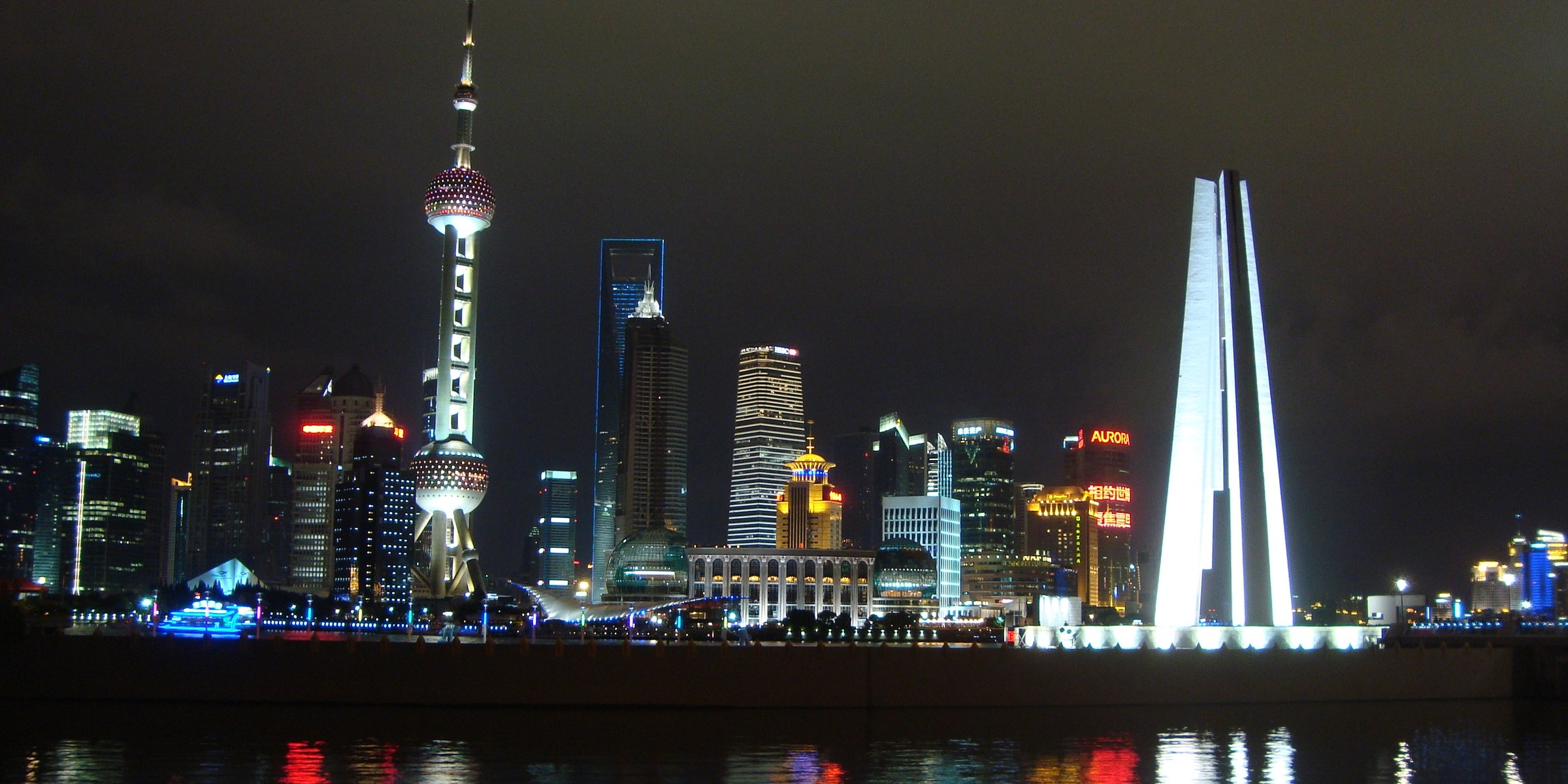
We usually plan the Bund at dusk, looking across the river to Pudong, and a slower walking day with cafes for the Former French Concession. Bring your passport and keep your phone charged for the official WeChat mini-program and maps. For payment and app setup on arrival, see your first 24 hours in Shanghai.
How many days do you need in Shanghai?
For the city itself, we suggest two to three days; with one day trip to Suzhou or Hangzhou, four or five days; and with both day trips, six to seven days.
Two days fits the core of the city: we usually plan the Bund and the Pudong skyline at dusk on one day, and Yu Garden early on the other, with Shanghai Museum East on whichever day suits its opening days. A third day gives room for the Former French Concession on foot and a late start. Day trips are what push the total up, because each takes a full day away from the city.
With one day trip, we suggest four or five days: two or three in the city, one out, and a spare half day. With both Suzhou and Hangzhou, we suggest six or seven days, so each trip has its own day and a lighter Shanghai day sits between them.
Pudong handles international flights and Metro Line 2 links the airport to the city, so we suggest Shanghai as an easy first landing.
The National Immigration Administration lists Shanghai Municipality, Jiangsu Province and Zhejiang Province among its 24 permitted provincial-level areas, so eligible nationals of 57 countries flying on to a third country or region can include Shanghai, Suzhou and Hangzhou in a stay of up to 10 days; see the 240-hour transit page.
We usually plan one fixed sight per half day and keep the rest open, and we suggest keeping arrival day light and saving sights with fixed opening days for when you are rested. Where you have a day trip, we usually place it mid-stay so a delayed flight does not push it into your departure day.
How do you get from Shanghai's airports into the city?
Shanghai has two airports. Pudong handles international and domestic flights and is about 30 km from downtown and 40 km from Hongqiao airport, while Hongqiao, in western Shanghai, is 13 km from the city centre and mainly serves domestic flights and regional flights within East Asia.
From Pudong, Metro Line 2 runs from Terminals 1 and 2 to People's Square in about one hour, and a free shuttle bus runs between the two Pudong terminals 24 hours a day. Hongqiao's Terminal 2 is served by Metro Lines 10 and 2.
The Shanghai Municipal Government describes the maglev as the world's first commercial high-speed maglev line. It connects Pudong International Airport with Longyang Road Station at up to 300 km/h, covering 30 km in eight minutes, and you can transfer to Metro Line 2 at Longyang Road.
We suggest confirming which airport and terminal your flight uses before you choose between the metro and the maglev. From Pudong, Metro Line 2 runs to People's Square, while the maglev suits you if you are happy to change trains at Longyang Road; for Hongqiao, we suggest a hotel near Metro Line 2 or Line 10.
If you message a specialist, send your flight number, the airport and terminal on your ticket, and your stay area, and we can talk through a clear route. An airport pickup is an optional add-on we can arrange on demand.
Where should you stay in Shanghai?
For a first visit, we suggest basing yourself near the Bund or People's Square, where walking access and Metro Line 2 make the city easier to cover.
- Near the Bund: we suggest this for first-timers who want walking access to the riverfront.
- Near People's Square: we suggest this if you want Metro Line 2, which runs to Pudong Airport.
- Former French Concession: we suggest this for quieter streets, cafes and walking days.
- Lujiazui in Pudong: we suggest this for skyline views and business-style hotels.
For getting around, the Shanghai Municipal Government calls the metro the backbone of the city's public transport: a network of more than 900 km across 21 lines connecting all major districts. Riders can use the Shanghai Metro Daduhui app, buy single-journey tickets from ticket vending machines, or use the Shanghai Public Transportation Card, and international bank cards such as Visa and Mastercard are accepted for ticket purchase. Eligible contactless UnionPay, Visa, Mastercard, American Express and JCB cards can be tapped at the gates with Tap to Ride. Ferries link the east and west banks of the Huangpu River, including between the Bund and Lujiazui; at the Bund you can board at piers such as East Jinling Road, East Fuxing Road and Gongping Road, and the city government calls East Jinling Road the most convenient for tourists.
For breakfast, we usually plan a shengjian and a xiaolongbao, with notes on Nanxiang xiaolongbao. Tell us whether you want to walk to the river, ride the metro to the airport line or have quiet streets, and we will match the base to it.
How do you add Suzhou or Hangzhou to a Shanghai trip?
We suggest Suzhou or Hangzhou as the first day trip from Shanghai, and each has a UNESCO World Heritage property that gives the day a clear focus.
The Classical Gardens of Suzhou are nine gardens in the historic city, dating from the 11th to the 19th century, and were inscribed in 1997 with boundaries modified in 2000. For the gardens, see Suzhou classical gardens, and for the train, see Shanghai to Suzhou by high-speed rail.
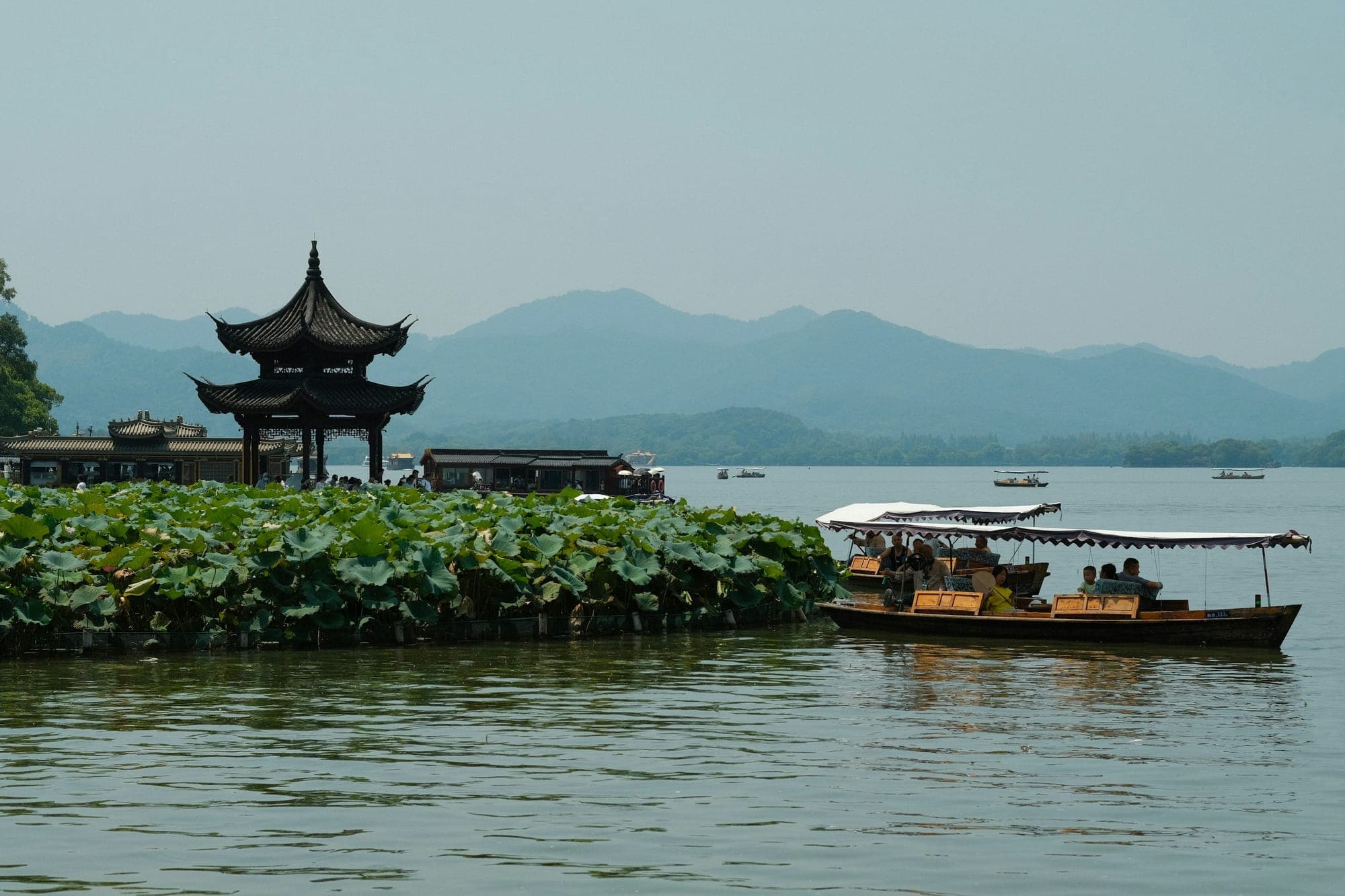
The West Lake Cultural Landscape of Hangzhou is the lake and the hills on its three sides, which have inspired poets, scholars and artists since the 9th century; it was inscribed in 2011. For the lake, see West Lake culture in Hangzhou, and for the route, see Shanghai to Hangzhou by high-speed rail.
To choose between them, we suggest asking what you want the day to feel like. Suzhou suits a day built around the classical gardens, and we usually plan two or three of the nine rather than all of them. Hangzhou suits a day around the lake and the hills on its three sides.
We suggest keeping luggage light for either day trip: leave larger bags at your Shanghai hotel, carry a day bag with your passport and phone, and return to the same hotel that night so you do not repack. If you would rather stay overnight in Suzhou or Hangzhou, we can plan that instead.
For an overview of the city, see the Shanghai destination page.
Plan your trip with LocalKey
LocalKey can arrange this trip through private China tours. Both options are your own China trip, planned, booked and backed, and not a group tour:
- Independent (details): you travel on your own with the LocalKey app and 24/7 backup, with no full-time guide on any day. A local guide, airport pickup or a private car and driver are optional add-ons on demand.
- Private Guided (details): an English-speaking private guide and a private car throughout the trip.
Talk to a 1:1 specialist, available 7×24 on WeChat or WhatsApp, to match your base, day trips and number of days to your dates.
Sources
- Shanghai Yu Garden — official visitor information (Chinese) — verified_on 2026-10-13
- Shanghai Municipal Government — Yuyuan Garden — verified_on 2026-10-13
- Shanghai Museum — Visit Shanghai Museum East — verified_on 2026-10-14
- Shanghai Municipal Government — Traveling between Shanghai's airports and city center — verified_on 2026-10-14
- Shanghai Municipal Government — Getting around Shanghai — verified_on 2026-10-14
- UNESCO World Heritage Centre — Classical Gardens of Suzhou — verified_on 2026-10-13
- UNESCO World Heritage Centre — West Lake Cultural Landscape of Hangzhou — verified_on 2026-10-13
- National Immigration Administration — Visa-Free Transit Policies, 20 August 2026 — verified_on 2026-10-14
- National Immigration Administration — 240-hour transit permitted areas, 19 December 2024 — verified_on 2026-10-13