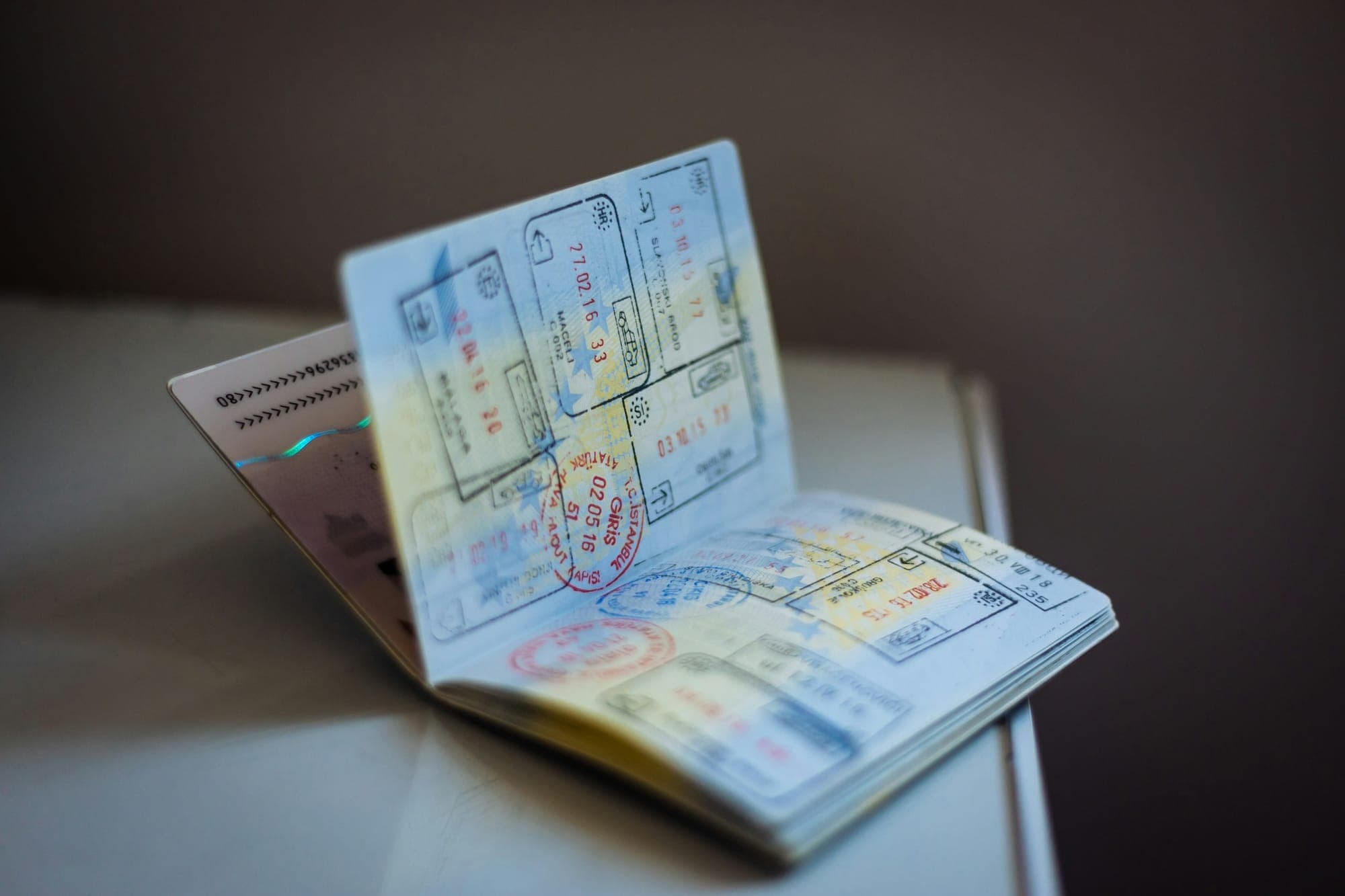
China’s arrival card service is free. Most foreign visitors need an arrival card even when they do not need a visa. Complete it through the National Immigration Administration (NIA), or fill it at the border. LocalKey’s free arrival card prep tool helps you prepare the fields and make a small passport photo on your device. You review, sign and submit through NIA yourself.
The online service started on 20 November 2025. NIA also provides paper arrival cards and self-service devices at entry ports. This guide was checked on 3 October 2026; follow the current form if it differs from this guide. NIA announcement.
Where do I submit the China arrival card?
Use the NIA computer form or NIA phone form. The NIA 12367 app and its WeChat and Alipay mini programs are alternatives. The observed form offers 13 languages, including English, French and Spanish.
There is no service fee. NIA has warned about copycat websites that charge for arrival card filling. Check the domain before sharing a passport photo: the web links above use s.nia.gov.cn. LocalKey does not collect your passport number, birth date or passport expiry, and does not submit a card for you. NIA’s fee warning.
If you cannot complete the card before departure, scan the designated code or use the available devices on arrival, or ask for the paper card. Preparation is useful because it puts your transport and accommodation details within reach, especially if your connection is slow at the border.
Do I need an arrival card if I enter visa-free?
Usually, yes. Visa exemption and arrival-card exemption are different questions. An ordinary holiday visitor using a visa-free policy generally still fills a card. A transit visitor who leaves the restricted port area also fills the appropriate temporary-entry card.
The exemptions cover valid foreign permanent-residence ID holders; non-Chinese holders of the Mainland Travel Permit for Hong Kong and Macao Residents; qualifying group visa or group visa-free travellers; direct transit within 24 hours without leaving the restricted port area; qualifying same-ship cruise visitors; eligible E-channel entrants; and foreign transport crew or employees. The form notice additionally lists centralized document-submission courtesy. Do not assume that a fast queue automatically means you qualify for an E-channel exemption.
Children who are not exempt need their own traveller record. A parent can add a child as a companion, with that child’s own passport image and details. Chinese nationals and travellers using a separate mainland permit should check the entry procedure for their document rather than use this foreigner-card guide.
Step 1: prepare the passport data-page photo
The observed online flow starts with the document type and an image of its data page. It accepts JPG or PNG with a 100 KB limit. A normal phone photo can be several megabytes, so saving a smaller copy is often necessary. This is a photo of the page that shows your identity and document details, not a separate portrait photograph.
Use the photo fixer to crop around the whole data page. Keep all corners, the printed text and both machine-readable lines at the bottom. Rotate until the page is upright. The helper exports a JPG within the size limit, removes image metadata and shows the final file size. Processing takes place in the browser; your image never leaves your device.
Open the saved file and zoom in before uploading it to NIA. Every character should remain readable. Smaller is useful only if the picture is still clear; if the machine-readable lines are blurred, take a sharper photo with the page filling more of the frame. Keep the passport flat and avoid glare. The tool never deliberately shrinks the longest side below approximately 800 pixels to force a file under the limit.
Upload the saved copy to NIA. Its recognition system fills later fields; check every result against your document, and correct it on the official form if necessary. Remove the downloaded passport image when you no longer need it.
Step 2: names, nationality and transport
The form asks for Last Name, First Name, Gender, Date of Birth, Country/Region of Citizenship and Passport Number, then your entry transportation and port. Copy passport details carefully. The prep sheet leaves passport number and birth date as “Copy from your passport,” rather than asking you to enter them into another website.
The observed name fields allow uppercase Latin letters, digits, spaces and underscores. Hyphens and apostrophes are not accepted. For example, O’Brien becomes O BRIEN, Smith-Jones becomes SMITH JONES, and José becomes JOSE. Last Name allows 40 bytes; First Name, which is optional, allows 30. Check the passport’s machine-readable spelling when a name cannot be represented by a simple accent removal. The tool flags unsupported characters rather than guessing another spelling.
For a flight, enter the operating flight number on the boarding pass. The official form uses that number to fill City of Entry and Port of Entry. A codeshare booking can show a marketing airline’s number instead; check the actual operating service. For train, vessel or land entry, match the city and port to your ticket and crossing. The helper’s port names are location guidance, not the complete official dropdown or immigration port codes.
Which entry category should I select?
A traveller with a valid Chinese visa or other entry permit answers Yes to that question and copies the number from the visa or permit. The visa number is commonly printed at the top right of a visa sticker. Do this directly on NIA; the prep tool does not ask you to enter it.
If you do not hold a visa or permit, answer No and select the applicable entry policy. The form may offer Visa-Free Policy, 240-Hour Temporary Entry for Transit, or another option depending on your nationality and port. The helper checks listed policies, but a conditional suggestion does not decide whether your full trip qualifies. Use the visa-free checker for the wider rules and official sources.
For 240-hour transit, you need a confirmed onward ticket to a third country or region, an eligible document with at least three months’ validity, a listed entry port, and travel within the permitted areas. Your stay is counted from midnight after the day of entry. A return trip to the place you arrived from does not meet the third-destination requirement. Hainan and other special policies have their own conditions; check those separately rather than selecting the nearest-looking option.
Step 3: contact and personal information
Some fields, such as Chinese Name, are optional. Country of Birth is required; City of Birth is conditional when born in China. Complete these directly on NIA. Contact Number uses digits and a plus sign, with a maximum of 30 characters. Include your country code. Email is optional, but a reachable address can be useful for receiving the receipt.
The transit variant includes further questions about other names, other citizenship and whether a passport has ever been lost or stolen. Answer the official questions truthfully. The emergency-permit category also asks for explanatory material. The helper explains these conditional fields without collecting additional identity information.
Step 4: travel details and the English hotel address
For a holiday, 3 Sightseeing/Leisure is the usual purpose. Select the actual purpose of this visit: business, visiting friends or relatives, work and study are separate choices. A tourist-purpose answer does not change the permission attached to your visa or entry policy.
Choose your Date of Entry and destination cities. The observed calendar allows dates up to three months ahead; use confirmed details and check again if your trip changes. Cities of Transit is optional and allows up to three cities.
English is accepted for the detailed address. You do not need a Chinese hotel-name lookup. Select province, city and district from the hotel’s address, then enter the hotel name and essential English street address. The detail field is limited to 100 bytes, not 100 arbitrary characters. Plain Latin letters generally occupy one byte; accented letters and other scripts can use more. Watch the tool’s byte counter and shorten nonessential wording if needed.
Common district guidance includes Dongcheng or Xicheng in Beijing, Huangpu or Jing’an in Shanghai, and Gusu in Suzhou. Choose the actual district printed on your accommodation address. These examples do not replace the official province–city–district dropdown.
Tourists usually answer No to the inviter question unless an inviting entity or person is part of the trip. If you answer Yes, enter the requested inviter details directly on NIA. Transit travellers need a confirmed departure itinerary: date, transport, service number, city and port. Keep the onward reservation available, and follow the official departure-date restrictions for your category.
Companions, signature and the receipt
One submission can include up to 10 companions. Each needs their own passport image within the 100 KB limit, names, document details, date of birth, nationality, relationship, phone and visa answer. Do not reuse one person’s photo for another traveller.
At the end, review the declaration and sign on screen with a finger or mouse. You perform this step yourself. After submission, save each traveller’s QR receipt. The form offers PDF download and email delivery; a screenshot kept offline alongside your passport is also useful.
Accommodation registration is a separate step
Hotels arrange their guests’ accommodation registration. If you stay with friends, in a rented apartment or another non-hotel home, you or your host must register within 24 hours of check-in. Since 21 September 2026 this can be done online nationwide through the NIA website, NIA 12367 app or mini programs. Visiting the local police station remains an option. Submitting an arrival card does not replace this registration. NIA accommodation announcement.
Once your entry details are prepared, use our first-time China checklist for payments, connectivity and everyday travel preparation, or plan a private China trip with LocalKey.