Updated 5 October 2026 · LocalKey consultant team
Use Chongqing Rail Transit for most journeys: the Line 2 monorail for Liziba, Lines 1 and 2 for central stations such as Jiaochangkou, and Lines 3 and 10 for Jiangbei Airport and Chongqing North Station. For steep streets, the Lianglukou escalator links Lianglukou with Caiyuanba and the Kaixuan Road lift links the upper and lower town, while the Yangtze River Cableway crosses the river; use a taxi or ride-hailing car for the rest, with the pickup set on a road where a car can stop.
Chongqing is easier when you plan movement in layers. A station, entrance or viewpoint may be close on a map but separated by steep streets, stairs, elevated roads or different levels of the same neighbourhood. We recommend checking the exact station entrance and street before leaving, then allowing more time than the straight-line distance suggests.
For background and neighbourhood context, see our Chongqing city page. This guide focuses on getting around the city in 2026, including the public transport links that support the Chongqing 2 or 3 day itinerary.
Which Chongqing metro and monorail lines will you actually use?
Chongqing has the world's largest mountain-city rail transit network, with 582 km open (Chongqing Municipal People's Government, August 2026), and it includes the straddle-type monorail Lines 2 and 3. For visitors, Lines 1, 2, 3, 6, 10 and the Loop Line cover the central districts, the airport and the railway stations.
| Line | Type | Useful stops for visitors (verified station names only) | Good for |
|---|---|---|---|
| Line 1 | Metro | Chaotianmen, Xiaoshizi, Jiaochangkou, Qixinggang, Lianglukou, Eling, Daping, Shapingba, Ciqikou | Yuzhong, central sights, Shapingba and Ciqikou |
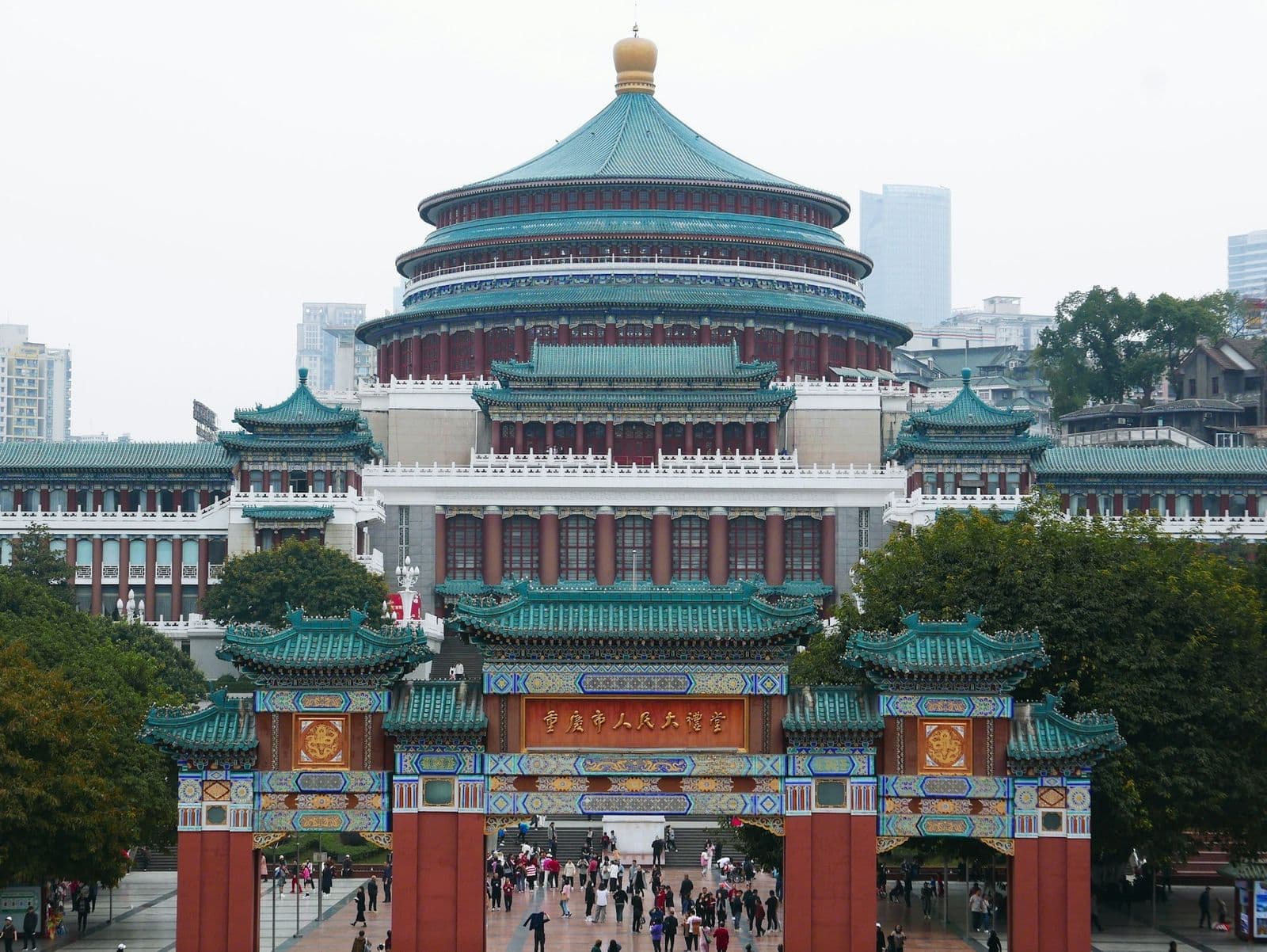
| Line 2 | Monorail | Jiaochangkou, Linjiangmen, Huanghuayuan, Daxigou, Zengjiayan, Niujiaotuo, Liziba, Fotuguan, Daping | Liziba, Jiefangbei, the People's Auditorium, Fotuguan Park and Chongqing Zoo |
| Line 3 | Monorail | Jiangbei Airport T2, Chongqing North Station South Square, Hongqihegou, Guanyinqiao, Niujiaotuo, Lianglukou, Nanping | Jiangbei Airport T2, Chongqing North Station, Guanyinqiao and Nanping |
| Line 6 | Rail line | Hongqihegou, Jiangbeicheng, Dajuyuan, Xiaoshizi, Shangxinjie | Jiangbeicheng, Xiaoshizi and Shangxinjie |
| Line 10 | Rail line | Jiangbei Airport T2, Jiangbei Airport T3, Chongqing North Station North Square, Chongqing North Station South Square, Liyuchi, Zengjiayan, Qixinggang | Jiangbei Airport T2 and T3, Chongqing North Station and central connections |
| Loop Line | Rail line | Chongqing West, Shapingba, Chongqing North Station South Square, Shangxinjie | Chongqing West, Shapingba, Chongqing North Station and Shangxinjie |
The key interchanges are Jiaochangkou between Lines 1 and 2; Lianglukou between Lines 1 and 3; Niujiaotuo between Lines 2 and 3; Daping between Lines 1 and 2; Xiaoshizi between Lines 1 and 6; Zengjiayan between Lines 2 and 10; Qixinggang between Lines 1 and 10; Hongqihegou between Lines 3 and 6; Shapingba between Line 1 and the Loop Line; Shangxinjie between Line 6 and the Loop Line; Chongqing North Station South Square between Lines 3 and 10 and the Loop Line; and Jiangbei Airport T2 between Lines 3 and 10.
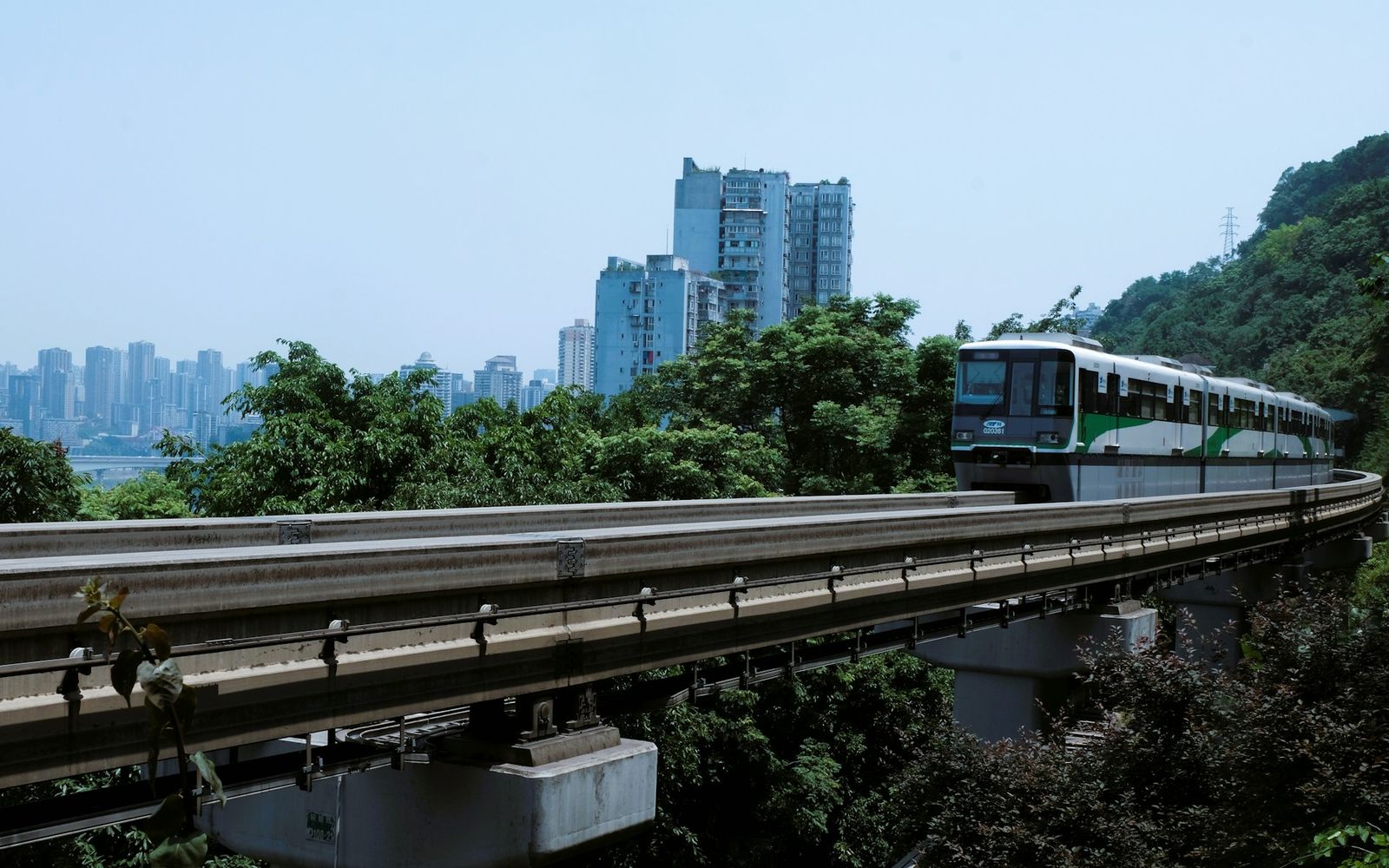
Line 2 is a straddle-type monorail, 31.36 km long, running from Jiaochangkou in Yuzhong to Yudong in Banan; Chongqing Rail Transit describes it as China's first straddle-type monorail line to open. It entered initial operation on 18 June 2005, and 22 of its 25 stations are elevated.
Line 3 is also a straddle-type monorail, 67.09 km long, which Chongqing Rail Transit calls the world's longest straddle-type monorail line. It runs north to Jiangbei Airport T2 and Jurenba and south to Yudong, with 45 stations, including Chongqing North Station South Square, Guanyinqiao, Niujiaotuo, Lianglukou and Nanping. Line 10 serves Jiangbei Airport T2 and T3, Chongqing North Station and central stations including Zengjiayan and Qixinggang.
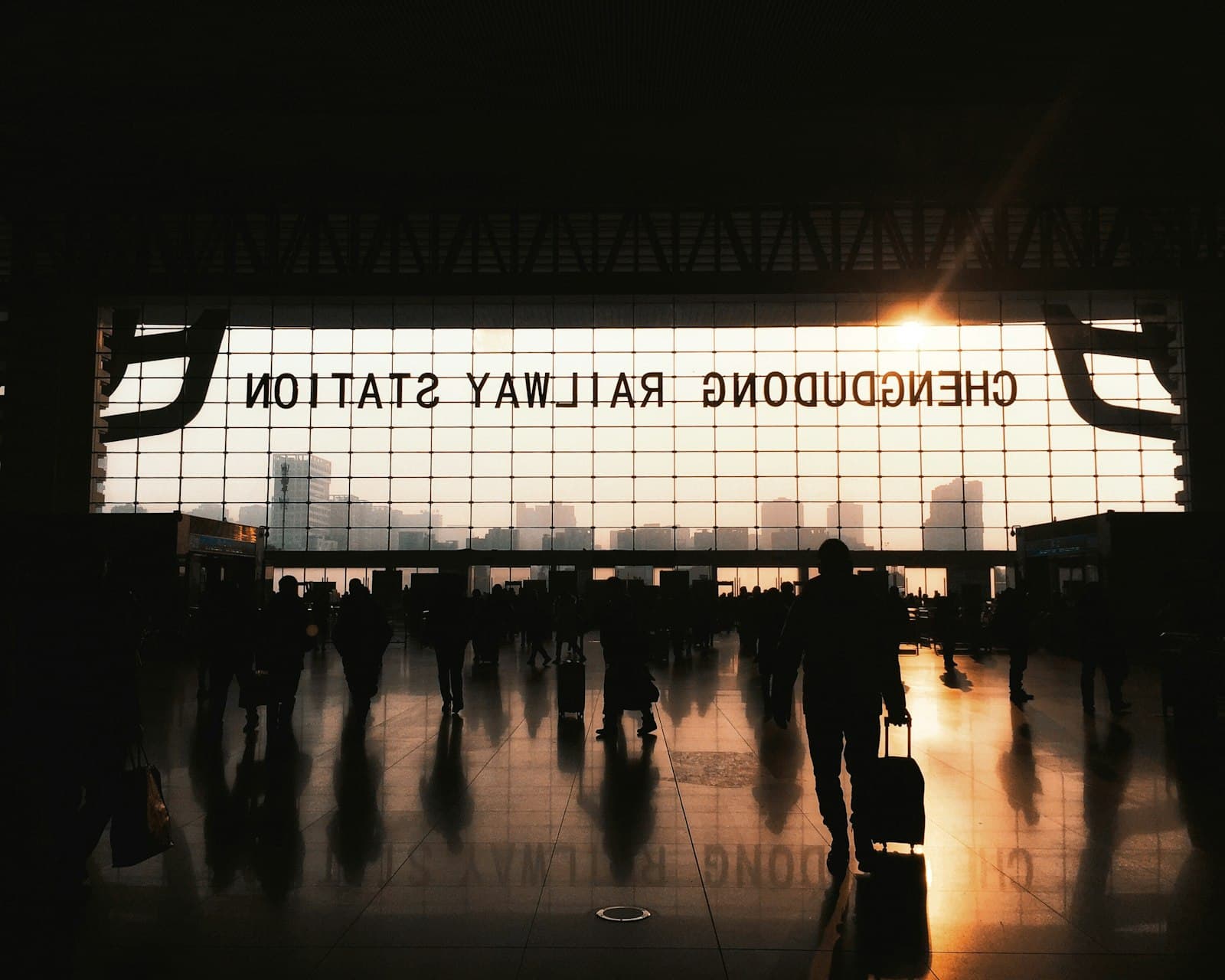
If you arrive by high-speed train, use our Chengdu to Chongqing by high-speed train guide for arrival planning; in the table above, Chongqing North Station is served at the South Square by Lines 3 and 10 and the Loop Line and at the North Square by Line 10, while the Loop Line also serves Chongqing West and Shapingba.
At Jiangbei Airport, Line 3 and Line 10 serve Jiangbei Airport T2, while Line 10 also serves Jiangbei Airport T3. Check the station signs when changing lines, as the correct square or terminal matters.
How does the Line 2 monorail at Liziba work in 2026?
Liziba is an elevated Line 2 station built together with a commercial-residential building, allowing the straddle-monorail train to pass through the structure. Its viewing platform, about 1,367 square metres, is there for the train-through-the-building view (Chongqing Municipal People's Government).
The station is on Line 2 between Niujiaotuo and Fotuguan. Follow the signs for the viewing platform and use the station entrances indicated on site.
Liziba is undergoing phased upgrades in 2026 because visitor numbers exceed the station's design load. The phased upgrade covers the hall, the platform, Entrances 1 and 2, and 14 escalators and lifts, and is due to finish on 30 December 2026.
Parts of the platform are closed from 16 June to 30 November 2026. Hall A is fully closed from 1 September and is expected to reopen around 31 October 2026. While Hall A is closed, passengers use the platform-to-hall stairs, so allow extra time and follow the instructions of station staff.
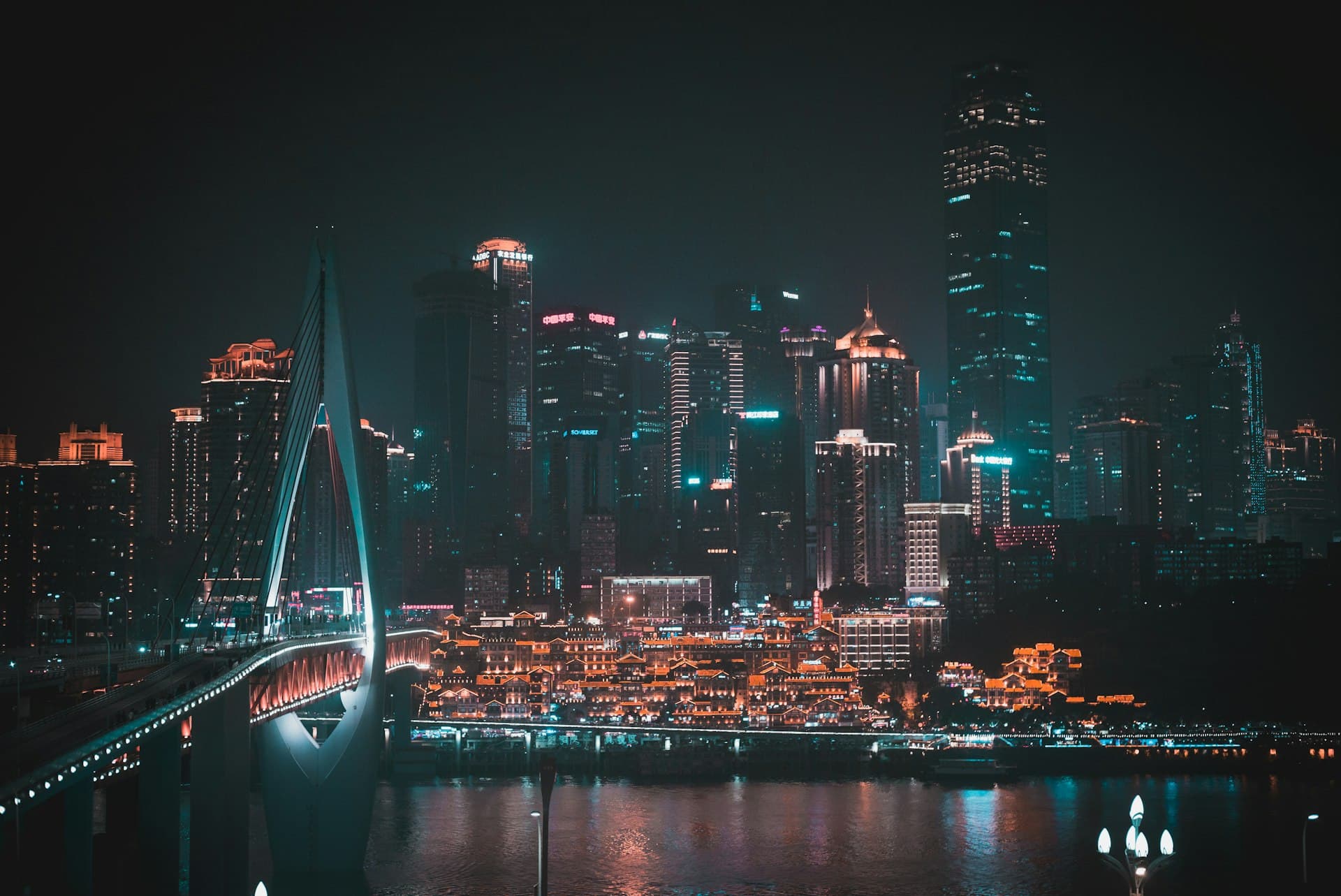
For a photo-led visit, see our photography experiences. For evening planning, use the Chongqing night views map and route; this article does not repeat that route.
How do you handle Chongqing's stairs and levels?
In Yuzhong, the Lianglukou escalator rises 52.7 metres between Lianglukou and Caiyuanba, and the Kaixuan Road lift rises 32.5 metres between the upper and lower town. The Yangtze River Cableway is a river crossing, 1,166 metres long, from Xinhua Road to Shangxin Street.
The Lianglukou escalator, also called the Huangguan escalator, is at 107 Zhongshan 3rd Road in Yuzhong. It links Lianglukou with Caiyuanba, replacing a 1953 funicular. The escalator is 112 metres long, rises 52.7 metres and takes about 2 minutes 30 seconds.
It operates daily from 08:00 to 20:00, and from 08:00 to 21:00 on statutory holidays. To reach it, take Line 1 or Line 3 to Lianglukou, use Exit 3 and walk for about three minutes.
The Kaixuan Road lift is a public passenger lift linking the upper town around Xinhua Road and Jiaochangkou with the lower town on Kaixuan Road, where the ground differs by nearly 50 metres. The lift itself rises 32.5 metres, about 11 storeys, and stands next to the Kaixuan Road stair street.
The lift operates from 07:00 to 22:00. It opened in 1986 and is described by its operator as China's first city passenger lift used for public transport. Treat it as a transport link, not simply as a landmark: the useful question is whether it connects the level you are leaving with the level you need.
The Yangtze River Cableway runs from Xinhua Road in Yuzhong across the Yangtze to Shangxin Street in Longmenhao, Nan'an. It is 1,166 metres long and operates from 08:00 to 22:00, with statutory holiday hours of 07:30 to 23:00. The official site shows remaining tickets for both stations. Check the night views guide if you want to combine the crossing with evening plans.
Our practical habits are simple. Search for the exact entrance, escalator or station rather than only the district. Check whether the pin sits on the upper or lower street. A short straight-line distance can involve a substantial height difference, so prefer metro plus a lift or escalator over a walking route when the terrain is steep. Allow extra time for stairs, crowds, station changes and the Liziba works.
If you are travelling with a pushchair, see our China family tours guidance before choosing routes, because a journey that looks close may include stairs or a change of level.
How do you get a taxi or ride-hailing car in Chongqing?
Chongqing's official central-city taxi guide covers refusals, detours, route changes and drivers pushing hot pot or river-cruise sales. It also identifies waiting points at busy visitor areas including Jiefangbei and Hongyadong.
For a street taxi, use one of the waiting points the official guide lists at hot spots such as Jiefangbei and Hongyadong, or a clear kerbside location where stopping is permitted. For complaints or lost property, the official guide lists 023-12345 and 12328.
For a ride-hailing car, set the pickup at a named entrance on a road where a car can stop. Avoid placing the pin inside a crowded pedestrian street or behind crowd-control barriers. At a sight on several levels, confirm whether the driver will use the upper or lower street and give the exact entrance name.
Jiefangbei and Hongyadong can be busy, so a nearby road may be more practical than the centre of the attraction. The same principle applies at Liziba during the 2026 works: confirm the station entrance or viewing-platform access point, then choose a road accessible to the vehicle.
A taxi or ride-hailing car is useful for journeys that cross several levels or connect places not served by one direct rail route. If you book private China tours, we can arrange private car and driver movements between levels, with pickups planned away from crowd control.
What should you check before you travel around Chongqing?
Parts of the Liziba platform are closed until 30 November 2026 and Hall A is expected to reopen around 31 October 2026. The Lianglukou escalator runs 08:00–20:00 (08:00–21:00 on statutory holidays), the Kaixuan Road lift 07:00–22:00 and the Yangtze River Cableway 08:00–22:00 (07:30–23:00 on statutory holidays).
On the day, follow on-site signs and staff at Liziba, and check the last train at the station; this guide does not state metro hours.
Check station signs again when changing at a large interchange, especially where the station name includes a square or terminal. The exact station entrance matters more than a broad district name when meeting someone or ordering a car.
For metro payment preparation, use our China metro guide for foreigners. This article covers Chongqing movement and route planning rather than payment setup.
Plan this with LocalKey
Tell us which sights, railway station, airport terminal and evening plans you are combining. We can place the rail interchanges, lifts, escalators and vehicle pickups into one route, with extra time for steep streets and the Liziba upgrade.
Every LocalKey trip is your own China trip — planned, booked and backed: we plan the route, book everything, and the app guides you day by day, with 24/7 support.
- Independent: you travel on your own with the LocalKey app and 24/7 backup. Airport pickup, a private car and driver, or a local guide can be added on demand, so a guide is an optional add-on.
- Private Guided: a private guide plus driver and car across the trip, with door-to-door car movements between levels, pickups arranged away from crowd control, and a guide to read station signs during the Liziba works.
Speak with a 1:1 specialist through 7×24 WeChat/WhatsApp for a route matched to your hotel, arrival point and walking pace.
Sources
- Chongqing Municipal People's Government — rail network (21 August 2026) — verified_on 2026-10-05
- Chongqing Rail Transit — line introduction — verified_on 2026-10-05
- Chongqing Municipal People's Government — Liziba station — verified_on 2026-10-05
- Chongqing Municipal People's Government — Liziba station upgrade, 2026 — verified_on 2026-10-05
- Chongqing Public Transport Operation Co. — Lianglukou escalator — verified_on 2026-10-05
- Chongqing Municipal People's Government — Huangguan escalator history — verified_on 2026-10-05
- Chongqing Public Transport Operation Co. — Kaixuan Road lift — verified_on 2026-10-05
- Chongqing Public Transport Operation Co. — Yangtze River Cableway — verified_on 2026-10-05
- Chongqing Municipal People's Government — central-city taxi riding guide — verified_on 2026-10-05