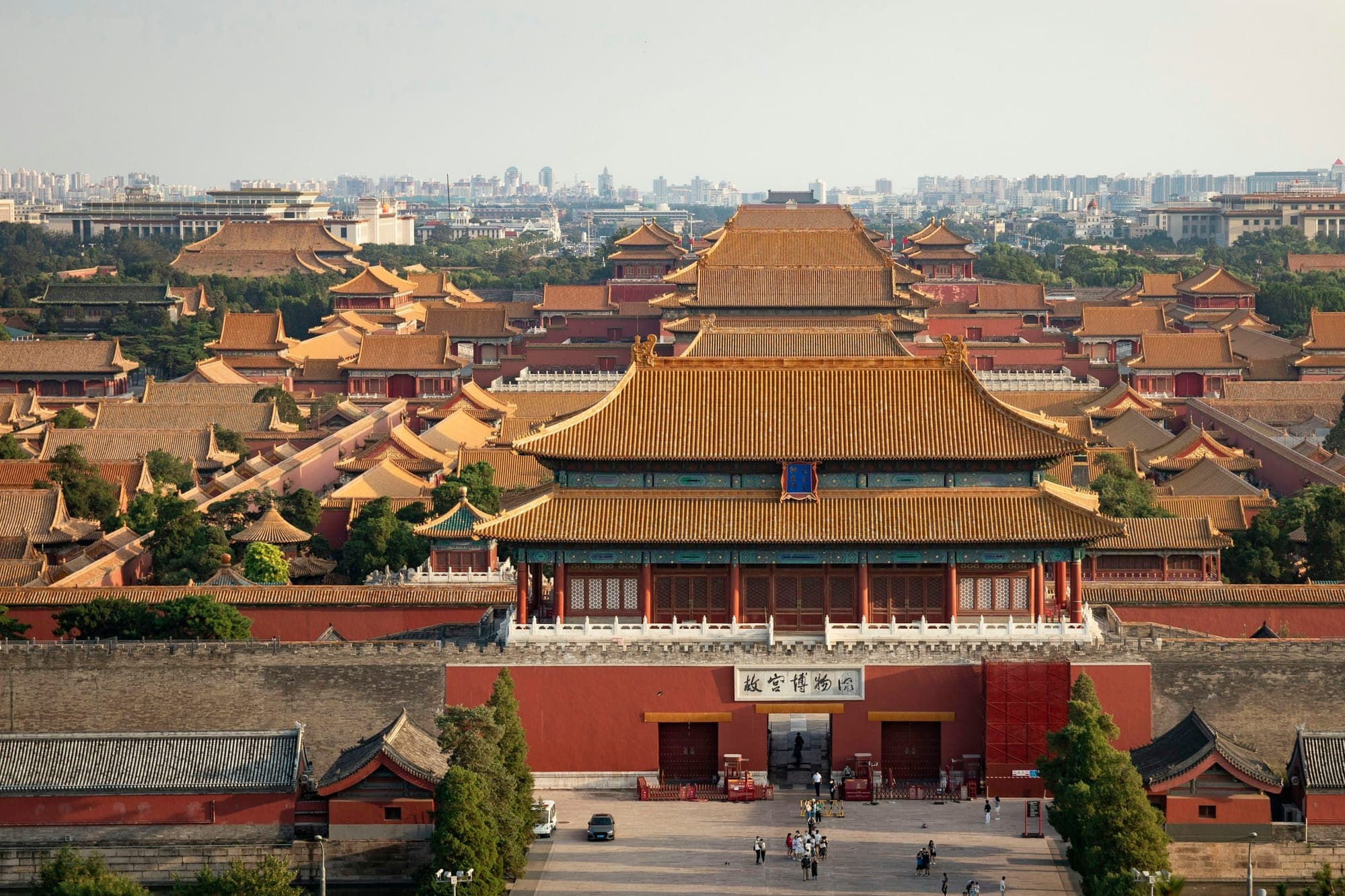
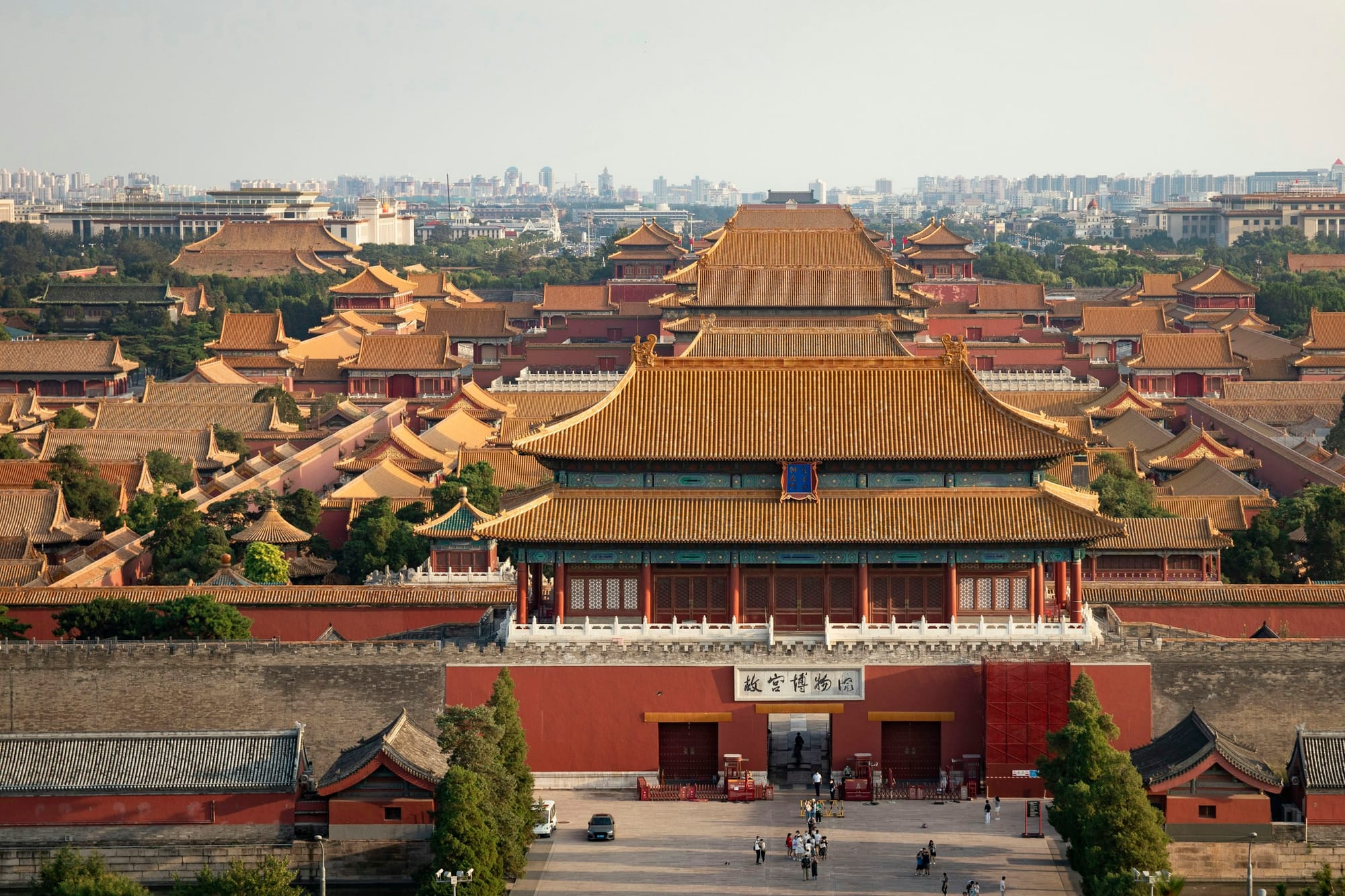
Bertolucci’s 1987 film The Last Emperor was the first feature authorized to shoot inside Beijing’s Forbidden City, now the Palace Museum, especially in the Courtyard and Hall of Supreme Harmony; travellers today walk those same open courtyards as museum visitors, with real-name advance booking.
Updated 1 October 2026 · LocalKey consultant team
For travellers drawn to history through cinema, the palace offers a rare kind of encounter: the film’s imperial setting is not a reconstructed backdrop but a living museum complex at the centre of Beijing.
The story
In The Last Emperor, Bernardo Bertolucci follows Puyi from childhood on the imperial throne through the collapse of the Qing dynasty and the disorienting political changes that followed. The film moves between ceremony, confinement, memory and spectacle. Its power comes partly from scale, but also from the tension between a child surrounded by ritual and an adult trying to understand what remains after the world that formed him has disappeared.
The Forbidden City gives that story a physical dimension. Broad courtyards create distance between the visitor and the ceremonial buildings. Painted doors, stone terraces and layered rooflines suggest a system designed to organise movement, rank and attention. Even when the palace is busy with museum visitors, the spatial logic is clear: this was an imperial residence and administrative centre, not simply a collection of grand halls.
Puyi’s life inside the palace also sits at a historical threshold. After his abdication in 1912, he remained in the Inner Court under the Articles of Favorable Treatment until he was expelled on 5 November 1924. The Palace Museum was established in the Forbidden City in 1925. Today, visitors enter as museum guests, moving through spaces that once belonged to an imperial household and now hold an extensive public collection.
The film does not turn the palace into a theme park. Instead, it gives travellers a narrative lens for noticing thresholds, courtyards and the contrast between public ceremony and private life. The best visit leaves room for both: the remembered palace of the film and the museum that exists now.
Was The Last Emperor really filmed in the Forbidden City?
Yes. The Last Emperor was the first feature authorized to film inside the Forbidden City, including the Courtyard and Hall of Supreme Harmony, where the coronation sequence was staged. The production also used controlled filming methods inside the Hall, while other interiors were created on soundstages.
The production’s access was historically significant. In a Directors Guild of America interview, Bertolucci described filming the coronation in the Courtyard and Hall of Supreme Harmony, with a Steadicam used inside the Hall because dollies, cranes and lights were not permitted there. That restriction shaped the visual language: the camera could move with the actors, but the building itself remained the dominant presence. The Directors Guild of America interview with Bernardo Bertolucci
That distinction matters when planning a visit. The film’s palace scenes were shot in real locations, but not every location in the film is within the Forbidden City. Some interiors were made on soundstages at Beijing Studios. The lakeside sequence was filmed beside Kunming Lake at the Summer Palace because the palace lakes were in disrepair at the time. The production also travelled to other locations in China, including Changchun and Dalian, as well as Italy. A location guide to The Last Emperor
So the accurate answer is both direct and nuanced: the Forbidden City is genuinely present in the film, especially in its ceremonial palace scenes, but the movie is a constructed journey across several locations. Travellers should not expect every remembered image to correspond to one modern visitor viewpoint or a single palace courtyard.
What can you still see of Puyi’s world inside the palace?
Visitors can still experience the imperial courtyards, ceremonial halls and spatial sequence that frame Puyi’s early life, but the Forbidden City is now the Palace Museum, with public access organised around museum visits rather than imperial residence. The building complex remains the essential setting; the political world around it has changed completely.
The most useful way to approach the palace is to watch how the spaces change as you move through them. Large ceremonial areas create a sense of order and distance. Smaller courtyards and side halls feel more intimate, though they are still governed by the same architectural hierarchy. The contrast helps explain why the film shifts so effectively between public ritual and the more enclosed world of the young emperor.
The palace was built between 1406 and 1420 and formed part of the imperial palaces of the Ming and Qing dynasties in Beijing. UNESCO describes the site as a major expression of palace architecture and imperial planning. UNESCO: Imperial Palaces of the Ming and Qing Dynasties in Beijing and Shenyang
Puyi’s world was not only defined by architecture. It was shaped by rules, attendants, education, ceremony and the boundaries of the Inner Court. The modern museum visit cannot reproduce that life, and it should not try to. Instead, the preserved setting allows visitors to consider how power was made visible through architecture: who could enter, where people stood, how far one had to walk and which rooms were reserved for particular occasions.
The film can sharpen that attention, but it is worth looking beyond the scenes you recognise. Notice the repeated roof forms, the relationship between stone platforms and open ground, and the way the central axis gives the palace its rhythm. The visit becomes richer when the film is a starting point rather than a checklist of locations.
Why is the Forbidden City worth visiting beyond the film?
The Forbidden City is worth visiting because it combines imperial history, monumental planning and a major museum collection in one central Beijing site. The film adds a memorable narrative layer, but the palace stands on its own as one of China’s defining cultural places.
A film-led visit can easily become focused on recognition: finding the hall, courtyard or gate that appeared on screen. A broader visit asks what the camera could not show. How does a visitor move through the complex? Which spaces are open and which are withheld? How does the scale of the central axis compare with the more private sections? What changes when a palace becomes a museum visited by people from around the world?
These questions connect the Forbidden City to wider Beijing. The city’s central axis is not an isolated attraction but part of a larger urban composition. A walk through the palace can lead naturally to Jingshan Park, where the layered roofs can be viewed from above, subject to local access conditions and the day’s route. It can also be paired with a hutong walk, where the scale shifts from imperial planning to lanes, courtyard homes and everyday neighbourhood life. Our Beijing Hutong Walk makes that contrast central to the day.
The palace is also a useful introduction to the idea that cultural travel is often about context rather than accumulation. One carefully paced museum visit can illuminate architecture, dynastic history, urban planning, conservation and modern public life. Adding more sites is not always the best way to understand Beijing. Allowing time to pause, look back and connect the palace to the city usually produces a more lasting impression.
For travellers planning a wider route, our Beijing destination guide gives the city a broader frame, while the Culture & Craft experiences collection offers ways to connect palace history with food, neighbourhoods, craft and contemporary local life.
How do you fit the Forbidden City into a Beijing trip?
Plan at least half a day for the Forbidden City, and allow most of a day if you want to explore side halls, museum collections and the surrounding central-axis neighbourhoods without rushing. It fits naturally into a first Beijing stay, especially when paired with Jingshan Park or a separate hutong experience.
The palace sits at the centre of Beijing, immediately north of Tiananmen Square. Your route will usually begin at the Meridian Gate, the southern entrance, and continue north through the principal palace sequence. Many visitors finish towards the north or east, depending on the areas open that day and the onward plan. Jingshan Park is a common next stop for an elevated view across the roofs, but check local access and opening information when planning the route. A separate hutong experience pairs well with the palace day because it shifts the scale from imperial planning to neighbourhood lanes; see our Beijing Hutong Walk for that contrast.
Plan at least half a day for the palace itself. Allow most of a day if you want to explore side halls, museum collections and the surrounding central-axis neighbourhoods without rushing.
The official Palace Museum booking channel states that same-day tickets are not available and that real-name reservations are required. Visitors from outside Mainland China should book and check in with a passport or another listed travel or residence permit, and should bring the original valid identification used for the reservation. Entry is through the Meridian Gate. Reservations open at 20:00 Beijing time seven days before the visit date, and a reservation is valid only on that date. The museum is closed on Mondays except statutory holidays. For the verified check-in windows, morning-session ticket checks must be completed by 12:00, while afternoon-session ticket checks start at 11:00. Confirm the current notice before travelling. Use the official Palace Museum English booking channel only; the museum states that it does not authorise third-party ticket agents. Verified on 1 October 2026.
Beijing’s dry autumn is often comfortable for a long outdoor museum day. Summer can be hot and humid, while winter can be cold, particularly when crossing large exposed courtyards. Comfortable shoes, sun protection and a flexible pace are more useful than trying to cover every building.
For a first visit, the palace works well within our Beijing 5-Day First-Time itinerary. For passport booking, hours, Meridian Gate entry, and day pacing, use How to Visit the Forbidden City in Beijing 2026. If you are combining Beijing with Shanghai, use the Beijing and Shanghai Classic Itinerary as a sample route. Travellers who need to confirm entry rules before building dates can also review our 240-hour visa-free China guide.
How do Independent and Private Guided trips handle a Forbidden City day?
Independent and Private Guided trips both place the Forbidden City within a planned Beijing route, while Independent gives you a self-directed museum day and Private Guided adds a dedicated local specialist to interpret the palace and manage the day’s flow. In both cases, advance real-name booking and the official museum rules still apply.
With Independent, LocalKey plans the wider journey, books trip logistics around the palace day, and gives you the route context needed to explore at your own pace — while Palace Museum tickets still follow the official real-name channel above. A local guide is available as an optional add-on only, useful if you want focused interpretation for the palace, the central axis or a related neighbourhood walk. This tier suits travellers who enjoy moving slowly through museum spaces and choosing their own emphasis.
With Private Guided, a private local guide accompanies the day and connects the visible architecture with Beijing’s history, the Palace Museum’s collections and the story behind the film. The guide can help shape the sequence around your interests, whether those are Puyi, imperial ceremony, architecture, photography, museum objects or the relationship between the palace and the modern city. Timing remains subject to official entry conditions and the museum’s operating notices.
Both tiers can include the palace alongside Jingshan Park, a hutong walk or a broader Beijing route. The right choice depends less on how much you want to see than on how you prefer to understand it. If you want independence with a carefully prepared framework, choose Independent travel. If you want interpretation and private support throughout the day, choose Private Guided travel.
Build this trip with LocalKey
Tell us what drew you to The Last Emperor: the film’s visual language, Puyi’s history, palace architecture or the experience of walking through a place that shaped modern China’s memory. We can build that interest into your own China trip — planned, booked and backed.
Start with Private China Tours, then choose Independent or Private Guided. A 1:1 specialist will help shape the route, confirm practical details and connect Beijing with the rest of your journey. During travel, support is available through 7×24 WeChat/WhatsApp.
Sources
- The Directors Guild of America: “A Shot to Remember: The Last Emperor”
- Movie-Locations: The Last Emperor filming locations
- UNESCO World Heritage Centre: Imperial Palaces of the Ming and Qing Dynasties in Beijing and Shenyang
- Official Palace Museum English booking channel — booking information verified on 1 October 2026.