
Updated 30 September 2026 · LocalKey consultant team
The story
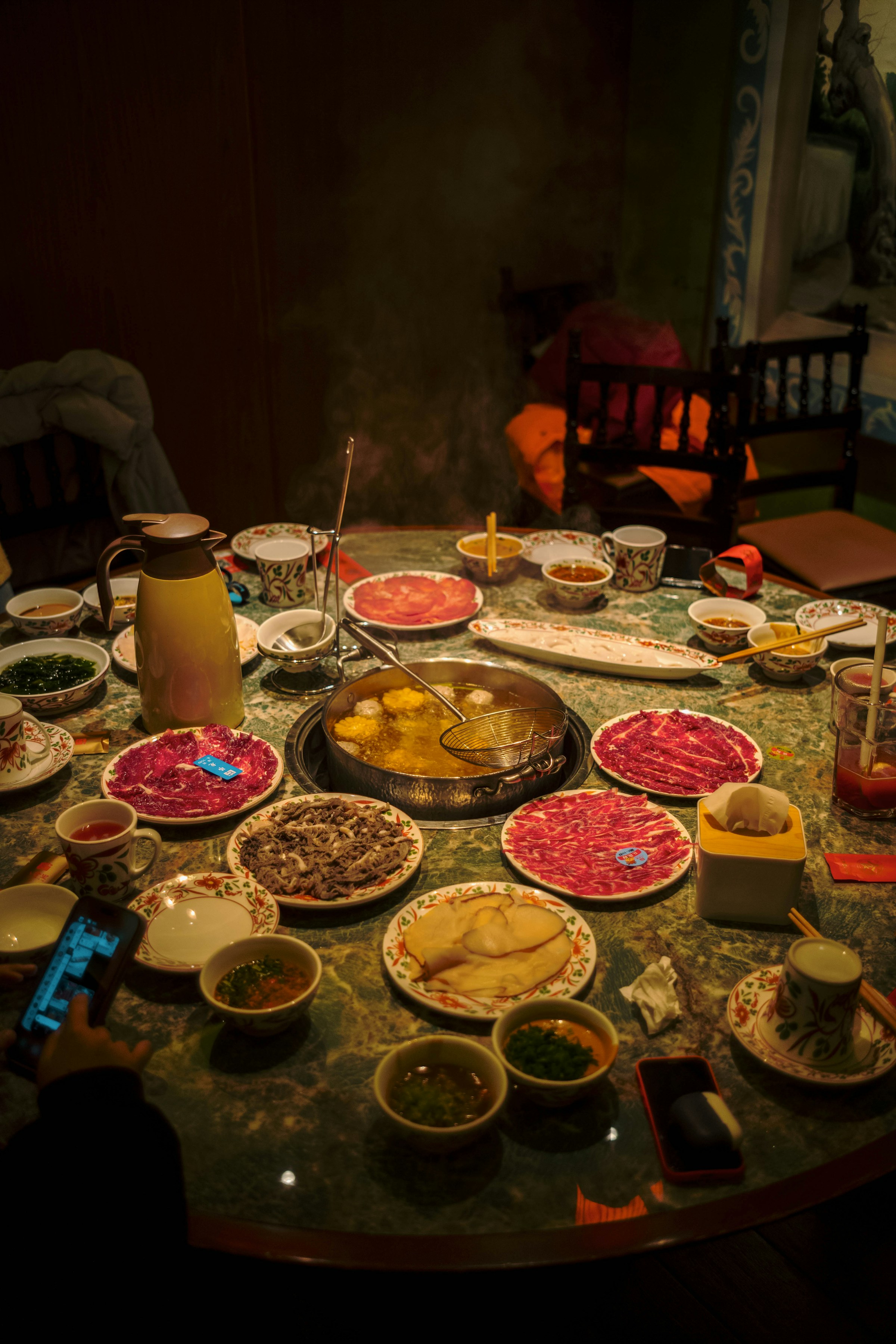
Short video clips from south-west China usually feature the same visual cues: boiling crimson liquid, clouds of fragrant steam, floating dried chillies, and brass ladles dipping into bubbling cauldrons. Travellers watching these scenes often arrive with two immediate questions: which city serves the hotter meal, and which destination provides an easier entry point for a first dinner?
The short answer is that both dining traditions belong to the shared culinary geography of the upper Yangtze basin, built around the signature pairing of dried chilli heat and citrusy Sichuan pepper numbness known as mala. Yet the practical table experience in each metropolis is noticeably distinct. Chongqing hot pot relies heavily on rendered beef tallow, producing an unyielding, dense heat where whole-pot red oil dominates the room. Chengdu hot pot leans primarily on refined rapeseed oil infused with aromatic spices, presenting a gentler, more fragrant simmer that readily welcomes mild split broths.
This guide focuses specifically on the practical differences between both table cultures—how the fat profile shifts flavour and heat retention, how each city approaches dipping sauces, how spice levels are negotiated at the counter, and how to sequence both cities during a single journey. For a deep look into the single-city heritage, ordering mechanics, and offal traditions of the mountain municipality, refer to our dedicated guide on Chongqing Hot Pot 2026.
The real places
Hot pot dining in south-west China is inseparable from urban geography. These are not interchangeable culinary checklists or restaurant chains; they reflect two different topographies, paces of life, and dining habits.
Chongqing is a dramatic mountain city built along the steep confluences of the Yangtze and Jialing rivers. In Chongqing, dining rooms spill across multi-level hillsides, underneath elevated roadway pillars, and down winding residential alleys. The local hot pot craft is formally recognized as a municipal intangible cultural heritage technique, codified across official listings maintained by the Chongqing Local Chronicles Office and municipal cultural heritage notices. The cooking style remains intensely focused on the evening meal: loud, communal rooms where heavy iron pots simmer with dense layers of rendered beef tallow and potent dried peppers.
Chengdu, situated on the fertile western plains of the Sichuan basin, approaches dining with a distinct rhythm. In Chengdu, hot pot exists within a broader municipal culinary canon that values delicacy, nuanced spice layering, and varied flavour profiles. Hot pot here sits side by side with historic provincial dishes such as mapo tofu—the classic wok-cooked bean curd preparation detailed in Chengdu Mapo Tofu 2026. In Chengdu dining rooms, the atmosphere is conversational and leisurely, offering extensive condiment stations, balanced vegetable selections, and a kitchen culture that accommodates different heat tolerances without hesitation.
The core differences between the two traditions can be mapped across five table factors:
| Feature | Chongqing Hot Pot | Chengdu Hot Pot |
|---|---|---|
| Broth and base | Heavy beef tallow base; dense, viscous, and heat-retaining; intensely savoury with direct chilli pungency | Rapeseed oil base with aromatic spices (clove, star anise, cinnamon); lighter body with floral fragrance |
| Pot form | Nine-grid iron pot (jiugongge) or single open red-oil basin; split pots rarely encouraged | Split dual-flavour pot (yuanyang) widely standard; clear mushroom or bone broth paired with spicy oil |
| Dipping habit | Minimalist dip: pure sesame oil with minced fresh garlic and a pinch of salt to coat ingredients | Elaborate condiment bar: sesame oil, sesame paste, oyster sauce, crushed peanuts, scallions, cilantro |
| Spice ordering | Default heat is substantial; mild (weila) remains noticeably fiery; heavy on whole dried chillies | Nuanced gradient from non-spicy to extra hot; kitchens readily calibrate chilli and Sichuan pepper load |
| Best first for low spice tolerance | Demanding for beginners; dense oil clings to surface and intensifies spice sensation | Excellent entry point; split pots permit gentle non-spicy broths alongside moderate red oil |
When planning multi-city itineraries, our private China tours often sequence Chengdu before Chongqing, allowing international guests to calibrate their palate to Sichuan pepper in a flexible split-pot setting before encountering the full beef-tallow heat of a riverside mountain dining room.
The culture behind it
The divergence between Chongqing and Chengdu styles stems from historical economic roles rather than accidental recipe shifts. In English-language travel writing, the umbrella term "Sichuan hot pot" frequently collapses both traditions into a single generic concept. In reality, the two cities developed their cauldrons to serve different communities.
Chongqing hot pot originated on the riverbanks among dock labourers and boat trackers working the Yangtze and Jialing waterways in the late nineteenth and early twentieth centuries. Local historical gazetteers document how manual labourers on the wharves purchased inexpensive beef offal—tripe, aorta, and liver—from slaughterhouses near Chaotianmen. To mask gamey aromas and preserve ingredients in the humid river basin, workers simmered the offal in shared cast-iron pots divided into wooden or metal grids. Each diner rented a specific compartment, dipping their own skewers into boiling red tallow laden with coarse salt, dried peppers, and Sichuan peppercorns. This working-class heritage established Chongqing's enduring preference for unpartitioned red pots, fast communal cooking, beef fat richness, and specialized offal textures.
Chengdu, by contrast, developed its dining culture as the administrative, commercial, and intellectual centre of the Sichuan plain. Chengdu kitchens adapted the rugged river basin pot into an urban restaurant format during the mid-twentieth century. Rather than relying on heavy beef fat from river docks, Chengdu cooks used locally pressed rapeseed oil (caizi you), which allowed delicate spice blends—fennel seed, cardamom, bay leaf, and ginger—to express their fragrance without being overwhelmed by animal grease. This refined approach made hot pot accessible to multi-generational family gatherings, leading directly to the widespread adoption of the split pot (yuanyang guo), named after the paired mandarin ducks symbolising balance.
In both cities, hot pot remains an active, cook-it-yourself communal meal. Diners manage their own ingredients using long chopsticks, monitoring boiling times, and retrieving morsels when textures reach their peak. The meal is unhurried, informal, and deeply social, contrasting sharply with formal multi-course banquet dining.
How to go
Visiting both cities to compare their hot pot styles is one of the most rewarding culinary journeys in western China.
Rail transit and timing
The Chengdu–Chongqing high-speed railway corridor connects both metropolises efficiently. Frequent high-speed trains operate between Chengdu East or Chengdu South and Chongqing West or Chongqing North, with typical journeys taking between 1 and 2 hours. Travellers should review ticketing logistics using our guide on 12306 train tickets for foreigners and familiarize themselves with navigation through major hubs via China train stations for foreigners.
A balanced schedule requires at least three to five days across both destinations. This duration provides enough time to enjoy giant panda conservation parks and heritage teahouse afternoons in Chengdu, take high-speed rail across the basin, and explore hillside viewpoints and river skylines in Chongqing, setting aside one dedicated evening dinner for each hot pot style. To see how these elements combine seamlessly into a private itinerary, examine our sample Chengdu Private Tour 2026: Pandas, Sichuan Basin, and Chongqing Add-On. To plan the evening around a Chongqing pot, see Chongqing night views.
Seasonality and climate
Hot pot is enjoyed year-round across the basin. During high summer (July and August), daytime temperatures in both cities can exceed 35°C (95°F), but dining rooms operate powerful air-conditioning systems, making an evening pot comfortable. In winter (December through February), the damp, overcast cold of the basin makes a simmering pot of spiced broth particularly comforting.
Table etiquette and ordering guidelines
When visiting hot pot restaurants in either city, keep these practical principles in mind:
- Selecting broths: In Chengdu, ask for a split pot (yuanyang) if your party includes varying spice preferences. One side contains the red-oil broth, while the other features clear chicken, pork bone, or wild mushroom soup. In Chongqing, split pots exist in modern establishments, but traditional venues often feature a single red-oil broth (hongyou) or a nine-grid pot (jiugongge). If ordering spicy in either city, specify mild spice (weila) or low oil (shaoyou) if you wish to moderate the intensity.
- Using the dipping sauce: In Chongqing, adhere to the traditional garlic-sesame oil bowl (xiangyou suanli). Sesame oil cools hot ingredients rapidly, coats the palate, and buffers stomach lining against heavy chilli oil. In Chengdu, feel free to visit the sauce station to blend sesame oil with crushed peanuts, scallions, and a dash of black vinegar to round out the heat.
- Cooking times: Thinly sliced beef, mutton, and sliced potato require only 20 to 45 seconds in active boil. Crisp tripe (maodu) is traditionally cooked using the "seven dips and eight lifts" technique (roughly 10 to 15 seconds) to maintain chew without turning rubbery. Dense root vegetables, lotus slices, and tofu cakes should simmer in slower-bubbling outer sections for several minutes.
- Payment processing: Most hot pot rooms expect QR payment. Set up Alipay for foreigners before you sit. Cash still appears in some older rooms, but do not count on it as the default.
- Specialized experiences: For broader culinary touring across China, explore our dedicated food experiences.
Build this trip with LocalKey
Experiencing the culinary contrasts between Chongqing and Chengdu works best when hot pot evenings are balanced with restful days, efficient station transfers, and sensible walking tempos. Rather than navigating crowded dining districts on fixed coach excursions, LocalKey arranges bespoke private journeys that match your personal pace.
Explore our comprehensive private China tours, and consider which travel format suits your travel style:
- Independent: Travel independently with full behind-the-scenes planning. LocalKey handles high-speed rail bookings, vetted hotel selections, and seamless routing through our dedicated app, supported by 24/7 bilingual dispatch via WhatsApp or WeChat. You can incorporate private airport pickups, a car and driver on demand, or a local guide on demand for complex dining or sightseeing days, preserving individual autonomy throughout.
- Private Guided: A fully escorted journey with dedicated local private guides and a private vehicle at every stage. Your guide assists with restaurant seating, customizes broth spice levels directly with kitchen staff, manages station arrivals, and unpacks the cultural context behind each city's historic neighbourhoods.
Connect with a 1:1 China specialist to design an itinerary tailored to your culinary interests, backed by continuous 7×24 WeChat or WhatsApp support on the ground. Enquire with LocalKey.
Sources
- Chongqing Local Chronicles Office: Intangible Cultural Heritage — Traditional Chongqing Hot Pot Making Technique — Municipal heritage documentation detailing dockside wharf origins, iron pot methods, and beef tallow broth formulation. Verified 30 September 2026.
- Chongqing Municipal People's Government: Notice on the Announcement of the Sixth Batch of Municipal Intangible Cultural Heritage Representative Items — Official registry of traditional hot pot preparation systems and historical lineages. Verified 30 September 2026.
- Chongqing Municipal People's Government: Notice on the Announcement of the Seventh Batch of Municipal Intangible Cultural Heritage Representative Items — Cultural heritage listing confirming municipal protection status across central districts. Verified 30 September 2026.
- National Public Service Platform for Standards Information: DB51/T 2502-2018 Sichuan Cuisine Cooking Terms and Dish Translation — Provincial technical standard establishing Sichuan culinary vocabulary, flavor categories, and cooking methods. Verified 30 September 2026.
- National Public Service Platform for Standards Information: DB51/T 3126-2023 Cooking Craft Specifications for Tianfu Tourism Cuisine — Official standards specifying ingredients, processes, and service criteria for provincial tourism dishes. Verified 30 September 2026.
- China Railway 12306 Official English Ticketing Portal — High-speed rail corridor schedules and passenger service guidelines between Chengdu and Chongqing. Verified 30 September 2026.