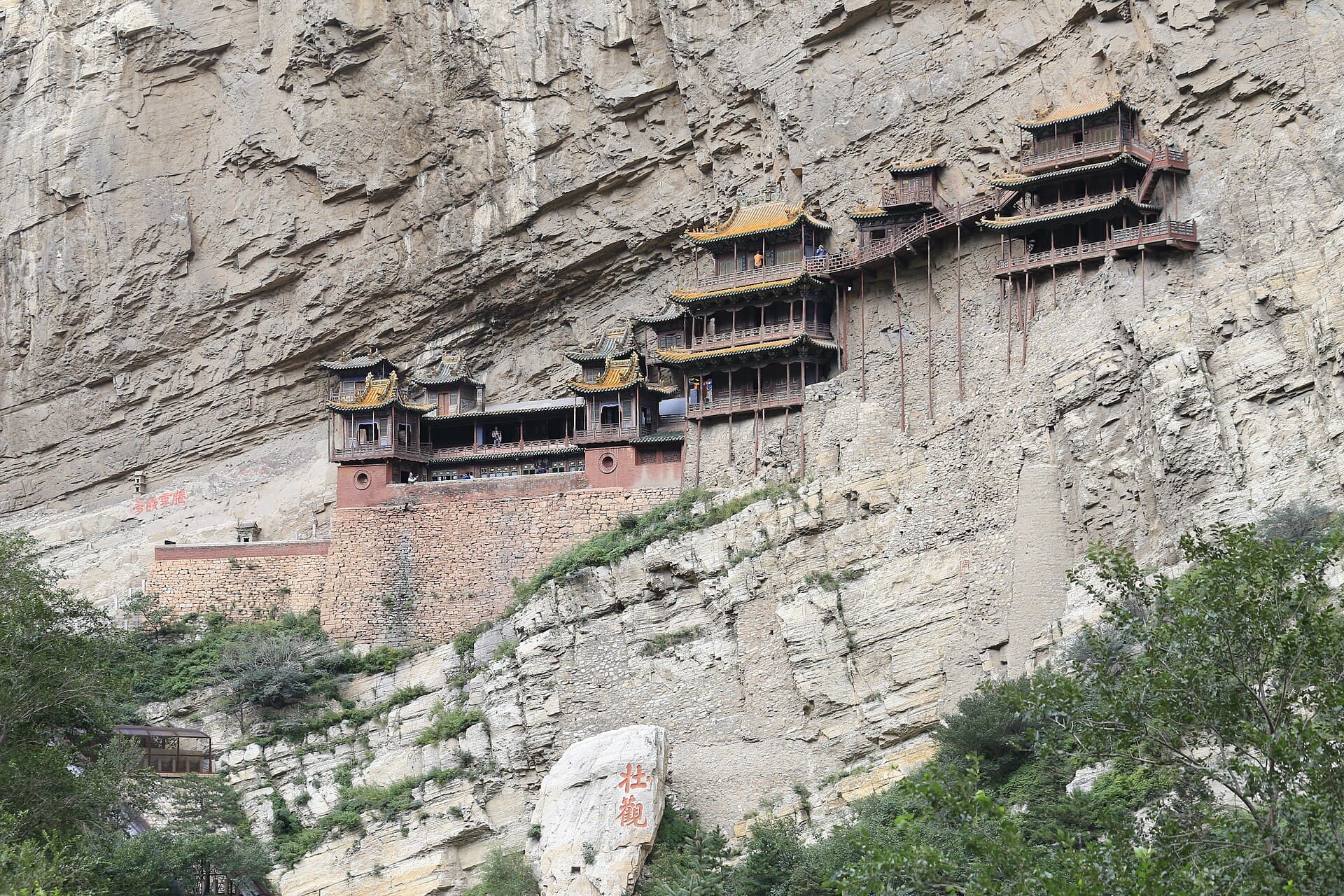
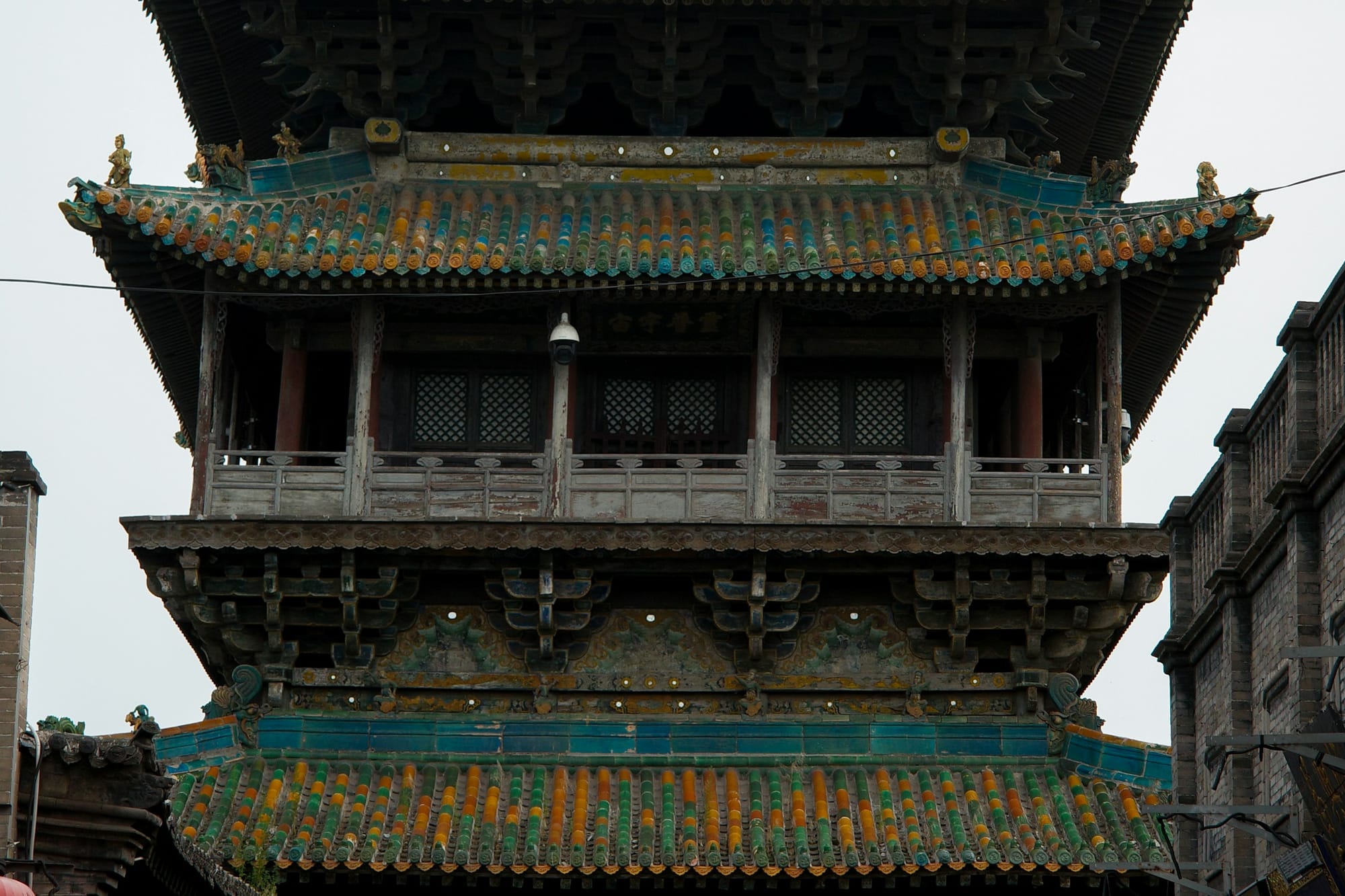
In August 2026, Game Science released a roughly fifteen-minute in-development gameplay trailer for Black Myth: Zhong Kui. Media outlets and fans soon frame-matched timber halls, brick pagodas, village archways, and quarry faces against real Chinese heritage sites. Secondary reporting — including a Huaxi Metropolis Daily cover piece on prospective “inspiration landscapes” — listed several candidates. Treat that coverage as secondary identification, not studio confirmation.
Two caveats sit above every itinerary tip on this page. Game Science has not published an official location list. The game is still in early development; final environments may differ from the trailer. This article is culture-travel inspiration for four real places you can visit — not an official filming-location walking guide, not a game walkthrough, and not a photography-volume post. For a more established Shanxi scan-and-visit companion after a finished game, see our Black Myth Wukong Shanxi locations guide.
| Place | Province / hub | Visitor readiness | Caveat |
|---|---|---|---|
| Hou-tu Temple (Lingshi) | Shanxi (Jinzhong) | Low / irregular | Not a standard commercial scenic; gates often locked |
| Balongsi Temple Pagoda | Shanxi (Wanrong / Yuncheng) | Low / rural monument | Solitary brick tower on farmland; no staffed park |
| Xiantai Paifang | Zhejiang (Yongjia / Wenzhou) | Moderate / village street | Open village setting; confirm local conditions |
| Yangshan Stele | Jiangsu (Nanjing / Tangshan) | High / managed scenic | Formal park hours and tickets — confirm before travel |
How this differs from the Wukong Shanxi guide
- Evidence level: Wukong travel writing rests on a released game plus widely reported Shanxi scan/inspiration sites. Zhong Kui candidates here rest only on media/fan matching of early trailer frames.
- Geography: Wukong clusters mainly in Shanxi. These four candidates span Shanxi, Zhejiang, and Jiangsu — multi-hub rail plus rural last-mile road.
- Site type: Two are quiet rural monuments, one sits on a living village street, and only Yangshan is a fully managed scenic park.
1. Hou-tu Temple, Lingshi, Shanxi
Trailer frames of a compact timber offering hall are widely compared to Lingshi Hou-tu Temple in Jingsheng Village, Lingshi County. The compound is a national key cultural relic; the surviving offering hall and main hall are Yuan timber work.
Do not confuse names. Jiexiu Hou-tu Temple is a separate, regularly staffed complex in Jiexiu city. Trailer matching points to the Lingshi Jingsheng shrine, not Jiexiu.
Access is uncertain. This is not a reliable commercial scenic with posted hours and turnstiles. Gates are often locked; whether a village custodian can open the courtyard varies by day. Informal “door fee” reports conflict — do not invent a fixed ticket. If you are already in Jingsheng for the Wang Family Compound corridor (often planned near Pingyao Ancient City stays in the Jinzhong belt), ask locally that morning whether the temple can be seen from the lane or opened. Expect exterior-only if locked.
2. Balongsi Temple Pagoda, Wanrong, Shanxi
Outdoor trailer vistas of a brick tower on open ground are often matched to Balongsi Temple Pagoda near Zhonglizhuang / Ronghe in Wanrong County (Yuncheng). It is a Song-dynasty square seven-story brick pagoda roughly 24 m high; the surrounding monastery is largely gone. National key cultural relic status does not equal a staffed tourist park.
Field reality: no formal ticket office or reliable posted hours; access is daylight and terrain. Farm lanes can be muddy after rain. Public-bus routing to this terrace is fragile and changes — do not invent bus numbers. The practical approach is a private car with driver from Yuncheng (about 75–90 minutes) or Wanrong town. Plan a dedicated half-day to full day; do not punch-card it with distant Taiyuan stops the same morning.
3. Xiantai Paifang, Yongjia, Zhejiang
Village-edge trailer sequences featuring a multi-tier ceremonial gateway are widely matched to Xiantai Paifang in Huatan Village, Yongjia County (Nanxi River area, Wenzhou). Built in 1505 (Ming Hongzhi), it is a wooden-stone hybrid memorial archway and a national key cultural relic (listed with companion Jinzhao Paifang).
Visitor reality: typically village-street open heritage rather than a gated ticket park — still confirm locally. Treat Huatan as a living community: keep noise down, do not climb the structure, and respect courtyards. Reach Yongjia / Wenzhou by high-speed rail, then use a private car with driver into the Nanxi River road network; rural buses exist but are awkward for first-time visitors chaining several villages.
4. Yangshan Stele, Nanjing
The most visitor-ready candidate is Yangshan Stele in Tangshan, Jiangning District, Nanjing — an unfinished Yongle-era quarry for a colossal stele intended for the Ming Xiaoling Mausoleum. Trailer quarry / cut-stone faces are often compared to this site. The monument components were never assembled into a finished stele; the half-quarried masses remain in the hillside.
Managed scenic: Yangshan Stele / Ming Culture Village operates as a formal park with paths, signage, and facilities. Climbing stairs through the hillside is required.
Hours and tickets (confirm before you go): local guides commonly cite morning openings around 08:30 and last admissions mid-to-late afternoon (seasonal end times often differ winter vs summer). Adult tickets are often cited around the ¥40 class — treat that as a guide, not a permanent price. Check the scenic WeChat channel or gate board on the day. Access from central Nanjing is straightforward by private car, taxi, or metro-plus-ride-hail toward Tangshan.
Multi-hub routing skeleton
These four places do not form one county loop. Use high-speed rail between hubs; use a private car with driver for rural spokes. Self-drive is a poor fit for foreign visitors on village farm tracks.
| Region | Base hub | Site | Pacing | Transit note |
|---|---|---|---|---|
| Central Shanxi | Taiyuan or Pingyao | Hou-tu Temple (Lingshi) | 1 day | Rail toward Pingyao / Lingshi; car to Jingsheng |
| Southern Shanxi | Yuncheng | Balongsi Pagoda (Wanrong) | 1 day | Rail to Yuncheng; dedicated rural car day |
| Jiangsu | Nanjing | Yangshan Stele | Half day | Rail to Nanjing South; car/taxi to Tangshan |
| Zhejiang | Wenzhou / Yongjia | Xiantai Paifang | 1–2 days | Rail to Wenzhou or Yongjia; Nanxi River road day |
Linking Shanxi + Nanjing + Zhejiang in one sprint is unrealistic. Budget roughly 8–10 days if you want all four with weather buffer — or pick one cluster (Shanxi pair, or Nanjing only, or Nanxi River) and leave the rest for another trip.
Planning with LocalKey
Turning trailer coordinates into a workable multi-province route is where operations matter: rail tickets, rural drivers who can find Zhonglizhuang or Huatan, and backup when a temple gate stays locked. We build your own China trip — planned, booked and backed — not a group tour.
- Independent: Travel on your own with the LocalKey app and 24/7 backup. We plan and book the route, including private car with driver for rural last miles. A local guide is an optional add-on on the days you want one.
- Private Guided: Private guides plus driver/car across the trip — useful when village access, dialects, and day-of monument conditions need continuous coordination.
Ask a 1:1 specialist via our private China tours inquiry desk or 7×24 WeChat / WhatsApp.
Before you go
- Re-check unmanaged sites the morning of: hotel, driver, or township contact for custodian presence.
- Watch Shanxi rain: loess farm tracks to Balongsi can fail after storms.
- Carry mobile payment for managed parks; small cash can help for informal rural caretaking — without assuming a published fee.
- No climbing historic timber or stone; no drones over residential courtyards without clear local consent.
Frequently Asked Questions
Are these official filming locations confirmed by Game Science?
No. Game Science has not released an official location list. The four places here are candidates identified by media and fans through frame-matching against the August 2026 in-development gameplay trailer.
Will the final game match these real sites?
Not necessarily. Early trailer art can change. Visit for the buildings’ own history, not for a promise of one-to-one game replicas.
Which site is easiest for first-time visitors?
Yangshan Stele in Nanjing — managed park, clearer hours, and simpler urban access. Lingshi Hou-tu Temple and Balongsi Pagoda need rural arrangements and may stay closed or unstaffed.
How does this differ from the Wukong Shanxi locations guide?
The Wukong Shanxi guide covers more established post-release inspiration/scan sites clustered in Shanxi. This Zhong Kui page covers early trailer-matched candidates across three provinces, with stronger access uncertainty.
Can I see all four in one China trip?
Yes if you allow roughly 8–10 days and accept multi-hub rail plus rural cars. Many travelers pick one cluster instead of forcing all four.
Independent or Private Guided for this route?
Independent fits if you handle stations yourself and want optional guides only on selected days. Private Guided fits if you want continuous guide-and-driver support for village access and multi-province logistics.