Updated 9 October 2026 · LocalKey consultant team
Chinese tea falls into six categories, green, yellow, dark, white, oolong and black, and China's traditional tea processing and social practices have been on UNESCO's intangible heritage list since 2022; on a trip, we suggest tasting a famous green tea such as West Lake Longjing in Hangzhou, sitting in a Chengdu teahouse, and adding Yunnan's Jingmai old tea forests, a UNESCO World Heritage site since 2023, if you have time.
What are the six types of Chinese tea?
Chinese tea producers have developed six categories: green, yellow, dark, white, oolong and black teas. Together with reprocessed teas such as flower-scented teas, they make up over 2,000 tea products.
UNESCO's 2022 entry, Traditional tea processing techniques and associated social practices in China, covers the knowledge and skills behind tea plantation management, tea-leaf picking, manual processing, drinking and sharing.
Tea is served steeped or boiled in homes, workplaces, tea houses, restaurants and temples. It is part of socialising and of ceremonies such as weddings, and greeting guests with tea is common to multiple ethnic groups. The knowledge is passed on through families and apprenticeships, and its bearers include tea producers, farmers, artists, and the people who make the pastries typically served with tea.
We suggest treating tea as part of everyday city life rather than a separate attraction, which makes it easy to add to most routes. If you are new to tea, we also suggest asking for two or three categories at the table, so you can compare them in one sitting.
What makes Chinese green tea different?
Green tea is made by high-temperature fixing and is not oxidised or fermented, which is why it is also called "non-fermented tea". The main steps are picking fresh leaves, fixing, rolling and drying.
Top-grade green tea is made from tender early buds, generally picked before Qingming or Guyu, two spring solar terms that both fall in April. Green tea is mainly produced in Zhejiang, Jiangsu, Anhui, Fujian and Sichuan.
Among the famous names are West Lake Longjing from Hangzhou, Zhejiang; Huangshan Maofeng from Anhui; and Suzhou Dongshan Biluochun from Jiangsu. Because all three are green teas, we suggest using them to compare places on one route.
The production technique for West Lake Longjing is listed as national item VIII-148 on China's Intangible Cultural Heritage list. It was published in 2008 in the second batch and declared by Hangzhou, Zhejiang. The tea originated in the Tang dynasty, became famous in the Song, Yuan and Ming, and flourished in the Qing. It is mainly produced in the West Lake District of Hangzhou and is named after Longjing village.
Where can you drink tea on a China trip?
We suggest drinking tea in eight places on a China trip: green teas in Hangzhou, Suzhou and Huangshan, old tea forests in Yunnan, and teahouse, morning tea and gongfu traditions in Chengdu, Guangzhou and Chaoshan. The table maps each of our eight regional tea pages to its place and tea experience, and each row links to its own page.
| Place | Tea experience | LocalKey page |
|---|---|---|
| Hangzhou, Zhejiang | West Lake Longjing, a green tea from Hangzhou's West Lake District | Longjing page |
| Suzhou, Jiangsu | Suzhou Dongshan Biluochun, a famous green tea | Biluochun page |
| Huangshan, Anhui | Huangshan Maofeng, a famous green tea | Maofeng page |
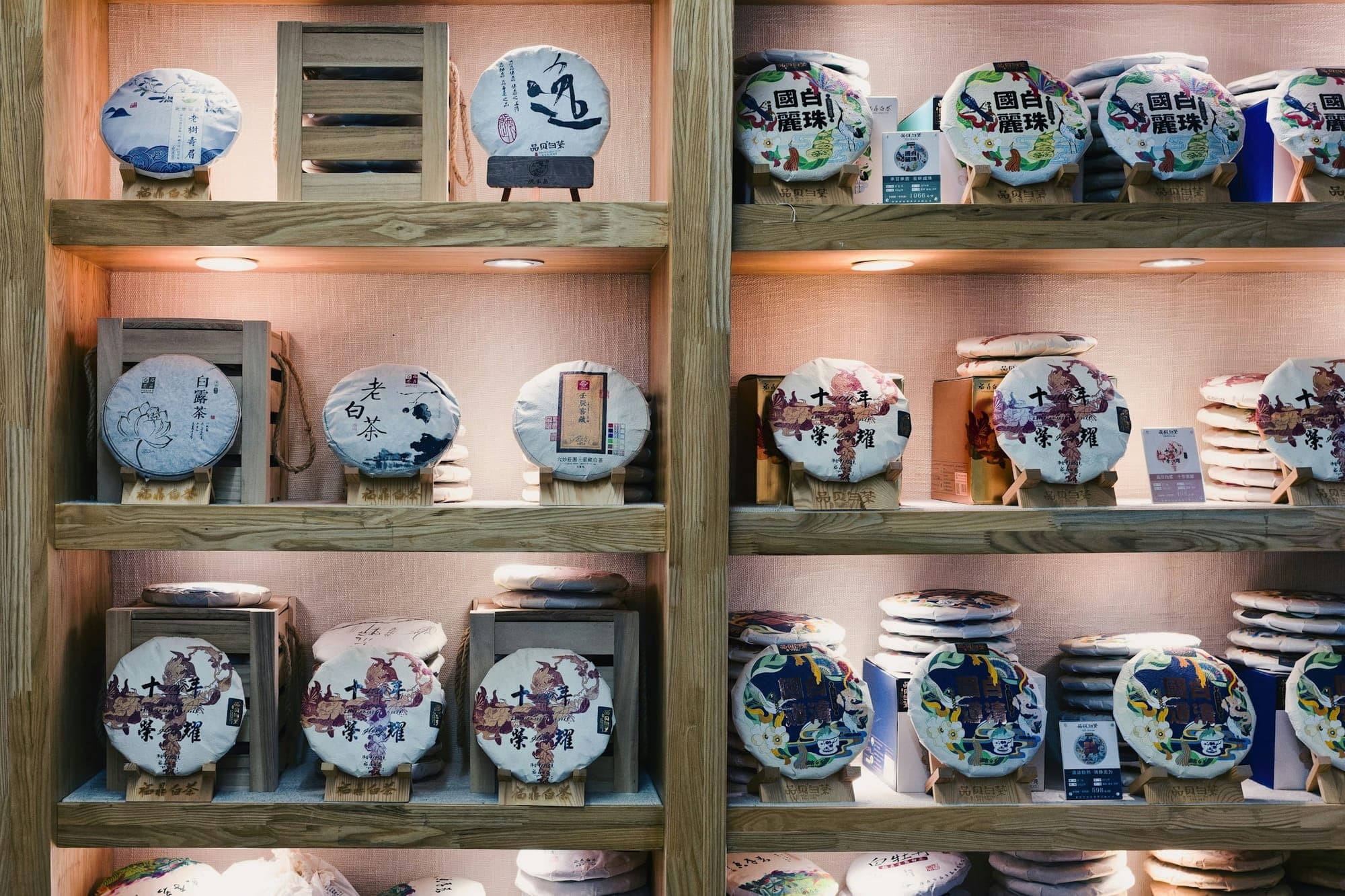
| Pu'er, Yunnan | Pu'er tea brick experience | Tea brick page |
| Jingmai Mountain, Pu'er, Yunnan | Old tea forests and traditional villages | Jingmai page |
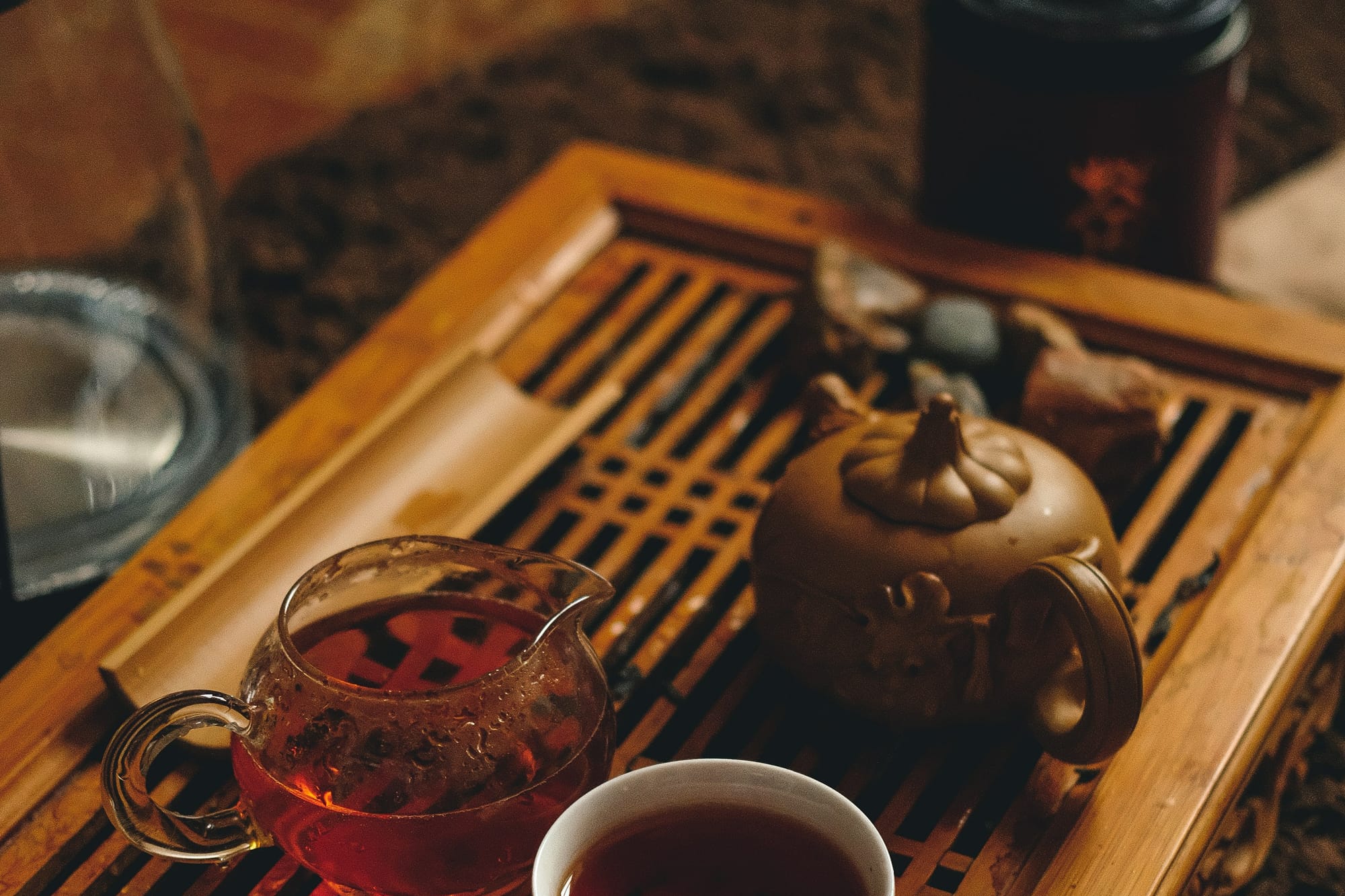
| Chaoshan | The gongfu tea ritual | Gongfu tea page |
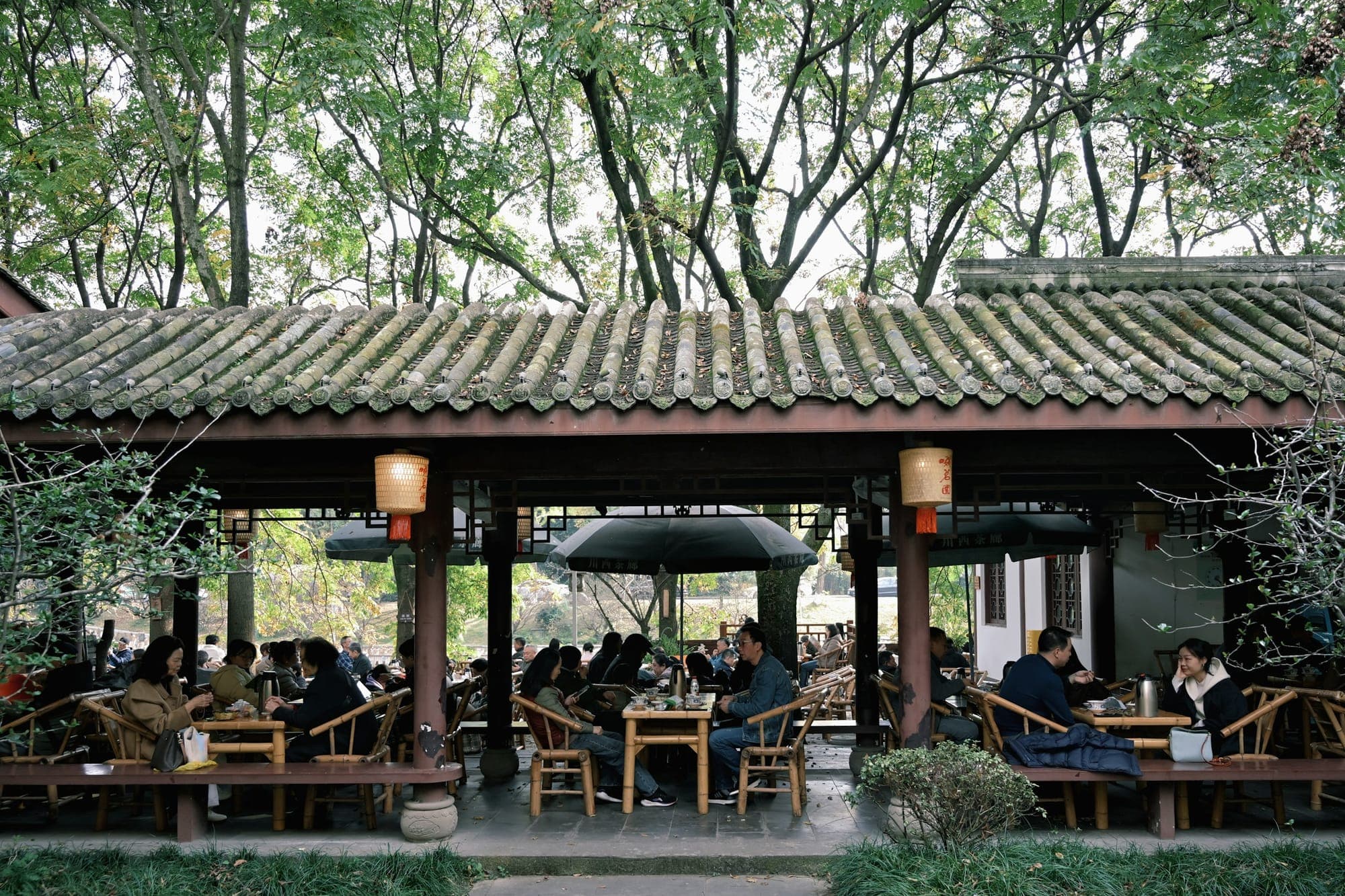
| Chengdu | Sitting in a teahouse | Teahouse page |
| Guangzhou | Cantonese morning tea | Morning tea page |
We suggest choosing one or two rows for each leg of your route rather than trying to visit every place in a single trip.
Why do Yunnan's old tea forests matter?
The Cultural Landscape of Old Tea Forests of the Jingmai Mountain in Pu'er was inscribed on the UNESCO World Heritage List in 2023. It lies in Huimin Town, Pu'er City, Yunnan Province.
The landscape was developed over a thousand years by the Blang and Dai peoples, following practices that began in the 10th century. It consists of old tea groves, tea plantations, forests and traditional villages, and old tea trees are cultivated in the forest understorey.
Traditional ceremonies in the landscape relate to the Tea Ancestor belief. We suggest seeing the site as a combination of forest, village and ceremony rather than only as a source of tea leaves.
How do you add tea to a China itinerary?
We suggest treating tea as one thread through a wider route rather than a separate trip. LocalKey can arrange your own China trip with tea stops in Hangzhou, Suzhou, Huangshan, Chengdu, Guangzhou, Chaoshan and Yunnan.
We suggest grouping stops by region: one leg through Hangzhou, Suzhou and Huangshan for the famous green teas, a Yunnan leg through Pu'er and Jingmai for the tea brick and old tea forests, and separate stops in Chengdu, Guangzhou and Chaoshan for teahouse sitting, Cantonese morning tea and the gongfu tea ritual.
We usually plan tea stops as short pauses rather than full days, so they fit between sightseeing. We also suggest considering spring for a green tea focus, because top-grade green tea is generally picked from early buds before Qingming or Guyu. Confirm timing with your consultant before you book.
Plan your trip with LocalKey
LocalKey can arrange your own China trip, planned, booked and backed, as one of our private China tours. This is not a group tour. There are two formats.
Independent (see the Independent format): you travel on your own with the LocalKey app and 24/7 backup. There is no full-time guide on any day. A local guide, airport pickup or a private car and driver are optional add-ons on demand.
Private Guided (see the Private Guided format): an English-speaking private guide and a private car throughout the trip.
We usually start with your interests, the number of cities and the season, then build the route around the tea stops you choose. To plan a tea route, talk to a 1:1 specialist, available 7×24 on WeChat and WhatsApp.
Sources
- UNESCO Intangible Cultural Heritage — Traditional tea processing techniques and associated social practices in China — verified_on 2026-10-09
- China Intangible Cultural Heritage Network — Green tea production technique (West Lake Longjing), national item VIII-148 — verified_on 2026-10-09
- UNESCO World Heritage Centre — Cultural Landscape of Old Tea Forests of the Jingmai Mountain in Pu'er — verified_on 2026-10-09