Updated 29 September 2026 · LocalKey consultant team
The story
Liyue is Genshin Impact's Geo nation: a harbour shaped by trade, mountain routes, contracts and towering karst scenery. For many players, its cliffs, rivers and stone terraces recall southern and central China.
This page maps developer-stated design inspiration and the 2020 scenic collaborations to places travellers can visit. The game is used here as a descriptive reference only. LocalKey Travel has no partnership with miHoYo or HoYoverse, and these places were not filming locations for a live-action production.
The real places
Three destinations are especially useful for understanding the connection between Liyue and real landscapes: Zhangjiajie in Hunan, Guilin and Yangshuo in Guangxi, and Huanglong in Sichuan.
Zhangjiajie and Jueyun Karst
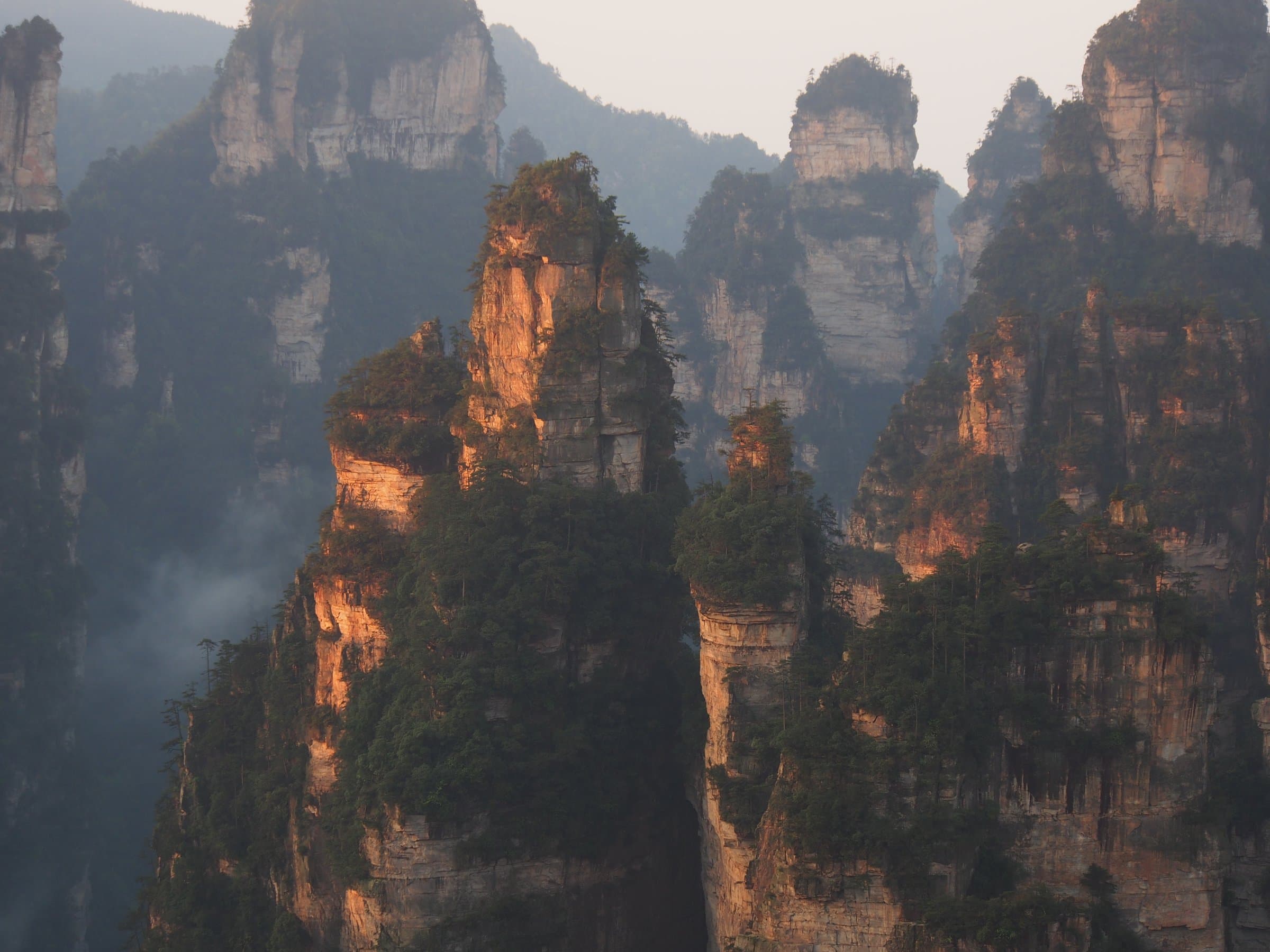
Zhangjiajie’s Wulingyuan Scenic Area is known for its tall sandstone pillars, forested ravines and suspended-looking viewpoints. The landscape is geologically different from Guilin’s limestone karst, but its vertical scale and clustered stone forms provide a clear visual reference for fantasy mountain country.
In September 2020, miHoYo announced strategic cooperation with the Zhangjiajie culture-tourism bureau. The announced scenic collaboration included teleport anchors and Geo Sigils at Wulingyuan and Tianmen Mountain. GameLook also reported that the Jueyun Karst and Mt. Tianheng areas drew design inspiration from Zhangjiajie’s karst scenery. A miHoYo Zhangjiajie documentary is also cited on the Liyue reference page on Wikipedia.
For a traveller, Wulingyuan is the practical focus. Allow at least two full days if you want time for viewpoints, walking routes and the main transport systems without compressing every stop. Tianmen Mountain is a separate mountain experience with its own cableway and access arrangements, so it should not be treated as a quick add-on to a Wulingyuan day.
Zhangjiajie is also the subject of LocalKey’s separate Avatar and Zhangjiajie story page. That article covers a different screen-world debate; this page focuses on Liyue, scenic collaboration and trip planning.
Guilin, Yangshuo and Dihua Marsh
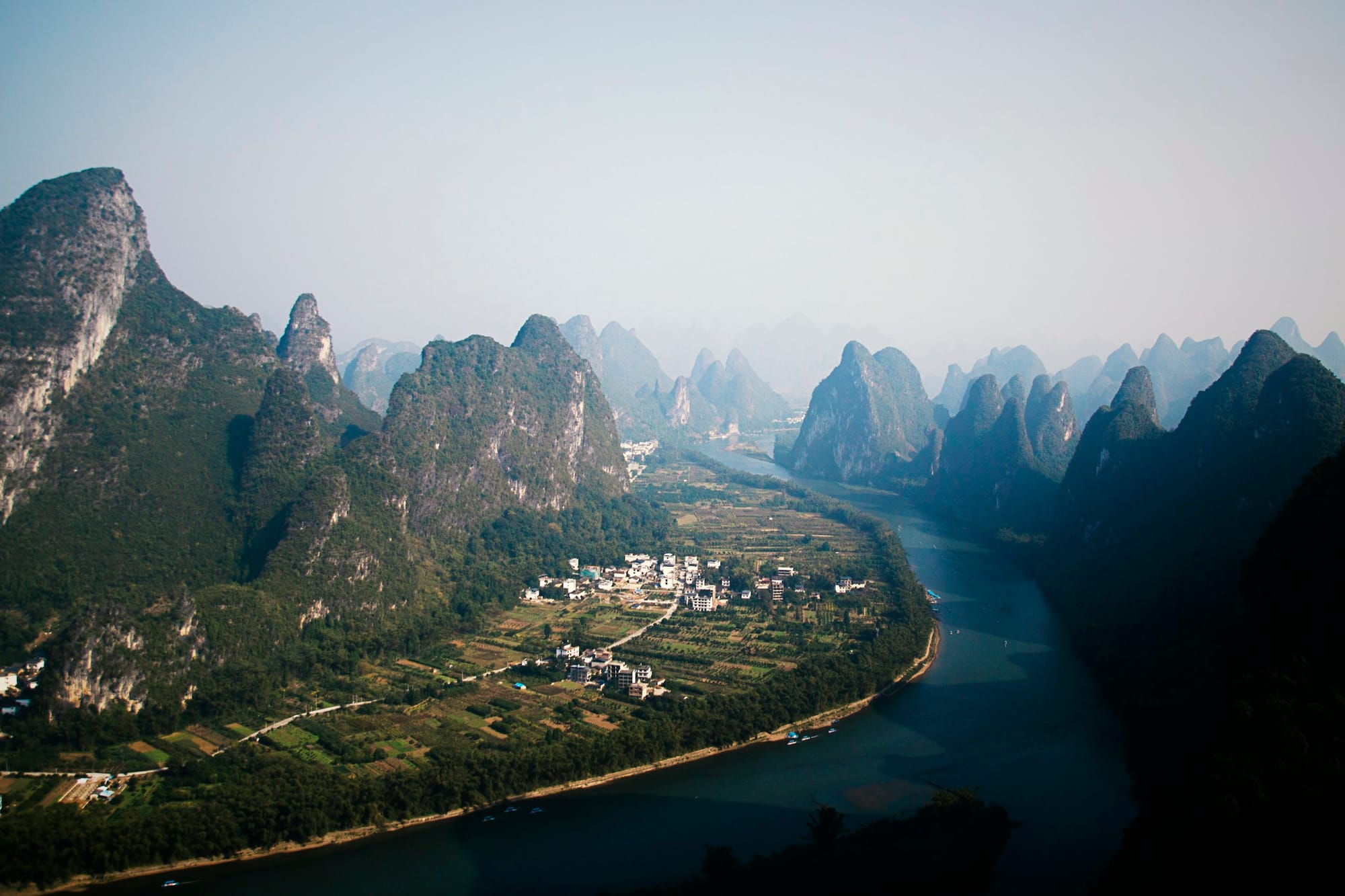
Guilin and Yangshuo offer the closest match to the river-and-karst atmosphere many players associate with Liyue. The Li River corridor combines limestone peaks, agricultural land, villages, ferry crossings and changing river light. Yangshuo is a useful base for short walks, cycling with a local operator, village visits and slower days beside the river.
A TGbus report sourced to the 2020 programme described Guilin as the next scenic collaboration after Zhangjiajie and Huanglong. It reported teleport anchors and a Geo Statue at Elephant Trunk Hill and Crown Cave, as well as a connection between Guilin’s landscape and Liyue’s Dihua Marsh. A miHoYo Guilin documentary from December 2020 is also cited on the Liyue reference page on Wikipedia.
The strongest travel interpretation is not that every Liyue location represents one exact Guilin landmark. Rather, Dihua Marsh’s open water, karst silhouettes and cultivated river setting can be read alongside the broader Guilin–Yangshuo landscape.
For a route built around this corridor, start in Guilin, take the Li River route or another suitable river transfer toward Yangshuo, and stay two or three nights in or near Yangshuo. The detailed commercial sample route belongs to Guilin–Yangshuo private tour planning, while the cultural context of the area is covered in Guilin and Yangshuo culture.
Huanglong and Luhua Pool
Huanglong National Scenic Area in Sichuan is a different landscape again: high mountain valleys, travertine terraces, forest, snow-range views and mineral-rich pools arranged in stepped basins.
A miHoYo news post dated October 17, 2020 described Huanglong as the second station in the scenic collaboration programme and identified Huanglong’s Five-Color Pond as inspiration for Luhua Pool. This is a direct developer-stated design inspiration, not a claim that the game was filmed there.
Huanglong deserves its own planning logic. The scenic area sits at high elevation, and the combination of altitude, cold weather and walking on uneven paths can make the visit more demanding than a lowland Guilin day. Build in time to arrive through a Sichuan gateway, manage the elevation, and keep the day flexible. Travellers interested in landscape details can pair the planning with Huanglong photography, while keeping the focus of this article on the Liyue connection.
Evidence at a glance
| Place | In-game area | Source type | Note |
|---|---|---|---|
| Zhangjiajie, especially Wulingyuan and Tianmen Mountain | Jueyun Karst and Mt. Tianheng | 2020 scenic collaboration; reported design inspiration; developer documentary | Strategic cooperation included teleport anchors and Geo Sigils; the mountain forms informed parts of Liyue’s visual language. |
| Guilin and the Li River corridor | Dihua Marsh | 2020 scenic collaboration; official-sourced report; developer documentary | Guilin linkage followed Zhangjiajie and Huanglong, with reported scenic-game features at Elephant Trunk Hill and Crown Cave. |
| Huanglong National Scenic Area | Luhua Pool | 2020 scenic collaboration; miHoYo news | Huanglong’s Five-Color Pond was identified as the design inspiration for Luhua Pool. |
For other places that may remind you of Liyue, use a softer description: the landscape resembles a game setting. Visual resemblance alone is not evidence of a developer collaboration.
The culture behind it
The visual connection works because China’s landscapes are not one single mountain style.
Zhangjiajie’s Wulingyuan is a sandstone landscape shaped by erosion, with narrow pillars, ravines and dense vegetation. It is listed by UNESCO as a World Heritage site under the name Wulingyuan Scenic and Historic Interest Area. Its scenery feels vertical and layered, with routes that move between forest floors, cliff-edge viewpoints and elevated transport.
Guilin and Yangshuo belong to the South China Karst landscape. Here, limestone peaks rise from a river basin and cultivated plain. The Li River is not simply a backdrop: it is a working landscape linked to farming, water transport, village life and regional food culture. The Guilin components are included within the UNESCO World Heritage property South China Karst.
Huanglong’s travertine pools show another kind of geological process. Mineral deposits have formed terraces and basins over time, creating a sequence of pools whose colors shift with water depth, light and seasonal conditions. UNESCO lists Huanglong Scenic and Historic Interest Area as a World Heritage site.
These places are worth visiting without a game connection. For broader China culture experiences, the same landscapes reward slow looking, not only a game checklist. Genshin Impact can be a useful starting point for noticing stone forms, water systems and regional differences, but the travel experience is broader: geology, local livelihoods, conservation, weather and the pace of moving through a protected landscape.
How to go
A practical Guilin–Yangshuo lead corridor
For most first-time travellers following the Liyue thread, Guilin and Yangshuo are the most natural starting point.
A comfortable frame is:
- Day 1: Arrive in Guilin, settle in and visit a central riverside or city landmark.
- Day 2: Travel along the Li River corridor toward Yangshuo, with time for the landscape rather than a rushed transfer.
- Day 3: Explore Yangshuo through a river, village, walking or food-focused day.
- Day 4: Keep as a flexible Yangshuo day, or return toward Guilin for onward travel.
Two nights can work for a compact visit; three nights gives more room for weather, slower movement and a cultural experience. See the Guilin–Yangshuo private tour sample for a route framework. The city guide pages for Guilin and Zhangjiajie are still pending, so this article links to route and experience pages instead.
Useful preparation includes the 12306 train ticket guide for foreign travellers, the 240-hour visa-free China guide where applicable, and Alipay setup for foreign travellers.
Adding Zhangjiajie
Zhangjiajie works best as a separate Hunan module rather than a forced extension of a short Guilin week. Travel between regions takes planning, and the most efficient connection depends on your entry city, transport availability and onward route.
Allow two full days for Wulingyuan if the landscape is a main reason for travelling. Tianmen Mountain can require a separate day or a carefully timed additional visit. The official Zhangjiajie ticket page should be checked before departure. Ticket structures, included transport and reservation rules can change; Bailong Elevator and cableways may be separate from the main admission arrangement.
Adding Huanglong
Huanglong is best planned as a separate Sichuan high-altitude day or overnight module, usually through Chengdu and onward Jiuzhai logistics. A Chengdu gateway can work well if it fits the wider itinerary, but the final access plan depends on transport schedules and the altitude tolerance of everyone travelling.
The official Huanglong site provides online booking information and a ticket service hotline at 0837-7249188. Real-name reservation procedures may apply. Do not treat Huanglong as a casual same-day detour from Guilin or Zhangjiajie.
Ticket prices and reservation rules change — reconfirm on the official Zhangjiajie, Huanglong and Guilin scenic channels (verified_on 2026-09-29) before you travel.
Build this trip with LocalKey
There are two useful ways to shape this story into a real private China tour:
- Independent: choose a carefully sequenced route, transport bookings and practical planning support, with a local guide as an optional add-on on the days you want one. This suits travellers who want flexible Guilin–Yangshuo days and optional Zhangjiajie or Huanglong modules.
- Private Guided: build scenic days around coordinated transport, local context and adjustments for weather, altitude and walking comfort across Guilin, Zhangjiajie or Sichuan modules.
A consultant can help decide whether Guilin–Yangshuo should stand alone or become the first module of a longer journey that adds Zhangjiajie or Sichuan. The aim is not to collect every reference point in one compressed loop. It is to give each landscape enough time to make sense.
That is the difference between recognizing a game influence and travelling through the place behind the visual idea: your own China trip — planned, booked and backed. Start with a trip inquiry if you want help balancing scenic access, cultural depth and realistic travel time.
Sources
- GameLook: Zhangjiajie and Genshin Impact cooperation, September 2020
- miHoYo: Huanglong scenic collaboration, October 17, 2020
- TGbus: Guilin scenic collaboration report, November 18, 2020
- UNESCO: Wulingyuan Scenic and Historic Interest Area
- UNESCO: Huanglong Scenic and Historic Interest Area
- UNESCO: South China Karst
- Zhangjiajie official ticket information
- Huanglong official website
FAQ
Is Liyue a real place?
No. Liyue is a fictional region in Genshin Impact. Its visual language draws on multiple real Chinese landscapes, including the karst and river scenery around Guilin, the sandstone pillars of Zhangjiajie and the travertine pools of Huanglong.
Which sites had official Genshin scenic collaborations?
The 2020 “Travels Afar” scenic collaboration programme included Zhangjiajie, Huanglong and Guilin. Announced elements included scenic-game features such as teleport anchors and Geo Sigils, while developer materials identified landscape inspiration for areas including Jueyun Karst, Dihua Marsh and Luhua Pool.
Can I visit Zhangjiajie, Guilin and Huanglong in one trip?
Yes, but they should be treated as separate regional modules rather than one compressed loop. Guilin–Yangshuo is a natural lead corridor, Zhangjiajie is a Hunan addition, and Huanglong is a high-altitude Sichuan module usually planned through Chengdu or Jiuzhai logistics.
How many days do I need for a Guilin–Yangshuo trip?
Allow two nights for a compact frame and three nights for a more comfortable visit. A four-day structure can include arrival in Guilin, a Li River corridor day, two Yangshuo-focused days and flexible time for weather or onward travel.
Should I travel Independent or Private Guided?
Independent travel works well when you want flexible days, with a local guide as an optional add-on on the days you want one. Private Guided travel is useful when you want coordinated transport, local context and support with scenic timing, altitude and regional connections.
How does this differ from the Avatar Zhangjiajie story page?
The Avatar page covers a different film-and-landscape discussion. This article focuses on Genshin Impact’s Liyue, developer-stated design inspiration and the 2020 scenic collaborations involving Zhangjiajie, Guilin and Huanglong.