Updated 28 September 2026 · LocalKey consultant team
Zhangjiajie is often presented as the real-world source for the floating Hallelujah Mountains in Avatar. The connection is more complicated: the film’s peaks are CGI, and Zhangjiajie was not the site of principal photography for the floating mountains. The useful question is not “Was Avatar filmed here?” but “Which landscapes and images may have influenced the film’s visual references?”
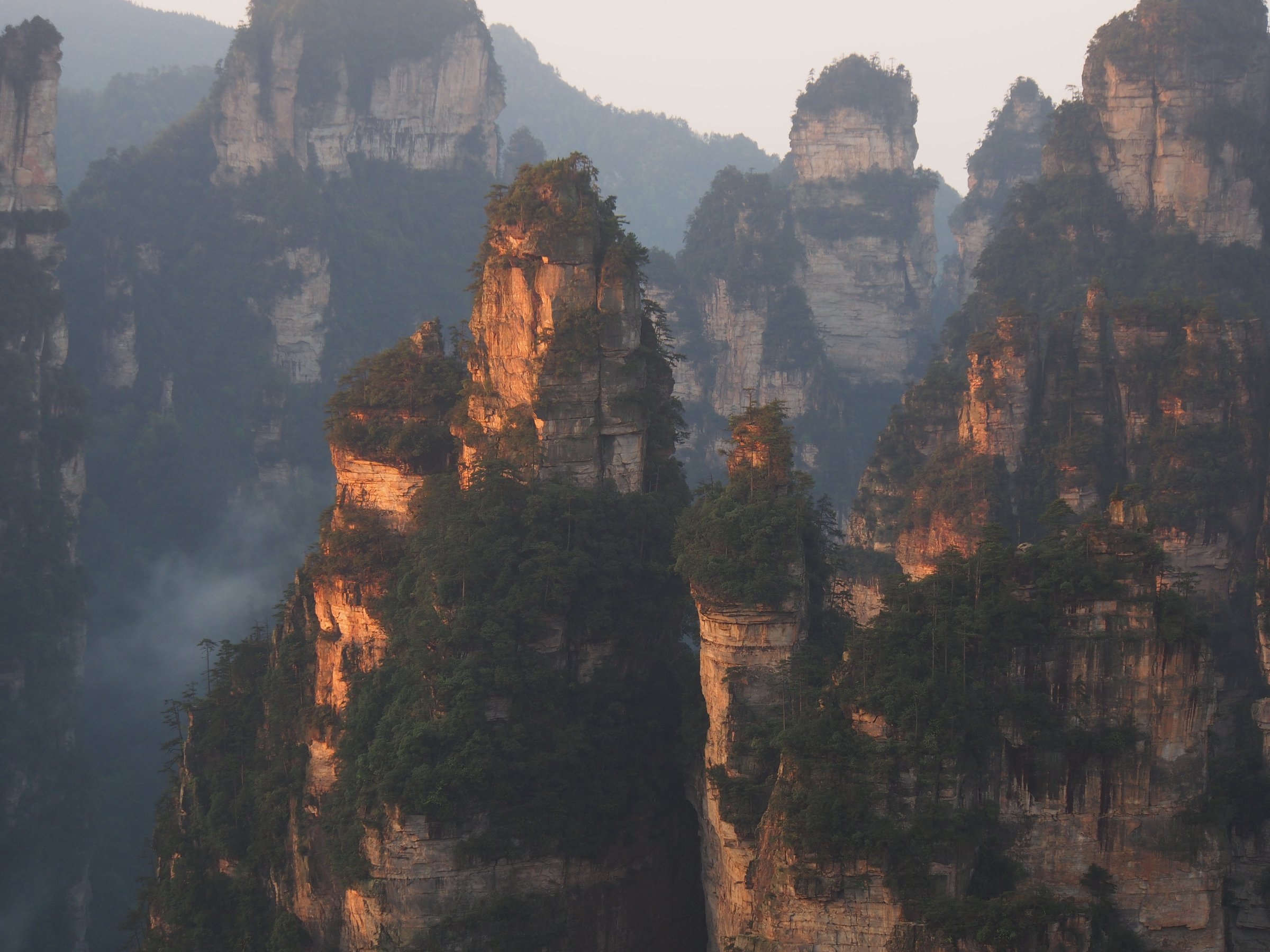
That distinction matters when planning a visit. Wulingyuan is a major landscape destination in its own right, with a UNESCO World Heritage designation, dense forest, cliff paths, cableways and enormous quartz-sandstone pillars. The film connection adds a layer of pop-culture context, but it does not define the place.
The story
Around the late-2009 release of Avatar, visitors noticed similarities between the film’s airborne mountains and Zhangjiajie’s sandstone pillars. Chinese online commentators, including a photographer surnamed Deng, argued the closest visual match was Zhangjiajie’s Southern Sky Column.
James Cameron’s reported explanation differed. At a December 2009 Beijing press event, he said the Hallelujah Mountains were modelled after Huangshan in Anhui, with production photographs from there — “recreate Huangshan Mountain in outer space,” in the wording recorded by China.org.cn.
So the careful answer is: Zhangjiajie is strongly linked to Avatar tourism and resembles the film’s landscapes, but the available production statement names Huangshan. Visual influence remains contested.
The real place: Wulingyuan and the Southern Sky Column
Wulingyuan Scenic Area is the wider landscape region. Zhangjiajie National Forest Park is one of its best-known sections, with narrow sandstone pillars rising through forested valleys. The park is part of the UNESCO World Heritage property known as Wulingyuan Scenic and Historic Interest Area, inscribed in 1992. UNESCO describes more than 3,000 narrow sandstone pillars and peaks, alongside ravines, streams and natural bridges. UNESCO: Wulingyuan Scenic and Historic Interest Area
Yuanjiajie is a particularly popular area within the park. Its Southern Sky Column became the centre of the film debate because its upright profile resembles images associated with the Hallelujah Mountains. It is also commonly referred to in English as the South Pillar of Heaven or Qiankun Pillar.
Production statements and local tourism claims should be kept separate:
- Production statement: Cameron’s 2009 Beijing comments identified Huangshan in Anhui as the model for the film’s Hallelujah Mountains and referred to production photographs from there. China.org.cn
- Local tourism story: In January 2010, Zhangjiajie authorities held a ceremony renaming the Southern Sky Column “Avatar Hallelujah Mountain.” Reuters reported that a Hollywood photographer had visited the area in 2008, based on a local government claim, and that Avatar-themed tours were being marketed. Reuters: Avatar inspires China province to rename mountain
- Later clarification: Contemporary reporting described the new name as an added way to refer to the pillar rather than a complete abolition of its previous name. A 2025 reply from the Hunan Provincial Department of Culture and Tourism went further, describing the 2010 wording as grassroots and resident-led marketing rather than an official renaming. It stated that from 2020, the scenic area removed the Avatar-inspired name from official promotional materials, maps and signs.
On current official materials, travellers should look for Qiankun Pillar or South Pillar of Heaven, not the Avatar nickname.
| Question | What the sources support |
|---|---|
| Was the film’s floating mountain photographed in Zhangjiajie? | No. The floating mountains are CGI, and Zhangjiajie was not the principal photography location for them. |
| What did Cameron name as a model? | Huangshan in Anhui, according to the 2009 Beijing press account. |
| Why is Zhangjiajie connected with the film? | The pillar formations resemble the film’s visual language, and local tourism promoted the connection after 2010. |
| What should visitors call the pillar today? | Qiankun Pillar, South Pillar of Heaven or Southern Sky Column. |
The culture behind it
The geology comes first. Wulingyuan’s tall formations are quartz-sandstone peak forests shaped by erosion, weather and water. Mist can gather in the valleys, while sunlight changes the colour and depth of the pillars throughout the day. The landscape can look otherworldly without needing a film reference.
The area is also a living cultural region. Tujia communities live around the park and across western Hunan, with local foodways, architecture, music and seasonal customs that are part of the wider destination. A thoughtful visit should treat Tujia culture as a living place and community, not as a costume hour inserted between viewpoints.
Wulingyuan is worth visiting even without the film. Ridge walks, forest trails, valley viewpoints and mountain transport already justify several days. The film may explain why first-time visitors recognise certain silhouettes; it is not the main reason to travel.
For culture-led planning, see LocalKey’s China culture experiences. For photography, the separate Zhangjiajie Avatar mountains photography guide owns the shot list and image-making advice.
How to go
Arriving in Zhangjiajie
The two most useful arrival points are:
- Zhangjiajie Hehua Airport: convenient for flights from selected Chinese cities and a straightforward onward transfer toward Wulingyuan.
- Zhangjiajie West railway station, often written Zhangjiajiexi: the main high-speed rail gateway for travellers arriving by train.
For rail planning, see 12306 train tickets for foreigners. If your wider itinerary uses a qualifying transit route, review the 240-hour visa-free China guide before booking; eligibility depends on nationality, route and current immigration rules.
A Zhangjiajie city guide is pending. This article focuses on Wulingyuan and the film-inspiration question rather than city-side planning.
How many days?
Allow three to four days for Wulingyuan if you want time for the main landscape areas without treating every stop as a race. Two nights can work for a compressed visit, but it leaves less flexibility for mist, rain, queues or a slower walking pace.
A practical frame is:
| Day | Focus |
|---|---|
| Day 1 | Arrive, transfer to Wulingyuan, settle in and take a light orientation walk near the town or park entrance. |
| Day 2 | Zhangjiajie National Forest Park, including a substantial walking route through the pillar landscape and viewpoints around Yuanjiajie. |
| Day 3 | A different sector of Wulingyuan, such as Tianzi Mountain or another ridge-and-valley route, with time for weather changes. |
| Day 4 | Flexible second look, shorter walk or onward transfer; use the day as weather insurance if the landscape is clouded on Day 2 or Day 3. |
You can also add a separate Tianmen Mountain day from Zhangjiajie city. Tianmen is not the same landscape as Wulingyuan: it is a city-side mountain experience known for its high gorge, cliff routes, cableway and natural arch. For photography planning, see the separate Mount Tianmen photography guide.
Season and weather
Spring and autumn are often comfortable for walking, with changing cloud and light. Summer can be humid, wet and busy; rain may also bring mist between pillars. Winter is quieter and can be cold or foggy; some lifts may pause in bad weather. Build flexibility — a cloudy morning may clear later. Comfortable shoes, a light waterproof layer and patience at transport stations matter more than forcing every viewpoint into one day.
Tickets and transport add-ons
The official ticket page, checked on 28 September 2026, lists:
- Entry-only ticket: ¥165, valid for four consecutive days.
- Entry ticket plus eco-bus: ¥236, valid for four consecutive days.
- Optional insurance: ¥3.
- The ticket covers access according to the selected option; the Bailong Elevator and cableways are separate purchases.
- The scenic area has five gates.
Book through the official “Zhangjiajie One-Stop Tour” WeChat mini-program, and reconfirm the current ticket rules before travel. Official Zhangjiajie ticket information
The Bailong Elevator and the cableways should be treated as separate add-ons when you plan the day. Secondary sources commonly quote fares in the region of ¥65 one way for the Bailong Elevator, but prices and operating arrangements can change. Confirm the current fare and availability through the official channel rather than treating any figure as permanently fixed.
Build this trip with LocalKey
Wulingyuan mixes park buses, lifts and weather. Two product levels fit:
- Independent — your own China trip — planned, booked and backed: LocalKey app roadbook, booked trains and hotels, 24/7 WeChat/WhatsApp. Add a local guide only on the days you want deeper park or culture reading. Airport pickup, private car with driver, and day guides are optional add-ons.
- Private Guided — the same planning, with private guides plus driver and car across the trip — useful when Wulingyuan days, weather buffers and an optional Tianmen day stack in one stay.
Ask a specialist via inquiry or 7×24 WeChat/WhatsApp. No group coach product on this page. No prices in articles — we quote privately. Start from private China tours.
Sources
- China.org.cn, “Avatar” director discusses Huangshan inspiration, 31 December 2009
- Reuters, “Avatar inspires China province to rename mountain,” 25 January 2010
- UNESCO World Heritage Centre, Wulingyuan Scenic and Historic Interest Area
- Zhangjiajie official ticket information
- Hunan Provincial Department of Culture and Tourism — reply on Hallelujah / Qiankun Pillar naming (CPPCC proposal handling)
Frequently asked questions
Was Avatar filmed in Zhangjiajie?
No. The film’s floating mountains are CGI, and Zhangjiajie was not the principal photography location for those mountains. The connection concerns possible visual reference and later tourism marketing, not a claim that the film was shot there.
What did James Cameron say versus what local tourism claimed?
Cameron’s reported December 2009 Beijing statement identified Huangshan in Anhui as the model for the Hallelujah Mountains and referred to production photographs taken there. Zhangjiajie tourism later promoted similarities with its Southern Sky Column and connected the area with the film after a 2010 renaming ceremony. The two accounts should not be merged into one settled production fact.
Where is the renamed pillar, and what is it called on official maps now?
The pillar is in Yuanjiajie within Zhangjiajie National Forest Park, part of Wulingyuan. It is commonly known as the Southern Sky Column, South Pillar of Heaven or Qiankun Pillar. A 2025 Hunan tourism reply said the Avatar-inspired name was removed from official promotional materials, maps and signs from 2020.
How many days do I need for Wulingyuan?
Plan three to four days for a balanced Wulingyuan visit, especially if you want time for Yuanjiajie, another mountain sector and weather flexibility. Two nights can work for a compressed route. Add a separate day for Tianmen Mountain if you want that city-side experience as well.
Independent or Private Guided for Zhangjiajie?
Independent works well if you want to control your walking pace and add a local guide only on selected days. Private Guided is better if you want route decisions, transport coordination and local context handled throughout the stay. Neither approach requires treating the Avatar connection as the main purpose of the visit.
How is this page different from the photography guide?
This page investigates the disputed inspiration story and explains how to plan a Wulingyuan visit. The Zhangjiajie Avatar mountains photography guide owns photography advice and its shot list. The Mount Tianmen photography guide covers a separate city-side mountain day.
Is this the same as the Genshin Impact Liyue page?
No. This page covers the Avatar film debate for Zhangjiajie. For developer-stated Liyue design inspiration and the 2020 scenic collaborations across Zhangjiajie, Guilin and Huanglong, see From Genshin Impact's Liyue to Real China.