Yes, as a visitor metaphor: Chongqing looks like a real-life cyberpunk city because steep hills, elevated rail, river bridges and night lighting stack it in layers, and you can see this at Liziba Station, Hongyadong and the Yangtze River Cableway. It is real transport infrastructure and riverside districts, not a film set, so plan two to three city days.
Updated 29 September 2026 · LocalKey consultant team
The story
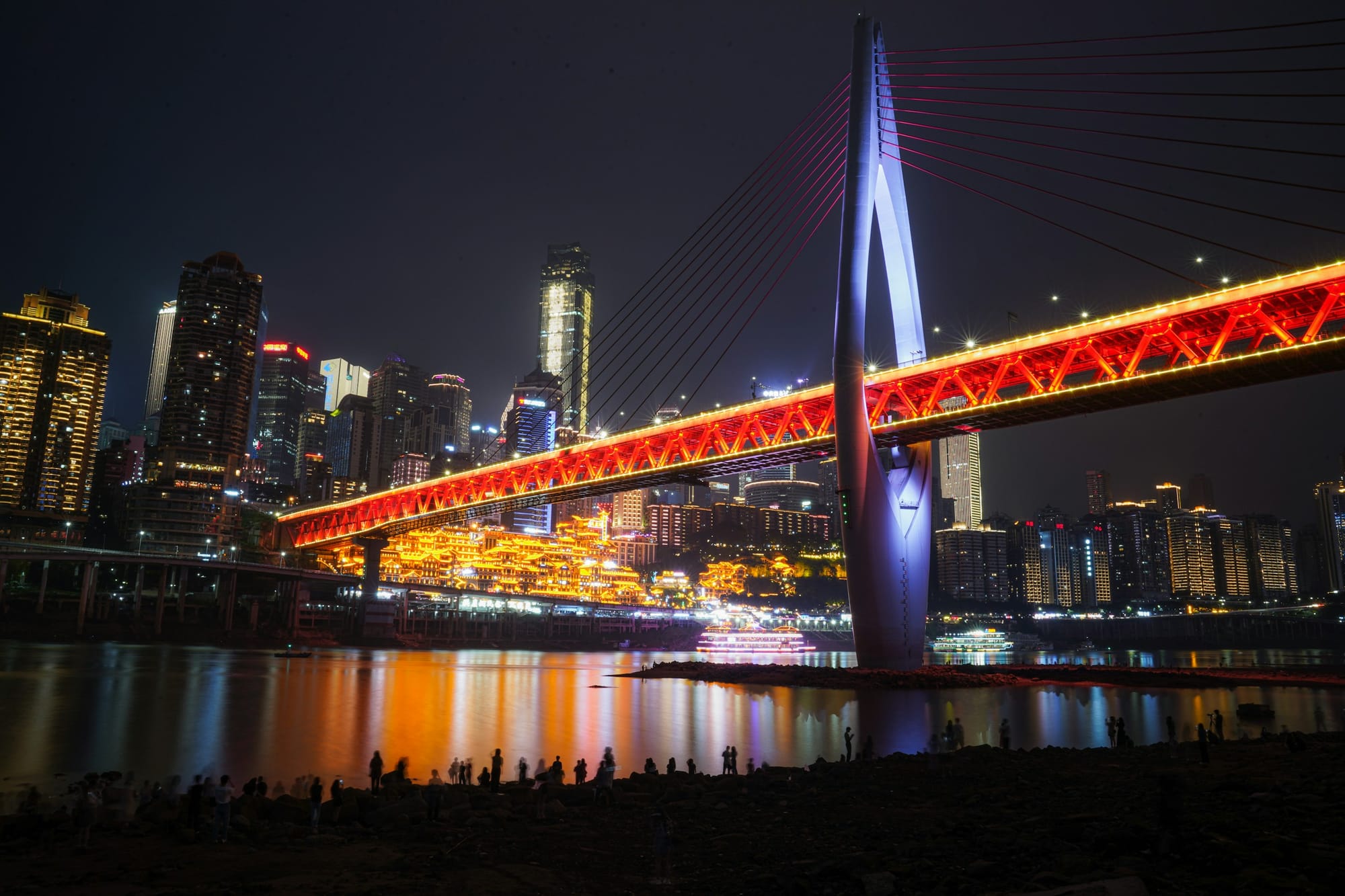
On TikTok and other social platforms, Chongqing is often framed as a real-life cyberpunk city: a night landscape of red bridges, illuminated towers, elevated rail, river crossings and buildings that appear to rise directly from the hills. The description works as a visitor metaphor, especially when the city is viewed after dark from the river.
The places behind the videos are real transport infrastructure, public viewpoints and riverside districts. They are not a film set or a branded fictional world. LocalKey has no partnership, sponsorship or endorsement relationship with any film, game or entertainment brand connected with the cyberpunk label.
Where can you see Chongqing's cyberpunk look in real life?
The real places behind the videos are Liziba Station, where CRT Line 2 runs through a residential and commercial building; Hongyadong, the multi-level riverside complex in Yuzhong with its illuminated facade; and the Yangtze River Cableway, a scenic crossing above the river. Check Liziba station signage and the Hongyadong and cableway notices on the day before a timed evening plan.
The strongest way to test the social-media claim is to visit the actual sites and separate the visual impression from the infrastructure facts.
| Place | What is real | How to visit | Access note |
|---|---|---|---|
| Liziba Station | CRT Line 2 runs through a residential and commercial building. The station levels are around floors 6 and 7 of the structure. | Ride Line 2 to Liziba, or use the public viewing platform outside the building. | The viewing platform opened around 22 August 2018, according to iChongqing and CQCB. CRT works may affect exits and approaches in 2026. Confirm station signage on arrival. Verified on 2026-09-29. |
| Hongyadong | A multi-level riverside complex in Yuzhong, arranged across steep urban terrain near the river. Its facade is illuminated at night. | Walk through the complex and use nearby riverfront viewpoints for a wider view. | Entry is generally free. Commonly reported access is around 09:00–23:00, while facade lighting has recently been reported at roughly 19:30–23:00 or 20:00–23:00. Check the official Hongyadong WeChat notice on the day. Verified on 2026-09-29. |
| Yangtze River Cableway | A scenic cableway crossing the Yangtze, operating since around 1987 over a route of about 1,166 metres. | Use it as a cross-river experience between the central districts, subject to queues and operating conditions. | Commonly reported hours are about 08:00–22:00 in summer and 08:00–21:00 in winter. Holiday extensions, maintenance closures and crowd controls can apply. Confirm the operator notice before setting out. Verified on 2026-09-29. |
Liziba Station: the train through the building
Liziba is the most literal example of the city’s online image. CRT Line 2 passes through a building that combines transport, residential and commercial functions. The train is not passing through a decorative facade: it is using an operating urban rail station integrated into the structure.
Visitors can ride Line 2 to Liziba and leave through the station, or approach the public viewing platform created for people who want to watch trains enter and leave the building. The viewing platform is useful for a short stop, but it is still a working neighbourhood and transport interchange. Keep clear of passenger routes, follow station instructions and expect the best viewing space to be busy during popular periods.
The station’s exits and surrounding approaches may change while CRT works continue. For a 2026 visit, use current station signs rather than relying on an old social-media map. The ordinary metro system is the practical way to reach Liziba from central Chongqing.
Hongyadong: layered riverside urban space
Hongyadong, also written as Hongya Cave in English, is a multi-level complex in Yuzhong. Its height difference, balconies, walkways and illuminated timber-style facade create the stacked perspective commonly used in short videos.
The complex is larger than a single photo viewpoint. You can enter from upper streets, move through different levels and walk towards riverside viewpoints. The most recognisable exterior view is often taken from across the water or from nearby bridges and riverfront paths. Inside, the layout can feel more like a busy visitor district than a quiet architectural site.
Treat reported times as planning guidance rather than a guarantee. General access is commonly listed from around 09:00 to 23:00, while lighting windows may change by season, event schedule or local management. Holiday crowd control may also affect entrances, bridges and the riverside approach. Check the official Hongyadong notice on the day you go.
Yangtze River Cableway: a working scenic crossing
The Yangtze River Cableway gives a different view of Chongqing from Liziba and Hongyadong. Instead of looking at the city from a street or bridge, you cross above the river and see the relationship between the hills, dense districts, bridges and water.
The route is a scenic cableway as well as a practical cross-river connection. Queues can be significant around sunset, weekends and public holidays, so build in waiting time. Reported hours commonly run from about 08:00 to 22:00 in summer and from about 08:00 to 21:00 in winter, but the operator may extend service for holidays or close for maintenance.
Check the latest operator notice before travelling. Weather, maintenance and crowd management can change access with little relevance to the hours shown in older travel posts.
Why does Chongqing look like a cyberpunk city?
Chongqing looks stacked because it sits across steep hills where the Yangtze and Jialing rivers meet, so rail lines, roads, bridges and buildings are layered by elevation, and at night signs, windows and bridge lighting add depth. The city was not designed as cyberpunk; the label is modern visitor shorthand.
Chongqing sits across steep hills where the Yangtze and Jialing rivers meet. Streets, bridges, rail lines and buildings have to adapt to changing elevation rather than spread across a flat grid. A short distance on a map can therefore involve stairs, ramps, tunnels, bridges or a different street level reached by lift.
That topography explains much of the city’s stacked appearance. Elevated rail can pass beside apartment towers. A road can run above a lower neighbourhood. A bridge can appear to connect two high points while the river lies far below. At night, signs, apartment windows, road lighting and bridge illumination add separate layers of colour and depth.
Older hillside building traditions also influence the visual language. Stilt-house traditions, often discussed through the term diaojiaolou (raised hillside timber houses), used elevated structures adapted to sloping terrain. Contemporary Chongqing is not a preserved stilt-house settlement, and its current skyline should not be reduced to a heritage image. The useful connection is the long relationship between construction, elevation and difficult ground.
The city is therefore not “designed as cyberpunk.” That label is a modern visitor shorthand for a real combination of mountain geography, dense development, transport engineering, commercial lighting and river infrastructure. It can help someone imagine the visual experience, but it should not replace the city’s own history or everyday use.
How many days do you need for Chongqing?
Plan two to three full city days if Chongqing is a main stop. Two days can cover Liziba, Hongyadong, the cableway and several central viewpoints at a steady pace, and three days gives more room for changing weather, queues, neighbourhood walks and a second evening route.
A practical sequence is:
- Start with Liziba in daylight so you can understand the station and surrounding building before returning to the central districts.
- Visit the Yangtze River Cableway later in the day, allowing time for queues and a changing view across the river.
- Go to Hongyadong after dark, but check lighting and access notices before leaving your hotel.
- Add a bridge or riverside viewpoint for a wider city panorama rather than relying on one facade.
For a day-by-day version, see the Chongqing itinerary; for which evening viewpoints, bridges and river cruises to pick, see Chongqing night views.
Begin planning with the live Chongqing destination guide and pair it with the Chengdu destination guide if you are linking the two cities. The sample Chengdu and Chongqing private route can help frame travel time between them.
Summer is hot and humid, with weather that can make hill walks and outdoor viewpoints tiring. Carry water, use breathable layers and leave flexibility around sunset plans. Winter is generally milder than northern China, but fog and low cloud can reduce long views across the rivers. Spring and autumn are often comfortable for walking, though conditions still change quickly in a mountain city.
For photography logistics, use the separate Chongqing cyberpunk photo guide, which covers gear, angles and a three-day shooting plan. For food planning, see the Chongqing hot pot guide. For wider cultural activities, browse LocalKey culture experiences.
Confirm the current CRT exit arrangement for Liziba, the day’s Hongyadong lighting window and the cableway operating notice before finalising a timed evening plan. These details can change because of works, maintenance, weather, holidays or crowd management.
Build this trip with LocalKey
Independent → Plan an Independent China trip
Independent travel can work well for travellers who are comfortable checking notices, navigating metro exits and adjusting the order of viewpoints. An Independent guide is an optional add-on only; it does not mean travelling without support. LocalKey can help shape the route, bookings and practical handover around your chosen level of assistance.
Private Guided → Plan a Private Guided China trip
A Private Guided arrangement is useful when you want a local professional to coordinate transfers, manage timing around queues and explain how the city’s terrain, transport and neighbourhood history fit together. It also gives you more flexibility when weather or an access notice changes the day.
LocalKey helps turn a visual idea into your own China trip — planned, booked and backed.
Sources
- iChongqing: Liziba Station and its public viewing platform
- Chongqing Municipal Government English site
- Trip.com: Hongya Cave travel information
- Yangtze River Cableway operator notices, WeChat channel and holiday operating updates — checked for changeable hours and maintenance information on 2026-09-29.
FAQ
Does Chongqing really look like a cyberpunk city?
It can look that way at night because mountain geography, dense high-rise development, elevated rail, bridges, river crossings and commercial lighting appear in one layered view. “Cyberpunk” is a visitor metaphor, not an official description of the city or a claim that Chongqing was designed around a fictional world.
How do I see the train at Liziba Station?
Take CRT Line 2 to Liziba and follow current station signs to the exit and public viewing platform. The station is integrated into a residential and commercial building, with station levels around floors 6 and 7. CRT works may affect exits and approaches, so confirm the route on arrival.
When are the Hongyadong lights on?
Hongyadong facade lighting has recently been reported in windows around 19:30–23:00 or 20:00–23:00, but the schedule can change. General access is commonly reported around 09:00–23:00. Check the official Hongyadong notice on the day, especially during holidays.
How many days do I need in Chongqing?
Allow two to three full city days for Liziba, Hongyadong, the Yangtze River Cableway, viewpoints and time to manage queues or weather changes. Two days is workable for the main sights; three days gives a more comfortable pace.
Is this page a photography guide?
No. This page explains the real places behind the cyberpunk framing and how to plan a visit. For gear, viewing angles and a three-day shoot plan, use the Chongqing cyberpunk photo guide.
What is the difference between Independent and Private Guided?
Independent planning gives you a flexible route with optional LocalKey support, while Private Guided travel includes a professional guide to coordinate timing, transport and interpretation. Both can be built around the same Chongqing places.