
Updated 6 October 2026 · LocalKey consultant team
Yes — for most visitors China is safe to travel to: the US State Department's China advisory is Level 2, "Exercise Increased Caution" (updated 3 September 2026), and its China country page says most visitors will not encounter safety concerns. The risks to plan for are scams, traffic, broadly drawn security laws and health basics such as unsafe tap water.
How safe is China from crime, and which scams target tourists?
The UK FCDO says serious crime against foreign nationals is relatively rare, but incidents can happen. The US State Department’s China country page (last updated 12 March 2026) says most visitors will not encounter safety concerns.
The same page says traffic accidents are the most common safety concern for US citizens. In practice, we suggest protecting your belongings at busy sights, using metered or app-booked transport and being cautious when a new acquaintance suggests a venue or asks for money.
The US State Department says violent crime is not common, although stabbings targeting foreigners have occurred. The UK FCDO also notes that rare indiscriminate vehicle and knife attacks have happened in public places. We suggest staying aware in crowded areas and following local instructions if an incident occurs.
Common scams named by official sources include:
- “Tourist Tea” and dating-app scams (US State Department): locals invite visitors out and leave them with an exorbitant bill.
- The “tea tasting” or “massage” scam (FCDO): friendly strangers invite you to a bar, to drink tea or to have a massage, and the venue then demands a large fee, sometimes followed by threats, violence or credit card fraud.
- Phone scams in which callers pose as police and ask you to send money. Do not wire money; verify the request with the local Public Security Bureau.
- QR-code phishing: the FCDO suggests learning the risks of QR-code phishing before you travel.
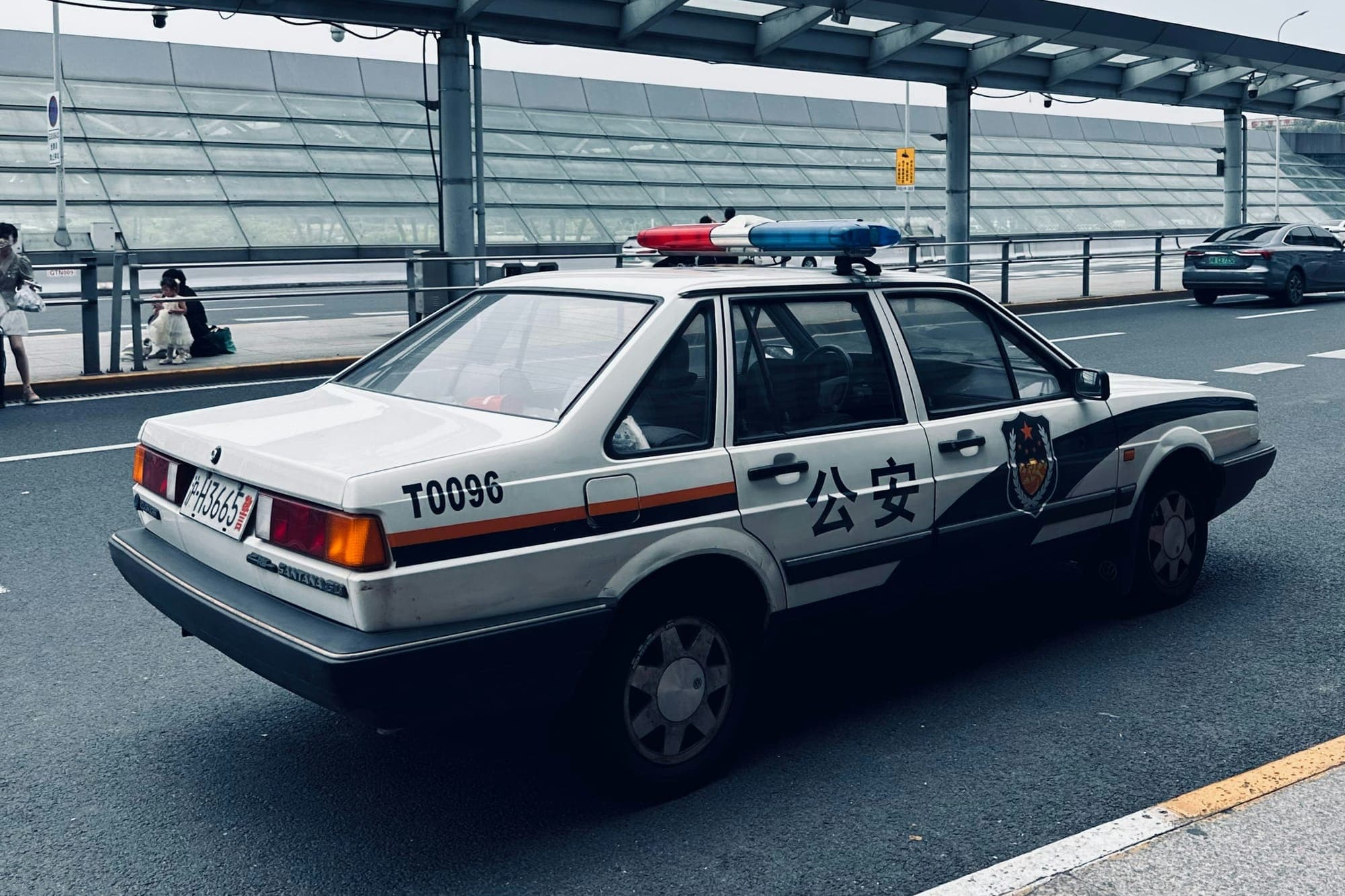
- Unlicensed, unmarked or unmetered taxis. The FCDO reports incidents of sexual assault and robbery against foreign nationals involving unmarked or unmetered taxis.
For taxis, insist on the meter and ask for a receipt. You can read more about app-booked rides in our DiDi guide for foreigners. Mobile payment is now ubiquitous, so counterfeit currency is less of a concern according to the US State Department, while the FCDO says counterfeit banknotes, especially 100 renminbi notes, remain common, including from ATMs. Banks will not replace counterfeit notes.
The US State Department says China has become predominantly cashless and fewer places accept foreign credit cards. Setting up mobile payment before you go can reduce cash handling. See our guides to Alipay for foreigners and WeChat Pay for foreigners.
For a broader first-trip preparation list, use our first-time China visitor checklist.
If something does go wrong, the emergency numbers are police 110, ambulance 120, fire 119 and traffic police 122 (FCDO); the US State Department says English is often available on 110, but not in remote areas. See our emergency numbers guide for what to say on the call. If you lose your passport, the FCDO says to go to the nearest police station or Public Security Bureau and get a report; see our lost passport guide.
What do the US State Department and UK FCDO advisories say about China?
The US State Department rates mainland China Level 2, “Exercise Increased Caution” (updated 3 September 2026), while the UK FCDO does not use numbered levels and does not advise against travel to any part of mainland China (advice updated 27 August 2026, still current 6 October 2026). The FCDO says, “No travel can be guaranteed safe.”
| Advisory | Current level or wording | Updated | Main reasons |
|---|---|---|---|
| US State Department — mainland China | Level 2: “Exercise Increased Caution” | 3 September 2026 | Arbitrary enforcement of local laws, exit bans without a fair and transparent process, and risk of unjust arrest or detention |
| US State Department — Hong Kong SAR | “Exercise increased caution” | 3 September 2026 | Arbitrary enforcement of local laws |
| US State Department — Macau SAR | “Reconsider travel” | 3 September 2026 | Limited ability to provide emergency consular services |
| UK FCDO — mainland China | Does not advise against travel to any part of mainland China; “No travel can be guaranteed safe” | 27 August 2026 (still current 6 October 2026) | Broad national security laws, detention risk and other local-law and security concerns |
For what each level means, who and which areas the US advisory singles out, and how FCDO advice works, see our China travel advisory explainer.
The US mainland headline reads: “Exercise increased caution in mainland China due to the arbitrary enforcement of local laws, the use of exit bans without a fair and transparent process under the law, and the risk of unjust arrest or detention.” The US advisory says expansive national security, counterespionage and data security laws give officials broad discretion to detain or interrogate foreign nationals. It identifies possible targeting of US citizens of Chinese heritage, people involved in business disputes, people with current or prior US law-enforcement, military or intelligence affiliation, and people on US government-funded programmes. US emergency consular services in the Tibet Autonomous Region are severely limited.
The FCDO says national security laws are broad and that visitors can be detained without intending to break the law. Restricted military areas exist. The US advisory says extra security checks, police presence and surveillance are common in the Xinjiang Uyghur Autonomous Region and Tibetan Autonomous Prefectures, where curfews and travel restrictions can be imposed at short notice; the FCDO says Tibet requires a permit through a specialist travel agent in China and an organised tour.
Laws that catch visitors out:
- Always carry your passport. The FCDO says police conduct random checks and do not accept printed copies.
- The FCDO says the authorities have a zero-tolerance policy on drugs and can test foreign nationals at random, including on entry. The US State Department says not to use illegal drugs in China or before going, and that a positive test can lead to detention even if the drug was legal elsewhere.
- Avoid demonstrations and do not photograph protesters or police without permission.
- Never pack bullets, casings or any munitions, including remnants.
- Fights can lead to penalties ranging from fines to detention, regardless of who started them.
The US State Department also advises US citizens to enrol in STEP and buy travel insurance.
For British citizens, the FCDO says visa-free stays of up to 30 days remain available until 31 December 2026. It says your passport must be valid for at least six months after arrival and have two blank pages. If you hold a US passport, see our guide to travel to China from the USA, which compares the tourist visa with 240-hour visa-free transit. Read the 30-day visa-free China information, the 240-hour visa-free China guide, and check your passport on our visa-free countries tool.
What health precautions do you need for China, including food and water?
The CDC advises seeing a doctor at least a month before travel and the FCDO advises checking vaccine recommendations at least eight weeks ahead. The CDC says tap water is not drinkable in China, even in major cities, and the FCDO says it is generally not safe to drink.
The CDC’s current travel health notice for China is Level 1, “Practice Usual Precautions” (Global Measles; retrieved 6 October 2026). Vaccine points from the CDC:
- Be up to date with routine vaccines such as MMR, polio and flu.
- Hepatitis A is recommended for unvaccinated travellers aged one year or older.
- Hepatitis B is recommended for unvaccinated travellers of all ages.
- Japanese encephalitis, rabies and typhoid vaccines depend on your itinerary and activities, including rural travel, long stays and animal contact.
- The CDC does not recommend yellow fever vaccination for China. Entry vaccination is required only for travellers arriving from countries with a yellow fever transmission risk.
On medicines, the FCDO says some medicines may not be allowed into China, so check with your doctor and the Chinese Embassy before you travel; the US State Department advises carrying prescription medicine in its original packaging with the prescription.
On food and water, the CDC says, “Food and water standards around the world vary based on the destination. Standards may also differ within a country and risk may change depending on activity type.” The FCDO says, “Tap water is generally not safe to drink. Only drink bottled water.” The CDC says, “Tap water is not drinkable in China, even in major cities. Bottled water is easily available.” Avoid swimming in fresh, unchlorinated water because of schistosomiasis, and take steps to prevent mosquito bites because dengue cannot be prevented by a vaccine.
The FCDO says healthcare in China is not free and can be very expensive, and advises insurance covering treatment and medical evacuation. The US State Department says medical care standards are not equivalent to those in the US, hospitals often require payment in cash or by mobile payment app before treatment, including a deposit before admission, and ambulances are often slow. It strongly recommends supplemental medical evacuation insurance. The FCDO maintains a list of doctors and medical facilities where some staff speak English.
If you get ill, see how to see a doctor in China. If you are planning China family tours with children, ask your doctor about their vaccines too; the CDC hepatitis A recommendation applies from age one.
Air pollution is a significant problem in many locations. Altitude sickness is a risk in parts of China, and most roads and towns in Tibet, Qinghai, parts of Xinjiang and western Sichuan are above 10,000 feet. Dengue is present in Guangdong Province and some other parts of China, mainly from May to November.
Is China safe for solo women and LGBTQ travellers?
The FCDO says women travelling alone or with female friends could be at higher risk of drink spiking, and that same-sex relationships are legal in China but public attitudes are less tolerant than in the UK. The US State Department says violence against LGB individuals is relatively rare.
For women, the FCDO's advice is not to leave drinks unattended or accept drinks from strangers, and to follow the unmarked-taxi warning above. Our solo female safety guide covers transport, scams and choosing a first city in more detail.
For LGBTQ travellers, the FCDO adds that showing affection in public may receive negative attention and that there is no Chinese law guaranteeing freedom from discrimination on the grounds of sexual orientation. The US State Department says same-sex marriages are not legally recognised, homosexuality has been decriminalised, prejudice and discrimination still exist, and there are growing LGB communities in some of the largest cities.
As general planning, we suggest keeping your accommodation and transport details to hand and telling someone you trust your plans for the day. These are common-sense steps, not a guarantee of any outcome.
Which apps and sites are blocked in China, and what do official sources say about VPNs?
The FCDO says the authorities control internet access and that Google, Facebook, YouTube and X are permanently blocked, while payment through apps such as WeChat or Alipay is almost universal. It also says China’s cybersecurity laws state that online products and services, for example VPNs, need to be licensed by the Chinese government (FCDO, updated 27 August 2026, checked 6 October 2026), so unlicensed VPN use is not permitted. For mobile data, plan on international roaming or a foreign eSIM data plan; see eSIM and SIM options for foreigners.
The FCDO adds that other websites may sometimes be blocked and that access can be limited around key political dates; its advice is to stay informed and follow Chinese law. LocalKey does not advise on VPNs, and this article gives no instructions for getting around blocked services.
The US State Department says to assume security services can read emails, texts and social media posts sent to or from China, including messages on Chinese apps. Avoid putting sensitive information into communications and review what you need to access before departure.
Before you go, the US State Department recommends researching mobile payment options. For getting online on arrival, see our eSIM and SIM guide for foreigners.
Plan your China trip with LocalKey
LocalKey can help plan the trip, book the practical arrangements and provide support on the road. Choose private China tours for your own China trip — planned, booked and backed. For the full planning order beyond safety, see our China travel guide 2026.
Independent means travelling on your own with the LocalKey app and 24/7 backup. Add-ons are available on demand, including airport pickup, a private car and driver, and a local guide. The guide is an optional add-on.
Private Guided includes a private guide and driver/car across the trip. This can suit first-timers who want someone alongside to handle taxis, tickets and check-ins, and to help with language at a pharmacy, clinic or police station if needed.
Speak with a 1:1 specialist through 7×24 WeChat/WhatsApp about routes, entry documents, transport, health planning and the level of support you want.
Sources
- US Department of State — China Travel Advisory, Level 2, updated 3 September 2026 — verified_on 2026-10-06
- US Department of State — China international travel information, last updated 12 March 2026 — verified_on 2026-10-06
- UK FCDO — China travel advice, updated 27 August 2026 — verified_on 2026-10-06
- UK FCDO — China: safety and security — verified_on 2026-10-06
- UK FCDO — China: health — verified_on 2026-10-06
- CDC Travelers' Health — China — verified_on 2026-10-06