Updated 28 September 2026 · LocalKey consultant team
The story
Ang Lee’s Crouching Tiger, Hidden Dragon (2000) moves between several parts of China: a bamboo canopy above the ground, white-walled villages with dark tiled roofs, mountain country, and dry desert scenes. The production was not built around one single destination.
For travellers, the most useful cluster is in eastern China: Hongcun and the Huangshan area in Anhui, plus the bamboo country around Anji in Zhejiang. These places can be combined with Hangzhou in a Jiangnan itinerary, while the film’s other regions are better understood as separate production locations.
The real places
Hongcun: village roofs and Moon Pond
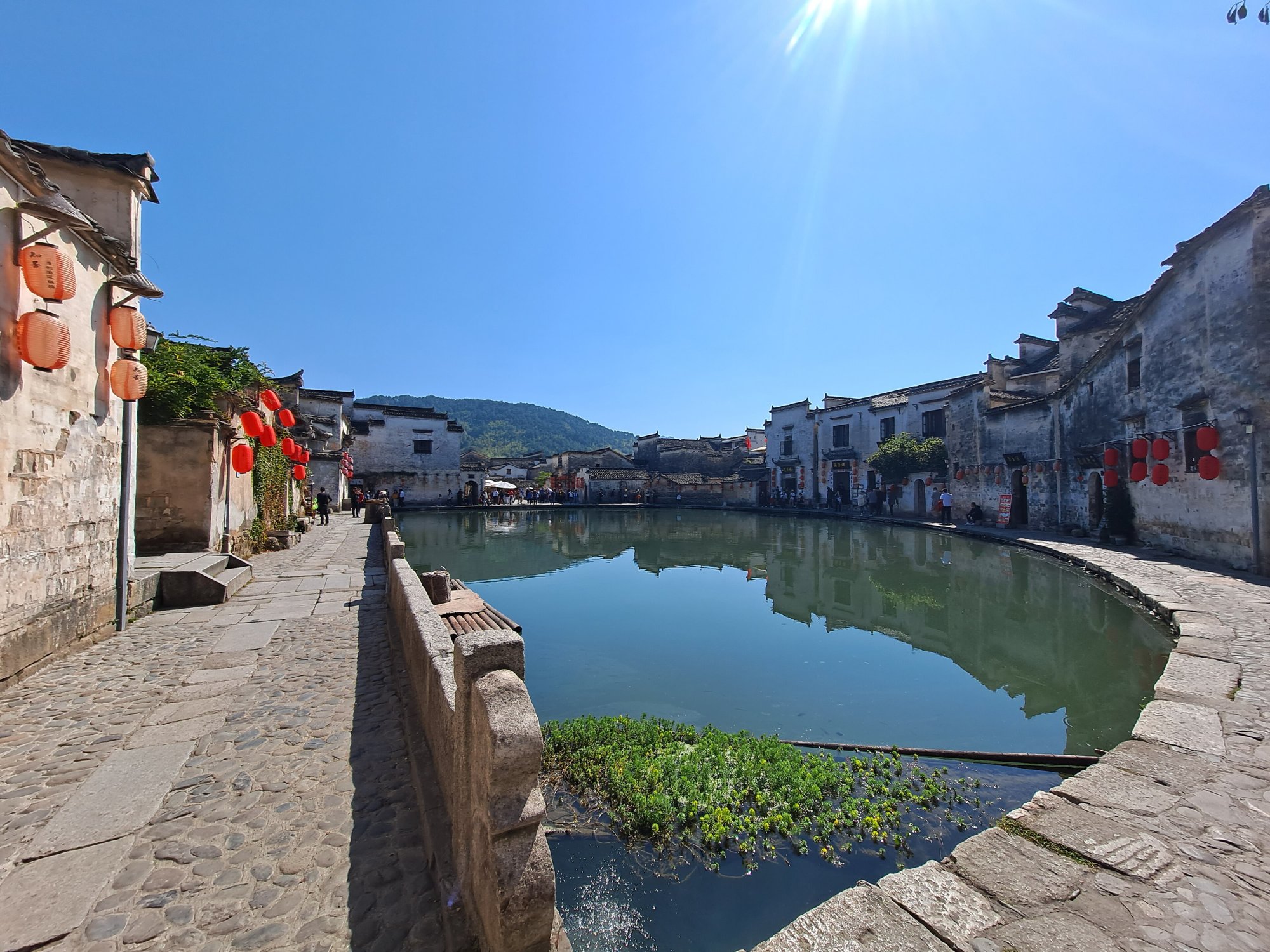
Hongcun is a historic Huizhou village in southern Anhui. Its crescent-shaped Moon Pond, lanes, rooflines, and carefully preserved village setting are frequently identified with the film’s village scenes. The location is also documented by location research site Movie-Locations, which names Hongcunzhen and Moon Pool among the filming places. Movie-Locations’ location guide is useful for scene recognition, but it should not replace a practical village guide.
Hongcun is part of the UNESCO World Heritage property “Ancient Villages in Southern Anhui — Xidi and Hongcun.” The village is worth visiting for its water network, ancestral halls, lanes, and architecture even if you never watch the film. For a focused walking plan, see the sibling guide: /china-guide/xidi-hongcun-ancient-villages-2026.
Anji Great Bamboo Sea: the bamboo sequence
The bamboo fight is associated with Anji in Zhejiang, north of Hangzhou. Production-side accounts identify the Anji bamboo forest as the location for the sequence:
- Cinematographer Peter Pau’s production account lists the bamboo forest near Anji among the locations and states that the bamboo battle was shot there. Live Design interview with Peter Pau
- In a 2016 conversation, Ang Lee and screenwriter James Schamus discuss the bamboo fight scene in the Anji Bamboo Forest. The Playlist interview
- A China Services Info feature identifies the Great Bamboo Sea of China in Anji, Huzhou, Zhejiang, as the site of the bamboo sequence. China Services Info feature
- A People’s Daily Digest feature reports the Great Bamboo Sea as an exterior location and attributes praise for Anji’s landscapes to Ang Lee after the Oscars. This is a Chinese press report rather than a production contract or location release. People’s Daily Digest feature
The scenic area is commonly visited as a nature and landscape destination, not only as a film stop. Confirm current admission arrangements locally because scenic-area policies and ticketing can change.
Mukeng near Hongcun: a contested tourism claim
Mukeng, a bamboo-covered area near Hongcun, is often promoted in tourism material as the setting for the treetop fight. A China Today feature attributes the canopy sequence to Mukeng. China Today’s Mukeng feature
That claim sits alongside the production-side accounts naming Anji. The available sources therefore do not support presenting Mukeng as settled fact. The practical way to describe the evidence is:
| Question | Evidence |
|---|---|
| Where was the main bamboo fight filmed? | Peter Pau’s production account and The Playlist interview identify Anji bamboo forest. |
| Why is Mukeng associated with the scene? | Tourism reporting (e.g. China Today) and some location guides attribute the canopy fight to Mukeng near Hongcun. |
| How should travellers plan? | Treat Anji as the better-supported production location; visit Mukeng as a nearby bamboo landscape with a contested film connection. |
Mukeng can fit naturally into a Hongcun stay, but it should not replace the Anji evidence in a location-focused answer.
Other reported locations
The production covered several distinct regions. Peter Pau’s account names Xinjiang, the Yellow Mountains of Anhui, Chengde, and the bamboo forest near Anji. Live Design’s production account
Location research also identifies:
- Chengde in Hebei, associated with imperial architecture and northern landscapes.
- Xinjiang’s Ghost City, associated with the film’s dry western scenes.
- Hengdian, where some built or controlled-set work is reported.
- Cangyan Shan in Hebei, another location connected with the film’s mountain and architectural imagery.
These places are spread across China and do not form one efficient short holiday. The Jiangnan and Huangshan cluster is the most practical choice for travellers who want the film connection alongside villages, mountain scenery, and regional food.
The culture behind it
Huizhou villages and water systems
Hongcun’s appeal comes from the way architecture, water, family history, and landscape work together. Its lanes and channels were designed around daily life, while ancestral halls and residential compounds reflect the social structure of Huizhou communities.
The UNESCO description of Xidi and Hongcun explains the significance of these settlements and their preserved architectural character. UNESCO: Ancient Villages in Southern Anhui — Xidi and Hongcun
A visit is therefore more than a film-location checklist. Look at how channels enter the village, how Moon Pond sits within the lane network, and how roof ridges, courtyards, and whitewashed walls frame the surrounding hills. The film gives the area a visual reference point; the village itself provides the deeper cultural context.
Bamboo country and Huangshan
Anji’s bamboo landscape is part of a working rural region rather than a theme built only around cinema. The Great Bamboo Sea offers walking paths, viewpoints, and a sense of scale that is difficult to understand from the screen.
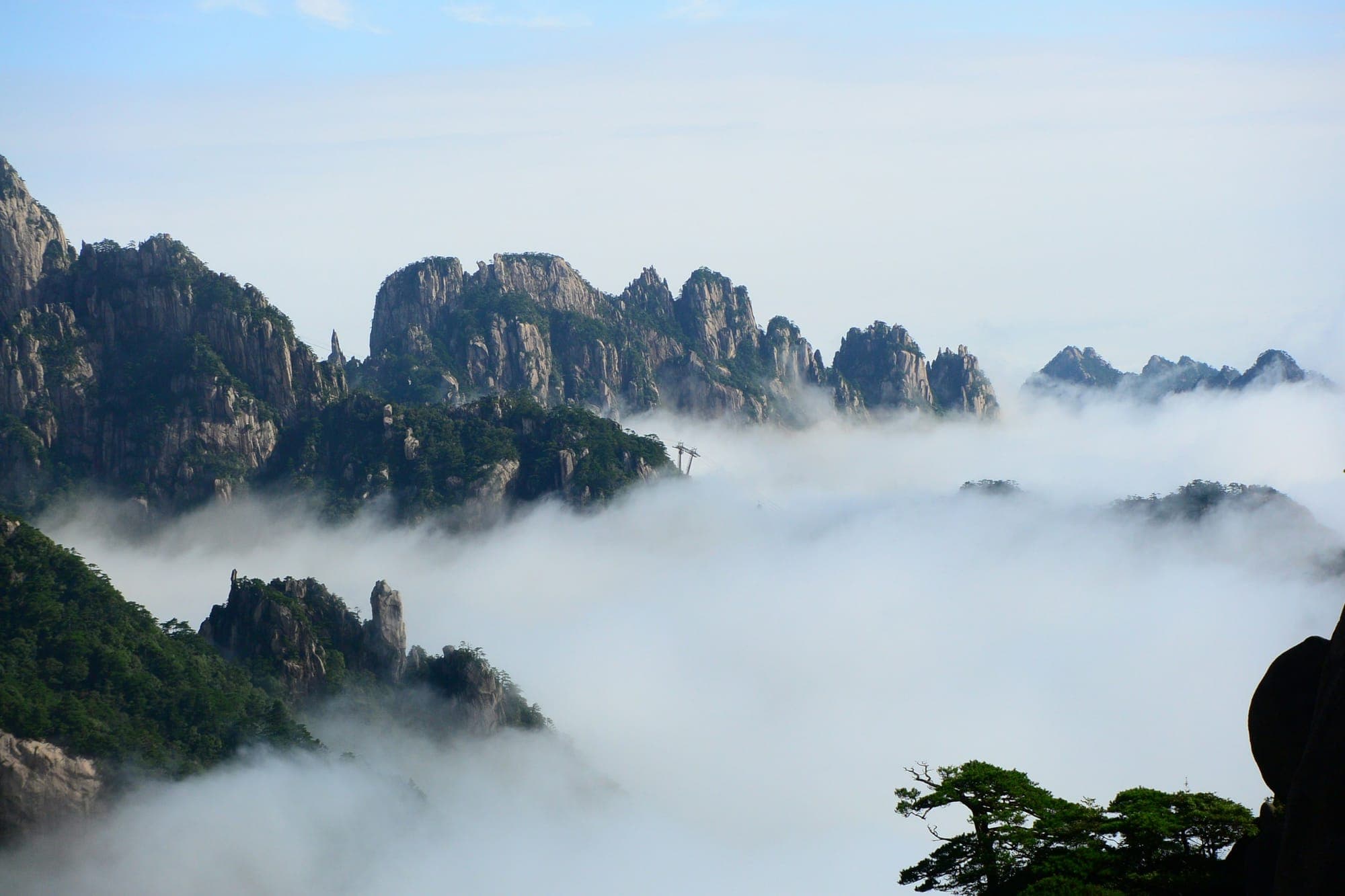
Huangshan adds a different layer: steep granite formations, pine-covered ridges, changing cloud conditions, and long stair routes. UNESCO recognizes Mount Huangshan for its cultural and natural importance. UNESCO: Mount Huangshan
If photography is your priority, keep the mountain-planning details in the dedicated sibling guide: /china-guide/huangshan-yellow-mountain-hiking-photography-2026. This article stays focused on filming locations and how to connect them.
How to go
Gateways and transport
Hangzhou is the easiest starting point for Anji and a comfortable soft landing for a Jiangnan trip. Huangshan is the natural gateway for Mount Huangshan, Hongcun, Xidi, and Mukeng.
Use the live city guides for current orientation:
High-speed rail is the practical backbone. Travellers commonly use Hangzhou for the Anji side, then continue by rail and arranged local transfers toward Huangshan and the southern Anhui villages. The final approach to scenic areas is usually by local vehicle or designated scenic-area transport. This route does not require self-driving.
For international visitors, ticketing and payment preparation matter. See /china-guide/12306-train-tickets-for-foreigners for rail booking guidance. If your nationality and itinerary qualify, the /china-guide/240-hour-visa-free-china-guide may also be relevant. Set up /china-guide/alipay-for-foreigners-2026 before gate days.
How many days?
Allow five to seven days for a comfortable version of the eastern-China film route:
| Days | Plan |
|---|---|
| 1 | Arrive in Hangzhou, recover from travel, and explore a small part of the city. |
| 2 | Travel to Anji and visit the Great Bamboo Sea; stay nearby or return toward Hangzhou. |
| 3 | Continue toward Huangshan and settle into the mountain area. |
| 4 | Spend a full day on Mount Huangshan, with one or two nights depending on your walking plan. |
| 5 | Descend and visit Hongcun; stay in or near the village. |
| 6 | Add Xidi, Mukeng, or a slower Hongcun morning before continuing onward. |
| 7 | Return toward Hangzhou or Shanghai, depending on your wider itinerary. |
A shorter four-day version is possible, but it makes Anji, Huangshan, and Hongcun feel compressed. The route is stronger when the mountain day and village stay have enough time to breathe.
The practical commercial route framework is covered here: /china-guide/hangzhou-huangshan-private-tour-2026. It owns the sample Hangzhou–Huangshan–Hongcun–Anji route design, while this article explains why those places are connected by the film story.
Season and tickets
Spring and autumn usually offer comfortable conditions for combining village walks, bamboo paths, and mountain hiking. Summer can be humid and wet, with strong growth and atmospheric mountain conditions; winter is quieter but requires more careful preparation for cold, wind, and possible closures.
Ticket promotions and gate prices change — reconfirm on the official Huangshan tourism platform (verified_on 2026-09-28) before you travel: official Huangshan tourism platform.
China Daily reported a 2025 half-price promotion for foreign tourists at 14 destinations, including Mount Huangshan, Hongcun, and Xidi. Treat that as a promotion to verify, not as a permanent rate. China Daily’s Huangshan ticket report
Hongcun prices are also subject to current policy and ticket arrangements. Some secondary booking platforms commonly list an adult walk-in figure around ¥104, but confirm the official or local rate before arrival. Anji’s Great Bamboo Sea is a 4A scenic area; confirm its current ticket and operating information locally.
Build this trip with LocalKey
There are two sensible ways to shape this route under private China tours:
- Independent — Rail-led logistics with open afternoons. A local guide is an optional add-on on the days you want one.
- Private Guided — More private-car and guide days, coordinated transfers, and a steadier pace between Hangzhou, Anji, Huangshan, and Hongcun.
If you want to discuss dates, walking preferences, hotel style, and the balance between film locations and wider Jiangnan culture, start an inquiry. The aim is your own China trip — planned, booked and backed.
For more culture-led ideas, browse LocalKey’s /experiences/culture.
Frequently asked questions
Where was the bamboo fight filmed: Anji or Mukeng?
The better-supported production evidence points to Anji bamboo forest. Peter Pau’s production account and a later Ang Lee / James Schamus conversation both identify Anji. Mukeng near Hongcun is promoted by tourism reporting as the canopy-fight location, so its connection should be described as contested rather than settled.
Was Hongcun used in the film?
Hongcun is widely identified with village scenes, especially the Moon Pond and surrounding village setting. Location research lists Hongcunzhen and Moon Pool, and the village’s architecture closely matches the film’s Jiangnan visual language.
What other regions appear in the filming record?
Reported locations include the Yellow Mountains of Anhui, Chengde, Xinjiang’s Ghost City, Hengdian, Cangyan Shan, and the bamboo forest near Anji. These places are geographically dispersed, so they are not one compact route.
How many days do I need for a Huangshan–Hongcun–Anji trip?
Five to seven days is a comfortable range when starting in Hangzhou and including a full Huangshan day. Four days is possible, but it leaves less room for weather, transfers, and a slower village visit.
Should I travel Independent or Private Guided?
Independent travel works well if you are comfortable coordinating rail tickets, local transfers, scenic-area logistics, and changing weather plans. A local guide is an optional add-on on the days you want one. Private Guided travel is useful when you want one team to connect Anji, Huangshan, Hongcun, and onward transport.
How does this page differ from the Xidi and Hongcun village guide?
This page answers the film-location question and compares the Anji production evidence with the contested Mukeng claim. The sibling guide, /china-guide/xidi-hongcun-ancient-villages-2026, owns the practical village walk and broader Xidi–Hongcun visit planning.
Sources
- Live Design: Crouching Tiger, Hidden Dragon behind the scenes with DP Peter Pau
- The Playlist: Crouching Tiger, Hidden Dragon interview
- China Services Info: Great Bamboo Sea of China
- People’s Daily Digest: Anji bamboo landscape feature
- Movie-Locations: Crouching Tiger, Hidden Dragon filming locations
- China Today: Mukeng tourism feature
- UNESCO: Ancient Villages in Southern Anhui — Xidi and Hongcun
- UNESCO: Mount Huangshan
- China Daily: Huangshan ticket promotion report
- Official Huangshan tourism platform