Updated 2 October 2026 · LocalKey consultant team
Visitors looking for a “cyberpunk Hong Kong” story should focus on today’s Kowloon Walled City Park, on the cleared site of the former Walled City, together with Hong Kong SAR’s neon-sign culture and dense street fabric. Place that stop inside a trip through the Greater Bay Area, the cluster of Hong Kong SAR, Macau SAR, Guangzhou, Shenzhen, Zhuhai and Foshan. Denser mainland companions such as Chongqing are different cities, so they belong in a cross-linked companion itinerary rather than a duplicated Hong Kong guide.
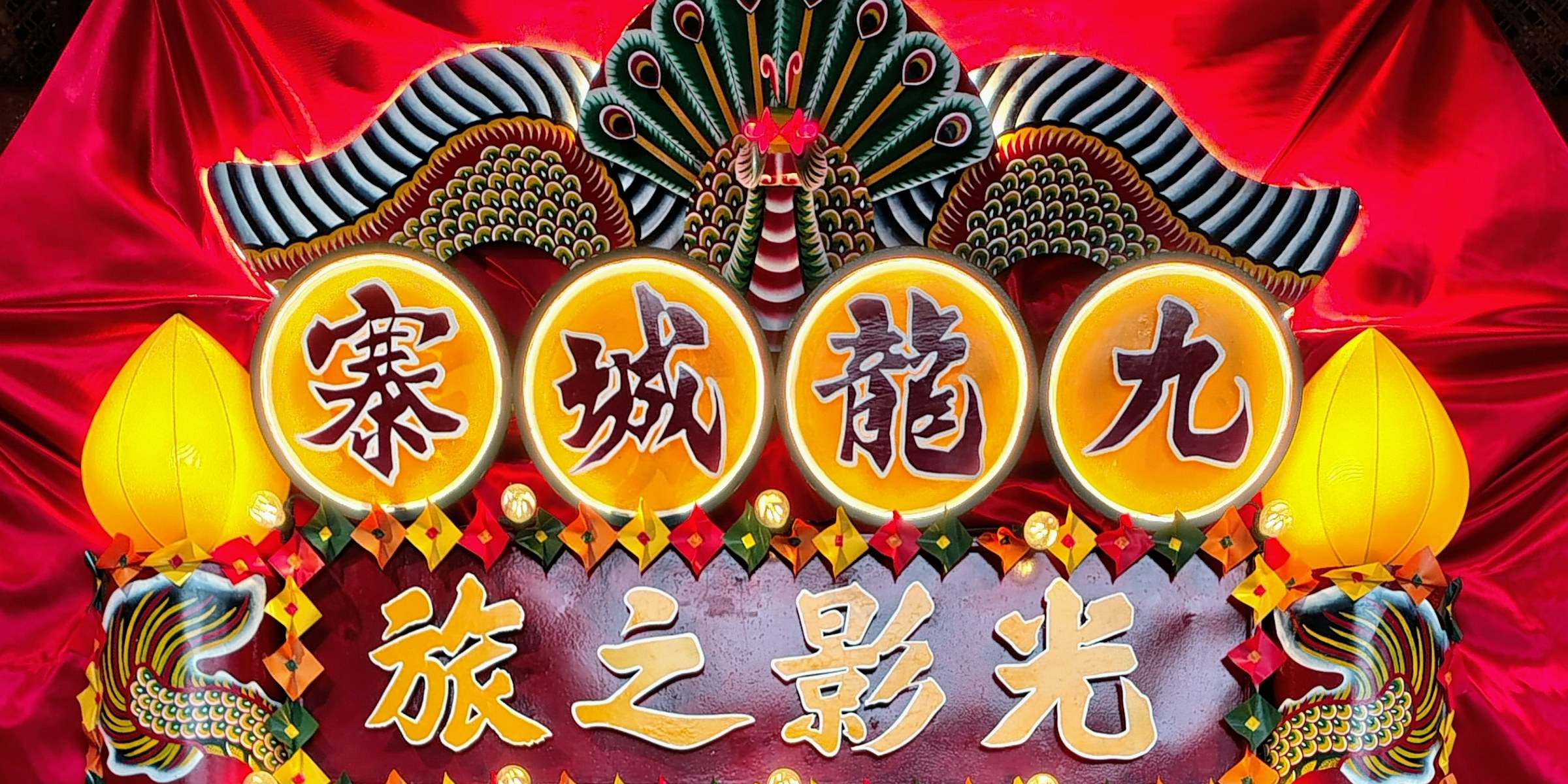
The phrase “cyberpunk Hong Kong” is best treated as a traveller viewpoint, not an official district label. It describes the visual relationship between high-density streets, layered signage, compact buildings, night movement and the memory of a place that once occupied an unusually intense position in the city’s history.
The strongest visit combines a reflective stop at Kowloon Walled City Park with a wider walk through Hong Kong’s older commercial streets. The point is not to collect a list of photo locations. It is to understand how a former enclosed settlement, a changing signboard culture and a tightly built city continue to shape the way visitors read Hong Kong.
What happened to the Kowloon Walled City, and what stands there now?
The Kowloon Walled City was cleared after a decision announced in 1987, and demolition was completed in April 1994. Kowloon Walled City Park opened on 22 December 1995 on the former site, preserving selected remains and presenting the location through a formal public garden. (LCSD historical account)
The former Walled City has therefore not survived as an intact urban quarter. Visitors should not expect to enter the dense built environment represented in archival photographs or popular visual culture. The real place today is a managed park with historical structures, scenic zones and interpretation.
The transition from the former settlement to the park is central to the story. The Leisure and Cultural Services Department records a construction period from May 1994 to August 1995. The completed park covers approximately 31,000 square metres and is arranged through eight scenic zones.
Its design follows the Jiangnan early-Qing garden style. This gives the site a formal visual language of paths, water, planting and architectural framing rather than attempting to recreate the former Walled City building by building. The contrast is useful: the park makes the lost urban form easier to discuss precisely because it does not pretend to reproduce it.
The park is managed by LCSD and was officially opened by Governor Christopher Patten on 22 December 1995, according to the department’s historical account. For background before travelling, the Hong Kong destination guide and Hong Kong travel guide for a China trip provide broader context on neighbourhoods, transport and trip planning.
What can you see at Kowloon Walled City Park today?
Kowloon Walled City Park contains a Jiangnan-style landscape, the Yamen, the Old South Gate remains and eight scenic zones; the Yamen and Old South Gate are declared monuments. The park is free and open daily from 06:30 to 23:00 (LCSD design information, LCSD opening hours)
The Yamen is the park’s architectural centrepiece and the only building remaining from the former Walled City, according to LCSD. Its survival gives the visit a material anchor: rather than encountering only a narrative about a demolished site, visitors can stand beside a preserved structure within the later garden landscape. (LCSD Yamen history)
The Old South Gate is another important remnant. During the 1994 demolition, granite plaques bearing the words “South Gate” and “Kowloon Walled City” were unearthed. The gate site and plaques help establish the former settlement’s physical boundary and connect the present park to the older place without turning the visit into a reconstruction exercise. (LCSD Old South Gate history)
The garden’s eight scenic zones add a second layer to the experience. Water, planted areas, paths and framed views encourage a slower reading of the site. This matters because the popular cyberpunk image often compresses Kowloon Walled City into a single mood. The park asks a more grounded question: what remains when an extremely dense urban setting has been cleared, documented and placed within a civic landscape?
LCSD also lists the “Kowloon Walled City: A Cinematic Journey” Movie Set Exhibition at the park. It is scheduled daily from 09:00 to 19:00 from 24 May 2025 to 23 May 2028, subject to the capacity and timed-entry arrangements stated on the LCSD opening-hours page. Check the current rules before visiting, especially if the exhibition is an important part of your day.
This is a history and culture stop first. It can support photography, but its value does not depend on recreating an old image of the Walled City. The most rewarding approach is to notice the relationship between surviving fragments, garden design and the wider urban setting.
Why do travellers link Hong Kong neon and density with a cyberpunk look?
Travellers link Hong Kong with a cyberpunk look because everyday dense streets, layered commercial signs and skilled sign craft create a visual language of overlapping infrastructure and human movement; Ridley Scott’s interviews support Hong Kong as an inspiration for Blade Runner’s visual direction only—he wanted to film there but could not afford to, and the film was not filmed in Hong Kong. The city’s neon has also changed through the Buildings Department’s Signboard Control System and Minor Works Control System since 31 December 2010, large-scale operations on target street sections since 2014, and M+ collecting neon signs since 2013, rather than through a single “neon ban.”
The comparison is partly connected to Blade Runner. In interviews with the New York Times and Wired, Ridley Scott recalled pre-skyscraper Hong Kong and described combining that memory with an overloaded New York when developing the film’s visual direction. (New York Times interview, Wired interview)
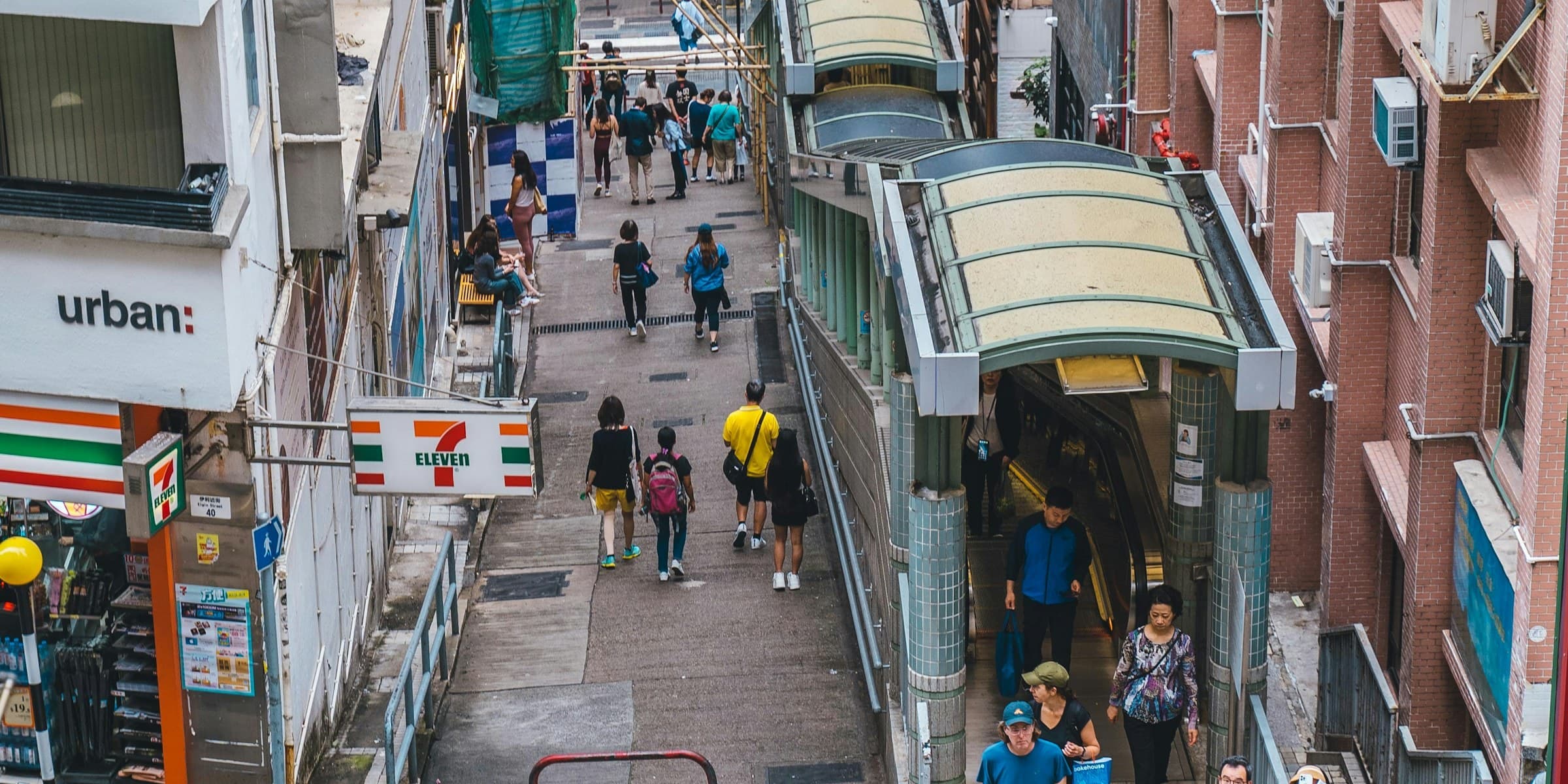
The Hong Kong connection is stronger when understood through ordinary streets rather than film references alone. Signboards extend from shopfronts, buildings sit close together and roads, footbridges, towers and transit lines overlap within a limited urban area. At night, illumination changes the way these layers are read, but the density belongs to daily life as much as to spectacle.
Neon signs also have a practical history. The Buildings Department’s Signboard Control System treats signboards as building works. Since 31 December 2010, the Minor Works Control System has offered a simplified path for erecting, altering or removing certain smaller signboards. The department also runs a Signboard Validation Scheme for eligible unauthorised signboards and can issue removal orders; since 2014 it has carried out large-scale operations on target street sections. These measures have changed the number and condition of older signs; they should not be simplified into a claim that Hong Kong has a single “neon ban.” (Buildings Department signboard control system, Buildings Department large-scale operations on target streets)
M+ has collected neon signs since 2013, documenting the material, lettering, construction and social setting of signs removed from the streets. Its conservation work shows why neon should be treated as visual culture and skilled fabrication, not merely as background decoration. (M+ collecting neon signs, M+ Conserving Neon Culture)
For travellers, this creates a useful balance. Look at the signs, but also look at the building edges, shop operations, transit entrances and residential-commercial overlap around them. A culture-led route can include the Chungking Express Hong Kong locations guide, while keeping the emphasis on real places and urban history rather than film stills, posters or dialogue.
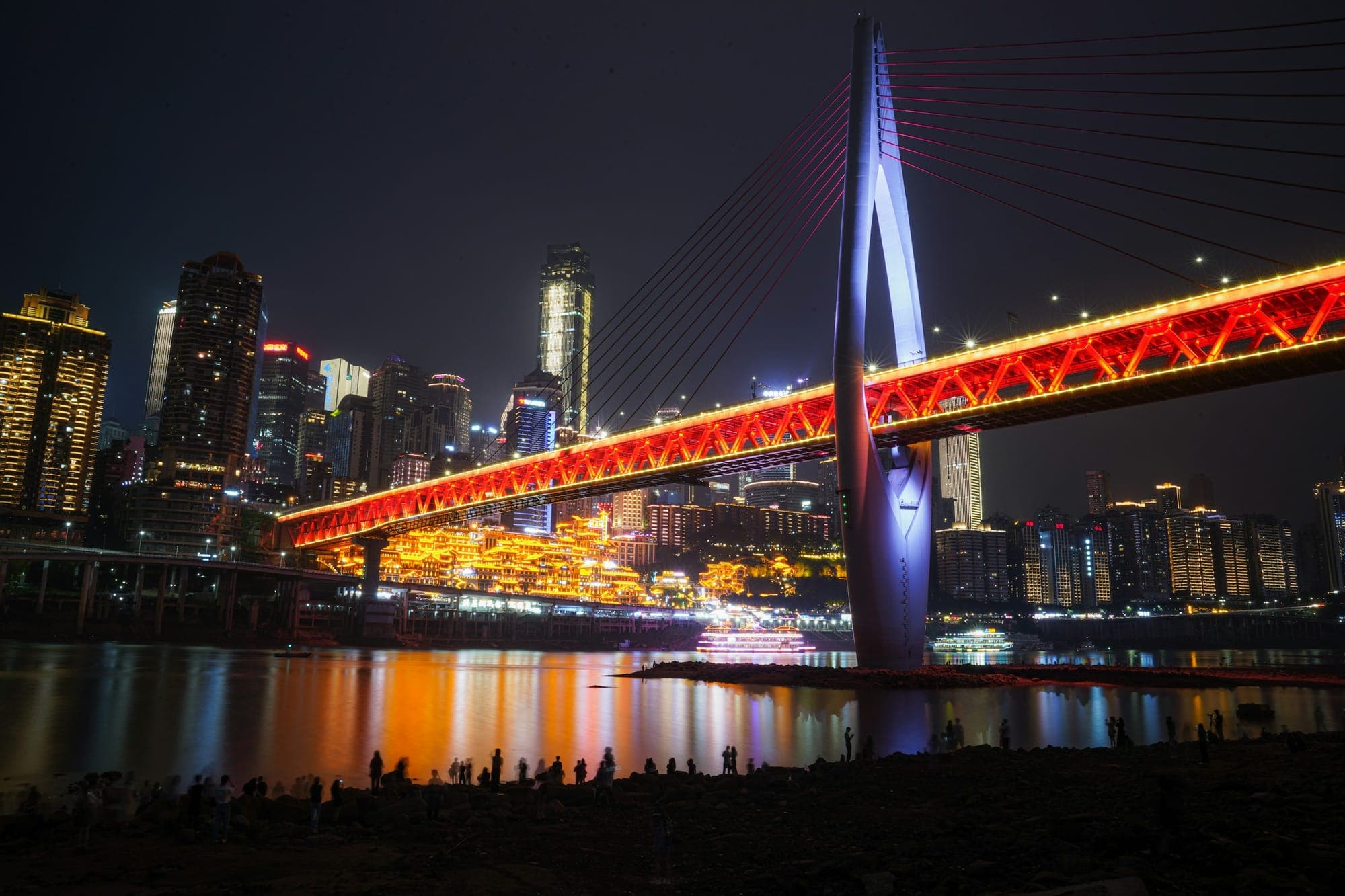
Travellers wanting a denser mainland comparison can continue with the Chongqing cyberpunk city guide. A separate Chongqing cyberpunk photo guide covers that city’s image-making routes. Those pages should remain companions: Chongqing and Hong Kong are different urban environments with different histories.
How do you visit Kowloon Walled City Park on a Greater Bay Area China trip?
Kowloon Walled City Park is reached from MTR Sung Wong Toi Station Exit B3, and the park has no public car parks inside. It is a free daily visit from 06:30 to 23:00, with separate hours and entry arrangements for the optional exhibition. (LCSD access information, LCSD opening hours)
The park works well as a morning historical stop or as part of a broader Kowloon culture day. Allow time to read the site, visit the Yamen and Old South Gate area, and continue through nearby streets rather than treating the park as a single quick viewpoint. The surrounding urban fabric is part of the explanation.
On a wider China itinerary through the Greater Bay Area, Hong Kong SAR is a separate immigration jurisdiction within China, so entry planning should be checked alongside the rest of your route. The Hong Kong to mainland China crossings guide explains border-crossing logistics, while the Hong Kong, Macau and China visa guide covers relevant entry questions without repeating its 240-hour guidance here.
For transport planning across the region, use the Greater Bay Area transport guide. The practical sequence depends on where you sleep and which cities follow Hong Kong. LocalKey can arrange the Hong Kong SAR portion around your chosen pace, then connect it with mainland cities through a coherent route.
A useful culture day might pair Kowloon Walled City Park with neighbourhood walking, a culture experience stop, a museum visit or a food-focused evening. The route should leave room for changing street conditions and ordinary city life. It does not need to turn every illuminated sign into a staged stop.
How do Independent and Private Guided trips include Hong Kong SAR culture days?
LocalKey’s Independent and Private Guided trips can include Hong Kong SAR hotels, guides, transfers and culture walks arranged directly around your wider China itinerary. Independent trips keep local guiding as an optional add-on only, while Private Guided trips include a dedicated guide-led structure.
Choose Independent if you want a flexible schedule with the freedom to explore Hong Kong’s streets at your own pace. A local guide can be added for Kowloon Walled City Park, a neighbourhood walk or a focused neon and signboard conversation when that would improve the day.
Choose Private Guided if you want a private route with guiding, timing and transfers shaped around your interests. The Kowloon Walled City story can then sit alongside other Hong Kong SAR culture days, mainland city visits and the practical movement between them.
Both tiers are part of Private China Tours. LocalKey can arrange Hong Kong SAR nights and culture walks, connect the city with a Greater Bay Area route, and provide a 1:1 specialist with 7×24 WeChat/WhatsApp support. The aim is your own China trip — planned, booked and backed.
If your priority is the history of the Walled City, build in time for the park and its monuments. If your priority is Hong Kong’s visual culture, pair the visit with signboard history and everyday street observation. If you want both, the best itinerary keeps the two threads connected without treating Hong Kong as a substitute for Chongqing or any other mainland destination.
Sources
- LCSD: Kowloon Walled City Park historical account — verified 2 October 2026, Asia/Taipei.
- LCSD: Park opening hours and exhibition information — verified 2 October 2026, Asia/Taipei.
- LCSD: Access to Kowloon Walled City Park — verified 2 October 2026, Asia/Taipei.
- LCSD: Park design — verified 2 October 2026, Asia/Taipei.
- LCSD: The Yamen — verified 2 October 2026, Asia/Taipei.
- LCSD: Old South Gate — verified 2 October 2026, Asia/Taipei.
- Buildings Department: Signboard control system — verified 2 October 2026, Asia/Taipei.
- Buildings Department: Large-scale operations on target streets — verified 2 October 2026, Asia/Taipei.
- M+: Collecting neon signs from Hong Kong’s streets — verified 2 October 2026, Asia/Taipei.
- M+: Conserving Neon Culture — verified 2 October 2026, Asia/Taipei.
- New York Times: Ridley Scott interview — verified 2 October 2026, Asia/Taipei.
- Wired: Ridley Scott interview — verified 2 October 2026, Asia/Taipei.